


Technical Guide to Woven Wire Fence T Post Spacing and Structural Integrity
In industrial and agricultural infrastructure, the performance of a perimeter or containment system depends heavily on the synergy between the mesh material and its support structure. Woven wire mesh is a preferred material for these applications due to its high tensile strength and ability to maintain structural integrity under load. However, the effectiveness of any mesh installation is fundamentally tied to the engineering of its support system, specifically the woven wire fence t post spacing.
For engineers and procurement professionals, understanding the variables that dictate post-spacing is critical for ensuring long-term durability, minimizing maintenance costs, and preventing structural failure. This article examines the technical considerations for determining optimal spacing, the mechanical properties of different mesh types, and how material selection influences the overall stability of the filtration or fencing system.
Understanding the Mechanical Properties of Woven Wire Mesh
Before calculating post-spacing, one must analyze the mechanical characteristics of the Woven Wire Mesh itself. Unlike welded wire, which relies on fused joints, woven mesh is constructed by interlacing longitudinal (warp) and transverse (shute) wires. This construction allows the mesh to absorb impacts and distribute tension more effectively across the entire panel.
Tensile Strength and Elasticity
The tensile strength of the wire—often measured in Megapascals (MPa) or pounds per square inch (PSI)—determines how much force the mesh can withstand before permanent deformation occurs. High-tensile woven wire allows for greater distances between posts because the wire can be stretched tighter without sagging. In industrial environments where perimeter security or debris containment is paramount, selecting a mesh with high-tensile properties is the first step in optimizing the support structure.
Weave Types and Load Distribution
The type of weave—whether plain, twill, or a specialized Dutch weave—affects the flexibility and load-bearing capacity of the material. While Dutch weaves are typically reserved for high-precision liquid filtration, plain and twill weaves are common in structural applications. A tighter weave with a higher mesh count provides more surface area to catch wind or debris, which increases the lateral load on the T-posts, necessitating closer spacing.
Engineering Factors Influencing Woven Wire Fence T Post Spacing
The determination of woven wire fence t post spacing is not a one-size-fits-all calculation. It requires an assessment of the physical environment, the intended load, and the specific gauge of the wire mesh being utilized.
1. Terrain and Topography
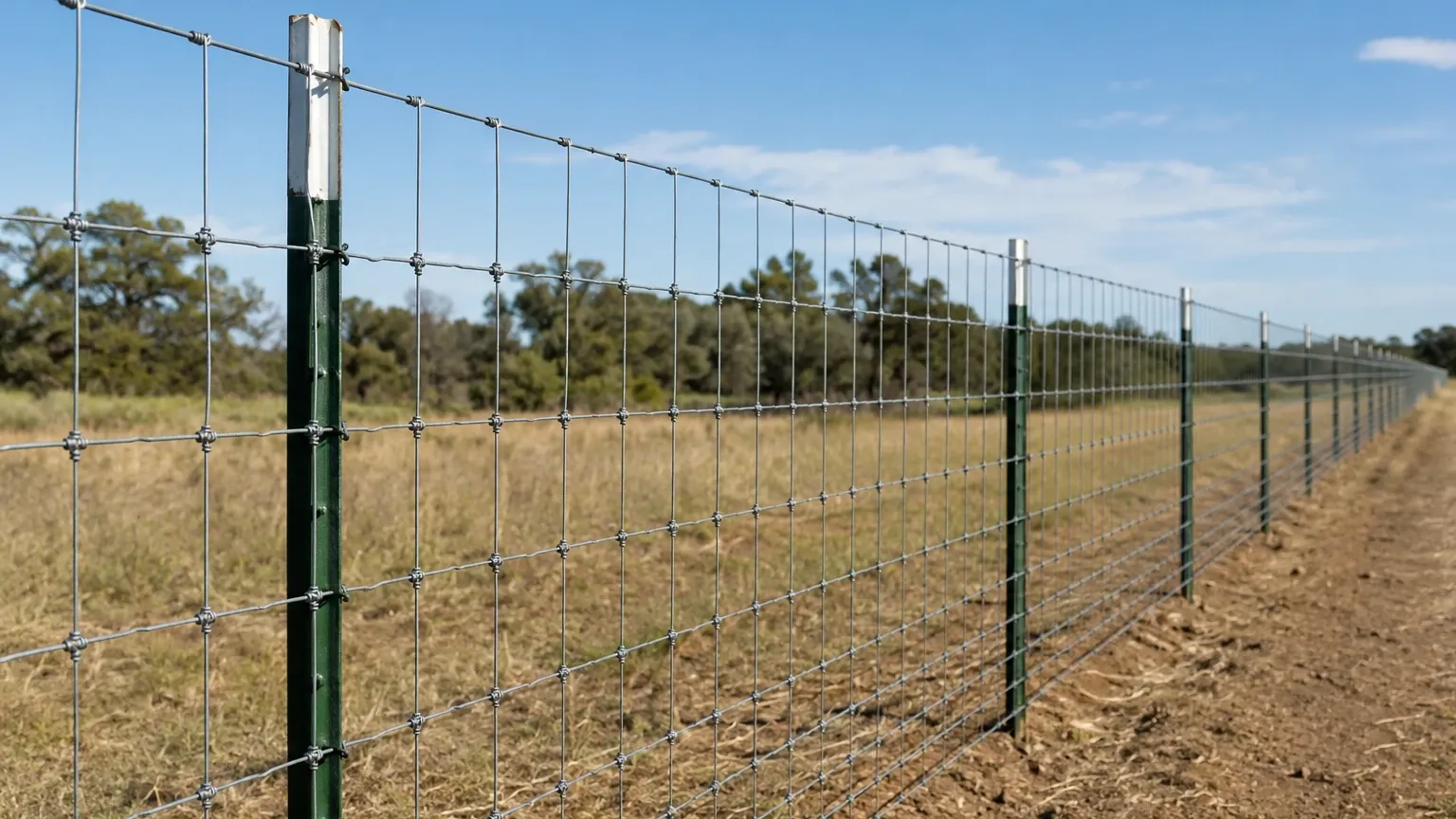
On flat, level ground, the standard spacing for T-posts typically ranges from 10 to 12 feet. However, as the topography becomes uneven, the spacing must be reduced. In undulating terrain, posts must be placed at every high and low point to ensure the mesh follows the contour of the ground without creating gaps or excessive tension points. Failure to adjust spacing on slopes can lead to "bridging," where the mesh pulls away from the ground, or "buckling," where the mesh sags in depressions.
2. Environmental Loads
Engineers must account for environmental factors such as wind loading and snow accumulation. In regions with high wind speeds, a woven wire mesh with a small opening size acts as a sail. This increases the lateral pressure on the T-posts significantly. To prevent the posts from leaning or snapping, spacing should be reduced to 8 feet or less, and the depth of the post-embedment should be increased.
3. Impact and Pressure Requirements
If the mesh is intended to contain heavy livestock or protect industrial assets from high-impact debris, the spacing must be tighter. For high-pressure applications, 8-foot spacing is often considered the industrial standard. This ensures that when an impact occurs, the force is distributed across multiple posts quickly, reducing the risk of a localized breach.
The Relationship Between Wire Gauge and Post Distance
The diameter of the wire used in the mesh—referred to as the gauge—is a primary factor in determining how far apart support posts can be placed.
* Heavy Gauge (9ga to 11ga): Thicker wires have higher inherent rigidity and can support their own weight over longer distances. When using heavy-gauge woven wire, engineers can often push spacing toward the 12-foot limit, provided the tensioning is handled correctly.
* Medium to Light Gauge (12.5ga to 14.5ga): These wires are more prone to sagging and stretching over time. To maintain a professional and functional installation, spacing for lighter gauges should be kept between 8 and 10 feet.
For specialized industrial applications requiring precise specifications, it is often necessary to consult technical data sheets. You can Plain, twill and dutch woven wire mesh in SS304/316L — rolls, cut mesh and framed panels. Send mesh count or micron target for a technical quote. to ensure the material selected matches the calculated load requirements of your post-spacing plan.
Material Selection: Stainless Steel vs. Galvanized Steel
The longevity of a woven wire system is heavily dependent on its resistance to corrosion. While galvanized steel is common, it often fails prematurely in chemical processing areas, coastal environments, or high-moisture industrial settings.
Stainless Steel 304 and 316L
Stainless steel 304 offers excellent durability for most standard industrial applications. However, for environments exposed to chlorides or high acidity, 316L stainless steel is the superior choice due to its molybdenum content, which provides enhanced pitting resistance.
From a structural standpoint, stainless steel has a different modulus of elasticity than carbon steel. It may require more precise tensioning during installation. When the woven wire fence t post spacing is optimized for stainless steel, the resulting system requires significantly less maintenance over a 20-year lifecycle compared to galvanized alternatives, which may require post-straightening or mesh replacement due to rust-induced weakening.
Installation Best Practices for Optimized Spacing
Even the most precisely calculated post-spacing will fail if the installation techniques are flawed. To ensure the Woven Wire Mesh performs as engineered, the following steps must be followed:
Corner and End Post Bracing
T-posts are excellent for line support but are not designed to handle the terminal tension of a woven wire system. Every run of mesh must begin and end with a heavy-duty H-brace or N-brace made of wood or heavy-wall steel pipe. These braces take the brunt of the tension, allowing the T-posts to simply maintain the vertical alignment and lateral stability of the mesh.
Proper Tensioning
Woven wire must be tensioned until the "tension curves" (the small crimps in the horizontal wires) are slightly flattened but not completely straight. Over-tensioning can snap the wires or pull the T-posts out of alignment, while under-tensioning leads to sagging and a reduction in the effective height of the barrier.
Secure Attachment
Using high-quality wire clips to attach the mesh to the T-posts is essential. In industrial settings, it is recommended to use at least five clips per post for a 48-inch high mesh. The clips should be tight enough to prevent vertical movement but allow for slight horizontal movement during thermal expansion and contraction cycles.
Total Cost of Ownership (TCO) Considerations
When designing a system, procurement teams often look at the initial cost of materials. However, a technical analysis of woven wire fence t post spacing reveals that increasing the quality of the mesh can actually reduce the total cost of the project.
For example, by selecting a high-tensile stainless steel mesh, an engineer might be able to increase post-spacing from 8 feet to 12 feet. This 50% increase in spacing reduces the number of T-posts required, lowers the labor costs for post-driving, and decreases the amount of hardware needed. Over a large-scale installation, these savings often offset the higher per-linear-foot cost of premium woven wire mesh.
Furthermore, optimized spacing reduces the mechanical stress on each individual component. When posts are spaced too far apart, the mesh sags, leading to increased wear at the attachment points. When they are too close, the system becomes overly rigid and prone to damage from ground heave or thermal shifts. Finding the "Goldilocks zone" of spacing ensures the longest possible service life.
Conclusion
Determining the correct woven wire fence t post spacing is a critical engineering decision that impacts the safety, functionality, and cost-effectiveness of industrial mesh systems. By considering the tensile strength of the Woven Wire Mesh, the specific environmental loads, and the material properties of alloys like SS304 and SS316L, professionals can design systems that withstand the rigors of demanding industrial environments.
For those in the planning stages of a filtration or perimeter project, confirming the mesh count, wire diameter, and material grade is the first step toward a successful installation. Whether the application is for chemical processing, water treatment, or industrial security, the integration of high-quality components with a scientifically sound support structure is the hallmark of professional engineering.
