


Simplex Strainer
In industrial fluid handling systems, the protection of downstream equipment—such as pumps, valves, nozzles, and heat exchangers—is a critical engineering priority. A simplex strainer serves as a primary line of defense, utilizing a single-chamber design to remove large particulate matter from liquids and gases. Unlike duplex strainers, which allow for continuous operation during cleaning, a simplex system requires the flow to be temporarily halted or diverted to remove and clean the internal filter element.
For engineers and procurement teams, selecting the correct simplex strainer involves more than simply matching pipe sizes. It requires a deep understanding of fluid dynamics, material compatibility, and the specific filtration requirements of the application. As a specialized manufacturer of stainless steel filtration solutions, Kaifil provides the precision components that define the performance and reliability of these essential industrial tools.
Fundamental Principles of Simplex Strainer Operation
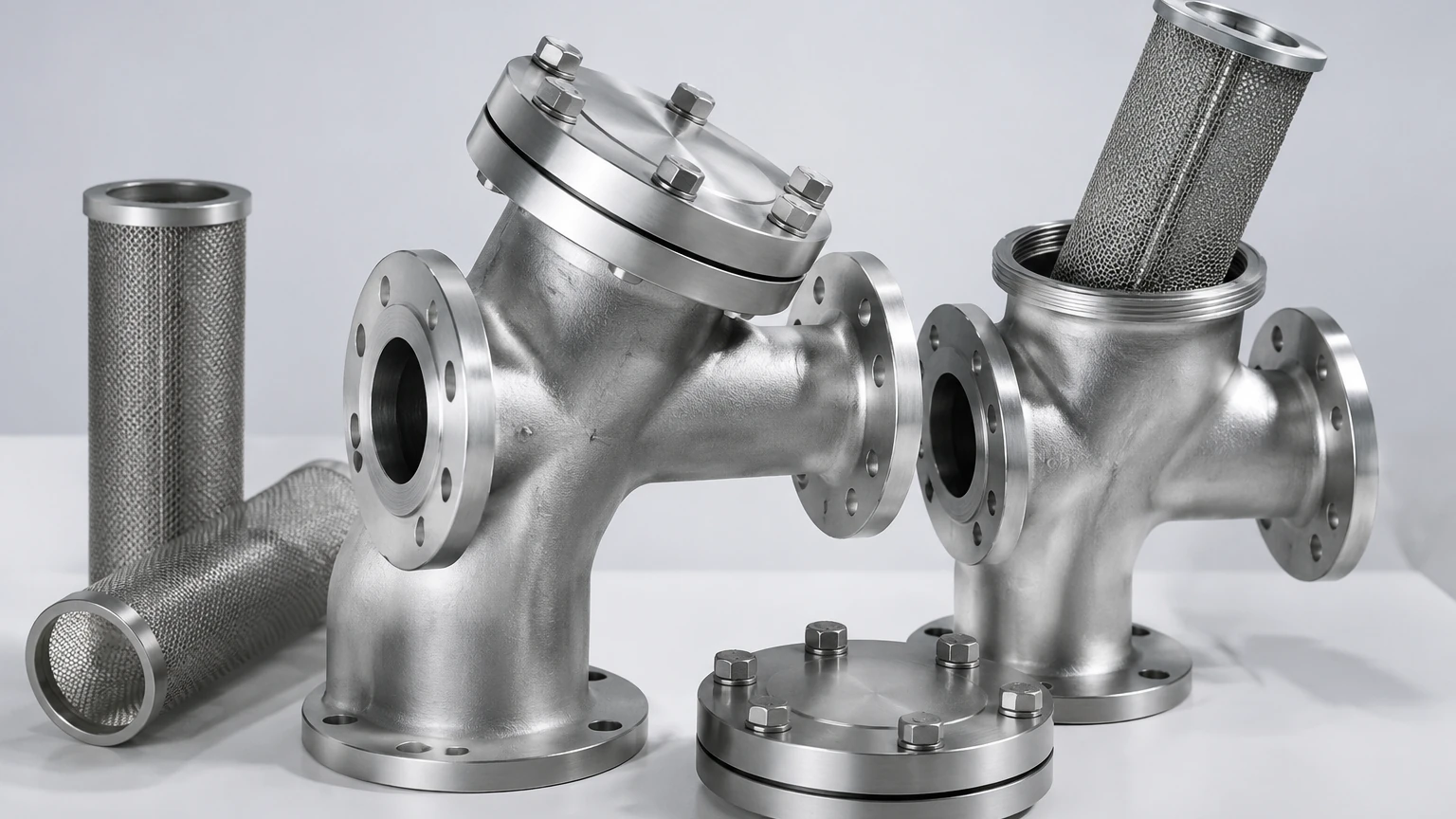
The basic architecture of a simplex strainer consists of a housing, a removable basket or screen, and a cover. The fluid enters the inlet, passes through the internal filter element, and exits through the outlet. Debris is trapped inside the basket, preventing it from reaching sensitive downstream components.
The "simplex" designation refers to the single-chamber configuration. This design is most effective in batch processing or in systems where the flow can be safely interrupted without compromising the integrity of the overall process. Because the system must be depressurized before the cover is opened, simplex strainers are often chosen for their simplicity, lower initial capital cost, and smaller footprint compared to duplex alternatives.
When evaluating a simplex strainer, the ratio of the open area of the basket to the cross-sectional area of the inlet pipe is a key performance indicator. A higher ratio typically results in a lower initial pressure drop and longer intervals between cleaning cycles. Engineering standards often recommend a minimum 6:1 open area ratio for general industrial applications to ensure efficient flow.
Engineering Considerations: Flow Rate and Pressure Drop
One of the most critical factors in strainer selection is the pressure drop ($ΔP$) across the unit. Every strainer introduces some resistance to flow. This resistance increases as the internal basket collects debris. If the pressure drop becomes too high, it can lead to cavitation in pumps, reduced flow rates, and potential damage to the filter element itself.
Engineers must calculate the clean pressure drop based on the fluid's viscosity, specific gravity, and flow rate. For high-viscosity fluids, such as heavy oils or syrups, the pressure drop will be significantly higher than for water at the same flow rate. In these instances, a larger strainer body or a coarser mesh might be necessary to maintain system efficiency.
To monitor performance, simplex strainers are frequently equipped with differential pressure gauges. By measuring the pressure at the inlet versus the outlet, operators can determine exactly when the basket requires cleaning. Setting a clear threshold for the maximum allowable $ΔP$ is essential for preventing structural failure of the stainless steel mesh or perforated metal components within the housing.
Material Selection for Industrial Filtration Components
The durability of a simplex strainer is dictated by the materials used for both the housing and the internal filter element. In demanding industrial environments, stainless steel is the preferred material due to its mechanical strength and resistance to corrosion.
1. Type 304 Stainless Steel: This is the standard grade for general-purpose applications. It offers excellent corrosion resistance in water treatment and many food-grade environments.
2. Type 316L Stainless Steel: For more aggressive chemical processing, pharmaceutical applications, or marine environments, 316L is used. The addition of molybdenum provides superior resistance to pitting and crevice corrosion, particularly in chloride-rich environments.
3. Specialty Alloys: In extreme cases involving high temperatures or highly acidic fluids, alloys like Monel or Hastelloy may be required for the internal mesh.
Beyond the metal components, the choice of gasket material (Buna-N, EPDM, Viton, or PTFE) is equally important. The gasket must be chemically compatible with the fluid and capable of maintaining a seal under the system's operating temperature and pressure. For more information on material specifications and custom configurations, you can visit the Main Page of Kaifil’s technical resource site.
Customizing the Internal Filter Element
The "heart" of the simplex strainer is the filter basket. Depending on the level of filtration required, these elements are constructed using different methods:
Perforated Metal
For removing large solids (coarse filtration), perforated metal baskets are the standard. They are robust and can withstand high differential pressures. The hole size usually ranges from 1/32" to 1/2", depending on the size of the particles that need to be captured.
Wire Mesh Liners
When finer filtration is required (down to the micron level), a stainless steel wire mesh liner is added to the perforated basket. The perforated metal provides the structural support, while the precision-woven wire mesh determines the filtration accuracy. This combination allows for fine filtration without sacrificing the mechanical integrity of the basket.
Wedge Wire
For heavy-duty applications or fluids with high solids loading, wedge wire elements offer a non-clogging surface. The V-shaped profile of the wire ensures that particles only contact the two leading edges, making the element easier to clean via backwashing or manual scraping.
Maintenance Protocols and Replacement Cycles
To ensure the longevity of a simplex strainer, a rigorous maintenance schedule is required. Because the system must be shut down for cleaning, maintenance is often synchronized with other scheduled downtime.
The cleaning process generally follows these steps:
1. Isolate the strainer by closing the inlet and outlet valves.
2. Vent the pressure from the housing using the vent plug.
3. Drain the fluid from the housing using the bottom drain plug.
4. Remove the cover and lift out the basket.
5. Clean the basket using a high-pressure water jet or a chemical cleaning agent suitable for the debris and the stainless steel grade.
6. Inspect the basket for signs of mechanical fatigue, broken wires, or corrosion.
7. Inspect the gasket or O-ring for wear and replace if necessary.
8. Reinstall the basket and secure the cover.
Failure to clean the strainer at the appropriate differential pressure can lead to "blow-by," where the pressure forces the basket to deform, allowing unfiltered fluid to bypass the element. Over time, the repeated stress of pressure cycles can cause work hardening in stainless steel mesh, leading to brittle failure. Regular inspection of the filter element is the only way to prevent these failures.
Industry-Specific Applications and Compliance
Simplex strainers are utilized across a broad spectrum of industries, each with its own set of technical requirements and regulatory standards.
* Chemical Processing: Here, the focus is on chemical compatibility and safety. Strainers must be able to handle aggressive solvents and acids without degrading. 316L stainless steel components are frequently mandated.
* Food and Beverage: In this sector, "sanitary" design is paramount. Strainers must have smooth internal surfaces (often polished to a specific Ra value) to prevent bacterial growth. Components must comply with FDA or 3-A standards.
* Pharmaceuticals: Similar to the food industry, pharmaceutical filtration requires high precision and traceability. The ability to provide material certificates and ensure that the filtration media does not leach any substances into the product is critical.
* Water Treatment: Simplex strainers are used to protect RO membranes and UV disinfection systems from large particulates that could cause physical damage or shading.
Evaluation Criteria for Purchasing and OEM Partnerships
When sourcing a simplex strainer or replacement filter elements, purchasing teams should look beyond the sticker price and consider the Total Cost of Ownership (TCO). A lower-quality strainer may have a lower initial cost but could lead to higher expenses through frequent basket replacements, increased downtime, or damage to expensive downstream equipment.
Key questions to ask a manufacturer include:
* What is the burst pressure of the basket? The basket should be designed to withstand the full system pressure in the event it becomes completely clogged.
* Can the filtration accuracy be customized? A one-size-fits-all approach rarely works in industrial filtration. The ability to specify custom micron ratings or mesh counts is essential.
* What quality control measures are in place? For critical applications, ensure the manufacturer performs hydrostatic testing and material verification (PMI).
* Is technical support available for sizing? A supplier should be able to assist with flow calculations and pressure drop predictions to ensure the strainer is correctly sized for the application.
Kaifil specializes in providing these high-performance, customized filtration components. By focusing on precision engineering and durable stainless steel construction, Kaifil helps industrial operators achieve reliable filtration with minimal maintenance overhead. Whether you are designing a new system or looking to optimize an existing process, understanding the nuances of the simplex strainer is the first step toward operational excellence.
