


Reactors
In the landscape of industrial processing, reactors serve as the primary vessels where chemical transformations, biological processes, and physical changes occur. Whether in a pharmaceutical lab or a large-scale chemical plant, the efficiency of these reactors is often dictated not just by the reaction kinetics themselves, but by the ancillary systems that support them. Among these, filtration and separation components are critical. For engineers and technical professionals, understanding the intersection of reactor design and high-performance filtration is essential for optimizing yield, ensuring product purity, and protecting downstream equipment.
Industrial reactors operate under a wide range of conditions, from high-pressure hydrogenation to ambient-temperature fermentation. Regardless of the specific application, the integrity of the internal filtration media directly impacts the reliability of the entire process. As a specialized manufacturer, Kaifil provides custom stainless steel filtration solutions designed to withstand the rigorous environments found within modern industrial reactors.
The Role of Filtration in Industrial Reactors
Filtration within reactor systems is rarely a standalone process; it is an integrated function that ensures the reaction proceeds as intended. In many chemical processes, reactors utilize catalysts to accelerate reactions. These catalysts can be expensive, often involving precious metals like platinum or palladium. Filtration components are used to retain these catalysts within the reactor (in fixed-bed applications) or to recover them from the product stream (in slurry reactors).
Beyond catalyst recovery, filtration in reactors serves several other vital purposes:
* Impurity Removal: Removing undissolved solids or precipitates that form during the reaction phase.
* Downstream Protection: Preventing particulate matter from entering heat exchangers, pumps, or sensitive analytical instruments located after the reactor outlet.
* Gas-Liquid Distribution: In gas-phase reactors, specialized metal mesh components can assist in the even distribution of gases through a liquid medium, enhancing the mass transfer area.
* Solid-Liquid Separation: In batch processing, the reactor itself may act as a filter-dryer, where the filtration media at the bottom of the vessel allows for the removal of the mother liquor while retaining the solid product.
Key Engineering Considerations for Reactor Filtration
When selecting filtration components for industrial reactors, engineers must look beyond simple micron ratings. The harsh chemical and thermal environments of a reactor demand materials and designs that can maintain structural integrity over long production cycles.
Material Compatibility and Corrosion Resistance
Most industrial reactors handle corrosive reagents, acids, or bases. Stainless steel 304 and 316L are the industry standards due to their excellent corrosion resistance and mechanical strength. In particularly aggressive environments, 316L is preferred for its superior resistance to pitting and crevice corrosion. For highly specialized applications, exotic alloys may be used, but precision-engineered stainless steel remains the most cost-effective and versatile choice for the majority of B2B filtration needs.
Thermal and Pressure Stability
Chemical reactions often involve significant heat and pressure. Unlike polymer-based filters, stainless steel wire mesh and sintered filter cartridges do not degrade or lose their pore structure when exposed to high temperatures. They can withstand the thermal shocks associated with rapid heating or cooling cycles within a reactor jacket. Furthermore, the high collapse pressure of metal filter elements ensures they remain functional even when high differential pressures occur due to cake buildup or high flow rates.
Filtration Precision and Flow Rates
The selection of the weave type—such as plain weave, twilled weave, or Dutch weave—determines the filtration accuracy and the flow characteristics. In reactor applications, a balance must be struck between the required micron rating and the allowable pressure drop. A filter that is too fine may clog prematurely, leading to excessive downtime, while one that is too coarse may allow catalysts or impurities to pass through, compromising the final product.
Integrating Custom Stainless Steel Filters in Reactor Design
Standard, off-the-shelf filtration products often fall short when integrated into complex reactor geometries. Customization is frequently required to ensure a perfect fit and optimal performance. This is where technical expertise in manufacturing becomes a decisive factor. For those looking to explore specific product configurations, visiting the Main Page provides a comprehensive overview of available customization options and technical specifications.
Customization for reactors often involves:
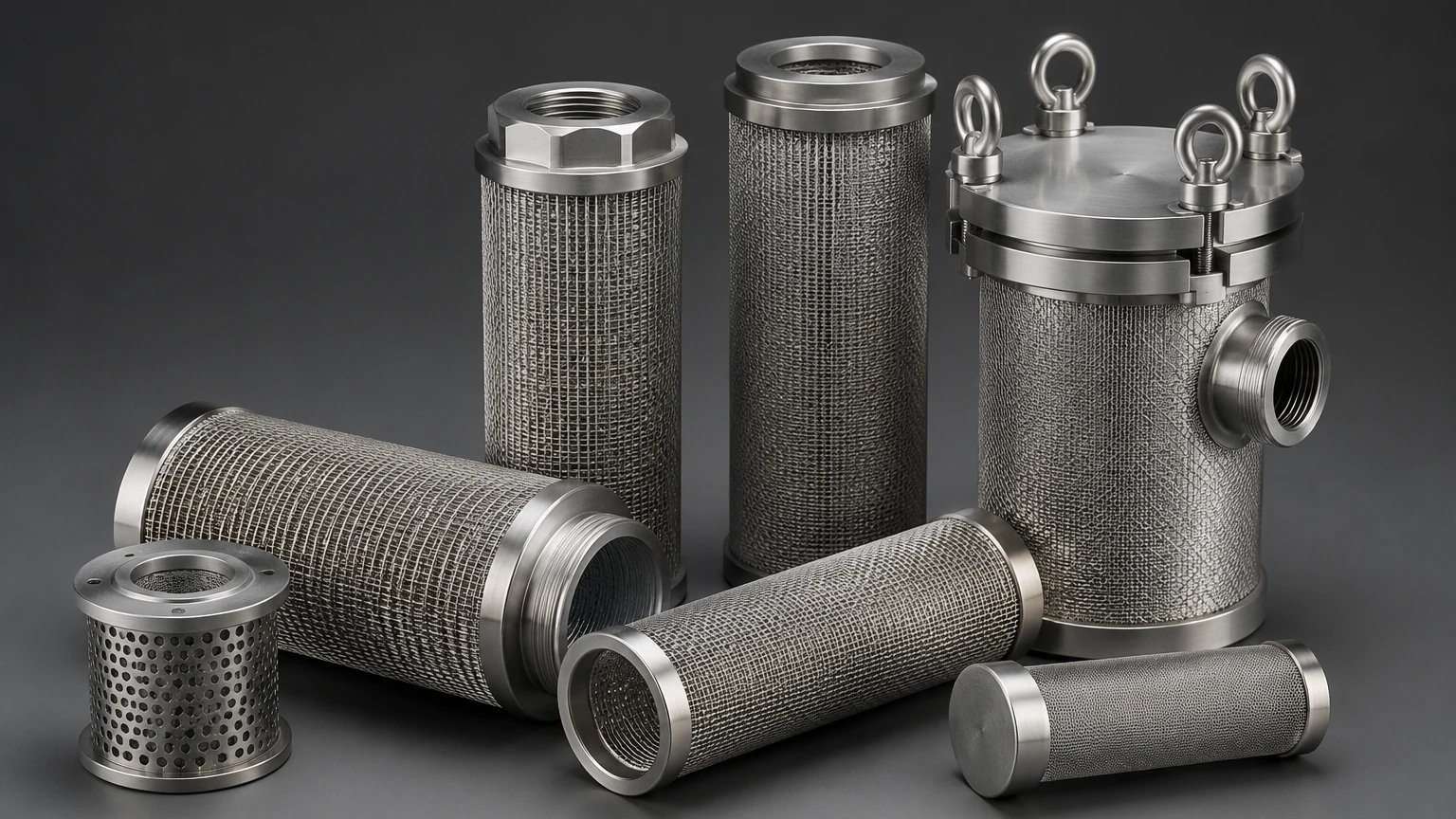
1. Bespoke Dimensions: Tailoring the diameter, length, and fitting types of filter cartridges to match the internal piping or nozzle configurations of the reactor vessel.
2. Reinforced Structures: Adding internal support cores or external cages to filter elements to prevent deformation under high-viscosity flow or mechanical agitation.
3. Sintered Multi-layer Mesh: Combining multiple layers of wire mesh through a vacuum sintering process to create a single, robust filtration medium that offers both high precision and extreme mechanical strength.
4. Specialized End Caps: Designing custom flanges, threaded connections, or bayonet fittings to ensure a leak-proof seal within the reactor housing.
Types of Reactor Systems and Their Filtration Requirements
The specific type of reactor in use will dictate the filtration strategy. Different systems present unique challenges for the filtration media.
Batch Reactors
In batch processing, the reactor is filled, the reaction occurs, and the product is then discharged. Filtration often happens at the end of the cycle. The filter must be able to handle varying solids loadings and be easily cleaned between batches to prevent cross-contamination. Stainless steel filters are ideal here because they can be subjected to rigorous Clean-in-Place (CIP) or Sterilization-in-Place (SIP) protocols.
Continuous Stirred Tank Reactors (CSTR)
CSTRs operate in a steady state where reactants are continuously added and products are continuously removed. Filtration components in these systems must provide consistent performance over long periods. They are often installed in a bypass loop or at the outlet. Because the reactor is constantly agitated, the filters must be resistant to the mechanical vibrations and turbulence generated by the impellers.
Fixed-Bed and Fluidized-Bed Reactors
In these reactors, the catalyst remains in the vessel. Filtration components, often in the form of support grids or retaining screens, are used to hold the catalyst bed in place. These screens must have a precise opening size to prevent "catalyst migration" while allowing the reactants and products to flow through with minimal resistance. In fluidized beds, the filters at the top of the reactor (often called cyclones or blowback filters) prevent fine catalyst particles from being carried out with the gas stream.
Common Risks and Performance Optimization
Engineers must be aware of potential failure modes to optimize the lifespan of reactor filtration components. The most common risk is "blinding" or fouling, where particles become lodged within the mesh pores. In reactor environments, this can be exacerbated by the formation of sticky polymers or the precipitation of salts.
To mitigate these risks and optimize performance, the following strategies are employed:
* Backpulsing and Backwashing: Using a reverse flow of fluid or gas to dislodge the filter cake. Stainless steel filters are uniquely suited for this because they can handle the reverse pressure without rupturing.
* Ultrasonic Cleaning: For deep-seated fouling, metal filters can be removed and cleaned in ultrasonic baths, restoring them to near-original permeability. This significantly reduces the total cost of ownership compared to disposable filters.
* Surface Treatment: Electropolishing the stainless steel surface can reduce the adhesion of particles, making the filter easier to clean and improving its corrosion resistance.
Technical Selection Criteria for Purchasing Teams
When procuring filtration components for reactors, purchasing teams and engineers should collaborate to confirm several technical parameters. This ensures that the supplied component will meet the operational demands of the facility.
1. Operating Environment: What are the maximum and minimum operating temperatures and pressures? Is there a risk of pressure spikes?
2. Chemical Profile: What is the exact composition of the process fluid? Are there trace amounts of chlorides or other agents that could cause stress corrosion cracking?
3. Particle Characteristics: What is the particle size distribution of the solids being filtered? Are the particles hard, abrasive, or deformable?
4. Cleaning Requirements: How often will the filter need to be cleaned? Does the process allow for the filter to be removed, or must it be cleaned in situ?
5. Regulatory Compliance: For pharmaceutical or food and beverage reactors, do the materials meet FDA or other relevant regulatory standards for food contact and biocompatibility?
By addressing these questions early in the design or replacement phase, industrial facilities can avoid costly downtime and ensure the longevity of their reactor systems. High-quality stainless steel filtration is not just a peripheral component; it is a fundamental part of the reactor's ability to produce high-quality outputs efficiently. Choosing a partner with deep manufacturing expertise ensures that these critical components are engineered to the highest standards of precision and durability.
