


Plate Frame Filter Press
In industrial liquid-solid separation, the plate frame filter press remains one of the most reliable and versatile technologies for high-solids slurry processing. Designed for batch operations, this equipment utilizes pressure—typically provided by a feed pump—to force liquid through a series of filter chambers. For engineers and procurement teams, understanding the mechanical nuances, material compatibility, and the integration of precision filtration components is essential for optimizing throughput and ensuring long-term operational efficiency.
As a fundamental tool in chemical processing, wastewater treatment, and pharmaceutical manufacturing, the plate frame filter press relies on the synergy between mechanical pressure and the physical properties of the filter media. While the press provides the structural framework, the efficiency of the separation is dictated by the selection of internal components, including the filter plates and the specific mesh or cloth used to capture solids.
Engineering Principles of Plate Frame Operation
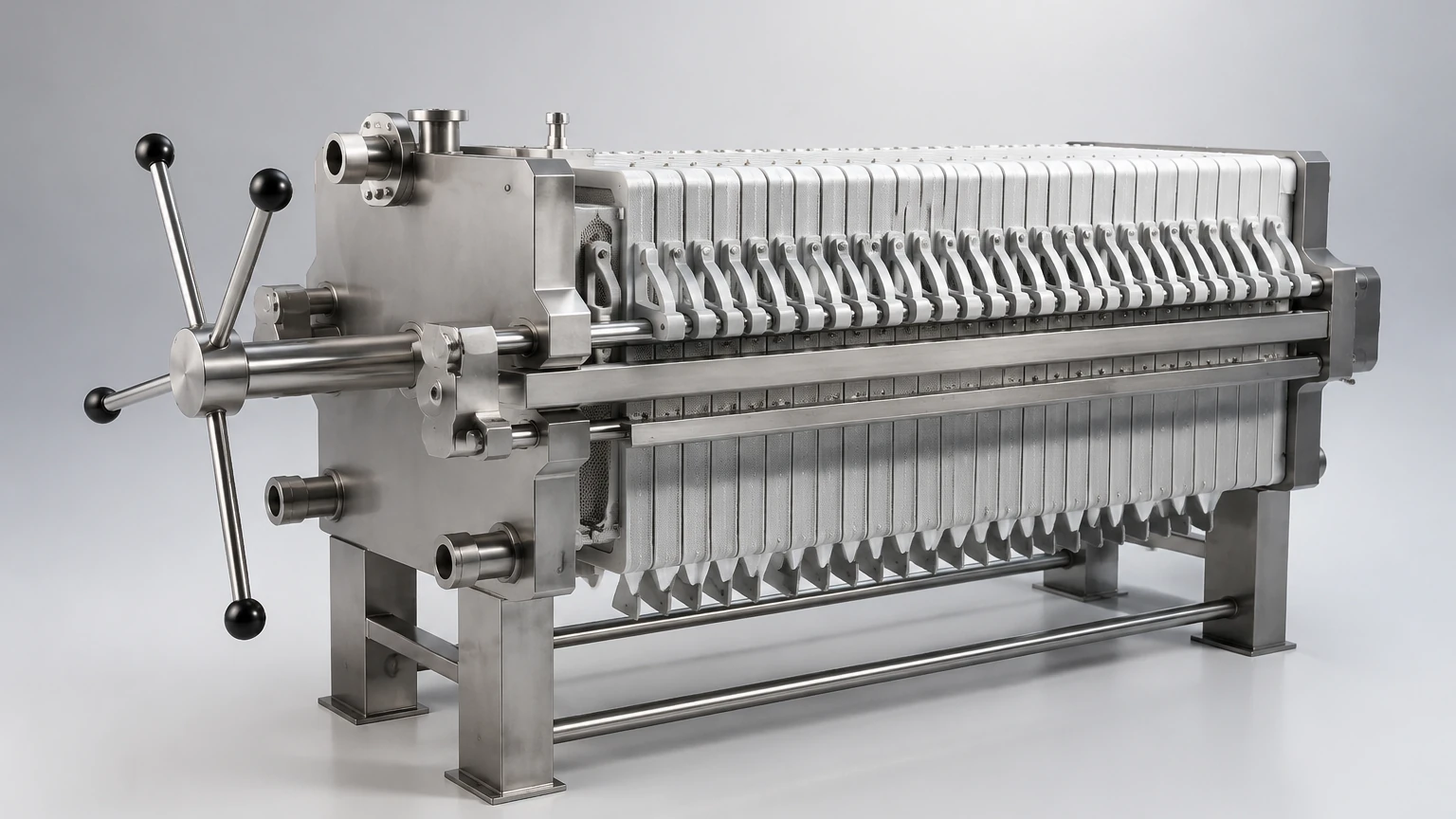
The fundamental operation of a plate frame filter press is governed by the relationship between pressure, filtration area, and the resistance of the forming filter cake. The assembly consists of a series of plates and frames arranged alternately, supported by a heavy-duty metal rail system. A hydraulic or manual closing mechanism compresses the pack to create a liquid-tight seal between the components.
The Filtration Cycle
1. Chamber Filling: Slurry is pumped into the press, filling the void spaces (chambers) created between the plates and frames.
2. Cake Formation: As the pump continues to deliver slurry, the pressure increases. The liquid (filtrate) passes through the filter media, leaving the solids to accumulate on the surface. This accumulation forms a "cake," which eventually acts as its own secondary filter medium.
3. Consolidation: Once the chambers are full, the flow rate drops and pressure reaches its peak. This stage ensures maximum dewatering of the solids.
4. Cake Discharge: The pressure is released, the plate pack is opened, and the solid cakes are removed, either manually or via an automated plate-shifting mechanism.
For applications requiring high purity or specific chemical resistance, the choice of internal hardware is critical. Engineers often look toward specialized manufacturers like Kaifil to provide custom stainless steel components that can withstand the high-pressure environment of a Main Page filtration system without compromising the integrity of the filtrate.
Component Selection and Material Compatibility
Selecting the right materials for a plate frame filter press involves evaluating the chemical nature of the slurry, the operating temperature, and the required filtration accuracy. While the frames are often made of cast iron or reinforced plastics, the filter media and supporting mesh require more rigorous technical scrutiny.
Filter Plates and Frames
Plates are typically designed with a recessed chamber or a flush plate-and-frame configuration. Recessed plates are common in high-pressure applications because they offer better structural support. However, flush plates used with separate frames allow for thicker filter cakes, which is advantageous in processes with high solids concentration. Material options include:
* Polypropylene: Excellent for general chemical resistance and lightweight handling.
* Stainless Steel (304/316L): Essential for high-temperature applications, food-grade processing, or environments where steam sterilization (SIP) is required.
* Cast Iron: Used for heavy industrial applications where abrasive slurries are processed at ambient temperatures.
0
The Role of Stainless Steel Wire Mesh
In many advanced industrial settings, traditional fabric filter cloths are replaced or supplemented by stainless steel wire mesh. Stainless steel provides a rigid, non-deformable surface that maintains precise aperture sizes under high pressure. This is particularly important in precision chemical processing where particle bypass cannot be tolerated. Custom-engineered wire mesh filters offer superior backwashing capabilities and a significantly longer service life compared to synthetic fibers.
Performance Evaluation and Filtration Accuracy
When specifying a plate frame filter press, engineers must calculate the required filtration area ($A$) and the total chamber volume ($V$). These variables are influenced by the slurry’s solids concentration and the desired cycle time.
Key Metrics for Engineers
* Flux Rate: The volume of filtrate passing through a unit area of filter media per unit of time. A declining flux rate indicates cake buildup or media blinding.
* Cake Dryness: Measured as a percentage of solids by weight. Higher pressure and longer consolidation times generally result in drier cakes, reducing subsequent drying costs.
* Particle Retention: This is defined by the micron rating of the filter media. In precision applications, using multi-layered sintered wire mesh can provide sub-micron retention while maintaining high mechanical strength.
To ensure these metrics are met, it is often necessary to consult with filtration specialists who can provide customized filtration solutions tailored to specific flow dynamics and chemical profiles.
Customization and Industrial Integration
Modern industrial processes rarely rely on "off-the-shelf" solutions. Customization is often required to integrate a plate frame filter press into an existing production line. This includes the design of specialized manifolds, custom-sized filter cartridges for pre-filtration, and reinforced support structures.
OEM and Customized Solutions
Manufacturers like Kaifil specialize in the production of precision metal filter components that enhance the performance of industrial presses. Whether it is a custom-sized stainless steel filter cartridge for a hydraulic system or a specific wire mesh weave for a pharmaceutical press, the ability to customize ensures that the equipment meets the exact demands of the application. Engineers should confirm the following before finalizing a custom design:
* Dimensional Tolerances: Ensuring the filter media fits perfectly within the plate recesses to prevent bypass.
* Material Certification: Verification of 316L or other alloys for regulatory compliance in food and beverage or pharmaceutical sectors.
* Structural Integrity: Ability of the mesh or plate to withstand the maximum pump pressure without permanent deformation.
Maintenance, Troubleshooting, and Replacement Cycles
The total cost of ownership (TCO) for a plate frame filter press is heavily influenced by maintenance requirements. The most common failure points are media blinding and seal leakage.
Common Risks and Mitigations
* Media Blinding: This occurs when fine particles become trapped within the pores of the filter cloth or mesh. While synthetic cloths may need frequent replacement, stainless steel mesh can often be restored through ultrasonic cleaning or chemical pickling.
* Uneven Cake Formation: Often caused by improper slurry distribution or fluctuating feed pressure. This can lead to plate warping due to uneven mechanical stress.
* Seal Leakage: High-pressure operation requires perfect alignment of the plate pack. Regular inspection of the hydraulic closing pressure and the condition of the plate gaskets is mandatory.
Establishing a clear replacement cycle for consumable components is vital for preventing unscheduled downtime. In high-volume operations, transitioning from disposable cloths to durable stainless steel filtration elements can significantly reduce the frequency of maintenance intervals.
Engineering Checklist for Purchasing Decisions
Before investing in a plate frame filter press or upgrading existing components, engineers should confirm several critical factors to ensure the system is fit for purpose:
1. Slurry Characterization: What is the particle size distribution, pH, and viscosity? This dictates the material of the plates and the micron rating of the mesh.
2. Throughput Requirements: How many gallons per hour (GPH) must be processed, and what is the maximum allowable cycle time?
3. Cake Handling: How will the solids be discharged? Manual discharge is labor-intensive, while automatic systems increase capital expenditure but lower operational costs.
4. Compliance Standards: Does the application require FDA, ASME, or ISO certifications for the filtration components?
5. Expansion Capability: Can the press frame accommodate additional plates in the future if production capacity needs to increase?
By addressing these technical considerations, procurement teams can move beyond basic price comparisons and focus on the long-term reliability and performance of their filtration infrastructure. For those seeking specialized guidance on material selection and custom component manufacturing, reviewing professional resources and product options is the recommended next step in the engineering process.
