


Plate & Frame Filter Press
In the landscape of industrial solid-liquid separation, the plate & frame filter press remains one of the most reliable and versatile technologies. Utilized extensively across the chemical processing, pharmaceutical, and food and beverage sectors, this equipment is designed to separate solids from liquids through pressure-driven filtration. While the mechanical structure of the press provides the necessary force, the efficiency of the process is dictated by the quality and specification of the filtration media used within the plates.
For engineers and procurement professionals, understanding the technical nuances of a plate & frame filter press is essential for optimizing throughput and ensuring product purity. As a specialized manufacturer of stainless steel filtration solutions, Kaifil provides the precision components and high-performance media required to meet the demanding standards of modern industrial applications. From custom wire mesh filters to specialized filter cartridges, the integration of advanced materials into traditional press designs can significantly enhance durability and filtration accuracy.
Engineering Principles of Plate & Frame Filtration
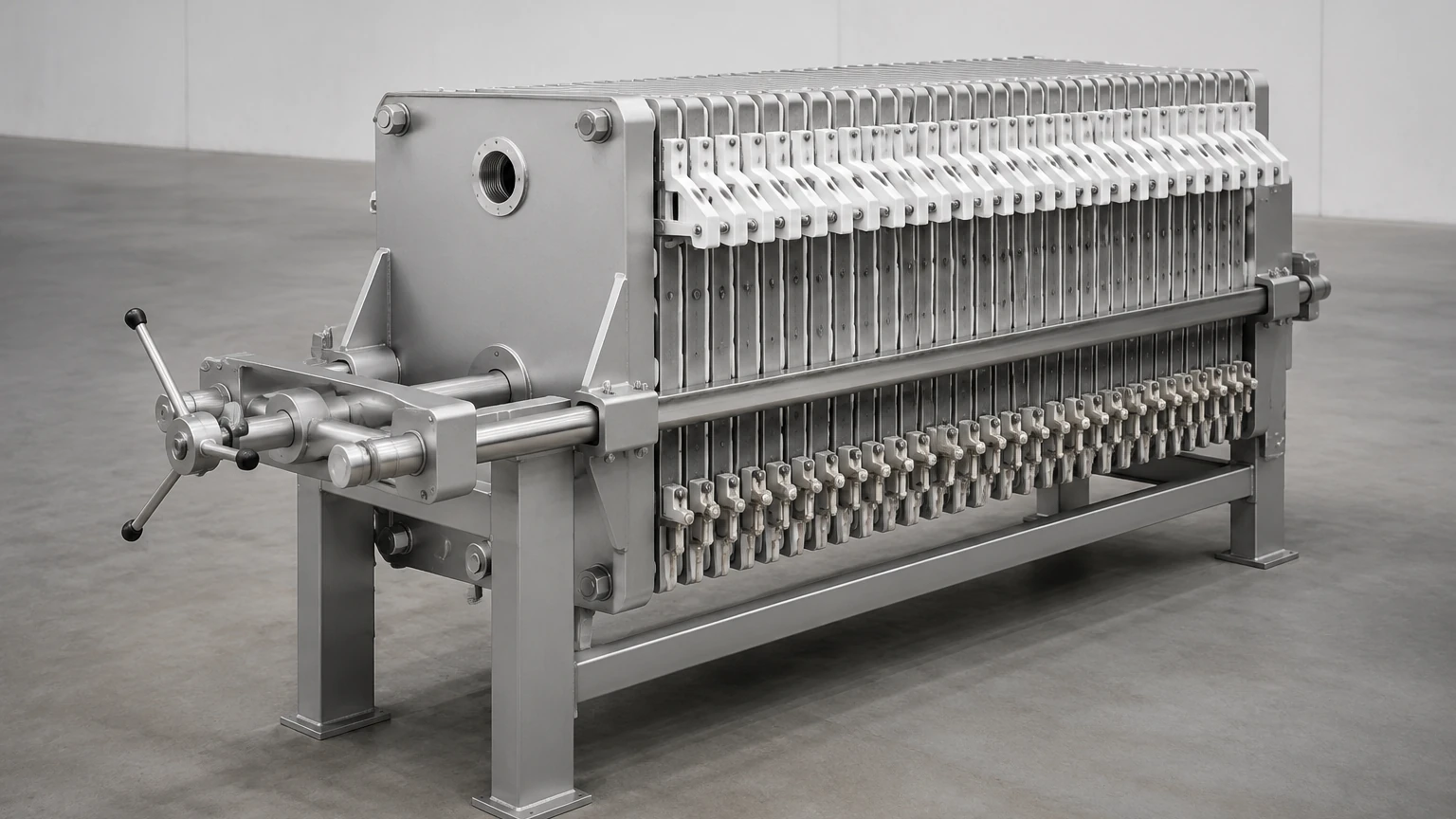
The fundamental operation of a plate & frame filter press relies on a series of alternating plates and frames supported by a heavy-duty metal structure. The "frame" provides a chamber for the slurry (the mixture of liquid and solids), while the "plate" supports the filter medium and provides a drainage path for the filtrate (the cleared liquid).
When the press is closed, usually via hydraulic or mechanical rams, the chambers are sealed. Slurry is pumped into the press under pressure. The liquid passes through the filter medium—often a cloth or a precision stainless steel mesh—and exits through the drainage ports in the plates. The solids are retained within the frames, gradually forming a "filter cake." Once the chambers are full or the pressure reaches a predetermined limit, the pumping stops, the press is opened, and the solid cakes are discharged.
From an engineering perspective, the pressure differential is the primary driver of flux. Higher pressures generally result in drier cakes and faster filtration cycles, but they also place significant mechanical stress on the filter media. This is why selecting the correct material and structural design for the internal filtration components is critical to preventing media failure and ensuring consistent performance.
Material Selection and Media Compatibility
One of the most critical decisions in the procurement of a plate & frame filter press system is the selection of the filtration media. While traditional textile cloths are common, many high-performance industrial applications require the durability and precision of stainless steel.
Stainless Steel vs. Synthetic Fabrics
In environments involving high temperatures, aggressive chemicals, or strict hygiene requirements, synthetic fabrics often fall short. Stainless steel 304 and 316L wire mesh offer several distinct advantages:
* Thermal Resistance: Stainless steel can operate at temperatures far exceeding the melting points of polypropylene or polyester.
* Chemical Stability: In chemical processing, resistance to solvents and corrosive acids is paramount. 316L stainless steel provides superior corrosion resistance, ensuring the media does not degrade or leach contaminants into the filtrate.
* Mechanical Strength: Metal mesh does not stretch or deform under high pressure, maintaining consistent pore sizes throughout the filtration cycle.
* Cleanability: Stainless steel media is highly compatible with Clean-in-Place (CIP) systems, allowing for rigorous sterilization in pharmaceutical and food applications.
Kaifil specializes in manufacturing these precision metal filter components, ensuring that the media can withstand the rigors of industrial use while providing the exact micron rating required for the specific process.
Performance Evaluation and Capacity Planning
When evaluating a plate & frame filter press for a new installation or an upgrade, engineers must consider several key performance indicators (KPIs). These factors determine the total cost of ownership and the overall efficiency of the production line.
1. Filtration Area and Cake Volume: The total surface area of the plates determines the flow rate, while the depth and number of frames determine how much solid material the press can hold before it must be emptied. Over-sizing can lead to unnecessary capital expenditure, while under-sizing results in frequent downtime for cake discharge.
2. Cycle Time: This includes the time for filling, filtration, cake washing (if required), air blowing, and discharge. Reducing cycle time is often achieved by optimizing the permeability of the filter media.
3. Cake Dryness: In many industries, the goal is to recover the solid cake with as little moisture as possible. The structural integrity of the filter plate and the ability of the media to facilitate efficient drainage are vital here.
4. Filtrate Clarity: Measured in parts per million (PPM) of suspended solids, clarity is a direct result of the micron rating and the weave pattern of the filter mesh.
For those looking to optimize these parameters, reviewing the Main Page of a dedicated manufacturer like Kaifil can provide insights into the various mesh types and custom configurations available to enhance press performance.
Customization and OEM Solutions for Specialized Industries
No two industrial processes are identical, and off-the-shelf filtration solutions often require modification to meet specific operational goals. Customization in a plate & frame filter press context usually involves the filtration media and the plate design.
Pharmaceutical and Food Grade Requirements
In these sectors, "dead zones" where bacteria can grow must be eliminated. Custom-designed stainless steel filter plates with smooth, electropolished surfaces and precision-welded mesh ensure that the equipment meets FDA and cGMP standards. Kaifil’s experience in providing OEM filtration solutions allows for the development of components that fit seamlessly into existing press frames while upgrading the filtration capability to meet modern regulatory demands.
High-Pressure Hydraulic and Chemical Applications
For applications involving high-viscosity fluids or high-pressure differentials, the filter media must be reinforced. Sintered wire mesh, which layers multiple plies of stainless steel wire cloth together through a heat-treatment process, provides the ultimate combination of filtration precision and structural strength. This ensures that the media does not collapse or bypass under the intense pressure of a filter press cycle.
Maintenance, Replacement Cycles, and Operational Costs
While the plate & frame filter press is a robust piece of equipment, its operational cost is heavily influenced by maintenance requirements and the replacement frequency of the filter media.
Common Risks and Mitigation
* Blinding: This occurs when particles become trapped within the pores of the filter medium, reducing flow. Using high-quality stainless steel mesh with optimized weave patterns can reduce the rate of blinding and make cleaning more effective.
* Gasket Failure: The seals between plates must be inspected regularly. Leaks not only waste product but can also be a safety hazard in chemical environments.
* Mechanical Wear: The moving parts of the press, including the hydraulic closing system and the plate shifting mechanism, require regular lubrication and inspection.
Replacement Cycles
Synthetic filter cloths may need replacement every few weeks or months depending on the abrasiveness of the slurry. In contrast, stainless steel filter media, though higher in initial cost, can last for years if properly maintained. The total cost of ownership (TCO) calculation should account for the reduced downtime and lower replacement labor costs associated with durable metal media.
Selecting the Right Filtration Media for Your Press
Choosing the right media involves a balance between filtration accuracy and flow capacity. A finer mesh will capture smaller particles but will also increase the resistance to flow, requiring higher pump pressure and potentially longer cycle times.
Engineers should confirm the following before finalizing a media selection:
* Particle Size Distribution (PSD): Understanding the range of particle sizes in the slurry is essential for selecting the correct micron rating.
* Slurry Concentration: High solids concentrations may require deeper frames or specific mesh surfaces that facilitate easier cake release.
* Operating Temperature and pH: These factors dictate whether 304, 316, or more exotic alloys are required for the filter components.
Kaifil works closely with global customers to develop these high-performance filter products, ensuring that every component—from material selection to the final customized design—meets the specific rigors of the application.
Conclusion
The plate & frame filter press remains a cornerstone of industrial separation because of its simplicity and effectiveness. However, the true performance of the system is unlocked through the engineering of the internal filtration components. By moving toward high-quality stainless steel media and customized OEM solutions, industrial operators can achieve higher purity, greater durability, and a more favorable total cost of ownership. For technical professionals seeking to optimize their filtration processes, consulting with a manufacturer that understands the intersection of material science and industrial engineering is the first step toward achieving superior results.
