


Define Frit
In the specialized fields of analytical chemistry, industrial processing, and high-precision engineering, the term "frit" refers to a porous component used to filter particles from a fluid stream or to provide a physical barrier that retains media while allowing liquid or gas to pass through. While the term originates from the glass and ceramic industries—where it describes a fused or partially fused material—in the context of modern industrial filtration, to define frit is to describe a highly engineered, sintered metal component designed for specific mechanical and chemical performance.
For engineers and procurement professionals, understanding the technical nuances of frits is essential for optimizing system longevity and filtration efficiency. Whether used in High-Performance Liquid Chromatography (HPLC), chemical reactors, or hydraulic systems, the selection of a frit impacts pressure drop, flow distribution, and the purity of the final output.
Technical Definition and Composition of Industrial Frits
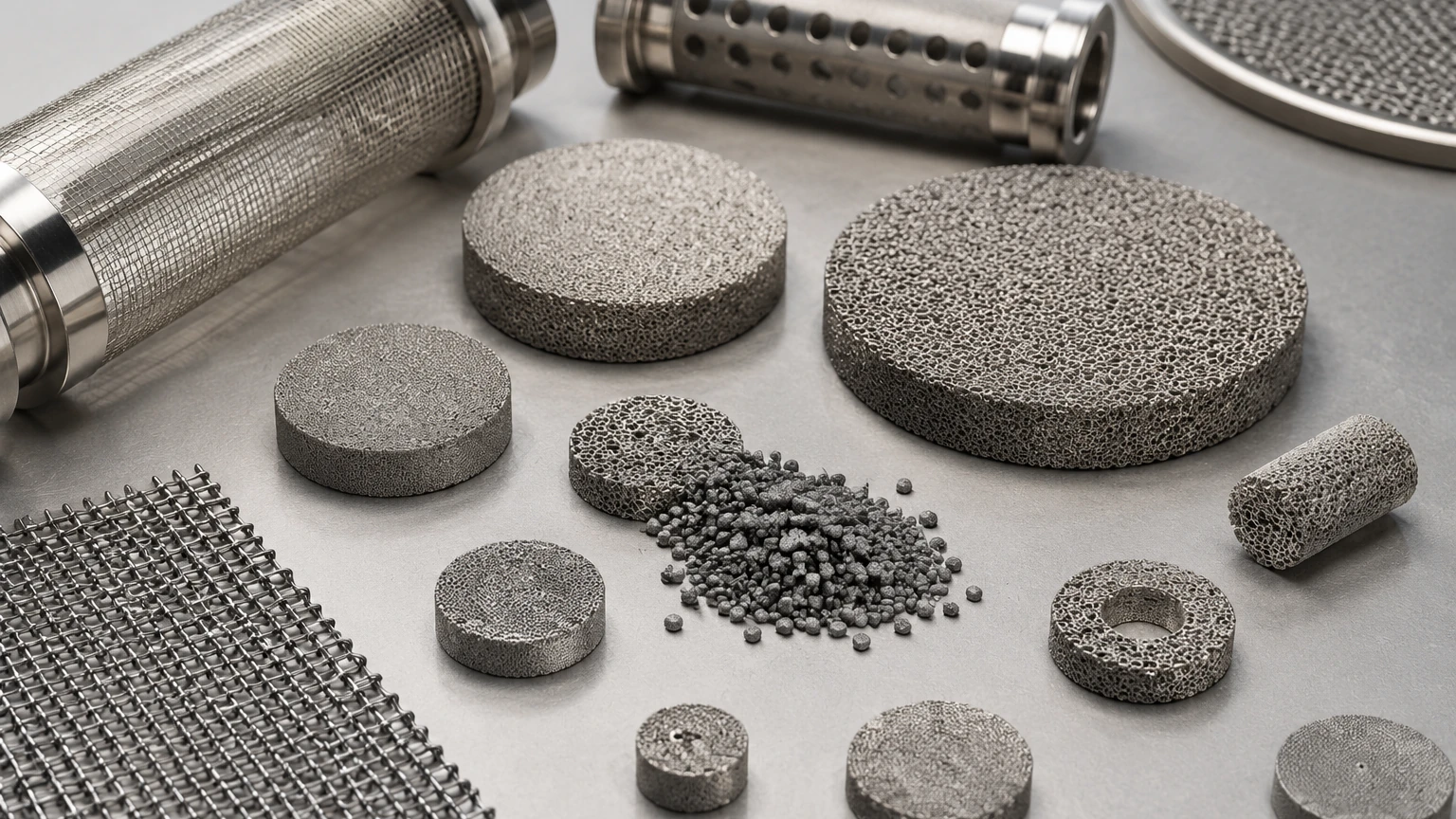
To define frit within an industrial framework, one must look at the manufacturing process known as sintering. Unlike traditional woven wire mesh, which relies on the interlacing of metal strands, a metal frit is typically produced from spherical or irregular metal powders. These powders are placed into a mold and subjected to high temperatures—below the melting point of the metal—and often high pressure. This process causes the particles to bond at their contact points, creating a rigid, porous structure.
Material Selection
Stainless steel, particularly Grade 316L, is the industry standard for manufacturing frits due to its excellent corrosion resistance and mechanical strength. However, depending on the application, other materials may be utilized:
* 316L Stainless Steel: Offers superior resistance to organic solvents and many acids, making it ideal for analytical instrumentation.
* Titanium: Used in biocompatible applications or environments where high resistance to chlorides is required.
* Nickel and Monel: Reserved for highly specialized chemical processing involving aggressive halogens.
* Hastelloy: Employed in extreme thermochemical environments where standard stainless steels might fail.
Porosity and Pore Size
The defining characteristic of a frit is its porosity. Porosity is the measure of void space within the material, usually expressed as a percentage. The "pore size" or "micron rating" of a frit refers to the diameter of the largest particle that can pass through the tortuous path created by the sintered particles. Because the path is non-linear, frits provide depth filtration, which is highly effective at capturing irregularly shaped contaminants.
The Role of Frits in Analytical Instrumentation
One of the most common B2B applications for precision frits is in the field of chromatography. In HPLC and UHPLC systems, frits serve two critical functions. First, they act as a retainer at the inlet and outlet of a chromatography column, keeping the silica-based packing material (stationary phase) securely in place. Second, they protect the expensive column packing from particulate matter originating from the mobile phase or pump seal wear.
When we define frit performance in these systems, we focus on "dead volume" and "band broadening." A poorly designed frit can cause turbulence or stagnant zones, which disrupts the sharp separation of chemical peaks. Therefore, manufacturers like Kaifil focus on ensuring uniform pore distribution and flat surface finishes to maintain laminar flow profiles. For more information on specialized filtration components, you can visit the Main Page to explore technical specifications.
Engineering Considerations: Pressure Drop and Flow Rates
For mechanical engineers, the decision to integrate a frit into a system involves a trade-off between filtration efficiency and pressure drop. According to Darcy’s Law, the flow rate through a porous medium is inversely proportional to the fluid's viscosity and the thickness of the medium, and directly proportional to the pressure differential.
Calculating the Impact
When specifying a frit, engineers must confirm:
1. Permeability Coefficient: How easily a fluid can move through the sintered structure.
2. Mechanical Integrity: The ability of the frit to withstand high differential pressures without deforming or shedding particles (media migration).
3. Thickness vs. Efficiency: A thicker frit provides a longer tortuous path, increasing the probability of particle capture, but it also increases the resistance to flow (backpressure).
In high-pressure hydraulic or gas systems, a frit that is too restrictive can lead to pump cavitation or system overheating. Conversely, a frit that is too porous may allow harmful contaminants to reach sensitive downstream components like sensors or fuel injectors.
Manufacturing and Customization: Beyond the Standard Frit
Industrial applications rarely rely on "one-size-fits-all" solutions. Defining a frit for a specific project often requires custom engineering. As a professional manufacturer, Kaifil provides OEM solutions that allow for the modification of several key variables:
* Geometry: Frits can be manufactured as flat discs, cups, plugs, or even complex conical shapes to fit specific housing designs.
* Integrated Assemblies: To simplify installation and ensure a leak-proof seal, frits are often pressed into a stainless steel or PEEK (polyetheretherketone) ring. This assembly prevents fluid bypass, ensuring that 100% of the medium passes through the filtration element.
* Surface Treatment: For certain pharmaceutical or food-grade applications, the frit may undergo electropolishing to reduce surface roughness and prevent bacterial adhesion.
By controlling the powder grain size and the sintering cycle (time and temperature), manufacturers can precisely tune the micron rating of the frit, ranging from 0.2 microns for sterile filtration to 100 microns for coarse pre-filtration.
Common Risks and Quality Evaluation Criteria
When sourcing frits for industrial use, purchasing teams must be aware of common risks associated with low-quality sintered products. A poorly manufactured frit can introduce more problems than it solves.
Media Migration
This occurs when individual metal particles break loose from the sintered body and enter the fluid stream. In analytical chemistry, this can lead to "ghost peaks" or damage to sensitive detectors. In industrial machinery, it can cause abrasive wear on valves and seals. High-quality frits undergo rigorous ultrasonic cleaning and integrity testing to ensure no loose particles remain.
Non-Uniform Pore Distribution
If the sintering process is not controlled, some areas of the frit may be denser than others. This leads to "channeling," where the fluid takes the path of least resistance. This reduces the effective filtration area and causes the frit to clog prematurely in specific zones, shortening the overall service life.
Chemical Incompatibility
While 316L is robust, it is not invincible. Engineers must confirm the compatibility of the frit material with the specific pH, temperature, and chemical composition of the process fluid. For example, exposure to high concentrations of hydrochloric acid may require a transition from stainless steel to a more exotic alloy like Hastelloy C-22.
Maintenance and Replacement Cycles
Because frits function as depth filters, they eventually become saturated with contaminants. Unlike surface filters (like certain types of wire mesh), frits cannot always be fully restored to their original state through backwashing.
In many B2B environments, frits are treated as semi-consumable components. In HPLC, they are replaced during routine column maintenance. In industrial gas filtration, they are replaced when the pressure drop across the element reaches a predetermined threshold. However, for larger sintered metal cartridges, ultrasonic cleaning in a compatible solvent can often extend the life of the component by dislodging trapped sub-micron particles.
Conclusion: Selecting the Right Filtration Partner
To define frit accurately in a commercial context is to recognize it as a critical precision component that protects the integrity of an entire industrial process. Whether the goal is to protect a $10,000 chromatography column or to ensure the purity of a chemical catalyst, the quality of the sintered metal frit is paramount.
When evaluating suppliers, engineers should look for manufacturers who provide detailed material certifications, precise micron ratings, and the ability to produce custom geometries. Kaifil’s expertise in stainless steel filtration solutions ensures that each component is engineered for durability and precise performance. By understanding the relationship between material science, sintering technology, and fluid dynamics, businesses can select filtration solutions that reduce downtime and improve product quality.
For technical support or to review specific product options for your next project, visit the Main Page to connect with our engineering team.
