


Lenticular Filter Beer
In the industrial production of beer, achieving consistent clarity and biological stability is a critical engineering challenge. The transition from fermentation to packaging requires the removal of yeast, proteins, and polyphenols that can cause turbidity and reduce shelf life. Among the various technologies available to brewmasters and process engineers, the use of a lenticular filter for beer has emerged as a preferred solution for mid-to-large scale operations. This method combines the high-solids loading capacity of traditional depth filtration with the sanitary advantages of an enclosed system.
For engineering teams tasked with optimizing a filtration line, understanding the technical nuances of lenticular systems—from housing design to media selection—is essential. This guide examines the engineering principles, selection criteria, and operational considerations necessary to integrate lenticular filtration into a professional brewing environment.
Understanding Lenticular Filtration in Brewing Operations
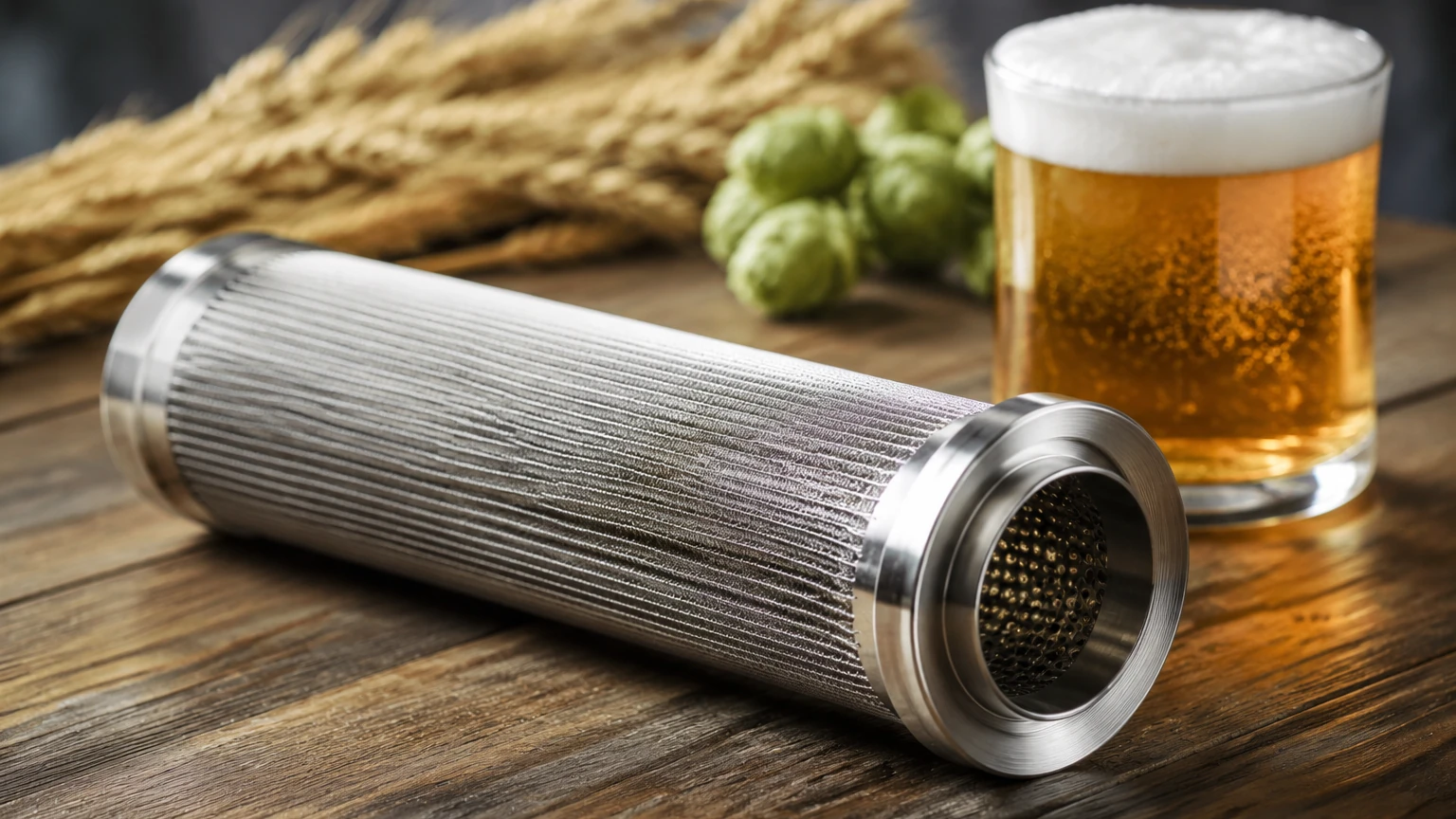
A lenticular filter for beer utilizes stacked, lens-shaped modules housed within a vertical stainless steel pressure vessel. Unlike open plate-and-frame filters, which are susceptible to product loss and environmental contamination, the lenticular system is entirely enclosed. This design is particularly advantageous for beer, as it prevents oxygen pickup and maintains carbonation levels during the filtration process.
The filtration media within these modules typically consists of cellulose, diatomaceous earth (DE), or perlite, often reinforced with resins to provide structural integrity. The "depth" aspect of the media allows it to trap particles throughout its thickness, rather than just on the surface. This is vital for beer, which contains a complex matrix of organic materials that would quickly blind a surface-level filter. By employing depth filtration, breweries can achieve high throughput and excellent clarity (low NTU) before the beer reaches the final brightening or sterile filtration stages.
Engineering Design and Operational Mechanism
The efficiency of a lenticular filter for beer is rooted in its modular architecture. Each module is composed of individual cells separated by a drainage manifold. When beer enters the housing, it is forced through the media into the center core of the stack. This radial flow design maximizes the surface area available for filtration relative to the footprint of the equipment.
Housing Specifications
From an engineering perspective, the housing is as critical as the media. High-quality lenticular housings are typically constructed from 316L stainless steel to ensure corrosion resistance and compatibility with caustic cleaning agents. The internal surfaces must be polished to a high degree (often 0.8 μm Ra or better) to prevent microbial niches.
Key components of the housing include:
- The Center Post: A rigid stainless steel rod that secures the modules in place, ensuring a tight seal to prevent bypass.
- The Pressure Gauge Assembly: Essential for monitoring differential pressure (ΔP), which dictates when a filter cycle is complete.
- Vent and Drain Valves: Used to evacuate air during startup and to recover product at the end of a run.
For those seeking specialized components for these systems, manufacturers like Kaifil provide the precision metal components and customized filtration solutions necessary to maintain system integrity. You can review product options and application support on the Main Page to see how custom stainless steel components enhance industrial filtration performance.
Key Selection Criteria for Industrial Beer Filtration
Selecting the right lenticular filter for beer requires a detailed analysis of the brewery's specific process requirements. Engineers must consider several variables to ensure the system meets both quality standards and economic goals.
Micron Rating and Retention Efficiency
Lenticular modules are available in various grades, ranging from coarse (5–20 μm) for primary clarification to fine (0.2–1.0 μm) for sterile filtration. The selection depends on the desired end-state of the beer. For example, a craft lager may require a tighter grade to achieve a "brilliant" appearance, while a heavily hopped IPA might use a coarser grade to retain essential oils and aromatics while still removing bulk yeast.
Flow Rate and Flux
Flux is defined as the flow rate per unit of filter area (L/m²/h). In brewing, exceeding the recommended flux can lead to premature blinding of the media and "breakthrough," where particles are forced through the filter due to excessive velocity. Generally, a slower flux results in better filtration efficiency and longer module life. Engineers must size the housing—choosing between 12-inch or 16-inch diameters and 1 to 4 modules per stack—to accommodate the peak flow requirements of the packaging line.
Total Dissolved Solids (TDS) and Turbidity
The incoming beer's turbidity, measured in Nephelometric Turbidity Units (NTU), directly impacts the throughput. High-yeast loads or heavy dry-hopping will necessitate more frequent module changes or a multi-stage filtration approach. Pre-clarification using a centrifuge or a coarser lenticular grade can significantly extend the life of the final polishing modules.
Material Compatibility and Sanitary Standards
In the food and beverage industry, material science is inseparable from process engineering. The components of a lenticular filter for beer must withstand rigorous Clean-in-Place (CIP) cycles and sterilization procedures.
Stainless Steel Durability
As noted, 316L stainless steel is the standard for brewery filtration housings. It offers superior resistance to pitting and stress-corrosion cracking, especially when exposed to the hot water and acidic/alkaline cleaners used in breweries. The precision of the machining on the seals and connections is paramount; any leak in a pressurized beer line results in foaming, product loss, and potential contamination.
Gasket and Seal Selection
Elastomers used in the filter housing, such as EPDM, Silicone, or Viton, must be FDA-compliant and capable of withstanding thermal cycling. During steam sterilization or hot water sanitization (typically 80°C to 90°C), these seals must maintain their elasticity to prevent bypass. A failure in a single O-ring can compromise the entire batch of beer, making high-quality, precision-engineered components a necessity.
Comparing Lenticular Systems with Alternative Filtration Technologies
To justify the investment in a lenticular filter for beer, it is helpful to compare it against other common technologies used in the industry.
| Feature | Lenticular Filter | Plate and Frame | Cartridge Filter |
| :— | :— | :— | :— |
| System Type | Enclosed / Sanitary | Open / Drip-prone | Enclosed / Sanitary |
| Media Type | Depth (Modules) | Depth (Sheets) | Surface or Depth (Cartridges) |
| Product Loss | Very Low | High (Drip loss) | Low |
| Oxygen Pickup | Minimal | Significant | Minimal |
| Cleaning | CIP Compatible | Manual Breakdown | CIP Compatible |
| Scalability | Moderate to High | High | Low to Moderate |
| Initial Cost | Moderate | Low | Moderate to High |
Lenticular systems offer a "middle ground" that captures the best of both worlds. They provide the high-capacity depth filtration of a plate-and-frame setup but within a sanitary, enclosed environment similar to cartridge filtration. For breweries focusing on shelf-stable products, the reduction in oxygen pickup alone often justifies the transition to lenticular technology.
Maintenance, Regeneration, and Total Cost of Ownership
The total cost of ownership (TCO) for a lenticular filter for beer involves more than the initial purchase price of the housing. It includes the ongoing cost of modules, water and chemical usage for CIP, and the labor required for changeovers.
Module Regeneration
One of the primary advantages of lenticular depth media is that it can often be regenerated. By performing a back-flush with warm water (not exceeding the manufacturer's pressure limits), brewers can remove some of the trapped solids and extend the module's life by 20–50%. However, this process has diminishing returns, and eventually, the media will become permanently fouled with proteins or glucans.
Monitoring Differential Pressure
Operational discipline is required to monitor the differential pressure (ΔP) across the filter stack. A typical starting ΔP might be 0.1 to 0.2 bar, with a recommended change-out at 1.5 to 2.0 bar. Operating beyond these limits risks deforming the modules or causing a "blow-through," where contaminants bypass the media entirely.
Long-term Reliability
Investing in a high-quality stainless steel housing ensures that the mechanical aspects of the filtration system will last for decades. While the filter modules are consumables, the precision metal components—such as the support plates, riser pipes, and specialized fittings—must remain true to their original tolerances. Engineering teams should partner with manufacturers who understand the rigors of industrial filtration and can provide customized solutions for specific piping layouts or flow requirements.
Technical Confirmation Before Implementation
Before integrating a lenticular filter for beer into a production line, engineers should confirm several technical parameters with their equipment supplier:
1. Chemical Compatibility: Ensure the media and seals are compatible with the specific cleaning agents used in the facility.
2. Temperature Limits: Verify the maximum operating temperature for both the media and the housing during sanitization.
3. Pressure Ratings: Confirm the housing meets local pressure vessel codes (such as ASME or PED) for the intended operating pressures.
4. Customization Options: Determine if the housing can be modified with specific inlet/outlet sizes (e.g., Tri-Clamp, DIN, or SMS) to match existing infrastructure.
By focusing on these technical details, breweries can ensure that their filtration process is not only effective at producing clear, high-quality beer but also efficient and cost-effective over the long term. The move toward lenticular technology represents a commitment to modern sanitary standards and process control in the evolving landscape of industrial brewing.
For more information on high-performance filtration components and custom manufacturing capabilities, visit the Main Page to consult with filtration experts.
