


Cement Dust Collector Filters
In the cement manufacturing industry, dust collection is not merely a matter of environmental compliance; it is a fundamental component of process efficiency, material recovery, and equipment longevity. The production of cement involves high-temperature chemical reactions, intensive grinding, and large-scale material handling, all of which generate significant volumes of particulate matter. Selecting the appropriate cement dust collector filters requires a deep understanding of the physical and chemical properties of the dust, the thermal conditions of the exhaust gas, and the mechanical requirements of the filtration system.
Industrial engineers and procurement teams must evaluate filtration solutions based on their ability to withstand abrasive particles, resist high temperatures, and maintain a stable pressure drop over extended operational cycles. This guide examines the technical considerations, material selection criteria, and engineering principles essential for optimizing filtration performance in cement production environments.
The Role of Filtration in Cement Production Processes
Cement plants utilize dust collection systems at various stages of the production line. Each stage presents unique challenges that dictate the design and material of the filter media.
Kiln and Preheater Exhaust
The kiln is the heart of the cement plant, where raw materials are heated to extreme temperatures to form clinker. The exhaust gases from the kiln and preheater towers are characterized by high temperatures (often exceeding 250°C) and the presence of corrosive gases such as sulfur dioxide (SO2) and nitrogen oxides (NOx). Filters in this section must possess exceptional thermal stability and chemical resistance.
Clinker Coolers
After leaving the kiln, the clinker must be rapidly cooled. The air used in this process becomes laden with highly abrasive clinker dust. Filtration systems here must handle high-velocity airflows and particles that can quickly erode standard filter media if not properly specified.
Finish Grinding and Milling
In the final stages, clinker is ground into a fine powder. The dust generated here is extremely fine, often in the sub-micron range. Filters must provide high filtration efficiency to prevent product loss and ensure that emissions meet stringent regulatory standards. Because this process often involves moisture (from cooling water or ambient humidity), the risk of filter "blinding"—where dust reacts with moisture to form a hard crust—is a primary concern.
Technical Challenges of Cement Dust
To select the right cement dust collector filters, engineers must account for three primary factors: abrasiveness, temperature, and hygroscopicity.
Particle Abrasiveness
Cement dust, particularly clinker, is highly abrasive. In a pulse-jet baghouse or a cartridge collector, the constant movement of the filter media during cleaning cycles can lead to mechanical wear. If the filter material is too fragile, the abrasive particles will cause premature failure. Stainless steel wire mesh and reinforced synthetic media are often utilized in high-wear zones to extend service life.
Thermal Loads
Temperature fluctuations are common in cement plants. If a filter is rated for 150°C but the process spikes to 200°C due to a system upset, the media can melt or lose its structural integrity. Engineers must specify filters that can handle both the continuous operating temperature and potential peak excursions.
Chemical and Moisture Sensitivity
The chemical composition of cement dust includes calcium silicates, aluminates, and ferrites. When these alkaline particles encounter moisture, they can undergo a hydration reaction, effectively "setting" on the filter surface. This leads to a permanent increase in pressure drop and requires the replacement of the filter. Hydrophobic coatings or specialized metal filtration components are often employed to mitigate these risks.
Material Selection and Engineering Criteria
While many cement dust collectors utilize fabric bags, specialized applications—particularly those involving extreme heat, corrosive additives, or the need for precision OEM components—often require metal-based filtration solutions. As a professional manufacturer, Kaifil provides customized stainless steel filtration solutions designed for these demanding industrial environments.
Stainless Steel Filter Media
In sections of the plant where synthetic fibers (such as polyester, aramid, or PTFE) cannot survive, stainless steel wire mesh or sintered metal filters offer a robust alternative. Stainless steel provides:
* High Temperature Resistance: Capable of operating in environments exceeding 500°C.
* Mechanical Strength: Resists the erosive force of high-velocity abrasive dust.
* Cleanability: Metal filters can be cleaned more aggressively than fabric, allowing for better recovery of the initial pressure drop.
Filtration Efficiency and Micron Ratings
The efficiency of cement dust collector filters is measured by their ability to capture particles of specific sizes. In the cement industry, a high "collection efficiency" for PM2.5 and PM10 (particulate matter less than 2.5 and 10 microns, respectively) is critical. The structure of the filter—whether it is a plain weave mesh, a twilled dutch weave, or a sintered laminate—determines the pore size and the resulting filtration accuracy.
For engineers seeking high-performance components, reviewing the Main Page of a specialized manufacturer can provide insights into how custom wire mesh configurations can be adapted for specific industrial dust collection needs.
Operational Performance: Pressure Drop and Cleaning
The performance of a dust collector is typically monitored through the differential pressure (ΔP) across the filter bank. A high ΔP indicates that the filters are loaded with dust and require cleaning or replacement.
Pulse-Jet Cleaning Systems
Most modern cement dust collectors use pulse-jet cleaning, where a burst of compressed air is fired down the center of the filter to dislodge the dust cake. The filter media must be flexible enough to expand during the pulse but durable enough to withstand the mechanical stress. If the filter is too rigid, the pulse will not effectively dislodge the dust; if it is too weak, the pulse will cause micro-tears in the media.
Air-to-Cloth Ratio
The air-to-cloth (A/C) ratio is a critical design parameter representing the volume of gas passing through a square foot of filter media. In cement applications, a lower A/C ratio is generally preferred for fine or abrasive dust to reduce the velocity of particles hitting the media, thereby reducing wear and improving capture efficiency.
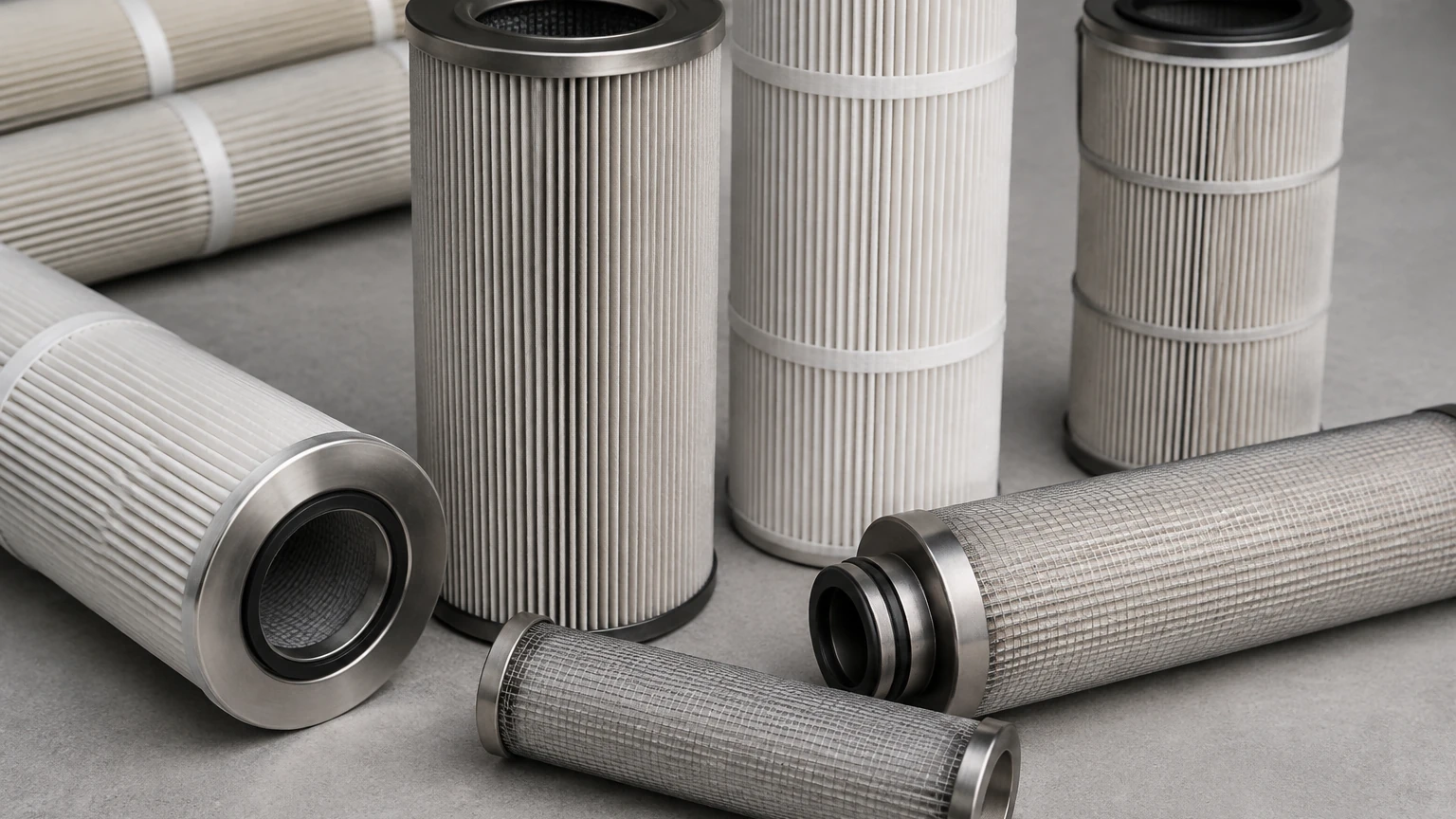
Customization and OEM Solutions for Cement Filtration
Standard off-the-shelf filters often fail to meet the specific needs of a unique plant layout or a specialized chemical process. Customization is frequently required in the following areas:
1. Dimensional Specifications: Custom lengths, diameters, and flange designs to fit existing collector housings without bypass leaks.
2. Structural Reinforcement: Internal cages or external mesh wraps to prevent filter collapse under high vacuum or pressure spikes.
3. Material Grading: Selecting specific stainless steel grades (e.g., 304, 316L, or Inconel) based on the acidity or alkalinity of the gas stream.
By working with a manufacturer that understands the nuances of industrial filtration, engineering teams can develop OEM components that integrate seamlessly into their systems. This collaboration ensures that the filtration solution is optimized for the specific particle size distribution and chemical profile of the cement dust being handled.
Maintenance, Replacement Cycles, and Total Cost of Ownership
When evaluating cement dust collector filters, purchasing teams should look beyond the initial unit price and consider the Total Cost of Ownership (TCO). The TCO includes:
* Energy Consumption: Filters that maintain a lower average pressure drop require less fan power, leading to significant energy savings over the life of the filter.
* Downtime Costs: High-quality, durable filters reduce the frequency of unplanned shutdowns for filter replacement.
* Compressed Air Usage: Efficiently cleaning filters requires fewer pulses, reducing the load on the facility’s compressed air system.
* Disposal Costs: Metal filters that can be ultrasonically cleaned and reused offer a lower environmental and financial impact compared to disposable synthetic bags.
Monitoring and Diagnostics
Implementing a robust monitoring program is essential. Regular inspections should look for signs of "bleeding" (dust passing through the filter), mechanical abrasion at the bottom of the filters, and chemical degradation. Monitoring the trend of differential pressure after each cleaning cycle can help predict the end-of-life for the filter media, allowing for scheduled maintenance rather than emergency repairs.
Conclusion
Selecting the right cement dust collector filters is a complex engineering task that impacts the entire cement production facility. By focusing on material durability, thermal resistance, and filtration efficiency, plants can achieve better environmental performance and lower operational costs. Whether utilizing standard synthetic media or specialized stainless steel components for extreme conditions, the goal remains the same: reliable, consistent, and cost-effective dust control. For those involved in the design or maintenance of these systems, partnering with a technical expert in filtration manufacturing is the most effective way to ensure that the chosen solution meets the rigorous demands of the cement industry.
