


Sanitary Filter Housings
In high-purity industrial processes, the integrity of the filtration system is paramount. Sanitary filter housings serve as the critical interface between the process fluid and the filtration media, ensuring that contaminants are removed without introducing new biological or chemical risks. Unlike standard industrial filter vessels, sanitary housings are engineered with a specific focus on cleanability, the elimination of stagnant zones, and adherence to stringent hygienic standards. For engineers and procurement specialists in the pharmaceutical, biotechnology, and food and beverage sectors, selecting the correct housing involves a deep understanding of material science, surface finishes, and mechanical design.
Understanding the Fundamentals of Sanitary Filtration
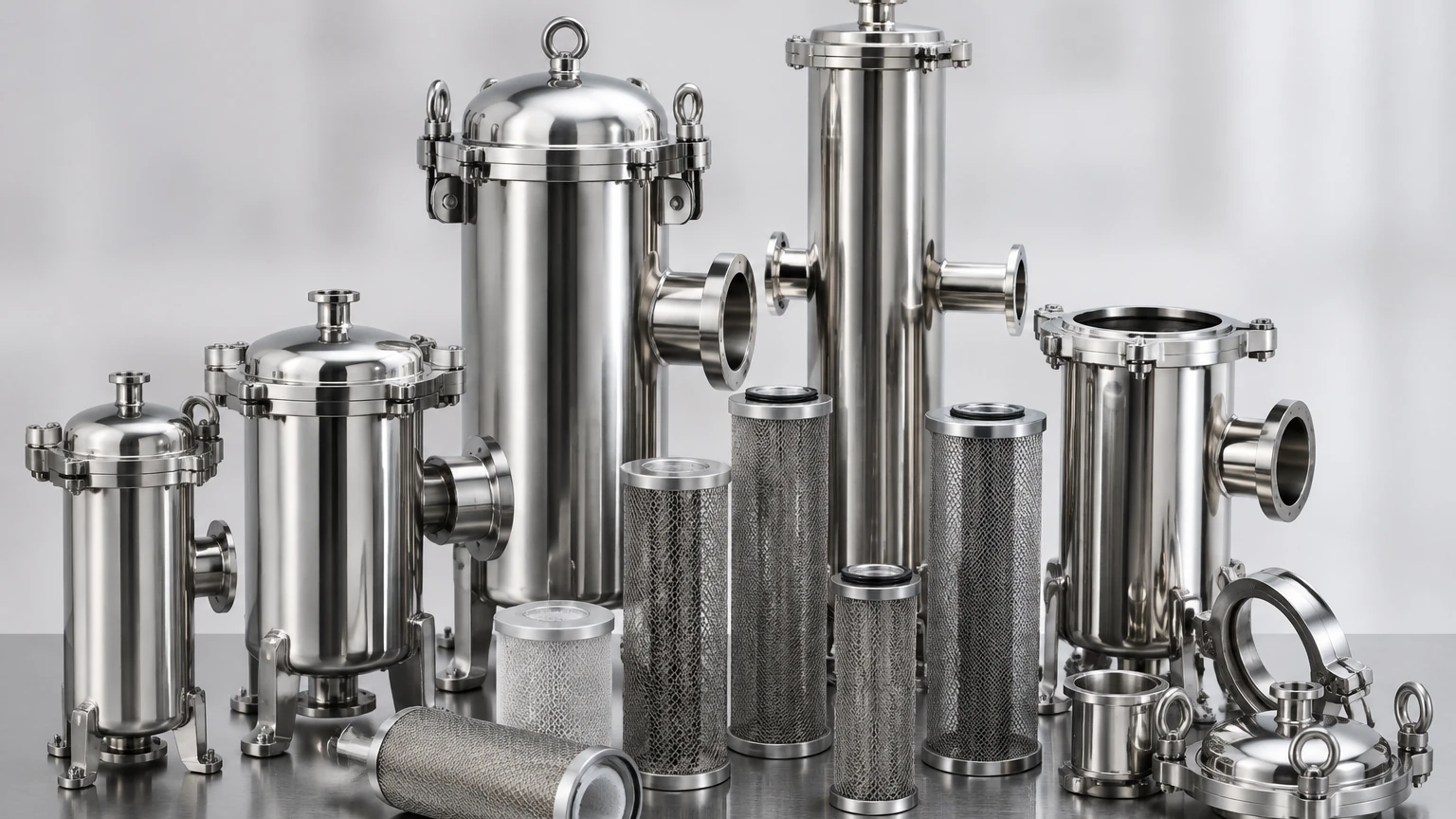
Sanitary filter housings are specialized pressure vessels designed to hold filter cartridges or mesh elements while maintaining a sterile or highly hygienic environment. Their primary function is to direct the flow of liquid or gas through the filter media while preventing bypass and ensuring that every internal surface can be reached by cleaning agents.
In industries such as pharmaceutical manufacturing, even a microscopic amount of residue can lead to bacterial growth, compromising an entire production batch. Therefore, the design of these housings must facilitate complete drainage and be compatible with Clean-in-Place (CIP) and Steam-in-Place (SIP) protocols. By visiting the Kaifil Main Page, professionals can explore how these engineering principles are applied to various filtration components to meet rigorous industrial demands.
Critical Material Specifications and Surface Finishes
The choice of material is the first line of defense against corrosion and contamination. In the realm of sanitary filter housings, Stainless Steel 316L is the industry standard. The "L" denotes low carbon content, which is essential for preventing carbide precipitation during welding, thereby maintaining the corrosion resistance of the heat-affected zones.
Surface Roughness (Ra)
Beyond the alloy composition, the internal surface finish is a defining characteristic of a sanitary housing. Surface roughness is measured by the Ra value (arithmetic average of the profile heights). For most sanitary applications, an internal Ra of less than 0.8 μm (32 μ-in) is required, while high-purity pharmaceutical applications often demand an Ra of less than 0.4 μm (16 μ-in).
Electropolishing
To achieve these ultra-smooth finishes, housings undergo electropolishing. This electrochemical process removes a microscopic layer of the stainless steel, smoothing out peaks and valleys at a molecular level. This not only reduces the surface area available for bacterial adhesion but also enhances the chromium-to-iron ratio on the surface, significantly improving the material's passive layer and its resistance to localized corrosion (pitting).
Design Configurations: Single-Round vs. Multi-Round Housings
Sanitary filter housings are generally categorized by the number of filter elements they contain and the orientation of their inlet and outlet ports.
Single-Round Housings
These are designed for lower flow rates or smaller batch processes. They typically house a single 10-inch, 20-inch, or 30-inch cartridge. Single-round housings are common in point-of-use filtration, laboratory settings, or small-scale pilot plants. Their compact design makes them easy to disassemble and clean manually if necessary.
Multi-Round Housings
For large-scale industrial production, multi-round housings can accommodate anywhere from three to over fifty cartridges. These vessels are designed to handle high flow rates while maintaining a manageable footprint. The engineering challenge with multi-round housings lies in ensuring uniform flow distribution across all cartridges to prevent premature clogging of elements near the inlet.
Housing Geometry
* T-Style: The inlet and outlet are on the same horizontal plane, with the filter bowl extending downward. This is the most common configuration for liquid filtration as it allows for easy cartridge replacement without breaking the main piping connections.
* In-Line: The fluid flows straight through the housing. These are often used for gas or vent filtration where the pressure drop must be kept to an absolute minimum.
Engineering Considerations for CIP and SIP Compatibility
One of the most significant differences between industrial and sanitary filter housings is the ability to withstand repeated sterilization cycles.
Steam-in-Place (SIP)
During SIP, saturated steam is introduced into the housing to kill microorganisms. This process subjects the housing to high temperatures (typically 121°C to 135°C) and pressure. The housing must be designed to handle thermal expansion without compromising the seals. Furthermore, the design must ensure that steam reaches every "nook and cranny," particularly the areas around the cartridge O-rings and the housing gaskets.
Clean-in-Place (CIP)
CIP involves circulating chemical detergents and rinses through the system at high velocities. A well-designed sanitary housing will have no "dead legs"—areas where the fluid velocity is zero or near-zero. Dead legs prevent cleaning chemicals from reaching certain surfaces, allowing bio-burden to accumulate. Engineering guidelines usually suggest a 2:1 or 3:1 length-to-diameter ratio for any branches to ensure turbulent flow reaches the end of the branch.
Sizing and Performance Evaluation
Correctly sizing sanitary filter housings is a balance between flow requirements, allowable pressure drop (ΔP), and the dirt-holding capacity of the intended filter elements.
Flow Rate and Velocity
Engineers must calculate the total flow rate (GPM or m³/h) and ensure the housing inlet and outlet sizes do not result in excessive fluid velocity. For liquids, velocities are typically kept below 2-3 m/s to prevent erosion and minimize pressure spikes (water hammer). For gases, velocities can be much higher but must be managed to avoid acoustic noise and excessive pressure loss.
Pressure Drop Considerations
The total pressure drop of a filtration system is the sum of the housing pressure drop and the clean filter element pressure drop. A common mistake is selecting a housing that is too small, which results in a high initial ΔP. This leaves very little room for the pressure to increase as the filter becomes loaded with contaminants, leading to frequent and costly filter changes. Ideally, the initial clean pressure drop should not exceed 2-5 psi (0.14-0.34 bar).
Selecting the Right Seal and Gasket Materials
The performance of a sanitary filter housing is only as reliable as its seals. Gaskets and O-rings must be compatible with the process fluid, the cleaning chemicals, and the high temperatures of sterilization.
* EPDM (Ethylene Propylene Diene Monomer): Excellent for steam and water applications, but poor resistance to oils and fats.
* Viton (FKM): High temperature and chemical resistance, but can become brittle in continuous high-pressure steam.
* Silicone: Very flexible and widely used in pharma, but has lower mechanical strength and can be permeable to certain gases.
* PTFE (Polytetrafluoroethylene): Virtually inert to all chemicals, but lacks the elasticity of elastomers, often requiring an encapsulated design (e.g., Silicone or Viton core with a PTFE jacket) to provide an effective seal.
All seal materials used in sanitary applications must comply with regulatory standards, such as FDA 21 CFR 177.2600 and USP Class VI toxicity testing.
Regulatory Compliance and Quality Assurance
In the B2B procurement process, documentation is as important as the physical hardware. Sanitary filter housings must be accompanied by a comprehensive data package to satisfy quality audits. This typically includes:
1. Material Mill Certificates: Proving the chemical composition of the stainless steel (316L).
2. Surface Finish Certificates: Documenting the Ra values achieved through mechanical and electropolishing.
3. Weld Documentation: Including welder qualifications and weld maps, ensuring that all joints are full-penetration and free of pits or crevices.
4. Hydrostatic Test Reports: Confirming the structural integrity of the vessel at pressures above its rated operating limit.
5. Compliance Statements: Confirming that all non-metallic components meet FDA and USP requirements.
Adhering to standards like 3-A Sanitary Standards or the ASME Bioprocessing Equipment (BPE) standard ensures that the equipment is designed with the highest level of hygienic safety in mind.
Customization and Technical Support for Industrial Applications
While standard sanitary filter housings meet many needs, complex industrial processes often require customized solutions. This might include unique port configurations, integrated bypass valves, or specialized mounting brackets for mobile filtration skids. Working with a manufacturer that understands both the engineering of the vessel and the physics of the filtration media is essential.
Kaifil specializes in providing these high-performance, customized filtration components. By integrating advanced manufacturing techniques with deep industry knowledge, they assist engineers in developing filtration systems that are not only effective but also durable and cost-efficient over their entire lifecycle. Whether the application involves aggressive chemical solvents or delicate pharmaceutical proteins, the housing must be viewed as a critical component of the process architecture.
For those looking to optimize their filtration processes, confirming the technical specifications of the housing—such as the drainability, the type of cartridge connection (e.g., Code 7, 222, or 226), and the specific surface treatment—is the necessary next step. Detailed product information and engineering support can be found on the Kaifil Main Page, providing a foundation for informed purchasing decisions and long-term operational success.
