


Woven Wire Fence Unroller: Engineering Guide for Industrial Mesh Deployment
In industrial and large-scale agricultural applications, the efficiency of installing high-quality mesh depends significantly on the tools used for deployment. While the material quality of the mesh ensures long-term performance, the mechanical process of unrolling and tensioning determines the initial structural integrity of the installation. A woven wire fence unroller is a critical piece of equipment designed to manage the heavy, high-tensile rolls of wire mesh often required in perimeter security, industrial enclosures, and specialized filtration support structures.
For engineers and project managers, understanding the interaction between the mechanical unroller and the physical properties of Woven Wire Mesh is essential for preventing material deformation, ensuring uniform tension, and reducing labor costs. This guide explores the technical considerations of mesh deployment, material selection, and the engineering requirements for successful large-scale installations.
The Role of Mechanical Unrollers in Mesh Installation
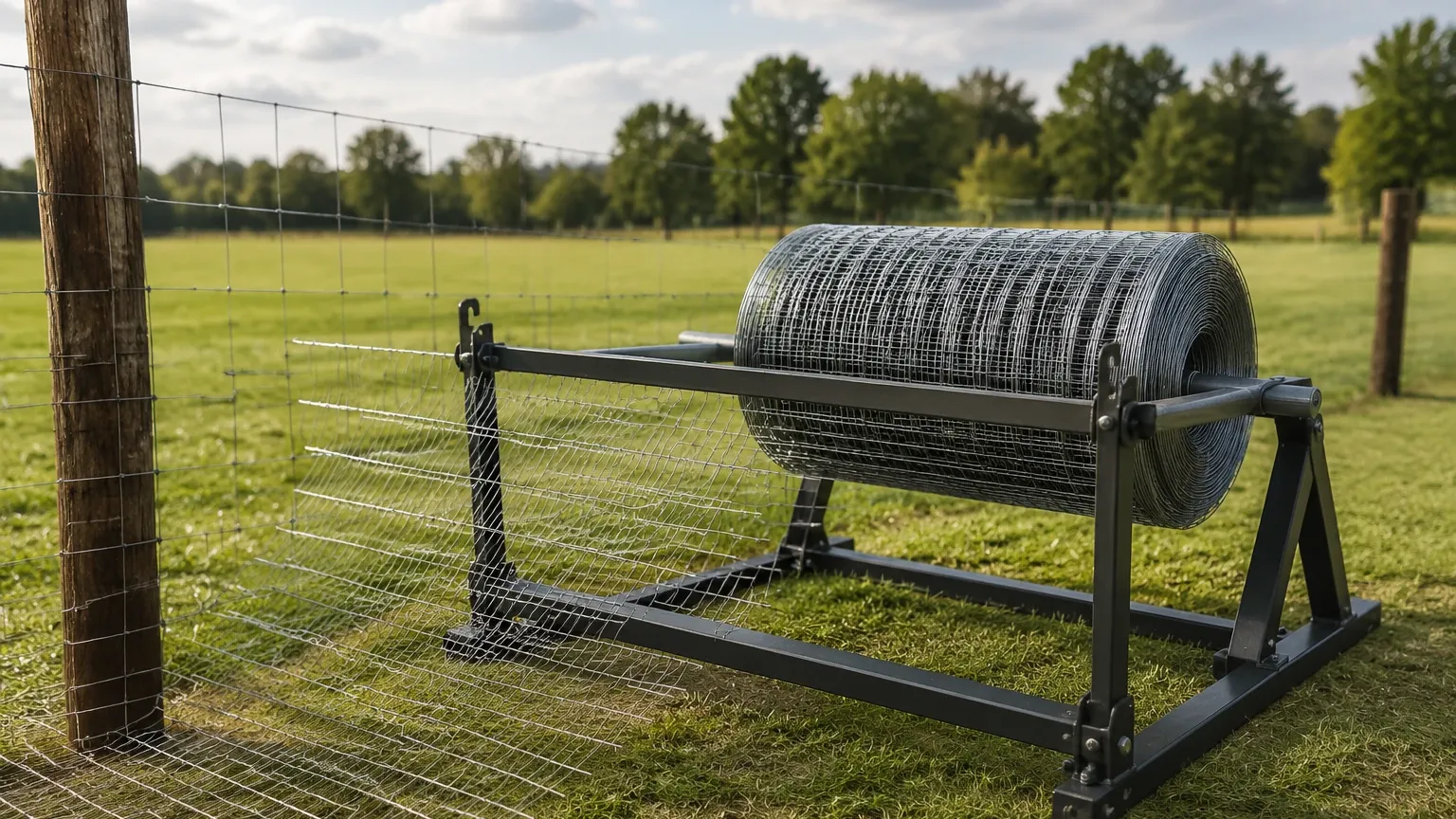
Industrial-grade woven wire mesh is typically supplied in large, heavy rolls that can weigh several hundred pounds depending on the wire gauge and roll length. Manually handling these rolls is not only labor-intensive but also risks damaging the mesh through kinking or uneven stretching. A woven wire fence unroller, often mounted on a skid steer, tractor, or specialized hydraulic platform, provides a controlled method for dispensing the material.
Mechanical Tensioning and Alignment
The primary function of an unroller is to maintain consistent tension as the mesh is deployed. In industrial applications, such as the construction of large-scale filtration beds or protective barriers, uneven tension can lead to "sagging" or "bowing" over time. A mechanical unroller allows the operator to apply a precise amount of drag or braking force to the roll, ensuring the mesh remains taut against the support posts or frames.
Furthermore, alignment is critical. If the roll is not unrolled perfectly level, the mesh will develop diagonal stress lines. This is particularly problematic for fine-mesh applications where aperture stability is required. High-quality unrollers feature adjustable vertical axes to compensate for uneven terrain or varying frame heights.
Technical Characteristics of Industrial Woven Wire Mesh
When selecting material for use with a woven wire fence unroller, engineers must consider the mechanical properties of the mesh. Kaifil specializes in manufacturing stainless steel mesh that meets rigorous industrial standards, ensuring that the material can withstand the stresses of mechanical deployment without compromising its filtration or structural characteristics.
Material Composition: SS304 vs. SS316L
The choice of alloy is the first step in ensuring the longevity of the installation.
* Stainless Steel 304: This is the most common grade used in industrial mesh. It offers excellent strength and good corrosion resistance for most atmospheric conditions. It is frequently used in industrial fencing and support structures where cost-effectiveness is a priority.
* Stainless Steel 316L: For environments exposed to chlorides, marine salt, or chemical processing byproducts, SS316L is the preferred choice. The addition of molybdenum provides superior pitting resistance. When using a woven wire fence unroller to install mesh in harsh environments, specifying 316L ensures the structure remains maintenance-free for decades.
Weave Types and Structural Integrity
The weave pattern significantly impacts how the mesh behaves during the unrolling process.
1. Plain Weave: The most straightforward pattern where wires cross over and under each other. It provides high aperture accuracy and is easy to handle with standard unrolling equipment.
2. Twill Weave: Used for heavier gauges or finer meshes, twill weaves allow for a thicker wire relative to the mesh count. This increases the tensile strength, making it more resistant to stretching during mechanical tensioning.
3. Dutch Weave: Primarily used for high-pressure filtration, dutch weaves are much denser and less flexible. If a project requires unrolling dutch woven mesh for large-scale filter panels, specialized equipment may be needed to handle the increased stiffness of the material.
Engineering Considerations for Large-Scale Deployment
Successful installation using a woven wire fence unroller requires more than just mechanical force; it requires an understanding of the material's limits. Engineers should focus on the following three factors:
1. Yield Point and Elastic Deformation
Every stainless steel wire has a yield point—the level of stress at which the material will permanently deform. During the unrolling and tensioning process, it is vital to stay within the elastic region of the material. Over-tensioning the mesh with a hydraulic unroller can stretch the apertures (the openings between wires), which is catastrophic if the mesh is being used for precise filtration or sizing applications.
2. Mesh Memory and Coil Set
Stainless steel mesh, especially in heavier gauges, often retains "memory" of its coiled state. When the unroller dispenses the mesh, the material may attempt to curl back toward its original shape. High-quality Plain, twill and dutch woven wire mesh in SS304/316L — rolls, cut mesh and framed panels. Send mesh count or micron target for a technical quote. is manufactured to minimize internal stresses, but installers must still use the unroller's tensioning bars to "work" the mesh flat as it is applied to the structure.
3. Edge Treatment and Safety
The edges of woven wire mesh (selvage) can be finished in several ways: tucked, welded, or raw. When using a mechanical unroller, raw edges can catch on the equipment or pose a safety risk to operators. For large-scale industrial projects, specifying a finished selvage or a reinforced edge can facilitate smoother unrolling and provide a more secure attachment point for tensioning hardware.
Common Risks in Mesh Handling and Installation
Even with a professional-grade woven wire fence unroller, several risks can compromise the quality of the project:
* Abrasive Damage: If the unroller's guide rollers are damaged or made of a material harder than the mesh itself, they can scratch the protective chromium oxide layer of the stainless steel. This can lead to localized corrosion (rusting) even in high-grade 304 or 316 mesh.
* Work Hardening: Stainless steel work-hardens quickly. Excessive manipulation or repeated tensioning and loosening during the installation process can make the wire brittle, leading to premature failure under vibration or wind loads.
* Kinking: A kink in a roll of mesh is often permanent. If the unroller does not have a smooth braking system, a sudden stop can cause the mesh to fold over itself, creating a structural weak point and an aesthetic defect.
Selection Criteria for Industrial Mesh Projects
Before purchasing mesh for use with a woven wire fence unroller, procurement teams and engineers should confirm several technical specifications with the manufacturer. At Kaifil, we recommend evaluating the following:
1. Wire Diameter vs. Mesh Count: Ensure the ratio provides the necessary open area while maintaining the tensile strength required for mechanical unrolling.
2. Roll Weight and Core Diameter: The unroller must be compatible with the roll's internal core size and total weight. Standard industrial rolls often come on 3-inch or 6-inch cores.
3. Tolerances: For filtration-critical applications, specify the allowable variance in aperture size. Mechanical unrolling should not exceed these tolerances.
4. Environmental Exposure: Determine if the installation will face high temperatures, acidic runoff, or salt spray to choose between SS304, SS316, or specialized alloys.
The Kaifil Advantage in Woven Wire Mesh
As a professional manufacturer, Kaifil provides customized filtration and structural mesh solutions that are engineered for durability and ease of installation. Our stainless steel woven wire mesh is produced with precision weaving technology to ensure consistent aperture size and high tensile strength, making it ideal for deployment with mechanical unrollers in demanding industrial environments.
Whether you are installing a high-security perimeter, a large-scale industrial sieve, or protective architectural panels, the quality of the mesh is the foundation of the project's success. By combining the right deployment tools, such as a robust woven wire fence unroller, with Kaifil’s precision-engineered mesh, you can achieve an installation that meets the highest standards of performance and longevity.
For technical assistance in selecting the correct mesh grade, wire diameter, or weave pattern for your specific application, consult with our engineering team. We provide detailed specifications and material certifications to ensure your project adheres to all safety and performance requirements.
