


Woven Wire Mesh Uses
In the landscape of industrial filtration and separation, Woven Wire Mesh stands as one of the most versatile and reliable materials available to engineers. Its structural integrity, combined with the ability to achieve precise aperture sizes, makes it a critical component in sectors ranging from petrochemical processing to pharmaceutical manufacturing. Understanding the specific woven wire mesh uses and the engineering principles behind them is essential for optimizing system performance and ensuring long-term durability.
As a specialized manufacturer, Kaifil provides precision-engineered filtration solutions that leverage the unique properties of stainless steel mesh. This guide explores the technical considerations, application scenarios, and selection criteria necessary for technical professionals and purchasing teams to make informed decisions.
Understanding the Fundamentals of Woven Wire Mesh
Before exploring specific applications, it is necessary to understand how the construction of the mesh dictates its performance. Woven wire mesh is produced by weaving longitudinal (warp) and transverse (shute) wires over and under each other. The method of weaving determines the mesh's strength, filtration accuracy, and flow characteristics.
Common Weave Types
* Plain Weave: The most common construction where each shute wire passes over and under one warp wire. It offers a high percentage of open area and is ideal for general-purpose filtration and screening.
* Twill Weave: Each shute wire passes over and under two warp wires. This allows for the use of heavier wires in a given mesh count, providing greater strength and better resistance to mechanical stress.
* Dutch Weave (Plain and Twill): These weaves utilize different diameters for warp and shute wires. The result is a dense, robust mesh with very fine filtration ratings (down to a few microns) and high mechanical stability. Dutch weaves are frequently used in high-pressure hydraulic and fuel filtration.
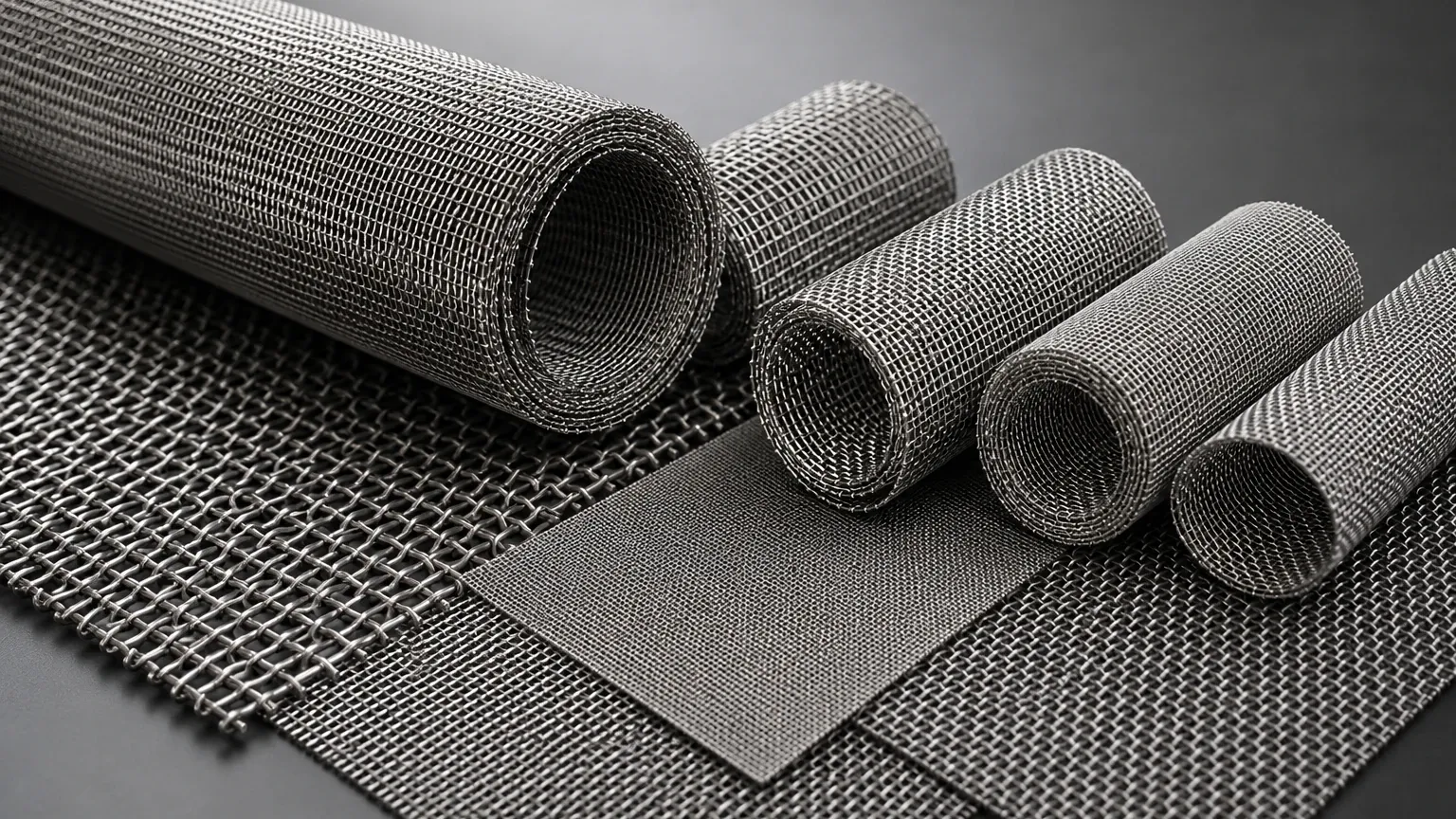
For those seeking specific configurations, Plain, twill and dutch woven wire mesh in SS304/316L — rolls, cut mesh and framed panels. Send mesh count or micron target for a technical quote. provides a comprehensive starting point for technical evaluation.
Primary Industrial Woven Wire Mesh Uses
The diversity of woven wire mesh uses stems from its ability to be customized for specific chemical, thermal, and mechanical environments. Below are the primary sectors where these components are indispensable.
1. Chemical and Petrochemical Processing
In the chemical industry, filtration media must withstand aggressive solvents, high temperatures, and corrosive fluids. Stainless steel woven mesh is used for catalyst recovery, polymer filtration, and the separation of particulates from liquid streams. The high corrosion resistance of alloys like 316L ensures that the mesh does not degrade or contaminate the process fluid.
2. Food and Beverage Production
Hygiene and precision are paramount in food processing. Woven mesh is utilized in sifting, straining, and filtering ingredients such as juices, oils, and syrups. Because stainless steel is non-reactive and easy to sanitize, it meets the stringent requirements for food-contact materials. Common applications include vibratory separators and inline strainers used to remove foreign bodies from production lines.
3. Pharmaceutical and Biotechnology
Pharmaceutical manufacturing requires high-purity filtration to ensure product safety. Woven wire mesh is used in fluid bed dryers, centrifuges, and chromatography equipment. The ability to manufacture mesh with precise micron ratings allows for the consistent removal of bacteria or specific particulate sizes without shedding fibers, a common risk with synthetic or paper-based filters.
4. Hydraulic and Lubrication Systems
In hydraulic systems, even microscopic particles can cause catastrophic component failure. Woven wire mesh serves as the primary filtration medium in suction and pressure filters. Its structural rigidity allows it to withstand high differential pressures while maintaining a consistent pore size, protecting sensitive valves and pumps from wear.
5. Water Treatment and Desalination
From municipal water treatment to industrial wastewater recycling, woven mesh is used in pre-filtration stages to protect membrane systems. It effectively removes sand, silt, and organic debris. In desalination plants, the use of specialized alloys like 904L or Duplex steel mesh provides the necessary resistance to chloride-induced pitting and crevice corrosion.
Technical Parameters Influencing Performance
When evaluating woven wire mesh uses, engineers must look beyond simple dimensions. Several technical parameters determine how a mesh will behave under operational loads.
Micron Rating vs. Mesh Count
* Mesh Count: Refers to the number of openings per linear inch. While useful for coarse screening, it does not account for wire diameter.
* Micron Rating: Defines the size of the particles the mesh is intended to retain. For precision filtration, the absolute micron rating is the most critical metric, especially when dealing with Dutch weaves where the openings are not square.
Open Area Percentage
The open area is the ratio of the total area of the openings to the total area of the mesh. A higher open area results in a lower pressure drop and higher flow rates but may reduce the mechanical strength of the mesh. Balancing flow requirements with structural integrity is a key engineering challenge.
Wire Diameter and Tensile Strength
The diameter of the wire affects the mesh’s durability and resistance to abrasion. In high-vibration applications, such as shale shakers in the oil and gas industry, choosing a thicker wire with high tensile strength is necessary to prevent premature fatigue failure.
Material Selection: Matching Alloy to Environment
The longevity of a filter component is largely determined by its material composition. While stainless steel is the standard, the specific grade must be matched to the operating environment.
* Type 304: The standard "18-8" stainless steel. It is suitable for most indoor applications and mild chemical environments. It is cost-effective but susceptible to chloride corrosion.
* Type 316L: Contains molybdenum, which significantly improves resistance to pitting and crevice corrosion in saline or acidic environments. The "L" denotes low carbon content, which improves weldability and prevents intergranular corrosion in the heat-affected zone of welds.
* Specialty Alloys: For extreme conditions, materials like Monel, Inconel, or Hastelloy may be used. These are reserved for highly specialized woven wire mesh uses involving extreme temperatures or highly oxidizing acids.
Common Risks and Mitigation in Filtration Systems
Selecting the wrong mesh or failing to account for operational variables can lead to system inefficiencies or failures. Technical teams should be aware of the following risks:
1. Blinding and Clogging
Blinding occurs when particles become lodged in the mesh openings, reducing flow and increasing differential pressure. This is often caused by selecting a mesh with a pore size too close to the particle size of the contaminant. Solutions include using twilled weaves or implementing automated backwashing systems.
2. Media Migration
In lower-quality mesh, wires may shift or break under pressure, leading to "media migration" where fragments of the filter enter the downstream flow. This is mitigated by using precision-woven mesh with high dimensional stability and ensuring proper support structures (such as perforated metal cores) are used in filter cartridge designs.
3. Chemical Incompatibility
Using 304 stainless steel in a high-chloride environment will lead to rapid pitting. Engineers must conduct a thorough chemical compatibility analysis before finalizing material specifications to avoid unexpected downtime.
Engineering Checklist for Custom Mesh Procurement
To ensure the successful integration of woven wire mesh into an industrial process, purchasing and engineering teams should confirm the following details with their manufacturer:
1. Operating Temperature: Will the mesh be exposed to cryogenic temperatures or extreme heat that could affect its structural properties?
2. Pressure Requirements: What is the maximum expected differential pressure across the mesh? Does the design require a support layer?
3. Flow Rate: What is the target flow rate, and what is the maximum allowable pressure drop (ΔP)?
4. Particle Characteristics: Are the particles being filtered spherical, angular, or fibrous? This influences the choice between plain and Dutch weaves.
5. Cleaning Protocols: Will the mesh be cleaned via ultrasonic bath, chemical CIP (Clean-In-Place), or manual scrubbing? The mesh must be robust enough to survive the cleaning cycle.
6. Regulatory Compliance: Does the application require FDA, USP Class VI, or other specific material certifications?
Conclusion
The effective application of woven wire mesh uses requires a deep understanding of both material science and fluid dynamics. By selecting the appropriate weave, material, and micron rating, industrial operators can achieve superior filtration efficiency, reduce maintenance costs, and protect downstream equipment.
Kaifil remains committed to providing technical expertise and high-quality manufacturing to support these complex requirements. Whether you are designing a new filtration system or optimizing an existing one, choosing the right partner for your woven wire mesh needs is the first step toward operational excellence.
