


Sintermetallfilter
In the landscape of industrial filtration, the demand for components that can withstand extreme temperatures, high pressures, and corrosive environments has led to the widespread adoption of sintered metal technology. A sintermetallfilter is a porous metal component manufactured through a process of powder metallurgy, where metal powders or fibers are fused together without melting the base material. This results in a structurally robust filter medium with precise pore distribution and high mechanical strength. For engineers and technical procurement teams, understanding the nuances of sintermetallfilter design, material selection, and performance characteristics is essential for optimizing process efficiency and ensuring the longevity of filtration systems.
Kaifil, as a specialist in custom stainless steel filtration solutions, provides high-performance sintered components tailored to the rigorous demands of chemical processing, pharmaceuticals, and hydraulic systems. By focusing on the technical integrity of the filter medium, Kaifil helps industrial operators move beyond standard off-the-shelf products toward engineered solutions that address specific operational challenges. You can explore our full range of capabilities on our Main Page.
The Engineering Principles of Sintered Metal Media
The production of a sintermetallfilter begins with the careful selection of metal powders or stainless steel wire mesh. In the sintering process, these materials are placed in a mold and heated in a controlled-atmosphere furnace to a temperature just below their melting point. Through molecular diffusion, the particles bond at their contact points, creating a rigid, porous structure.
One of the primary advantages of this manufacturing method is the ability to control the porosity and pore size distribution. Unlike flexible media or polymer-based filters, a sintermetallfilter maintains its geometry under significant differential pressure. The resulting matrix is characterized by an interconnected network of pores that allow for deep filtration or surface filtration, depending on the specific design of the medium. For technical professionals, this means the filter provides a predictable and stable micron rating throughout its service life, even when subjected to thermal cycling or high-velocity fluid flows.
Material Selection and Chemical Compatibility
Material science plays a pivotal role in the selection of a sintermetallfilter. The most common material used in industrial applications is 316L stainless steel, chosen for its excellent corrosion resistance and mechanical properties. However, depending on the chemical composition of the fluid being filtered and the operating temperature, other alloys may be utilized.
* 316L Stainless Steel: The industry standard for general chemical resistance and high-temperature applications (up to 450°C in oxidizing environments). It is particularly effective in resisting pitting and crevice corrosion in chloride-containing media.
* 304 Stainless Steel: Often used in food and beverage applications where the extreme corrosion resistance of 316L is not required, providing a cost-effective yet durable solution.
* Nickel-Based Alloys (e.g., Hastelloy, Inconel): Reserved for highly aggressive chemical environments or extreme temperatures exceeding the limits of standard stainless steel.
When evaluating a sintermetallfilter, engineers must consider the pH levels, the presence of oxidizing agents, and the potential for galvanic corrosion. Kaifil’s expertise in material selection ensures that the chosen alloy is compatible with the process fluid, thereby preventing premature failure due to material degradation.
Filtration Accuracy and Permeability
The performance of a sintermetallfilter is defined by two primary metrics: filtration accuracy (micron rating) and permeability. Filtration accuracy refers to the ability of the filter to retain particles of a specific size. Sintered metal media can achieve ratings as fine as 0.5 microns, making them suitable for gas polishing and fine chemical filtration.
Permeability, on the other hand, describes the ease with which a fluid passes through the filter medium. High permeability is desirable to minimize the initial pressure drop across the system. However, there is an inherent trade-off between filtration fineness and permeability. A finer pore structure naturally offers more resistance to flow.
To optimize these parameters, engineers must calculate the required surface area of the sintermetallfilter based on the flow rate and the maximum allowable pressure drop ($ΔP$). By utilizing pleated designs or multi-layered sintered wire mesh, manufacturers can increase the effective filtration area within a compact footprint, thereby enhancing permeability without sacrificing filtration efficiency. This balance is critical for maintaining the energy efficiency of pumps and compressors within the industrial circuit.
Customization and OEM Capabilities
Industrial systems rarely conform to a single standard. Consequently, the ability to customize a sintermetallfilter is a significant advantage for OEM manufacturers and plant engineers. Customization extends beyond simple dimensions to include the structural integration of the filter into the larger system.
Kaifil specializes in the development of customized filtration components, including:
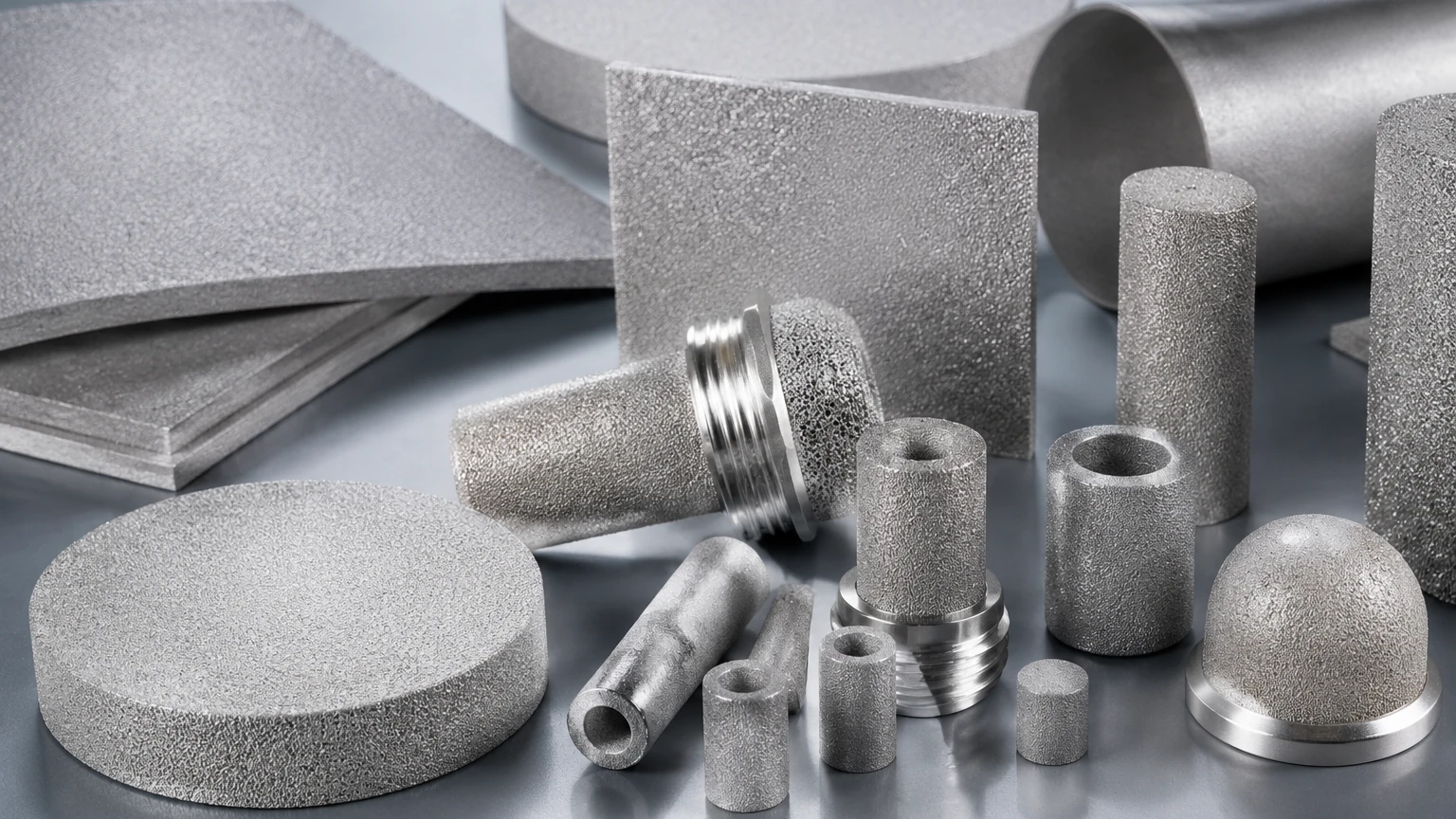
* Sintered Metal Cartridges: Designed for high-flow liquid and gas applications, often featuring reinforced inner cores to withstand high collapse pressures.
* Sintered Discs and Plates: Used in fluidization, sparging, and small-scale laboratory filtration.
* Tapered and Conical Filters: Custom geometries designed to fit specific housing configurations or to facilitate specific flow patterns.
* Integrated Fittings: Sintered media can be welded to various end-fittings (NPT, BSP, Flange, or custom connectors) to ensure a leak-proof and robust installation.
By working closely with clients during the design phase, Kaifil ensures that the sintermetallfilter meets the exact mechanical and hydraulic requirements of the application, reducing the need for adapters or system modifications.
Application Scenarios for Sintermetallfilter
The versatility of sintered metal makes it a preferred choice across several demanding sectors. Each industry places unique stresses on the filtration media, requiring specific engineering considerations.
Chemical and Petrochemical Processing
In these environments, filters are often exposed to aggressive solvents, high-pressure catalysts, and extreme temperatures. Sintered metal filters are used for catalyst recovery, where the ability to withstand backpulsing (reverse flow cleaning) is essential for continuous operation. The mechanical integrity of the sintermetallfilter prevents media migration, ensuring that no metal fragments contaminate the downstream product.
Pharmaceutical and Biotechnology
For pharmaceutical applications, the primary concerns are cleanability and compliance. Sintered stainless steel filters are ideal because they can be sterilized in place (SIP) and cleaned in place (CIP). The smooth surface finish and the absence of binders or adhesives in the sintered structure eliminate the risk of extractables or leachables, meeting stringent FDA and GMP requirements.
Food and Beverage Industry
In the production of beverages, steam filtration is a critical step to ensure the removal of particulates from culinary steam. Sintered metal filters provide the thermal stability required for steam service while maintaining the hygienic standards necessary for food-contact materials.
Maintenance, Cleaning, and Total Cost of Ownership
One of the most compelling arguments for choosing a sintermetallfilter over disposable polymer or paper filters is the Total Cost of Ownership (TCO). While the initial investment in a sintered metal component is higher, its ability to be cleaned and reused multiple times significantly reduces long-term operational costs.
Cleaning methods for a sintermetallfilter include:
1. Backwashing/Backpulsing: Reversing the flow of fluid to dislodge accumulated cake from the surface of the filter. This is often done in-situ.
2. Ultrasonic Cleaning: Using high-frequency sound waves in a cleaning solvent to remove fine particles trapped deep within the pore structure.
3. Chemical Cleaning: Utilizing acids, alkalis, or surfactants to dissolve organic or inorganic contaminants.
4. Thermal Burn-off: Heating the filter in a controlled environment to carbonize and remove organic polymers or residues.
Proper maintenance and scheduled cleaning cycles extend the life of the sintermetallfilter, often allowing it to remain in service for several years. This reduces the waste generated by disposable filters and minimizes the downtime associated with frequent filter changes.
Selection Criteria: A Guide for Engineers
Before specifying or purchasing a sintermetallfilter, technical teams should confirm several key parameters to ensure the component is fit for purpose. A mismatch in specifications can lead to premature clogging, structural failure, or insufficient filtration.
* Operating Temperature: Confirm both the steady-state and peak temperatures, as well as the rate of temperature change (thermal shock).
* Operating Pressure and Differential Pressure: Determine the maximum pressure the filter will encounter and the point at which the filter must be cleaned or replaced ($ΔP$ limit).
* Fluid Characteristics: Define the viscosity, density, and chemical composition of the fluid. Higher viscosity fluids may require larger pore sizes or increased surface area.
* Contaminant Profile: Understand the nature of the solids being removed (size, shape, concentration, and deformability). Hard, spherical particles are easier to remove via backpulsing than soft, gelatinous contaminants.
* Required Micron Rating: Specify whether the rating is "absolute" (100% retention) or "nominal" (a specific percentage of retention).
By addressing these factors during the procurement process, engineers can ensure that the selected sintermetallfilter provides optimal performance and reliability. Kaifil provides the technical support necessary to navigate these variables, offering guidance on material selection and design optimization.
Conclusion
The sintermetallfilter stands as a critical component in modern industrial processes, offering a combination of durability, precision, and reusability that other media cannot match. Whether it is for protecting sensitive downstream equipment in a hydraulic system or ensuring the purity of a pharmaceutical batch, the technical advantages of sintered metal are clear. By understanding the engineering principles and maintenance requirements of these filters, organizations can achieve higher process efficiency and lower operational costs. For those seeking specialized manufacturing and engineering support for their filtration needs, the resources available on our Main Page offer a gateway to customized, high-performance solutions.
