


High Temperature Hepa Filter
In industrial cleanroom environments and sterile processing facilities, maintaining air purity is a non-negotiable requirement. While standard High-Efficiency Particulate Air (HEPA) filters are sufficient for ambient temperature applications, many critical industrial processes—such as pharmaceutical depyrogenation, semiconductor drying, and specialized chemical processing—operate at temperatures far exceeding the limits of standard filter media and adhesives. This necessitates the use of a high temperature HEPA filter, a specialized component engineered to maintain structural integrity and filtration efficiency under extreme thermal stress.
Selecting the right high temperature HEPA filter requires a deep understanding of material science, thermal dynamics, and mechanical engineering. Because these filters must operate in environments ranging from 250°C to over 400°C, every component, from the frame to the sealant, must be chosen to prevent outgassing, warping, or catastrophic failure. This guide examines the technical specifications, construction methods, and engineering considerations essential for integrating high-temperature filtration into industrial systems.
Technical Construction of High Temperature HEPA Filters
The primary difference between a standard HEPA filter and a high temperature HEPA filter lies in the materials used to withstand thermal expansion and degradation. In a standard filter, aluminum frames and polyurethane sealants are common. However, at elevated temperatures, these materials would melt, outgas, or lose their seal.
Frame Materials
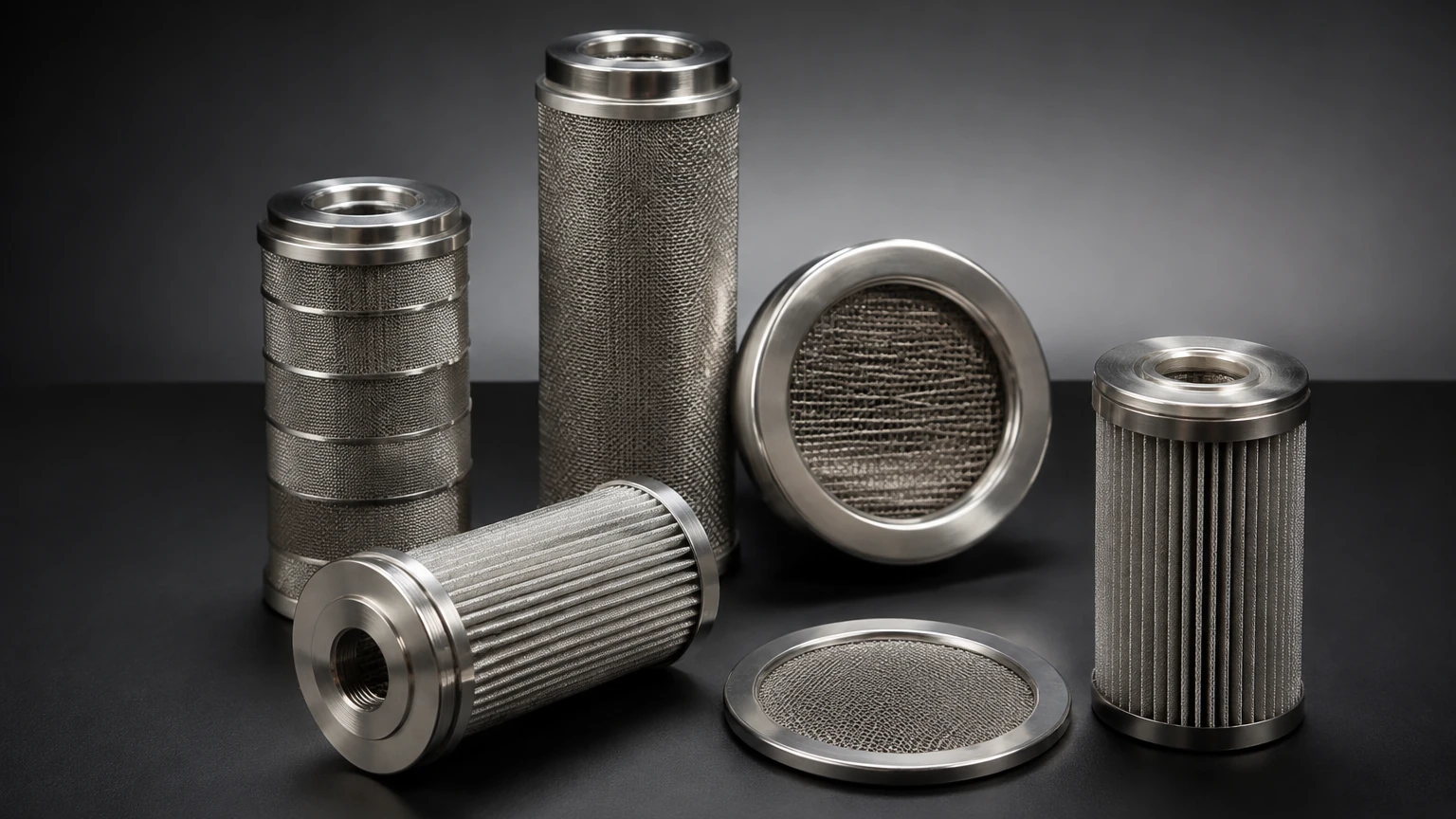
To ensure structural rigidity, high-temperature filters almost exclusively utilize stainless steel frames. Stainless steel 304 is the industry standard, providing excellent corrosion resistance and mechanical strength at high temperatures. For environments involving corrosive chemicals or higher moisture levels at heat, stainless steel 316L is often specified due to its superior resistance to pitting and stress-corrosion cracking. The frame must be precision-engineered to account for thermal expansion, ensuring that the filter does not buckle or create bypass gaps within the housing as it heats up.
Filter Media
The media used in a high temperature HEPA filter is typically a specialized glass fiber paper. Unlike standard glass fiber, this media is manufactured with high-temperature binders or is binder-free to prevent the release of volatile organic compounds (VOCs) during the initial heat-up cycles. The pleating of the media is often supported by aluminum separators or stainless steel mesh to maintain uniform spacing and airflow even when the media becomes more brittle due to prolonged heat exposure.
Sealants and Gaskets
The sealant is perhaps the most critical component. There are two primary types used in high-temperature applications:
1. Silicone-Based Sealants: Typically rated for temperatures up to 250°C. These remain flexible, which helps absorb the mechanical stress of thermal expansion. However, they must be properly cured to prevent silicone outgassing, which can ruin sensitive semiconductor or optical components.
2. Ceramic or Glass Sealants: Used for temperatures reaching 350°C to 400°C. These sealants create a rigid, airtight bond between the media pack and the frame. While they offer the highest temperature resistance, they are susceptible to thermal shock if the temperature fluctuates too rapidly, leading to cracks in the seal.
Performance Evaluation and Efficiency Standards
A high temperature HEPA filter must meet the same rigorous efficiency standards as its ambient-temperature counterparts, typically defined by EN 1822 or ISO 29463. Most industrial applications require H13 or H14 efficiency, meaning the filter must capture at least 99.95% or 99.995% of particles at the Most Penetrating Particle Size (MPPS), which is usually around 0.3 microns.
The Impact of Heat on Filtration Physics
As temperature increases, the viscosity of air also increases. This change in fluid dynamics affects the pressure drop across the filter. Engineers must calculate the "hot" pressure drop rather than relying solely on ambient test data. A higher pressure drop requires more fan power to maintain the required air exchange rates. Furthermore, Brownian motion—the random movement of tiny particles—becomes more vigorous at high temperatures, which can actually improve the capture efficiency of sub-micron particles, though this must be balanced against the increased risk of mechanical bypass due to thermal expansion of the filter housing.
Testing and Certification
Testing high-temperature filters presents unique challenges. Standard DOP (Dispersed Oil Particulate) testing is often performed at room temperature before installation. However, for critical pharmaceutical applications, in-situ leak testing (PAO testing) may be required. It is essential to confirm that the filter has been pre-conditioned or "baked out" by the manufacturer to ensure that any residual binders or lubricants are removed before the filter is placed into a live production environment.
Critical Risks and Engineering Challenges
Integrating a high temperature HEPA filter into an industrial process is not without risks. Failure to account for the physical realities of high-heat environments can lead to contamination or system downtime.
Outgassing and Contamination
In the first few hours of operation, even high-quality filters may release trace amounts of vapors as the materials reach their operating temperature. In semiconductor manufacturing or high-end optics, this outgassing can lead to molecular contamination on sensitive surfaces. Specifying a "low-outgassing" or "pre-baked" filter is critical for these industries. Engineers should request outgassing test reports from the manufacturer to verify the cleanliness of the filter at peak operating temperatures.
Thermal Shock and Seal Integrity
Rapid heating or cooling cycles are the primary cause of filter failure in high-temperature applications. If a ceramic-sealed filter is heated too quickly, the difference in the expansion rates between the stainless steel frame and the ceramic sealant can cause the seal to crack. This creates a bypass path for unfiltered air. Systems should be designed with controlled ramp-up and ramp-down phases to preserve the integrity of the filter seals.
Mechanical Stability
At temperatures above 300°C, the mechanical properties of metals begin to change. While stainless steel is robust, thin-walled frames can still warp if not properly reinforced. The use of precision-manufactured metal components is vital here. For those looking to source high-quality filtration components and custom metal solutions, visiting the Main Page of a specialized manufacturer can provide technical insights into the durability and customization of stainless steel filter housings and supports.
Industrial Applications for High Temperature HEPA Filters
Several industries rely heavily on these specialized filters to ensure product safety and process yields.
Pharmaceutical Depyrogenation Tunnels
In pharmaceutical manufacturing, glass vials and ampoules must be sterilized and depyrogenated (removal of pyrogens/bacterial endotoxins) before being filled with medication. This process typically involves a tunnel where the glassware is exposed to temperatures between 250°C and 350°C. High temperature HEPA filters are used to provide ultra-clean air within these tunnels, ensuring that as the vials are sterilized, they are not re-contaminated by airborne particulates.
Semiconductor and Electronics Manufacturing
Certain stages of wafer fabrication and electronic component drying require high-heat environments that must remain at ISO Class 5 cleanliness or better. High temperature HEPA filters allow these ovens and drying chambers to operate without introducing dust or metallic particles that could short-circuit a microchip or ruin a high-resolution display.
Food and Beverage Sterilization
In aseptic packaging, the air used to dry or move containers after high-heat sterilization must be filtered. While the temperatures are often lower than in pharmaceutical depyrogenation (usually around 200°C to 250°C), the requirement for moisture resistance and food-grade materials makes the choice of a stainless steel-framed HEPA filter essential for long-term reliability and compliance with hygiene standards.
Selection Criteria: A Checklist for Engineers
When specifying a high temperature HEPA filter for a new project or replacement cycle, engineers should confirm the following technical details with their supplier:
1. Maximum Operating Temperature vs. Peak Temperature: Ensure the filter can handle continuous operation at your process temperature, not just short bursts.
2. Ramp Rate Limits: Determine the maximum allowable rate of temperature change (e.g., 5°C per minute) to prevent thermal shock to the sealants.
3. Frame Material and Gauge: Confirm the use of Stainless Steel 304 or 316L and ensure the frame thickness is sufficient to prevent warping under the weight of the media pack at heat.
4. Sealant Type: Choose between silicone (for flexibility up to 250°C) or ceramic/glass (for rigidity up to 400°C).
5. Outgassing Requirements: Specify if the filter needs to be pre-baked or certified low-outgassing for sensitive environments.
6. Gasket Material: Ensure the gasket (the seal between the filter and the housing) is made of a high-temperature material like silicone or glass fiber rope, rather than standard EPDM or neoprene.
7. Customization Options: In many industrial retrofits, standard sizes do not fit. Working with a manufacturer capable of custom dimensions and specialized face guards is often necessary.
Maintenance and Lifespan Considerations
The lifespan of a high temperature HEPA filter is generally shorter than that of a standard filter due to the physical stress of thermal cycling. Monitoring the pressure drop is the most effective way to determine when a filter is reaching the end of its functional life. However, in high-temperature applications, a sudden *drop* in pressure can be more alarming than a rise, as it often indicates a crack in the sealant or a breach in the media.
Regular visual inspections are recommended, looking specifically for signs of discoloration in the media or hairline fractures in the sealant. Because these filters are often located in hard-to-reach areas like depyrogenation tunnels, choosing a filter with a robust stainless steel construction can extend the replacement interval by resisting mechanical fatigue.
Conclusion
High temperature HEPA filters are critical engineering components that bridge the gap between extreme thermal processing and ultra-clean air requirements. By selecting filters with high-grade stainless steel frames, specialized glass fiber media, and appropriate sealants, industrial operators can ensure process integrity and product safety. Understanding the limitations of these filters—particularly regarding thermal shock and outgassing—is essential for any engineer tasked with maintaining a sterile or particulate-free high-heat environment. For further technical specifications on custom stainless steel filtration solutions and precision metal components, the Main Page provides a comprehensive resource for industrial filtration needs.
