


Porous Ceramic Filter
In the landscape of industrial separation and purification, the porous ceramic filter represents a specialized solution designed for environments where traditional polymer or standard metal filters may reach their physical or chemical limits. Characterized by high thermal stability, exceptional chemical inertness, and a rigid structural matrix, these components are essential in high-temperature gas filtration, aggressive chemical processing, and molten metal refinement.
For engineers and procurement professionals, understanding the technical nuances of porous ceramic media is critical for optimizing system longevity and filtration efficiency. While Kaifil specializes in high-precision stainless steel filtration solutions, providing a comprehensive overview of ceramic alternatives allows technical teams to make informed decisions regarding material compatibility and application-specific performance requirements.
Understanding Porous Ceramic Filter Technology
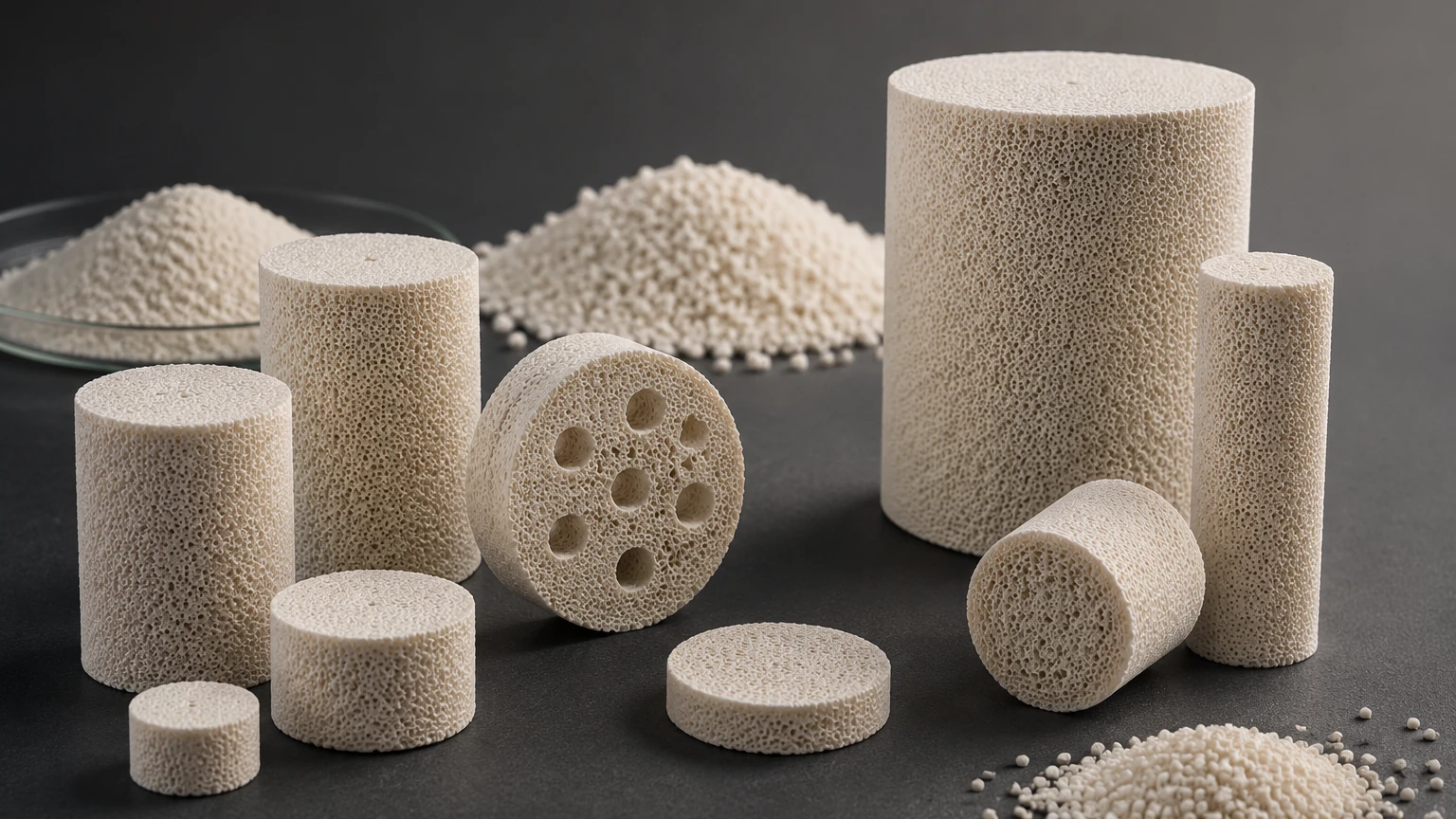
A porous ceramic filter is a rigid material composed of a three-dimensional network of pores. Unlike fibrous media, which rely on the entanglement of strands, ceramic filters are typically produced through the sintering of inorganic powders—such as alumina (Al2O3), silicon carbide (SiC), or zirconia (ZrO2)—at temperatures often exceeding 1,000°C.
During the manufacturing process, the control of grain size, binder selection, and sintering duration determines the resulting porosity and pore size distribution. This results in a medium that can range from "open-cell" foams used for high-flow molten metal filtration to dense, fine-pored membranes used for microfiltration and ultrafiltration. The rigid nature of the ceramic matrix ensures that the pore structure does not deform under high differential pressure, providing consistent filtration accuracy throughout the component's service life.
Key Material Properties and Performance Metrics
When evaluating a porous ceramic filter for industrial use, several engineering parameters must be prioritized to ensure the component survives the operating environment.
1. Porosity and Pore Size Distribution
Porosity refers to the percentage of void space within the ceramic body, typically ranging from 30% to 90% depending on the application. For liquid filtration, a narrower pore size distribution is preferred to ensure a sharp "cut-off" point, preventing particles larger than the rated micron size from passing through. In gas filtration, higher porosity is often favored to minimize pressure drop while maintaining high surface area for particulate capture.
2. Thermal Stability and Shock Resistance
One of the primary reasons engineers specify ceramic over metal or plastic is temperature resistance. Many porous ceramics can operate continuously at temperatures exceeding 800°C, with some silicon carbide variants reaching much higher. However, ceramics are inherently brittle. Thermal Shock Resistance (TSR) is a vital metric, indicating the filter's ability to withstand rapid temperature fluctuations without cracking.
3. Chemical Inertness
Ceramic filters are largely unaffected by strong acids, organic solvents, and many alkaline solutions. This makes them ideal for the chemical processing industry where stainless steel might suffer from localized pitting or general corrosion. However, it is important to note that certain ceramics, such as high-alumina types, may be susceptible to strong hydrofluoric acid or concentrated hot phosphoric acid.
Porous Ceramic vs. Stainless Steel Filters: A Comparative Analysis
Choosing between a porous ceramic filter and a stainless steel filter (such as those featured on the Kaifil Main Page) requires a balanced assessment of mechanical requirements and environmental stressors.
| Feature | Porous Ceramic Filter | Stainless Steel Filter (Wire Mesh/Sintered) |
| :— | :— | :— |
| Temperature Limit | Very High (up to 1,000°C+) | High (up to 450°C – 600°C depending on alloy) |
| Ductility | Brittle; prone to mechanical shock | Ductile; resistant to impact and vibration |
| Corrosion Resistance | Excellent across most pH levels | Excellent in many environments; susceptible to specific halides |
| Customization | Limited to molded/sintered shapes | Highly customizable (welded, pleated, machined) |
| Cleaning | Chemical soaking, high-temp burnout | Backwashing, ultrasonic, chemical cleaning |
| Cost | Generally higher for specialized shapes | Cost-effective for high-volume OEM production |
Stainless steel filters offer significant advantages in terms of mechanical durability. In systems subject to high vibration, hydraulic shock, or frequent handling, the ductility of metal prevents the catastrophic failures that can occur with brittle ceramics. Furthermore, stainless steel components allow for complex geometries—such as pleated cartridges—that provide a much higher filtration surface area within the same footprint compared to thick-walled ceramic tubes.
Critical Industrial Applications
The unique properties of the porous ceramic filter make it indispensable in several high-stakes industrial sectors.
High-Temperature Gas Filtration
In power generation and waste-to-energy plants, flue gases must be cleaned of fly ash and particulates at extreme temperatures. Ceramic candle filters are often used here because they can withstand the heat that would melt or oxidize standard metal alloys. They facilitate the removal of sub-micron particles, protecting downstream equipment and ensuring compliance with environmental emissions standards.
Molten Metal Filtration
In the foundry industry, ceramic foam filters are used to remove non-metallic inclusions from molten aluminum, iron, and steel. The filter must survive the thermal shock of the pour while providing a tortuous path that traps oxides and slag, resulting in higher-quality castings with fewer defects.
Chemical and Pharmaceutical Processing
Ceramic membranes are frequently employed for the separation of aggressive chemicals or for sterile filtration in pharmaceutical manufacturing. Their ability to be steam-sterilized repeatedly without degrading makes them a reliable choice for long-term installations where hygiene and chemical purity are paramount.
Engineering Selection Criteria for Industrial Systems
To integrate a porous ceramic filter successfully, technical professionals should confirm several operational variables before procurement:
* Differential Pressure (ΔP): Determine the maximum allowable pressure drop across the filter. While ceramics are rigid, excessive ΔP can lead to structural failure if the housing or support structure is not properly engineered.
* Flow Velocity: High-velocity fluids can cause erosion on the surface of certain ceramic materials. Engineers must calculate the face velocity to ensure it remains within the manufacturer’s recommended limits.
* Sealing and Gasketing: Because ceramics do not deform, achieving a leak-proof seal requires specialized gaskets (often graphite or high-temperature elastomers). The interface between the rigid ceramic and the metal housing is a common point of bypass if not designed correctly.
* Filtration Mechanism: Is the requirement for surface filtration (cake building) or depth filtration? Ceramic filters can perform both, but the pore structure should be optimized for the specific mechanism to prevent premature blinding.
Maintenance, Cleaning, and Replacement Cycles
Maintaining the efficiency of a porous ceramic filter involves managing the accumulation of filtered solids. Unlike disposable polymer filters, ceramic media are often intended for multi-year service lives, provided they are cleaned correctly.
1. Backpulsing/Backwashing: In gas applications, a reverse pulse of compressed air is often used to dislodge the filter cake. The rigidity of the ceramic ensures the pores do not expand during this process, maintaining filtration integrity.
2. Chemical Cleaning: For liquid applications involving organic fouling or mineral scaling, ceramic filters can be soaked in concentrated acids or bases that would destroy other media types.
3. Thermal Regeneration: In cases where the filter is clogged with organic matter, the filter can sometimes be heated in a controlled furnace to burn off the contaminants, restoring the original permeability.
Despite their durability, ceramic filters must be inspected for micro-cracks during maintenance cycles. A single hairline fracture can lead to a total bypass of unfiltered fluid, compromising the entire process.
Sourcing and Customization for Specialized Filtration
When standard off-the-shelf solutions do not meet the rigorous demands of a specific industrial process, customization becomes necessary. Engineers must work closely with manufacturers to define the exact material composition and pore morphology required.
For many applications, however, a high-performance metal filter may provide a more robust and cost-effective alternative. Metal filtration solutions, such as those provided by Kaifil, offer the advantage of being weldable and machinable, allowing for easier integration into complex machinery. By reviewing product options and application support on the Main Page, technical teams can compare the benefits of stainless steel wire mesh and sintered metal components against ceramic alternatives.
In conclusion, the porous ceramic filter is a powerful tool in the engineer's arsenal, particularly when faced with extreme heat or highly corrosive environments. By carefully weighing the trade-offs between ceramic's thermal resistance and metal's mechanical toughness, industrial operators can select the filtration media that ensures the highest level of process reliability and the lowest total cost of ownership.
