


Sintered Brass
Sintered brass is a specialized porous material widely utilized in industrial applications for filtration, sound attenuation, and fluid control. Produced through powder metallurgy, this material offers a unique combination of controlled porosity, mechanical strength, and corrosion resistance. For engineers and procurement professionals, understanding the technical nuances of sintered brass is essential for optimizing system performance and ensuring long-term reliability in demanding environments.
As a core component in pneumatic systems, hydraulic circuits, and chemical processing equipment, sintered brass provides a cost-effective alternative to stainless steel in environments where extreme temperature or highly aggressive chemical compatibility is not the primary concern. By visiting the Main Page of a specialized manufacturer like Kaifil, technical teams can explore how these components integrate into broader industrial filtration strategies.
The Manufacturing Process of Sintered Brass
The production of sintered brass components is a high-precision engineering process that begins with the selection of high-quality brass powder. Most industrial-grade sintered brass is composed of a copper-zinc alloy, often with small additions of other elements to enhance specific properties such as machinability or corrosion resistance.
Powder Atomization
The process begins with atomization, where molten brass is disintegrated into fine droplets that solidify into spherical or irregular particles. For filtration applications, spherical powders are generally preferred because they allow for more uniform pore distribution and predictable flow characteristics. The particle size distribution is strictly controlled, as the diameter of the powder grains directly determines the eventual micron rating of the sintered part.
Compaction and Shaping
The brass powder is loaded into a mold or die that matches the required geometry of the final component. In many cases, the powder is compacted under high pressure to form a "green" part. However, for high-porosity applications, gravity sintering may be used, where the powder is simply poured into a mold and heated without external pressure. This allows for the highest possible void volume, which is critical for applications requiring low pressure drops.
The Sintering Stage
Sintering occurs in a controlled-atmosphere furnace at temperatures below the melting point of the brass alloy. During this stage, diffusion causes the contact points between the powder particles to bond, forming a rigid, interconnected matrix. The result is a solid component that retains a network of microscopic pores. The duration and temperature of the sintering process are calibrated to achieve the desired balance between mechanical integrity and permeability.
Technical Characteristics and Performance Metrics
When evaluating sintered brass for an industrial application, engineers must focus on several key performance indicators. These metrics define how the material will behave under operational stress and how effectively it will perform its intended function.
Porosity and Permeability
Porosity refers to the percentage of void space within the material, while permeability measures the ability of fluids (liquids or gases) to pass through that void space. Sintered brass typically offers porosity levels ranging from 30% to 50%. High permeability is essential for reducing energy consumption in pneumatic systems, as it minimizes the resistance to airflow.
Micron Ratings and Filtration Efficiency
Sintered brass filters are categorized by their micron rating, which indicates the size of particles they can effectively trap. These ratings can range from as fine as 2 microns to over 100 microns. It is important to distinguish between nominal and absolute micron ratings. A nominal rating indicates the ability to retain a major percentage of particles of a certain size, while an absolute rating represents the diameter of the largest spherical particle that can pass through the filter under specific test conditions.
Mechanical Strength and Pressure Resistance
Despite its porous nature, sintered brass exhibits significant structural rigidity. It can withstand high differential pressures without deforming, making it suitable for high-pressure pneumatic lines. The sintering process creates a metallurgical bond that is far stronger than simple mechanical interlocking, ensuring that the filter media does not shed particles into the downstream flow.
Primary Industrial Applications
The versatility of sintered brass makes it a staple in various sectors, from heavy manufacturing to precision instrumentation. Its primary roles often revolve around safety, noise reduction, and fluid purification.
Pneumatic Silencers and Mufflers
One of the most common uses of sintered brass is in the construction of pneumatic silencers. When compressed air is exhausted from valves or cylinders, it can create noise levels that exceed safety regulations. Sintered brass mufflers dissipate the energy of the exhausting air by forcing it through a tortuous path of pores, significantly reducing noise without causing excessive backpressure that would slow down the machinery.
Breather Vents and Pressure Equalization
In gearboxes, hydraulic reservoirs, and storage tanks, sintered brass breather vents allow for the equalization of internal and external pressure. As fluid levels change or temperatures fluctuate, air must move in and out of the system. The sintered brass element prevents dust, moisture, and debris from entering the system while allowing air to flow freely.
Flame Arrestors
Due to its ability to dissipate heat rapidly and its controlled pore structure, sintered brass is used in flame arrestor applications. In systems where flammable gases are present, a sintered brass component can quench a flame front by absorbing heat and preventing the flame from passing through to the other side of the filter, thereby preventing explosions.
Liquid Filtration
While often associated with gas, sintered brass is also effective for filtering oils, fuels, and water in non-corrosive environments. It is frequently used in oil burners and hydraulic systems to protect sensitive nozzles and valves from particulate contamination.
Engineering Selection and Design Considerations
Selecting the right sintered brass component requires a deep dive into the specific requirements of the application. Engineers should consider the following factors during the design phase:
1. Fluid Compatibility: Sintered brass is compatible with air, water, and various oils. However, it should be avoided in applications involving strong acids, ammonia, or high concentrations of chlorides, which can lead to dezincification or stress corrosion cracking.
2. Temperature Limits: Sintered brass maintains its structural integrity at temperatures up to approximately 200°C (392°F). For applications exceeding this range, sintered stainless steel or bronze alloys may be required.
3. Pressure Drop (ΔP): Every filter introduces a pressure drop. Engineers must calculate the maximum allowable ΔP to ensure the system operates efficiently. This involves balancing the micron rating (finer pores increase ΔP) with the surface area of the filter.
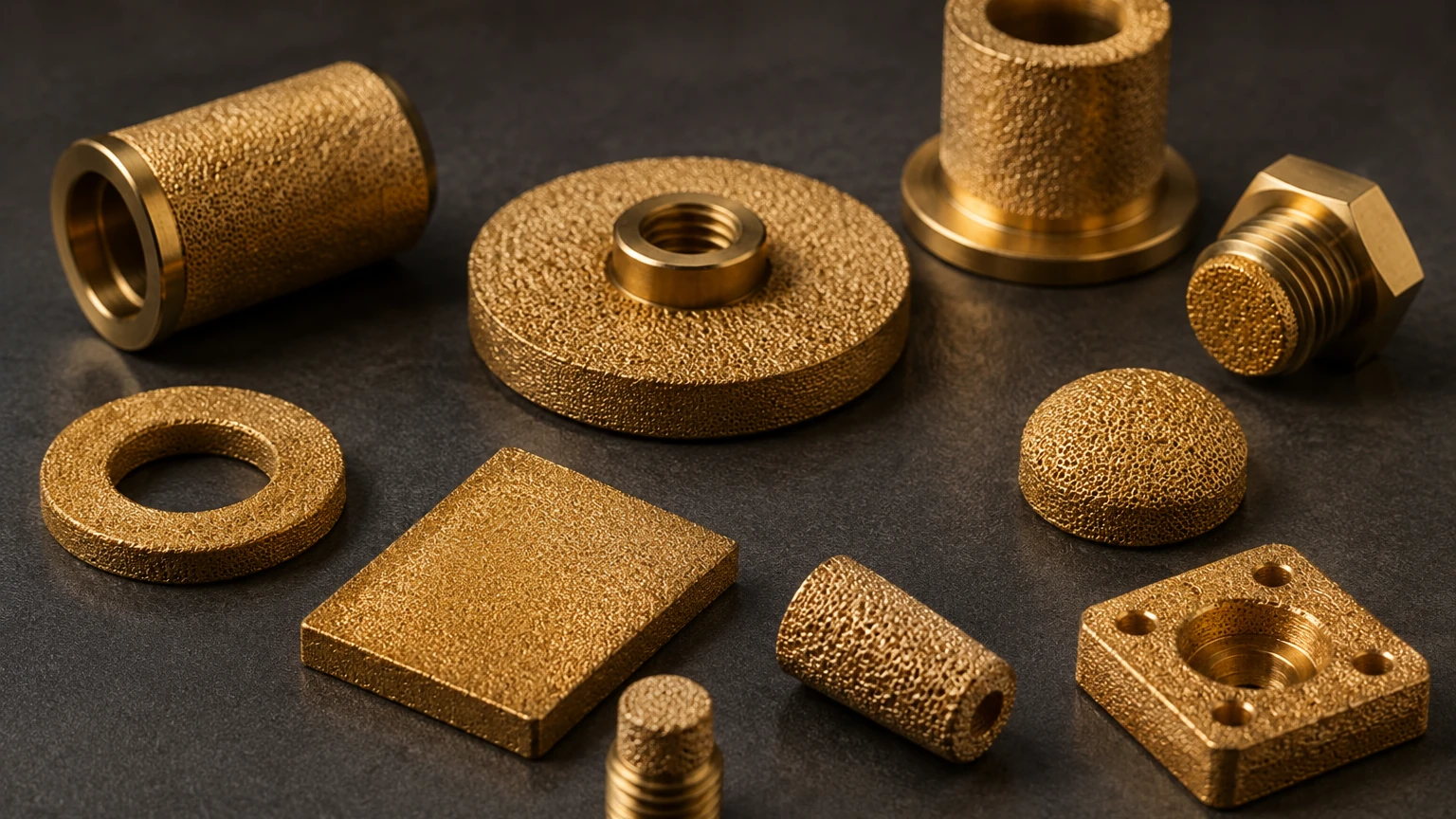
4. Customization Requirements: Many industrial applications require unique shapes, such as discs, cones, cylinders, or threaded plugs. Working with a manufacturer that offers OEM customization ensures that the sintered brass element fits perfectly within the existing housing or manifold.
Sintered Brass vs. Sintered Stainless Steel
A common question for purchasing teams is whether to specify sintered brass or sintered stainless steel. The choice usually comes down to a trade-off between cost and performance.
* Cost Efficiency: Sintered brass is generally more economical to produce and machine than stainless steel. For high-volume pneumatic components, this cost difference can be substantial.
* Corrosion Resistance: Stainless steel (such as 316L) offers superior resistance to oxidation and chemical attack. In marine environments or pharmaceutical processing, stainless steel is often mandatory.
* Strength: While brass is strong, stainless steel has higher tensile strength and can withstand higher operating pressures and temperatures.
For many standard industrial air applications, sintered brass provides the optimal balance of performance and value. However, for specialized filtration needs, consulting the Main Page of a dedicated manufacturer allows for a comparison of different metal media to find the best fit for the specific environment.
Maintenance, Cleaning, and Longevity
The service life of a sintered brass component depends heavily on the contaminant load and the operating environment. Unlike disposable paper or fabric filters, sintered metal components are often cleanable, which contributes to a lower total cost of ownership.
Cleaning Methods
When the pressure drop across a sintered brass filter reaches a predetermined limit, cleaning may be necessary. Common methods include:
* Ultrasonic Cleaning: The most effective method for removing fine particles trapped deep within the pore structure. The component is submerged in a cleaning solvent and subjected to high-frequency sound waves.
* Backwashing: Reversing the flow of fluid through the filter to dislodge surface contaminants.
* Chemical Cleaning: Using mild detergents or specialized solvents to dissolve accumulated oils or resins, provided the chemicals are compatible with brass.
Replacement Cycles
Despite being cleanable, sintered brass components will eventually reach a point where they can no longer be restored to their original permeability. In pneumatic silencers, the pores can become permanently clogged with oil mist and fine dust. Establishing a regular inspection schedule helps prevent sudden system failures and ensures that noise reduction levels remain within legal limits.
Conclusion
Sintered brass remains a cornerstone of industrial fluid power and filtration due to its reliability, versatility, and cost-effectiveness. By leveraging the unique properties of powder metallurgy, manufacturers like Kaifil provide engineers with the tools needed to manage noise, protect sensitive components, and ensure the purity of industrial fluids. Whether used as a simple breather vent or a complex custom-engineered filter, sintered brass offers a proven solution for modern engineering challenges.
When sourcing these components, it is vital to partner with a manufacturer that understands the technical demands of your industry. From precise material selection to custom OEM designs, the right filtration partner can help optimize your system's performance. For more information on custom filtration solutions and technical specifications, explore the resources available on the Main Page to find the ideal component for your next project.
