


The Transfer of Heat Through Direct Contact
In industrial manufacturing and process engineering, thermal management is often as critical as the primary function of a component. For filtration systems operating in high-temperature environments, understanding the transfer of heat through direct contact—a process known as conduction—is essential for ensuring structural integrity, process efficiency, and safety. Whether a system is filtering molten polymers, high-pressure steam, or aggressive chemicals at elevated temperatures, the thermal properties of the filter media and its housing dictate the longevity of the equipment.
For engineers and procurement specialists, the challenge lies in selecting materials and designs that can withstand continuous thermal loads while maintaining precise filtration accuracy. This article examines the technical principles of thermal conduction within metal filtration components, the engineering considerations for high-temperature applications, and how to optimize filter selection for environments where heat transfer is a primary variable.
Understanding Thermal Conduction in Industrial Filtration Systems
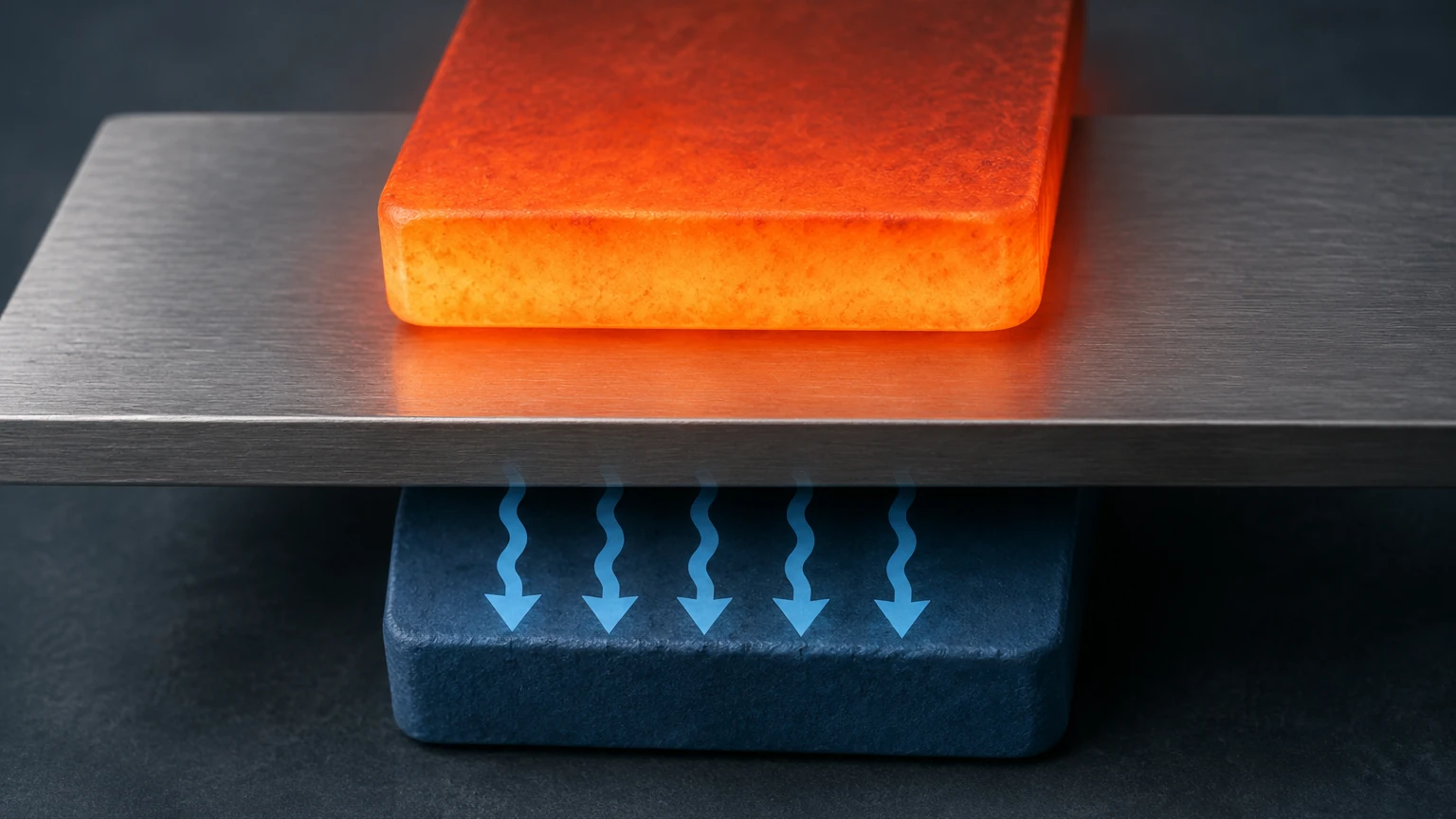
At the molecular level, the transfer of heat through direct contact occurs when kinetic energy is passed between adjacent atoms or molecules. In solids, particularly metals like the stainless steel used in Kaifil filtration products, this transfer is facilitated by both lattice vibrations and the movement of free electrons.
In a filtration context, conduction happens at several interfaces:
1. Fluid-to-Media Interface: The process fluid transfers heat directly to the wire mesh or sintered metal fibers.
2. Media-to-Support Interface: Heat moves from the filtration layer to the internal support cores or external cages.
3. Filter-to-Housing Interface: The heat is conducted from the filter element through the seals and seating surfaces into the filter housing and eventually to the external environment or heat recovery systems.
Thermal conductivity ($k$) is the measure of a material's ability to conduct heat. When designing systems for the Main Page of industrial utility, engineers must account for the specific conductivity of the alloys used. For instance, while stainless steel 316L is prized for its corrosion resistance, its thermal conductivity is significantly lower than that of copper or aluminum. This lower conductivity can be an advantage in maintaining process temperatures within the fluid, but it also means that the filter element itself can become a localized heat sink or a point of significant thermal stress during rapid temperature fluctuations.
Material Selection: Thermal Properties of Stainless Steel Mesh
Stainless steel is the industry standard for high-temperature filtration due to its mechanical strength and resistance to oxidation. However, different grades exhibit different behaviors when subjected to the transfer of heat through direct contact.
Austenitic Stainless Steels (304, 316, 310S)
These are the most common materials for industrial filters. Grade 310S, in particular, is engineered for high-temperature service, offering better resistance to oxidation and cyclic heating than 304 or 316. When heat is conducted through these materials, they undergo thermal expansion. The coefficient of thermal expansion (CTE) must be factored into the tolerances of the filter assembly to prevent bypass or mechanical failure at operating temperatures.
Sintered Metal Media
Sintered wire mesh and sintered metal fibers provide a unique thermal profile. Because the wires are fused together at every contact point through a vacuum sintering process, the entire structure acts as a continuous thermal conductor. This allows for more uniform heat distribution across the filter surface, reducing the risk of "hot spots" that could degrade the process fluid or cause localized weakening of the mesh.
Engineering for Thermal Expansion and Structural Integrity
When the transfer of heat through direct contact occurs in a confined assembly, such as a filter cartridge inside a heavy-walled pressure vessel, differential expansion becomes a primary engineering concern.
Differential Thermal Expansion
If the filter element is made of a different alloy than the housing, or if the element heats up significantly faster than the housing, the resulting physical expansion can exert immense pressure on seals and end caps. Engineers must specify:
* Expansion Joints or Floating Mounts: Allowing the filter element to grow in length without buckling.
* Gasket Compatibility: Using high-temperature materials like Graphite or PTFE (within its limits) that maintain a seal even as the metal surfaces expand and contract.
Structural Integrity at Temperature
As temperature increases, the yield strength of metal decreases. A filter that can withstand a differential pressure of 10 bar at 25°C might fail at 5 bar when operating at 400°C. When reviewing technical specifications on a manufacturer's Main Page, it is vital to check the "derated" pressure ratings for the specific operating temperature of your application.
High-Temperature Applications and Heat Transfer Dynamics
Several industrial sectors rely heavily on the predictable transfer of heat through direct contact within their filtration stages.
Polymer Melt Filtration
In plastic extrusion, the polymer must be kept at a precise temperature to maintain the correct viscosity. The filter screen changer is heated, and heat is conducted through the metal mesh into the polymer. If the conduction is uneven, it can result in "cold slugs" that block the mesh or "degraded spots" where the polymer has overheated.
Steam Filtration
Culinary-grade steam or process steam filtration involves constant contact with high-energy vapor. The filter elements must conduct heat away from the surface quickly enough to prevent localized condensate buildup, which can lead to water hammer or erosion of the fine mesh layers.
Hot Gas Filtration
In power generation or chemical synthesis, gases at temperatures exceeding 500°C are common. Here, the transfer of heat through direct contact between the gas-borne particulates and the filter surface can lead to "caking" or sintering of the particles onto the filter, making cleaning difficult. Understanding the thermal gradient across the filter media helps in designing effective pulse-jet cleaning cycles.
Mitigating Thermal Risks: Shock, Creep, and Oxidation
Operating in environments where the transfer of heat through direct contact is constant introduces three primary risks to filtration components:
1. Thermal Shock: This occurs when a cold fluid is suddenly introduced to a hot filter, or vice versa. The rapid contraction or expansion can cause the microscopic welds in the wire mesh to crack. Utilizing sintered materials with robust bond points is the best defense against thermal shock.
2. Creep: This is the tendency of a solid material to move slowly or deform permanently under the influence of persistent mechanical stresses and high heat. In filtration, creep can lead to the "opening" of the mesh pores, effectively lowering the filtration rating and allowing larger contaminants to pass through.
3. Oxidation and Scaling: At high temperatures, the chromium in stainless steel reacts with oxygen to form a protective layer. However, if the temperature exceed the material's limit, this layer can flake off (scaling), contaminating the filtrate and thinning the wire diameter, which reduces the structural life of the filter.
Technical Selection Criteria for Heat-Intensive Environments
To ensure the reliability of a filtration system, engineers should confirm the following data points before finalizing a purchase:
* Maximum Continuous Operating Temperature: The highest temperature the filter can withstand indefinitely without significant loss of mechanical properties.
* Peak Temperature Limits: Short-term temperature spikes the system can handle during startup, shutdown, or process upsets.
* Thermal Conductivity Requirements: Does the process require the filter to help dissipate heat or maintain it?
* Cleaning Compatibility: High-temperature filters are often cleaned via pyrolysis or ultrasonic baths. The filter must be able to withstand these cleaning temperatures without losing its micron rating.
For customized solutions tailored to specific thermal profiles, consulting the engineering resources on a professional manufacturer's Main Page allows for the alignment of material science with practical application needs. Customizations might include reinforced internal cores for high-viscosity fluids at temperature or specialized alloy selections like Inconel or Monel for extreme thermal and corrosive combinations.
Conclusion: Integrating Thermal Management with Filtration
The transfer of heat through direct contact is an unavoidable reality in industrial filtration. By viewing the filter not just as a separator of particles, but as a heat-conducting component within a larger thermal system, engineers can design more resilient and efficient processes. Selecting high-quality stainless steel media, accounting for thermal expansion, and understanding the derating of materials at temperature are the cornerstones of successful high-temperature filtration.
As industrial processes push toward higher efficiencies and more extreme operating conditions, the role of precision-engineered metal filters becomes even more significant. Investing in components designed with a deep understanding of thermal conduction ensures that your filtration system remains a reliable link in the production chain, rather than a point of failure.
Download The Transfer of Heat Through Direct Contact as a PDF
