


Woven Wire Fence with Top Rail: Engineering Durability and Structural Integrity
In industrial environments, the selection of fencing and enclosure systems is dictated by more than just basic security. Engineers and facility managers must account for material longevity, resistance to corrosive elements, and structural stability under load. A woven wire fence with top rail represents a sophisticated structural solution that combines the high-performance characteristics of precision-manufactured mesh with the mechanical support of a rigid framing system.
While standard fencing often relies on tension alone, the integration of a top rail provides a definitive horizontal support structure that prevents sagging, maintains mesh alignment, and enhances the overall lifespan of the installation. For industries ranging from chemical processing to food and beverage production, understanding the technical nuances of Woven Wire Mesh and its structural implementation is critical for ensuring operational safety and cost-efficiency.
The Role of the Top Rail in Woven Wire Systems
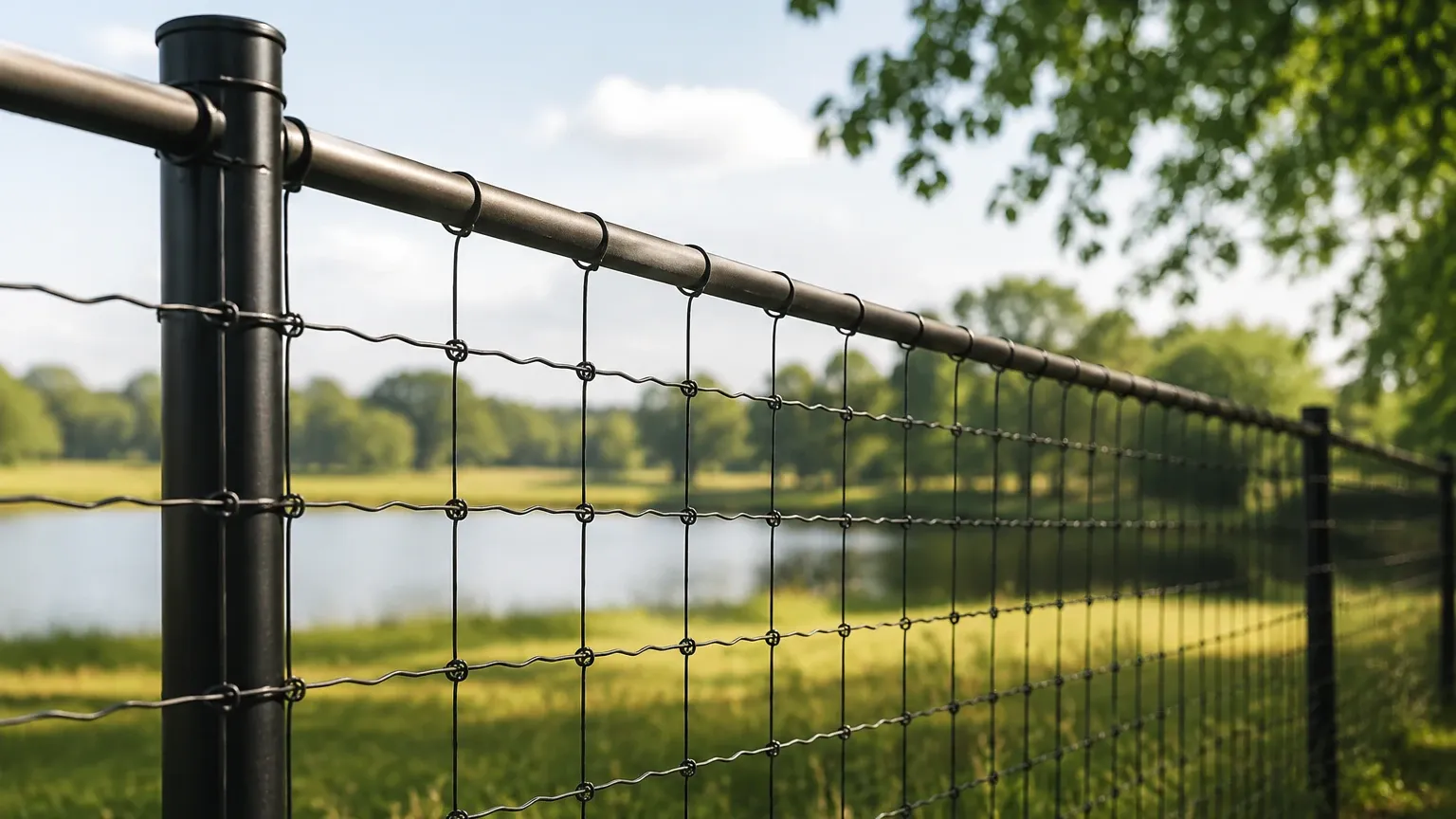
The "top rail" is a horizontal member, typically a pipe or tube, that runs along the upper edge of the fence line, connecting the vertical posts. In a woven wire system, its function is multifaceted:
1. Load Distribution: Woven mesh, particularly when manufactured from high-gauge stainless steel, possesses significant weight. The top rail distributes this weight evenly across the vertical posts, reducing the stress on individual attachment points.
2. Prevention of Deformation: Unlike welded wire, which is rigid at every junction, woven wire relies on the mechanical interlock of the wires. Without a top rail, the mesh can "belly" or sag over time due to gravity or external impacts. The rail ensures the mesh remains taut and aesthetically uniform.
3. Enhanced Security: A top rail eliminates the vulnerability of a soft top edge. In security applications, this prevents the mesh from being easily pulled down or bypassed, providing a solid anchor point for additional security measures if required.
4. Safety and Compliance: In industrial walkways or machine guarding applications, a top rail provides a smooth, snag-free surface, protecting personnel from the exposed ends of the wire mesh.
Material Science: Selecting the Right Alloy
When specifying a woven wire fence with top rail for industrial use, the choice of material is the most significant factor in determining the Total Cost of Ownership (TCO). Kaifil specializes in high-grade stainless steel solutions, which are preferred over galvanized or PVC-coated steel in demanding environments.
SS304: The Industrial Standard
Stainless steel 304 is the most common alloy used for woven wire mesh. It offers excellent corrosion resistance and high tensile strength. It is suitable for most indoor industrial applications, such as machine guarding, internal partitions, and storage enclosures where exposure to harsh chemicals is limited.
SS316L: The Solution for Corrosive Environments
For facilities located near coastal regions, or those involving chemical processing, pharmaceutical manufacturing, or food production where aggressive cleaning agents are used, SS316L is the superior choice. The addition of molybdenum (2-3%) provides enhanced resistance to pitting and crevice corrosion, particularly in chloride-rich environments. Utilizing SS316L for both the mesh and the top rail ensures that the entire assembly ages at the same rate, preventing premature failure of the structural components.
Technical Specifications of Woven Wire Mesh
To optimize a woven wire fence with top rail, engineers must define the mesh specifications based on the application’s requirements for airflow, visibility, and physical barrier strength.
Mesh Count and Opening Size
The mesh count refers to the number of openings per linear inch. In structural fencing, a lower mesh count with a thicker wire diameter is typically preferred to maximize impact resistance. For example, a 2×2 mesh (two openings per inch) provides a robust barrier while maintaining high visibility. Conversely, finer meshes may be used for safety screens to prevent small objects from passing through.
Wire Diameter and Tensile Strength
The diameter of the wire directly influences the rigidity of the fence. Industrial woven wire mesh often utilizes wire diameters ranging from 1.0mm to 4.0mm. A thicker wire increases the tensile strength of the panel, making it more resistant to mechanical deformation. When paired with a top rail, the entire system can withstand significant lateral pressure, which is essential in high-traffic industrial zones.
Weave Types
While plain weave is the most common for fencing, other configurations offer specific benefits:
* Plain Weave: Each warp wire crosses over and under each weft wire. It provides a consistent opening size and is the most economical for large-scale fencing.
* Twill Weave: Each warp wire passes over and under two weft wires. This allows for a heavier wire diameter relative to the mesh count, resulting in a denser, stronger panel.
* Crimp Styles: For structural mesh, "inter-crimp" or "lock-crimp" styles are often used. These pre-crimped wires ensure that the intersections are locked in place, providing extra stability even when the mesh is subjected to vibration or impact.
Engineering Considerations for Industrial Installation
Integrating a top rail into a woven wire fence system requires precise engineering to ensure the components work in harmony.
Thermal Expansion
In outdoor applications or facilities with high temperature fluctuations, the thermal expansion coefficients of the stainless steel mesh and the rail must be considered. Stainless steel expands and contracts more than carbon steel. If the mesh is fastened too rigidly to a frame without allowing for slight movement, the tension can cause the mesh to warp or the fasteners to shear.
Attachment Methods
How the woven wire mesh is secured to the top rail and vertical posts is a critical failure point. Common methods include:
* U-Bolts and Clamps: Provide a secure mechanical bond and allow for adjustments during installation.
* Tension Bars and Bands: A vertical bar is threaded through the end of the mesh and then clamped to the post or rail. This provides even tension across the entire height of the panel.
* Welded Frames: For maximum rigidity, the mesh can be tack-welded into a custom-fabricated angle-iron or tube frame, which is then bolted to the support structure. This is often the preferred method for machine guarding and safety partitions.
Applications of Woven Wire Fence with Top Rail
The versatility of this configuration makes it suitable for a wide range of specialized industrial applications:
1. Chemical and Petrochemical Facilities
In environments where corrosive vapors are present, traditional fencing fails rapidly. A 316L stainless steel woven wire fence with a top rail provides a long-term solution for perimeter security and internal hazard isolation, resisting the effects of acid rain and chemical spray.
2. Food and Beverage Processing
Hygiene is paramount in food grade environments. Stainless steel woven mesh is easy to sanitize and does not shed particles or coatings. The top rail configuration is used to create secure zones for high-value ingredients or to partition off automated packaging lines while maintaining airflow and visibility for inspectors.
3. Pharmaceutical Cleanrooms
In pharmaceutical manufacturing, the mesh must be burr-free and resistant to frequent sterilization. Woven wire partitions with top rails provide the necessary structural strength to support ceiling-mounted filtration units or lighting, while the mesh allows for laminar airflow to pass through the enclosure.
4. Machine Guarding and Personnel Safety
OSHA and other safety standards require barriers that can withstand the impact of a failing component or a falling worker. The top rail provides the necessary structural backbone to ensure the safety barrier does not collapse under load, while the woven mesh provides the impact absorption required to contain debris.
Evaluating Total Cost of Ownership (TCO)
When purchasing industrial filtration or fencing components, the initial purchase price is only one part of the equation. A woven wire fence with top rail manufactured from high-quality stainless steel typically involves a higher upfront investment than galvanized chain-link. However, the TCO is significantly lower due to:
* Reduced Maintenance: Stainless steel does not require painting, coating, or frequent rust treatment.
* Longevity: In many industrial environments, a 316L stainless steel system can last 20-30 years, whereas galvanized steel may require replacement every 5-7 years.
* Operational Continuity: Replacing a fence in a high-security or high-hygiene area often requires shutting down operations. Investing in a durable system minimizes these costly disruptions.
Conclusion: Selecting a Technical Partner
Choosing the right configuration for a woven wire fence with top rail requires a deep understanding of material properties and mechanical design. It is not a one-size-fits-all product. Engineers should work with manufacturers who can provide detailed material certifications, precise mesh count specifications, and guidance on structural integration.
At Kaifil, we provide the technical expertise necessary to navigate these decisions. Whether you require specific micron-rated filtration mesh or heavy-duty structural panels, our focus is on delivering reliable, customized solutions that meet the rigorous demands of modern industry. For those looking to specify materials for their next project, we recommend a thorough review of Plain, twill and dutch woven wire mesh in SS304/316L — rolls, cut mesh and framed panels. Send mesh count or micron target for a technical quote. to ensure the selected mesh aligns with both the structural and environmental requirements of the application.
