


Engineering Considerations for Woven Wire Fence Wood Posts and Industrial Mesh Integration
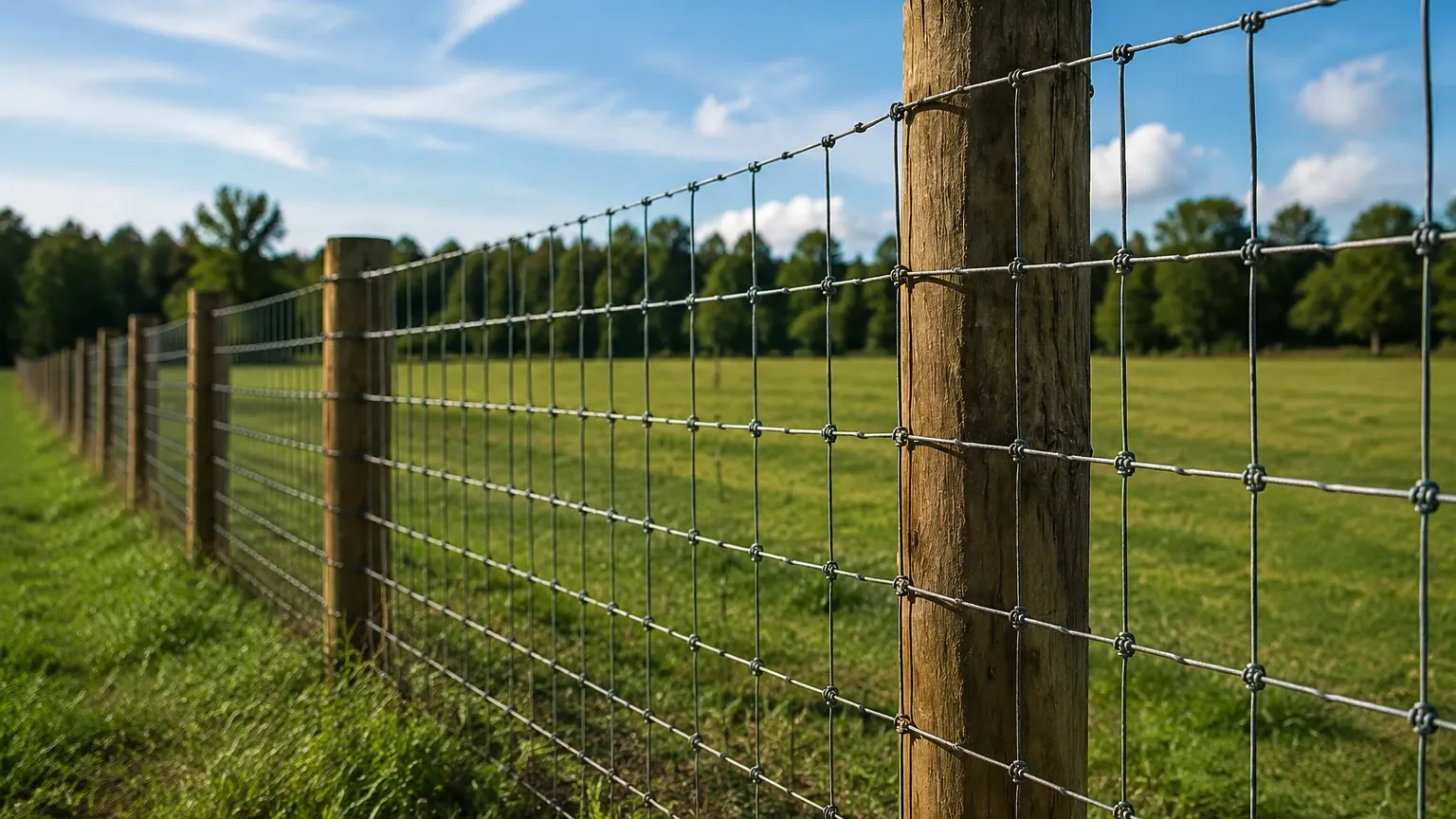
In both agricultural and industrial sectors, the integrity of a containment or filtration system depends heavily on the synergy between the mesh and its supporting structure. While the term "woven wire fence wood posts" often brings to mind traditional livestock containment, the engineering principles behind securing high-quality Woven Wire Mesh to various support structures are critical for long-term performance. For engineers and facility managers, understanding how different mesh types interact with support materials like wood, steel, or composite posts is essential for maintaining tension, ensuring durability, and achieving specific filtration or separation goals.
Industrial applications often require higher precision than standard perimeter fencing. Whether the mesh is used for security partitions, debris screening, or as a component in a larger filtration assembly, the choice of support post—and the method of attachment—directly impacts the system's lifespan and effectiveness.
The Role of Wood Posts in Woven Wire Systems
Wood posts remain a staple in many fencing and partitioning applications due to their cost-effectiveness and ease of installation. In many industrial perimeter settings or temporary filtration sites, wood provides a flexible and readily available structural foundation. However, when using wood posts with high-performance stainless steel mesh, several technical factors must be considered.
Material Selection and Longevity
For industrial-grade applications, standard untreated lumber is rarely sufficient. Pressure-treated timber, typically treated with Chromated Copper Arsenate (CCA) or similar preservatives, is necessary to resist rot, fungal decay, and insect infestation. In environments where chemical exposure is a concern—common in the processing industries Kaifil serves—the interaction between the wood treatment chemicals and the metal mesh must be monitored.
Stainless steel 304 or 316L mesh is generally resistant to the corrosive nature of treated wood, whereas galvanized mesh may experience accelerated zinc depletion when in direct contact with certain wood preservatives. This makes high-grade Plain, twill and dutch woven wire mesh in SS304/316L — rolls, cut mesh and framed panels. Send mesh count or micron target for a technical quote. the preferred choice for projects requiring longevity and structural stability.
Structural Stability and Spacing
The spacing of woven wire fence wood posts is determined by the weight of the mesh and the environmental loads it will face (such as wind or physical impact). For heavy-duty industrial mesh, post spacing typically ranges from 8 to 12 feet. Closer spacing provides greater rigidity, which is vital for maintaining the precise aperture of the mesh under tension. If the posts shift or warp, the mesh can sag, leading to uneven wear and potential failure of the filtration or containment barrier.
Technical Specifications of Woven Wire Mesh
When transitioning from simple fencing to industrial-grade applications, the specifications of the mesh become significantly more complex. Engineers must look beyond basic height and length to evaluate wire diameter, mesh count, and weave type.
Weave Types and Their Applications
1. Plain Weave: The most common type, where each shute wire passes alternately over and under each warp wire. This provides consistent openings and is ideal for standard separation tasks.
2. Twill Weave: Each shute wire passes alternately over and under two warp wires. This allows for a heavier wire diameter in a given mesh count, increasing the strength and durability of the mesh when secured to rigid posts.
3. Dutch Weave: This weave uses a larger diameter warp wire and a smaller shute wire, resulting in a very dense, strong mesh with high filtration precision. While less common for simple "fencing," it is the standard for industrial filtration components that may be housed within framed panels attached to structural supports.
Wire Diameter and Aperture
The relationship between wire diameter and aperture size defines the "open area" of the mesh. In industrial settings, a high open-area percentage is often desired to allow for fluid or air flow, but this must be balanced against the physical strength required to withstand tensioning against wood or metal posts. Using a thicker wire diameter increases the mesh's resistance to deformation, which is a common risk when the mesh is stretched across long spans.
Attachment Methods and Tensioning
One of the primary challenges in using woven wire fence wood posts is achieving and maintaining proper tension. Unlike metal posts, which often use specialized clips or welding, wood posts require mechanical fasteners that can cause localized stress points on the wire.
Fastening Techniques
To secure Woven Wire Mesh to wood, heavy-duty galvanized staples are the industry standard. However, for industrial applications, "U-nails" or staples should not be driven so deep that they crimp the wire. Crimping creates a weak point where vibration or thermal expansion can lead to wire fatigue and eventual breakage.
For high-tension requirements, engineers often specify a "sandwich" method. This involves placing a wooden or metal batten over the mesh and screwing it into the post. This distributes the pressure across the entire height of the post, preventing individual wires from slipping or snapping under load.
The Importance of Corner Bracing
In any woven wire system, the corner and end posts bear the brunt of the tension. When using wood, these posts must be deeper and often require "H-braces" or "N-braces" to prevent the tension of the mesh from pulling the post toward the center of the run. Without adequate bracing, the mesh will inevitably lose its tension, compromising the integrity of the entire installation.
Environmental and Chemical Compatibility
Kaifil specializes in stainless steel solutions because industrial environments are often unforgiving. When designing a system that incorporates woven wire fence wood posts, the environmental conditions play a decisive role in material selection.
Corrosion Resistance
In chemical processing or coastal applications, the salt spray or acidic vapors can quickly degrade standard carbon steel. Stainless steel 304 offers excellent resistance for most general-purpose industrial applications. However, for environments with high chloride exposure or extreme chemical concentrations, SS316L is the superior choice due to its molybdenum content, which provides enhanced pitting resistance.
Thermal Expansion
Industrial facilities often experience significant temperature fluctuations. Metal mesh and wood posts have different coefficients of thermal expansion. A mesh that is perfectly tensioned in the heat of summer may become overly tight in winter, potentially pulling staples out of wood posts or snapping wires. Selecting a mesh with the appropriate elasticity and using tension springs can mitigate these risks.
Customization and OEM Solutions
For many B2B customers, a standard roll of mesh is only the beginning. Kaifil provides customized filtration and separation components that are often integrated into larger structural systems.
Framed Panels vs. Rolls
While rolls of mesh are suitable for long runs of fencing, many industrial applications benefit from framed panels. These panels can be pre-tensioned in a factory setting and then bolted directly to wood or metal posts. This ensures a consistent level of tension and makes replacement or maintenance much simpler. Framed panels also protect the edges of the mesh, which are the most vulnerable points for fraying or corrosion.
Micron-Level Precision
For specialized filtration, the mesh count must be exact. Kaifil works with engineers to determine the specific micron target required for their application. Whether the mesh is being used to keep large debris out of a water intake system or to provide fine filtration in a chemical reactor, the accuracy of the weave is paramount. This level of precision is what differentiates industrial Woven Wire Mesh from standard hardware cloth or agricultural fencing.
Evaluation Criteria for Purchasing Managers
When sourcing materials for a project involving woven wire and wood supports, purchasing managers should confirm the following details with their supplier:
* Alloy Grade: Ensure the stainless steel grade (304, 316, 316L) matches the environmental requirements of the site.
* Mesh Count and Wire Diameter: Verify that the physical strength of the mesh is sufficient for the intended span and tensioning method.
* Edge Treatment: For mesh that will be attached to wood posts, consider whether a finished edge (selvage) or a framed edge is necessary to prevent unraveling.
* Compliance: Ensure the mesh meets relevant ASTM or ISO standards for industrial wire cloth.
Common Risks and Mitigation
1. Sagging: Caused by inadequate tensioning or post-movement. Mitigation: Use proper bracing and high-tensile stainless steel mesh.
2. Galvanic Corrosion: Occurs when dissimilar metals meet in the presence of an electrolyte. Mitigation: Use stainless steel fasteners with stainless steel mesh.
3. Aperture Distortion: Occurs when the mesh is over-tensioned or hit by a heavy object. Mitigation: Select a twill weave or a heavier wire gauge for high-impact areas.
Conclusion
Integrating Woven Wire Mesh with wood posts requires a balance of traditional construction techniques and modern material science. While wood provides a versatile foundation, the performance of the system ultimately depends on the quality of the mesh and the precision of the installation. By focusing on high-grade stainless steel alloys and understanding the mechanical requirements of tensioning and fastening, engineers can create durable, effective solutions for both containment and industrial filtration.
Kaifil continues to support global industries by providing the technical expertise and manufacturing capabilities needed to develop custom filtration components. From material selection to final production, our focus remains on delivering reliable, high-performance wire mesh that meets the rigorous demands of modern industrial applications.
