


Woven Wire Mesh: Engineering Principles for Integrated Structural Applications
In the realm of industrial design and infrastructure, the selection of containment and filtration materials requires a deep understanding of mechanical properties, environmental resistance, and structural compatibility. While Woven Wire Mesh is frequently discussed in the context of high-precision filtration, its utility extends significantly into structural applications, including safety barriers, architectural infill, and specialized enclosures.
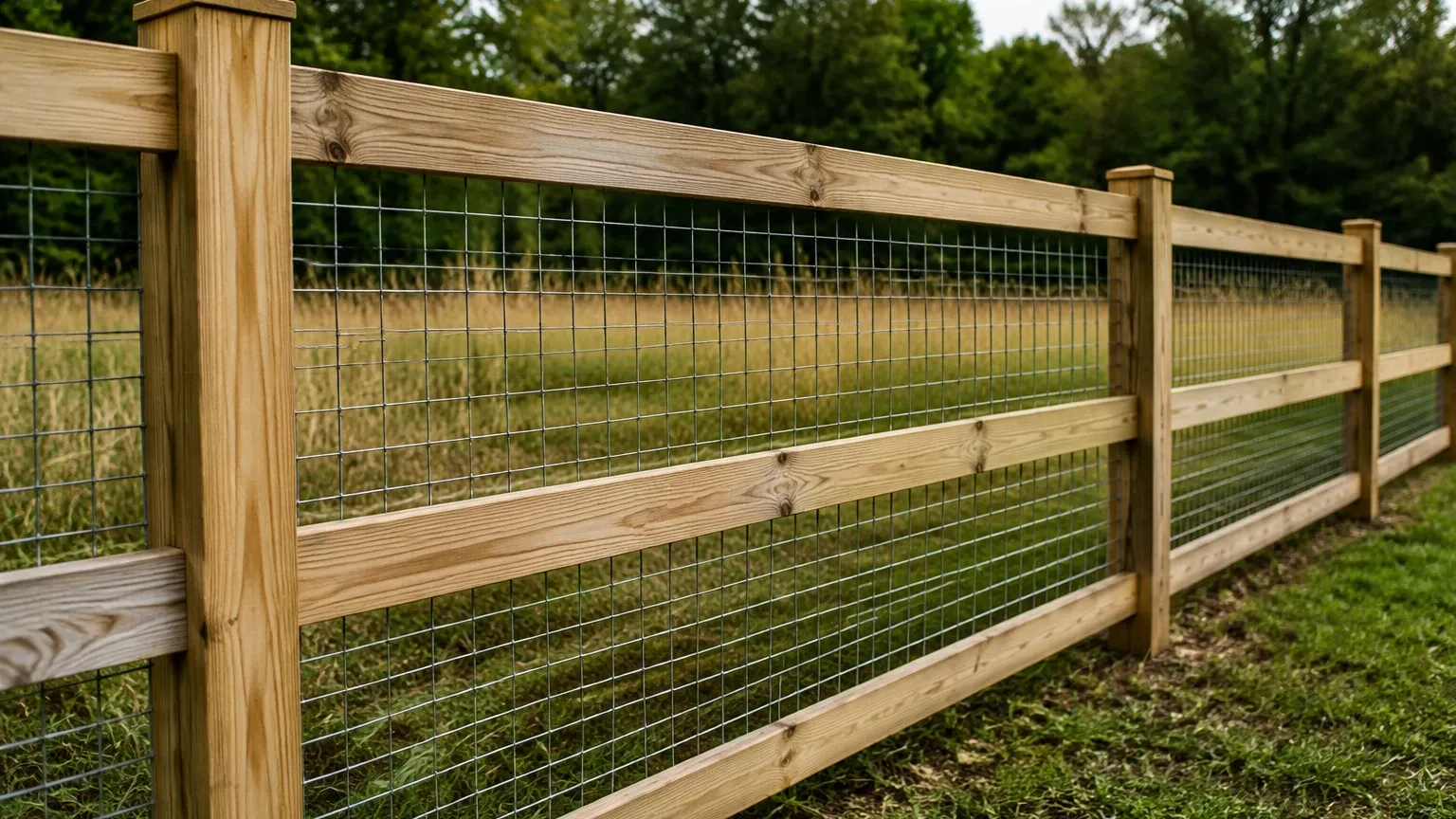
One specific configuration that technical professionals often evaluate is the woven wire fence with boards. This design combines the tensile strength and visibility of stainless steel mesh with the rigid support of a perimeter frame or horizontal board system. For engineers and procurement teams, moving beyond standard hardware-store solutions toward industrial-grade stainless steel components is essential for ensuring long-term durability and safety in demanding environments.
Understanding Woven Wire Mesh in Structural Applications
Industrial woven wire mesh is manufactured by weaving individual wires over and under one another to create a stable, consistent grid. Unlike welded wire, which relies on spot welds at every intersection, woven mesh maintains its integrity through the mechanical tension of the weave itself. This allows for a degree of flexibility and energy absorption that is critical in high-impact or high-vibration environments.
When specifying mesh for a woven wire fence with boards, the primary engineering focus is on the "crimp" and the "weave type." In structural applications, a plain weave or an intermediate crimp is often preferred. The crimping process pre-bends the wire before weaving, ensuring that the wires remain locked in place even when subjected to lateral pressure. This is particularly important when the mesh is integrated into a wooden or metal frame, as it prevents the mesh from sagging or deforming over time.
Engineering Considerations for Woven Wire Fence with Boards
Integrating woven wire mesh with a board-based support system requires careful consideration of the interface between the two materials. In industrial and agricultural-industrial settings, the "boards" typically serve as the primary load-bearing members, while the mesh provides the containment or protective barrier.
Load Distribution and Tensioning
One of the most common failures in fence systems is improper tensioning. When using a woven wire fence with boards, the mesh must be secured in a way that allows for thermal expansion and contraction without causing the wire to snap or the boards to warp. Engineers often specify a "tension wire" or a specialized mounting bracket that distributes the load evenly across the horizontal boards.
Aperture Size and Wire Diameter
The relationship between the opening size (aperture) and the wire diameter determines the "open area" percentage. For safety enclosures or architectural fences, a higher open area allows for better visibility and airflow, but it may reduce the overall structural rigidity. Conversely, a heavier wire diameter increases the mesh's resistance to physical impact and environmental stressors like heavy snow or wind loads.
Material Science: SS304 vs. SS316L for Industrial Enclosures
Material selection is perhaps the most critical factor in the total cost of ownership (TCO) for any industrial mesh project. While galvanized steel is common in residential fencing, industrial applications almost exclusively demand stainless steel due to its superior corrosion resistance and mechanical properties.
1. Grade 304 Stainless Steel: This is the standard "18/8" stainless steel. It offers excellent corrosion resistance in most indoor and mild outdoor environments. It is a cost-effective choice for many industrial safety guards and perimeter fences where chemical exposure is minimal.
2. Grade 316L Stainless Steel: For applications near coastal areas, chemical processing plants, or pharmaceutical facilities, 316L is the necessary choice. The addition of molybdenum provides enhanced resistance to pitting and crevice corrosion, particularly in chloride-rich environments. The "L" denotes low carbon content, which improves weldability and prevents sensitization during the manufacturing of framed panels.
For those seeking specific technical data on alloy performance or weave patterns, it is advisable to Plain, twill and dutch woven wire mesh in SS304/316L — rolls, cut mesh and framed panels. Send mesh count or micron target for a technical quote.
Technical Specifications: Mesh Count, Wire Diameter, and Aperture
When communicating with a manufacturer like Kaifil, providing precise technical specifications is vital for an accurate quote and a high-performance end product. Engineers should focus on three primary metrics:
* Mesh Count: The number of openings per linear inch. In structural fencing, mesh counts are typically lower (e.g., 1×1 to 10×10) compared to filtration applications (which can exceed 400×400).
* Wire Diameter: Measured in millimeters or inches. For a woven wire fence with boards, wire diameters usually range from 1.0mm to 4.0mm to provide the necessary stiffness.
* Aperture (Clear Opening): The actual distance between two adjacent wires. This is the most critical dimension for containment applications, ensuring that the mesh effectively blocks the intended objects while allowing for the desired level of transparency.
| Application Type | Typical Mesh Count | Typical Wire Diameter | Recommended Material |
| :— | :— | :— | :— |
| Industrial Safety Guard | 2 x 2 to 4 x 4 | 2.0mm – 3.0mm | SS304 |
| Architectural Infill | 1 x 1 to 2 x 2 | 3.0mm – 5.0mm | SS304 / SS316L |
| High-Corrosion Perimeter | 4 x 4 to 8 x 8 | 1.5mm – 2.5mm | SS316L |
| Precision Filtration | 20+ | < 0.5mm | SS316L |
Installation and Integration with Support Frames
The method of attaching woven wire mesh to a board system significantly impacts the lifespan of the installation. In a woven wire fence with boards configuration, there are three primary attachment methods:
1. Stapling and Battening: The mesh is stapled to the wooden boards, and a secondary "batten" board is screwed over the staples. This sandwiches the mesh, providing a clean finish and preventing the wires from snagging.
2. U-Edging and Bolting: For more industrial applications, the mesh is fitted with a stainless steel U-channel (U-edge) around the perimeter. This framed panel is then bolted directly to the support boards or metal posts.
3. Tensioning Bars: A vertical bar is threaded through the mesh at the end of a run, which is then pulled tight against the terminal board using heavy-duty bolts. This is the preferred method for long runs of fencing to prevent sagging.
Maintenance and Longevity in Demanding Environments
While stainless steel Woven Wire Mesh is largely maintenance-free, certain environmental factors can affect its performance. In industrial settings, the buildup of particulate matter or chemical residues can lead to surface staining, often mistaken for rust. This is usually "tea staining," a surface-level oxidation that does not compromise the structural integrity of the wire.
Regular cleaning with pressurized water or mild detergents is sufficient to maintain the aesthetic and functional properties of the mesh. When integrated into a woven wire fence with boards, it is also important to inspect the interface points. If the boards are made of wood, they may rot or warp, which can put uneven stress on the mesh. Selecting pressure-treated timber or composite boards can mitigate these risks.
Procurement Strategy for Custom Industrial Mesh
For purchasing teams, the goal is to balance initial capital expenditure (CAPEX) with long-term operational reliability. When sourcing mesh for a woven wire fence with boards, consider the following procurement checklist:
* Certification: Does the manufacturer provide material test reports (MTRs) to verify the alloy composition (e.g., actual nickel and chromium content)?
* Customization: Can the mesh be provided in custom roll widths or pre-cut panels to minimize on-site waste?
* Edge Treatment: For safety applications, are the edges of the mesh knuckled (turned back) or welded to prevent sharp protrusions?
* Lead Times: Given that many industrial projects operate on tight schedules, understanding the production capacity for high-volume orders is essential.
Kaifil specializes in providing these technical solutions, moving beyond simple commodity mesh to offer engineered components that meet specific industrial requirements. Whether the application is a complex filtration system or a robust structural enclosure, the focus remains on precision, material integrity, and application-specific design.
Conclusion
The use of Woven Wire Mesh in a woven wire fence with boards configuration represents a sophisticated intersection of material science and structural engineering. By selecting the appropriate stainless steel grade, wire diameter, and attachment method, technical professionals can create containment solutions that offer unparalleled longevity and performance. When designing these systems, partnering with a manufacturer that understands the nuances of industrial filtration and metal fabrication ensures that the final installation meets the rigorous standards of modern industry.
