


6 x 6 Woven Wire Mesh: Engineering Specifications and Industrial Applications
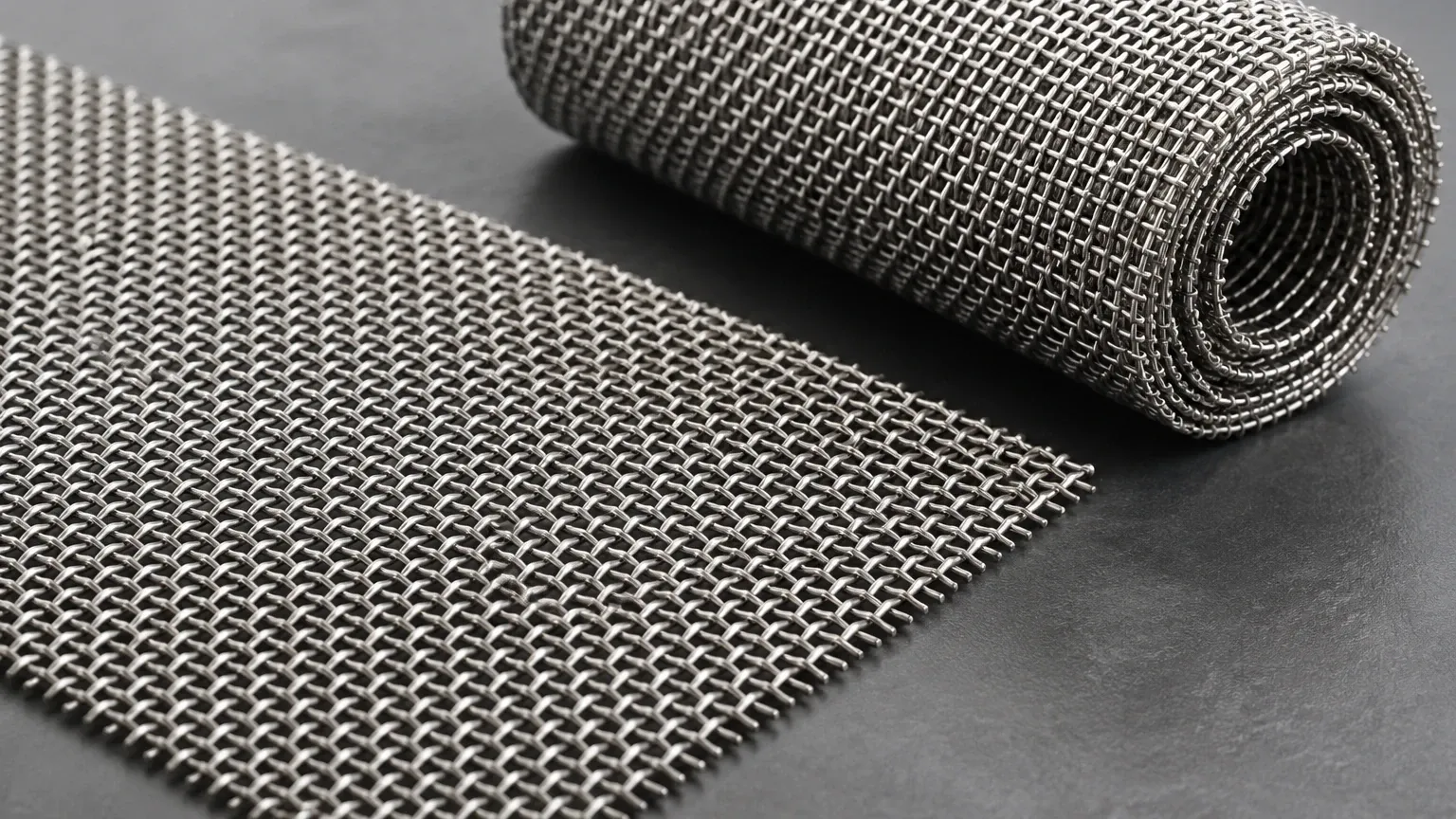
In the landscape of industrial filtration and material separation, the selection of the correct mesh specification is a critical engineering decision. Among the various configurations of Woven Wire Mesh, the 6 x 6 mesh stands as a versatile, intermediate-grade solution. Characterized by six openings per linear inch in both the warp and weft directions, this specification provides a balance of structural rigidity, high open area, and precise aperture control.
For engineers and procurement professionals, understanding the technical nuances of 6 x 6 woven wire mesh is essential for optimizing system performance, whether the application involves primary liquid filtration, aggregate screening, or protective guarding. This guide explores the geometric properties, material considerations, and engineering factors that define the utility of 6-mesh stainless steel solutions.
Understanding 6 x 6 Woven Wire Mesh Geometry
The term "6 x 6 mesh" refers specifically to the number of wires per linear inch (25.4 mm). In a standard square weave, this results in 36 openings per square inch. However, the mesh count is only one part of the technical profile. To fully define the performance of the mesh, engineers must consider the relationship between the wire diameter and the resulting aperture (opening size).
Aperture and Wire Diameter
In 6 x 6 woven wire mesh, the aperture size is determined by subtracting the wire diameter from the pitch (the distance from the center of one wire to the center of the next). For a 6-mesh screen, the pitch is 0.1667 inches (4.23 mm).
* Standard Configuration: A common industrial standard for 6-mesh uses a wire diameter of 0.035 inches (0.889 mm). This results in an aperture of 0.1317 inches (3.345 mm).
* Heavy-Duty Configuration: For high-impact or high-pressure applications, a thicker wire (e.g., 0.047 inches or 1.2 mm) may be used, which reduces the aperture size but significantly increases the mechanical strength and wear life of the screen.
* Light-Duty Configuration: Thinner wires increase the open area and flow rate but reduce the structural integrity and resistance to deformation under load.
Open Area Percentage
The percentage of open area is a vital metric for calculating flow rates and pressure drops. It is calculated using the formula: `(Aperture / (Aperture + Wire Diameter))^2 x 100`. For a standard 6-mesh with 0.035" wire, the open area is approximately 62.4%. This high transparency makes it an excellent choice for applications requiring minimal resistance to fluid or air flow.
Material Science: Selecting the Right Alloy
The performance of 6 x 6 woven wire mesh in demanding environments is largely dictated by its metallurgical composition. Kaifil specializes in stainless steel alloys, which offer the durability and chemical resistance required for modern industrial processes.
Stainless Steel 304 (SS304)
SS304 is the most widely specified material for industrial mesh. It provides excellent corrosion resistance in most atmospheric conditions and is suitable for food processing, architectural applications, and general industrial screening. It maintains its mechanical properties at temperatures up to 800°F (427°C).
Stainless Steel 316L (SS316L)
For environments involving chlorides, marine conditions, or highly acidic/alkaline chemical processing, SS316L is the preferred choice. The addition of molybdenum enhances its resistance to pitting and crevice corrosion. The "L" designation indicates low carbon content, which minimizes carbide precipitation during welding, ensuring the mesh remains corrosion-resistant at the joints if fabricated into filter cartridges or framed panels.
High-Temperature and Specialty Alloys
In specialized sectors such as petrochemical or aerospace, 6-mesh may be produced in alloys like Inconel or Monel to withstand extreme thermal cycling or specific chemical catalysts. However, for the majority of B2B filtration needs, SS304 and SS316L provide the most cost-effective balance of performance and longevity.
Calculating Performance: Flow Dynamics and Pressure Drop
When integrating 6 x 6 woven wire mesh into a hydraulic or pneumatic system, engineers must account for the physical impact the mesh has on the medium. While 6-mesh is considered "coarse" compared to micron-rated Dutch weave filters, it still introduces turbulence and resistance.
Flow Rate and Velocity
The high open area of 6-mesh (typically >60%) allows for high-velocity flow with relatively low energy loss. This is critical in pre-filtration stages where the goal is to remove large debris without starving downstream pumps or sensitive components.
Pressure Drop (ΔP)
Pressure drop across a 6 x 6 mesh screen is a function of the fluid's viscosity, density, and velocity. Because the openings are relatively large (approx. 3.3 mm), the ΔP is negligible in many low-viscosity water applications. However, in high-viscosity oil or polymer filtration, even a 6-mesh screen can contribute to cumulative system pressure, requiring careful calculation during the design phase.
Particle Retention
6-mesh is designed to retain particles larger than its aperture (e.g., 3,345 microns). It is not intended for fine filtration but serves as a primary barrier. In multi-stage filtration systems, the 6-mesh layer acts as a "trash screen," protecting finer Woven Wire Mesh layers from mechanical damage caused by large contaminants.
Industrial Applications of 6 x 6 Woven Wire Mesh
The versatility of the 6-mesh configuration allows it to serve multiple roles across diverse industries. Its structural stability and uniform openings make it a standard component in several key areas:
1. Pre-Filtration and Intake Screening
In water treatment and power generation, 6 x 6 mesh is used in intake structures to prevent large debris, aquatic life, and suspended solids from entering the system. Its robust wire diameter ensures it can withstand the force of flowing water and debris impact.
2. Food and Beverage Processing
Stainless steel 6-mesh is frequently used in the processing of bulk food products, such as grains, seeds, and nuts. It serves as a scalping screen to remove oversized contaminants or as a support structure for finer filter media in juice or syrup clarification.
3. Chemical and Petrochemical Processing
In catalyst recovery and chemical reactors, 6-mesh panels are used to support catalyst beds or to strain large particulates from process streams. The choice of SS316L ensures the mesh can withstand corrosive reagents over long operational cycles.
4. Architectural and Security Guarding
Beyond filtration, the 6 x 6 mesh is utilized in mechanical engineering for safety guards on rotating equipment. It provides the necessary ventilation for cooling while preventing personnel from coming into contact with dangerous components. Its aesthetic uniformity also makes it a popular choice for architectural infill panels.
Customization and Fabrication Options
As a professional manufacturer, Kaifil provides customized solutions that go beyond standard off-the-shelf rolls. Industrial applications often require specific form factors to integrate into existing machinery.
* Cut-to-Size Pieces: Precision laser or plasma cutting ensures that the mesh fits perfectly into housings without frayed edges.
* Framed Panels: For high-pressure applications or vibrating screens, 6-mesh is often mounted in rigid stainless steel frames to prevent bypass and increase structural life.
* Filter Cartridges: 6 x 6 mesh can be rolled and welded into cylinders to serve as coarse strainers or as the inner support core for pleated filter elements.
* Edge Treatments: Options include hemmed edges, U-binders, or welded selvages to improve handling safety and prevent the mesh from unraveling under vibration.
Critical Procurement Considerations for Engineers
When specifying 6 x 6 woven wire mesh for a project, purchasing teams should confirm several technical details with the manufacturer to ensure the product meets the application's demands.
1. Wire Diameter Tolerance: Even slight variations in wire diameter can affect the aperture size and open area. Ensure the manufacturer adheres to ASTM E2016 or equivalent industrial standards.
2. Material Certification: Request Mill Test Reports (MTRs) to verify the chemical composition of the stainless steel, especially for pharmaceutical or food-grade applications.
3. Flatness and Tension: For screening applications, the mesh must be supplied flat and free of curls or waves to ensure uniform particle separation.
4. Cleaning and Passivation: For medical or high-purity chemical applications, the mesh should undergo ultrasonic cleaning and passivation to remove manufacturing oils and enhance corrosion resistance.
Maintenance and Longevity in Demanding Environments
The total cost of ownership (TCO) for industrial filtration components is heavily influenced by their service life and maintenance requirements. 6 x 6 woven wire mesh is inherently durable, but its lifespan can be extended through proper care.
Cleaning Protocols
Because of its relatively large openings, 6-mesh is less prone to "blinding" (clogging) than finer meshes. However, sticky or fibrous materials can still accumulate. Recommended cleaning methods include backwashing, steam cleaning, or mechanical brushing. The use of stainless steel ensures that the mesh can withstand aggressive cleaning agents without degrading.
Wear and Replacement Cycles
In abrasive applications, such as aggregate screening, the wires will eventually thin due to erosion. Engineers should monitor the wire diameter over time. Once the wire has worn beyond a certain percentage of its original thickness (typically 30-50%), the risk of wire breakage increases, and the mesh should be replaced to prevent downstream contamination.
Conclusion
The 6 x 6 woven wire mesh is a fundamental component in the industrial toolkit, offering a robust solution for coarse filtration and separation. By selecting the appropriate wire diameter and alloy, and by partnering with a manufacturer capable of precision customization, engineers can ensure their systems operate with maximum efficiency and minimal downtime.
For technical assistance in selecting the optimal Woven Wire Mesh configuration for your specific application, contact the engineering team at Kaifil. We provide comprehensive support from material selection to final fabrication, ensuring your filtration components meet the highest standards of quality and performance.
