


Understanding 2 x 2 Woven Wire Mesh in Industrial Filtration Applications
In the realm of industrial filtration and material separation, the selection of the correct mesh specification is a critical engineering decision. Among the various configurations available, 2 x 2 woven wire mesh represents a foundational coarse-grade material used extensively for pre-filtration, structural support, and heavy-duty screening. This specification, characterized by having two openings per linear inch in both the warp and shute directions, offers a unique balance of high open area and mechanical rigidity.
For engineers and procurement professionals, understanding the technical nuances of Woven Wire Mesh is essential for optimizing system performance and ensuring the longevity of filtration components. This guide examines the technical parameters, material considerations, and industrial applications of 2 x 2 mesh to support informed purchasing and design decisions.
Technical Specifications of 2 x 2 Woven Wire Mesh
The designation "2 x 2" refers to the mesh count, which is the number of openings per linear inch (25.4mm). While the mesh count defines the frequency of the grid, the performance of the mesh is equally dependent on the wire diameter and the resulting aperture size.
Mesh Count and Aperture
In a 2 x 2 configuration, there are four openings per square inch. The aperture, or the clear distance between two adjacent wires, is calculated by subtracting the wire diameter from the pitch (the center-to-center distance of the wires). For a 2-mesh screen, the pitch is 0.5 inches (12.7mm). Therefore, if a standard wire diameter of 0.063 inches (1.6mm) is used, the aperture would be 0.437 inches (11.1mm).
Open Area Percentage
The open area is a critical metric for flow dynamics. It determines the percentage of the total surface area that is unobstructed, directly impacting the flow rate and pressure drop across the filter. Coarser meshes like the 2 x 2 woven wire mesh typically offer a high open area, often exceeding 60% to 70% depending on the wire gauge. This makes them ideal for high-flow applications where minimal resistance is required.
Wire Gauge Selection
The choice of wire diameter affects both the strength of the mesh and its filtration characteristics. Thicker wires provide greater structural integrity and resistance to mechanical wear but reduce the open area. Conversely, thinner wires maximize throughput but may require additional support structures in high-pressure environments.
Material Selection: The Role of Stainless Steel
For industrial environments, material durability is non-negotiable. Kaifil specializes in manufacturing filtration solutions using high-grade stainless steel to ensure chemical compatibility and thermal stability.
SS304 vs. SS316L
* Stainless Steel 304: This is the most common grade for industrial wire mesh. It provides excellent mechanical properties and good corrosion resistance in many environments. It is a cost-effective choice for general-purpose screening and filtration where extreme chemical exposure is not a primary concern.
* Stainless Steel 316L: For applications involving corrosive chemicals, saline environments, or pharmaceutical processing, SS316L is the preferred choice. The addition of molybdenum enhances its resistance to pitting and crevice corrosion. The "L" (low carbon) designation is particularly important if the mesh is to be welded into frames or cartridges, as it prevents carbide precipitation during the welding process.
Specialized Alloys
In extreme cases involving high temperatures or highly aggressive acids, specialized alloys such as Monel, Inconel, or Hastelloy may be utilized. However, for the majority of B2B filtration needs, SS304 and SS316L provide the most reliable performance-to-cost ratio.
Structural Integrity and Weave Types
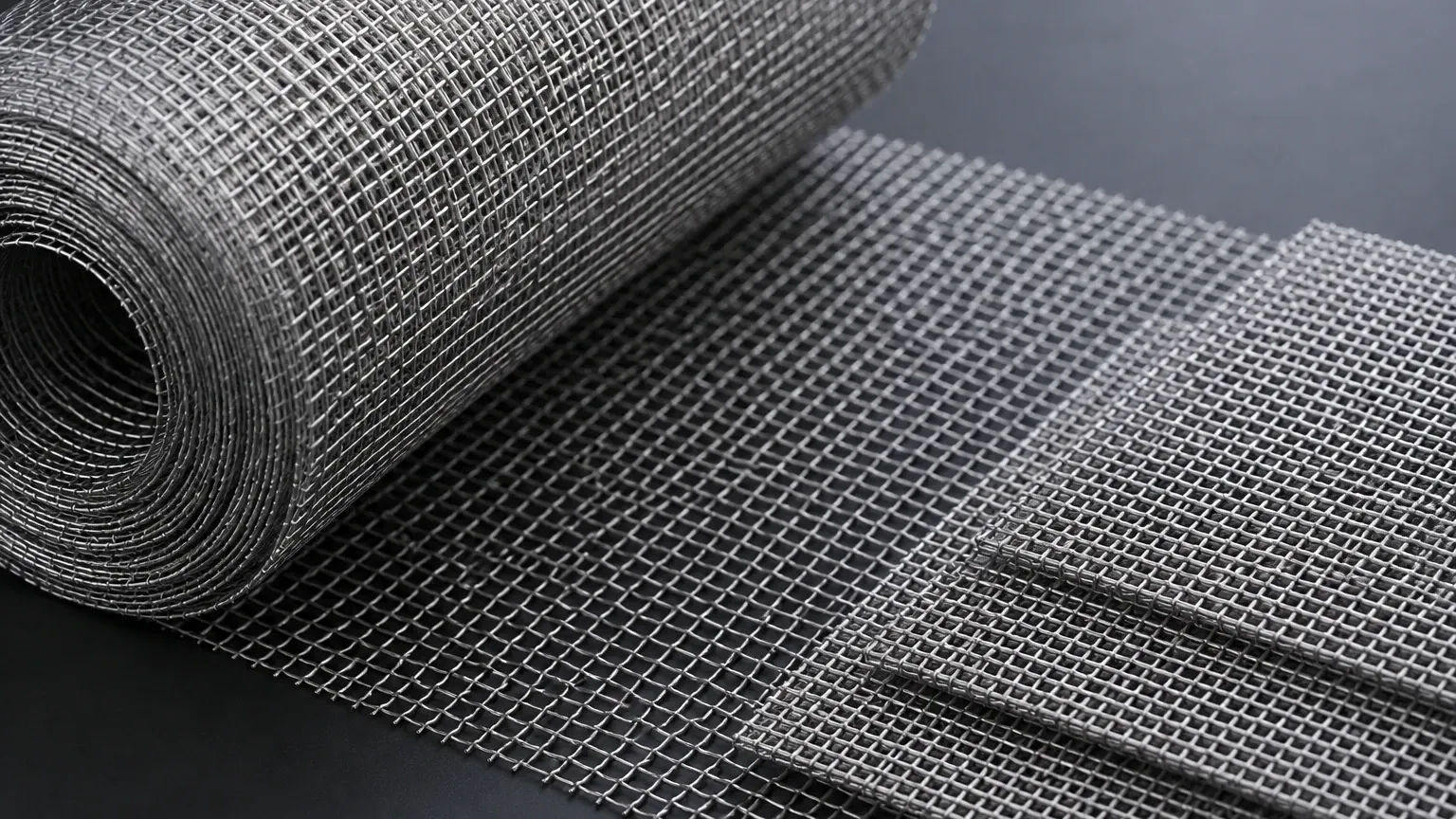
Most 2 x 2 woven wire mesh is produced using a Plain Weave pattern. In this construction, each warp wire passes alternately over and under each shute wire. This simple over-under pattern is highly effective for coarse meshes, providing a stable and consistent aperture size.
Mechanical Stability
Because 2 x 2 mesh uses relatively thick wires, it possesses significant inherent stiffness. This makes it suitable for use as a "support mesh" or "drainage layer" in multi-layered filter elements. In these configurations, the coarse 2×2 mesh provides the structural skeleton that protects finer, more delicate filter media (such as fine wire cloth or non-woven felts) from collapsing under high differential pressure.
Edge Treatments and Fabrication
When integrating 2 x 2 mesh into industrial equipment, the edge treatment is vital for safety and performance. Options include:
* Raw Edges: Suitable for mesh that will be further processed or enclosed in a frame.
* Hemmed or Folded Edges: Prevents fraying and provides a safer handling surface.
* Welded Frames: For use as vibrating screens or heavy-duty guards, the mesh is often tensioned and welded into a rigid stainless steel frame.
Key Industrial Applications
The versatility of 2 x 2 woven wire mesh allows it to serve multiple functions across diverse sectors. Its primary roles include protection, support, and coarse separation.
1. Pre-Filtration and Trash Racks
In water treatment and chemical processing, 2 x 2 mesh is often the first line of defense. It acts as a pre-filter to remove large debris, branches, or plastic waste before the fluid reaches finer filtration stages or sensitive pumps. This protects downstream equipment from damage and reduces the maintenance frequency of finer filters.
2. Support for Filter Cartridges
In the manufacturing of stainless steel filter cartridges, 2 x 2 mesh is frequently used as an inner or outer support core. It maintains the cylindrical shape of the cartridge and ensures that the pleated filter media remains evenly spaced, allowing for uniform flow distribution across the entire surface area.
3. Food and Beverage Processing
Stainless steel mesh is inherently hygienic and easy to clean. In food processing, 2 x 2 mesh is used for scalping—removing oversized contaminants from bulk dry ingredients—or as part of washing systems for produce. The high open area ensures that wash water or air can pass through the product efficiently.
4. Safety Guards and Architectural Enclosures
Beyond filtration, the mechanical strength of 2-mesh makes it an excellent choice for safety guards on industrial machinery. It allows for visibility and ventilation while preventing personnel from contacting moving parts. In architectural contexts, it is used for infill panels and partitions due to its clean, industrial aesthetic and durability.
Engineering Considerations for Selection
When specifying 2 x 2 woven wire mesh for a project, engineers should evaluate the following factors to ensure the selected product meets the application requirements:
* Flow Velocity: Calculate the expected flow velocity through the mesh. High-velocity systems may require heavier wire diameters to prevent wire displacement or vibration-induced fatigue.
* Pressure Drop (ΔP): Use the open area percentage to estimate the initial pressure drop. A higher open area results in a lower ΔP, which reduces energy consumption for pumps and compressors.
* Chemical Compatibility: Ensure the stainless steel grade is compatible with the process fluid, especially at elevated temperatures. Consult corrosion resistance tables for SS304 and SS316L relative to your specific chemicals.
* Total Cost of Ownership (TCO): While cheaper materials may reduce initial capital expenditure, high-quality stainless steel mesh reduces the frequency of replacements and downtime. Consider the ease of cleaning (backwashing or ultrasonic cleaning) when calculating the long-term value.
Customization and OEM Capabilities
As a professional manufacturer, Kaifil provides extensive customization options for Woven Wire Mesh to meet specific industrial needs. Standard rolls are available, but many B2B applications require precision-cut pieces, discs, or custom-fabricated components.
Tailored Specifications
If a standard 2 x 2 mesh does not perfectly suit your flow requirements, wire diameters can be adjusted. For example, a "heavy-duty" 2-mesh might use a 0.080-inch wire, while a "light-duty" version might use a 0.047-inch wire. These adjustments allow for fine-tuning the balance between strength and throughput.
Integration Services
Kaifil can supply mesh with various finishes, including passivated surfaces for enhanced corrosion resistance or electropolished finishes for pharmaceutical-grade cleanliness. We also offer forming, welding, and framing services to deliver ready-to-install filtration components.
Conclusion: Making an Informed Choice
The 2 x 2 woven wire mesh is a workhorse of industrial filtration, providing the necessary strength and flow capacity for the most demanding environments. Whether used as a standalone screen or as a critical support component in a complex filtration system, its performance depends on the precision of its manufacture and the appropriateness of its material specification.
By focusing on technical accuracy—from wire gauge selection to the choice of stainless steel grade—engineers can ensure their filtration systems operate at peak efficiency with minimal maintenance. For those seeking reliable, high-performance filtration components, partnering with a manufacturer that understands these engineering nuances is the first step toward operational excellence.
If you are currently designing a filtration system or need to replace existing mesh components, it is advisable to confirm your specific micron requirements, flow rates, and environmental conditions. Plain, twill and dutch woven wire mesh in SS304/316L — rolls, cut mesh and framed panels. Send mesh count or micron target for a technical quote. Review product options and application support to find the ideal configuration for your industrial application.
