


Engineering Guide to 1 2 x 1 2 Woven Wire Mesh in Industrial Applications
In the landscape of industrial filtration and separation, the selection of specific mesh dimensions is a critical engineering decision that impacts flow rates, structural integrity, and the efficiency of the entire process. The 1 2 x 1 2 woven wire mesh—referring to a mesh with 1/2-inch openings—occupies a unique position between fine filtration media and heavy-duty structural grates. Often categorized as a coarse mesh, it serves as a foundational component in chemical processing, food production, and pharmaceutical manufacturing.
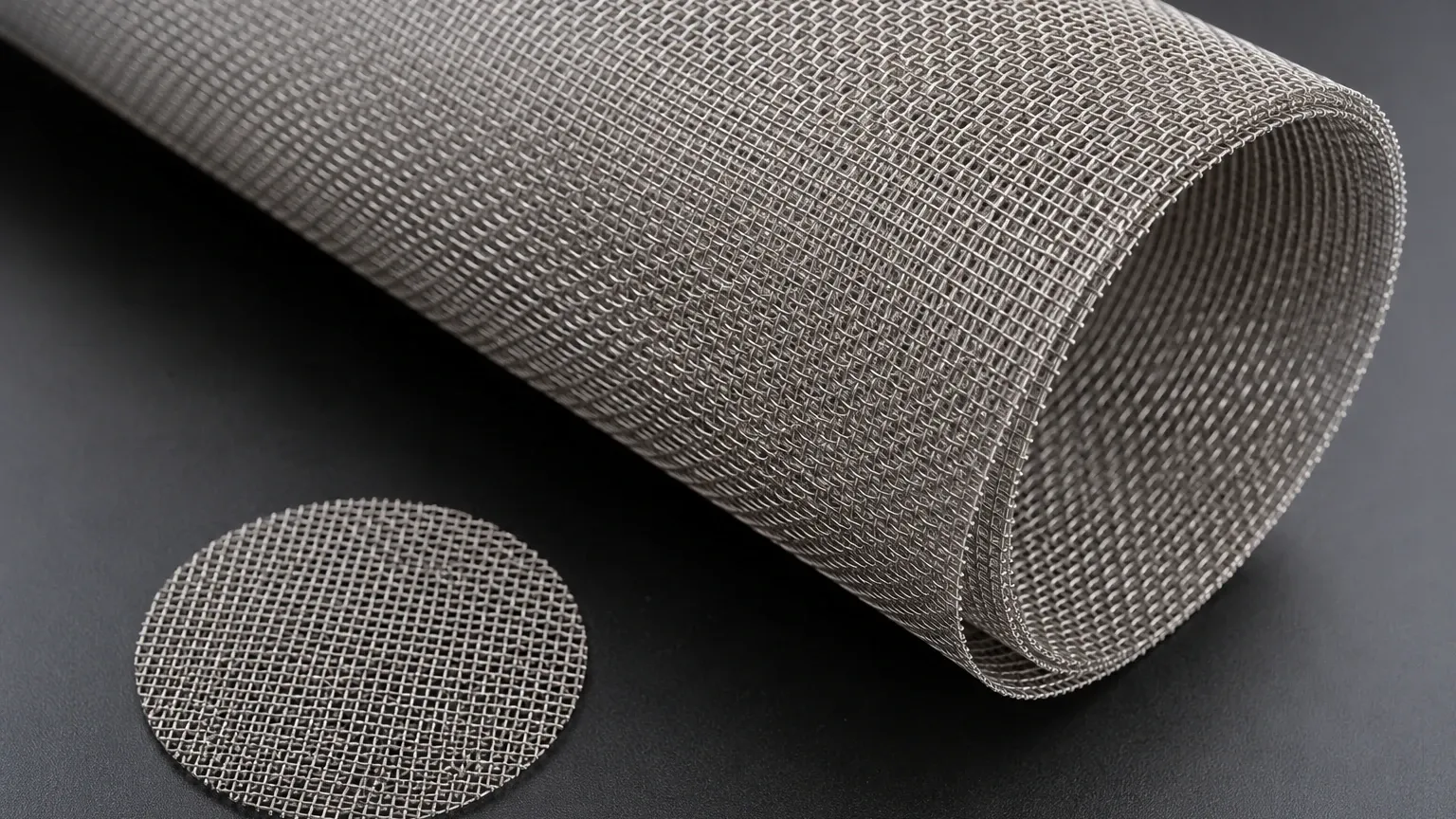
Selecting the right Woven Wire Mesh requires a deep understanding of wire diameters, material properties, and weave styles. For engineers and procurement teams, the challenge lies not just in finding the 1/2-inch dimension, but in ensuring the specification meets the mechanical and chemical demands of the operating environment.
Technical Specifications and Geometry
When specifying a 1 2 x 1 2 woven wire mesh, the term "1/2 inch" can refer to two different measurements: the mesh count (2 meshes per linear inch) or the clear opening size. In most industrial contexts, a 1/2" mesh typically refers to the center-to-center distance between wires or the clear space between them.
The Relationship Between Wire Diameter and Open Area
The performance of the mesh is dictated by the relationship between the wire diameter and the opening. For a fixed 1/2-inch opening, increasing the wire diameter improves the structural strength and wear resistance but decreases the percentage of open area. Conversely, a thinner wire increases the open area, allowing for higher flow rates and lower pressure drops, but at the cost of durability.
Common wire diameters for 1/2" mesh include:
- 0.063 inches (16 gauge): Offers high open area (approx. 79%), suitable for light guarding and air filtration.
- 0.080 inches (14 gauge): A balanced specification for general industrial screening.
- 0.105 inches (12 gauge): Provides significant rigidity and impact resistance, often used in heavy-duty basket liners or protective screens.
- 0.120 inches (11 gauge): Used in high-stress environments where mechanical deformation must be minimized.
Calculating Open Area
Engineers must calculate the percentage of open area to predict the throughput of a system. The formula used is:
Open Area % = (O / (O + D))² x 100
Where *O* is the opening size and *D* is the wire diameter. For a 1 2 x 1 2 woven wire mesh with a 0.500" opening and a 0.080" wire, the open area is approximately 74%. This high transparency makes it an excellent choice for applications requiring minimal obstruction to fluid or gas flow.
Material Selection: SS304 vs. SS316L
Material choice is the primary determinant of the mesh’s lifespan, especially in corrosive or high-temperature environments. Kaifil specializes in stainless steel alloys to ensure long-term reliability.
Stainless Steel 304
SS304 is the standard industrial grade for woven wire mesh. It provides excellent resistance to atmospheric corrosion and is suitable for most food-grade applications. It is cost-effective and maintains its physical properties at temperatures up to 800°F (427°C). However, it is susceptible to chloride-induced pitting, making it less ideal for marine environments or heavy chemical processing involving salts.
Stainless Steel 316L
For more demanding environments, SS316L is the preferred choice. The addition of molybdenum enhances its resistance to pitting and crevice corrosion, particularly in chloride-rich environments. The "L" denotes low carbon content, which is crucial for components that require welding, as it prevents carbide precipitation and maintains corrosion resistance at the weld joints. This material is standard in the pharmaceutical and petrochemical industries.
Weave Styles and Structural Integrity
While the 1/2-inch mesh size is most commonly produced in a plain weave, the method of securing the wires—known as crimping—is vital for larger openings.
1. Plain Weave: Each warp wire passes alternately over and under each shute wire. This is the simplest and most common weave for Woven Wire Mesh, providing consistent opening sizes and a smooth surface.
2. Pre-Crimp Styles: For larger openings like 1/2", wires are often pre-crimped before weaving.
* Lock Crimp: The wires are crimped at the points of intersection, locking them into place. This prevents the wires from shifting under mechanical stress, ensuring the accuracy of the 1/2" opening over time.
* Inter-Crimp: Extra crimps are provided between the intersections, which is useful when using lighter-gauge wires with large openings to provide additional stability.
Industrial Applications of 1/2" Woven Wire Mesh
The versatility of the 1 2 x 1 2 woven wire mesh allows it to be utilized across diverse sectors, often serving as a secondary or primary barrier in complex systems.
Chemical and Petrochemical Processing
In chemical reactors, this mesh size often serves as a support grid for finer catalyst beds. It provides the necessary mechanical strength to hold the weight of the catalyst while allowing the process gas or liquid to pass through with negligible pressure resistance. Its corrosion resistance ensures that the process stream remains uncontaminated by metallic degradation products.
Food and Beverage Industry
Safety is paramount in food processing. 1/2" mesh is frequently used for machine guarding and ventilation screens. Because it is made from stainless steel, it can withstand rigorous Clean-in-Place (CIP) procedures involving caustic chemicals and high-pressure steam without rusting or harboring bacteria.
Pharmaceutical Manufacturing
In pharmaceutical contexts, coarse mesh is used in the early stages of material separation or as a protective layer for more delicate, high-precision filter cartridges. The ability to customize the mesh into specific shapes, such as baskets or cylinders, allows for seamless integration into existing processing equipment.
Water Treatment and Filtration
As a pre-filter, the 1/2" mesh removes large debris—such as stones, twigs, or plastic waste—before the water reaches finer filtration stages. This protects expensive downstream equipment like pumps and fine membranes from mechanical damage.
Engineering Considerations for Procurement
When moving from a design phase to procurement, engineers should confirm several technical details to ensure the 1 2 x 1 2 woven wire mesh performs as expected.
Tolerances and Precision
Industrial applications often require tight tolerances on both the wire diameter and the opening size. Standard commercial tolerances may not be sufficient for high-precision separation. It is essential to specify whether the 1/2" dimension is a maximum allowable opening or a nominal average.
Edge Treatment and Framing
Woven mesh can be supplied with raw cut edges or finished edges. For many B2B applications, the mesh is integrated into a frame or welded to a support structure. Specifying a framed panel or a specific selvage edge can prevent fraying and make installation safer and more efficient.
Surface Finish
Depending on the application, the mesh may require additional treatments. Passivation is common for stainless steel to enhance the protective oxide layer. For applications involving sticky materials, electropolishing can provide a smoother surface that reduces adhesion and improves cleaning efficiency.
Customization and Technical Support
Every industrial environment presents unique challenges, from extreme pH levels to high-vibration mechanical loads. A standard off-the-shelf mesh may not always suffice. Kaifil provides extensive customization options to meet specific engineering requirements, ensuring that the filtration or separation component contributes to the overall efficiency of the system.
Whether you require specific alloy compositions for high-temperature resistance or custom-fabricated shapes for integration into complex machinery, professional manufacturing support is critical. You can Plain, twill and dutch woven wire mesh in SS304/316L — rolls, cut mesh and framed panels. Send mesh count or micron target for a technical quote. to explore how different weave types and material grades can be optimized for your specific application.
Maintenance and Replacement Cycles
While stainless steel Woven Wire Mesh is known for its durability, it is not indestructible. The lifespan of a 1/2" mesh screen depends on:
- Abrasion: High-velocity particles can wear down the wire diameter over time, eventually leading to wire breakage.
- Chemical Exposure: Even SS316L can succumb to corrosion if the concentration of corrosive agents or the temperature exceeds its design limits.
- Mechanical Fatigue: Constant vibration or pressure cycling can cause work-hardening of the stainless steel, leading to brittle fractures at the crimp points.
Regular inspections should focus on checking for wire thinning, signs of pitting, and any deformation in the mesh openings. Establishing a proactive replacement cycle based on observed wear patterns can prevent catastrophic failure and unscheduled downtime.
Conclusion
The 1 2 x 1 2 woven wire mesh is a versatile and robust component essential for modern industrial operations. By carefully selecting the wire gauge, material grade, and weave style, engineers can optimize their systems for maximum throughput and longevity. Understanding the technical nuances—from open area calculations to the benefits of SS316L—ensures that the chosen mesh provides a reliable solution for even the most demanding filtration and separation tasks. As a professional manufacturer, Kaifil remains committed to providing the technical expertise and high-quality components necessary to support global industrial infrastructure.
