


Woven Wire Mesh: Distinguishing Between Retail Availability and Industrial Engineering Requirements
In the procurement landscape for industrial components, search queries like "woven wire mesh walmart" often emerge from a need for immediate, small-scale solutions. While general retailers and large-box stores serve a vital role in providing consumer-grade hardware, the requirements of industrial filtration, chemical processing, and precision engineering demand a significantly higher level of technical specification. For engineers and purchasing managers, understanding the boundary between retail-grade mesh and industrial-grade Woven Wire Mesh is critical to ensuring system integrity, process efficiency, and long-term cost-effectiveness.
This guide explores the technical nuances of woven wire mesh, evaluating when retail options might suffice and why specialized manufacturing is necessary for demanding industrial environments. We will examine material certifications, weave geometries, and the engineering considerations that define professional filtration solutions.
Understanding the Context of "Woven Wire Mesh Walmart" Searches
When a professional searches for "woven wire mesh walmart," the intent is typically focused on one of three scenarios: rapid prototyping, non-critical secondary containment, or simple insect/debris screening. Retail outlets like Walmart or local hardware stores generally stock "hardware cloth" or basic stainless steel mesh intended for residential or light commercial use.
However, these products often lack the documentation required for B2B applications. In industrial sectors—such as pharmaceutical manufacturing or hydraulic system design—the mesh is not merely a physical barrier but a precision-engineered component. Retail-grade mesh rarely provides the verified micron ratings, chemical resistance profiles, or mechanical strength data necessary for high-pressure or corrosive environments. While a retail purchase might solve a temporary DIY fix, it introduces significant risks if integrated into a professional production line.
The Technical Limitations of Consumer-Grade Mesh
To understand why industrial-grade woven wire mesh is distinct, one must look at the manufacturing tolerances. Consumer-grade mesh is often produced with wider tolerances regarding wire diameter and aperture consistency. In a retail environment, a "100 mesh" screen might have significant variance in the size of its openings across a single square foot.
In contrast, industrial woven wire mesh produced by specialist manufacturers like Kaifil adheres to strict international standards (such as ISO 9044). This ensures that every aperture is uniform, which is vital for maintaining a consistent pressure drop and filtration efficiency. If an engineer is designing a filter for a chemical reactor, a single oversized aperture in a retail-grade mesh could allow contaminants to pass through, potentially damaging downstream equipment or compromising the final product's purity.
Material Integrity: SS304 vs. SS316L and Traceability
One of the primary differences between industrial procurement and retail purchasing is material traceability. A roll of mesh found via a search for "woven wire mesh walmart" may be labeled as "stainless steel," but it often lacks the Mill Test Reports (MTRs) that confirm the exact chemical composition.
Grade 304 Stainless Steel
Commonly found in retail settings, SS304 offers good corrosion resistance for general applications. However, in industrial settings involving chlorides or marine environments, SS304 is prone to pitting corrosion.
Grade 316L Stainless Steel
Industrial filtration often requires SS316L, which contains molybdenum to enhance resistance to chemical attack and pitting. For the pharmaceutical and food and beverage industries, using 316L is often a regulatory or safety requirement. Specialist manufacturers provide full material traceability, ensuring that the mesh delivered matches the specific alloy requested. This level of verification is unavailable in the retail consumer market.
Weave Geometries and Filtration Performance
Retail mesh is almost exclusively limited to "Plain Weave," where each warp wire crosses alternately over and under each shute wire. While effective for basic screening, industrial applications often require more complex weave structures to handle specific flow rates and particle sizes.
1. Plain Weave: The most common and economical, suitable for general sieving and low-pressure filtration.
2. Twill Weave: Each shute wire passes over and under two warp wires. This allows for a heavier wire diameter to be used for a given mesh count, increasing the mechanical strength of the mesh.
3. Dutch Weave (Plain and Twill): These weaves utilize different wire diameters for the warp and shute. This results in a much denser, stronger mesh with precise "tortuous path" filtration capabilities. Dutch weaves are essential for high-pressure hydraulic filters and fine fuel filtration, where a retail plain weave would simply fail under the load.
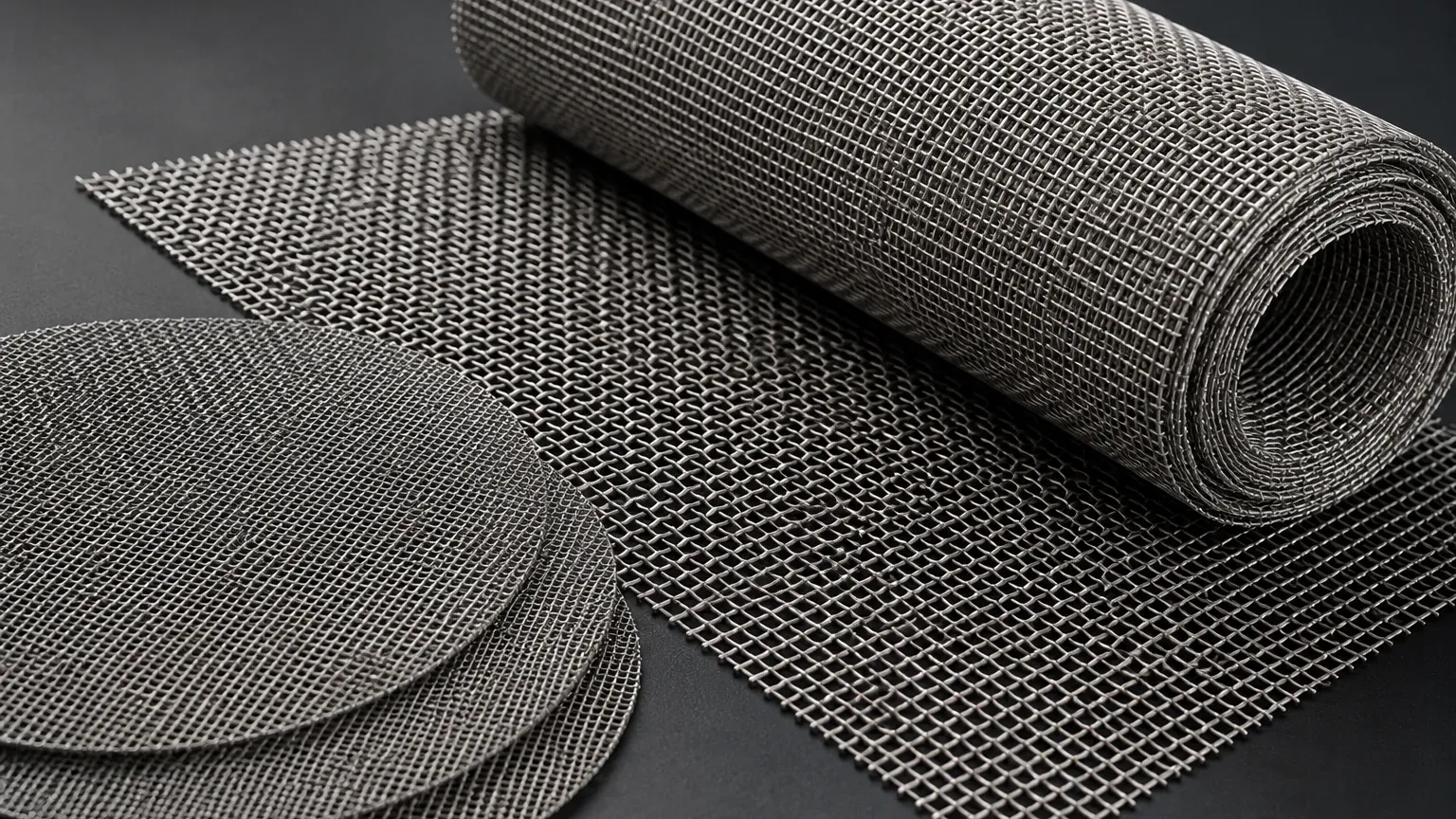
For those seeking high-performance options, Plain, twill and dutch woven wire mesh in SS304/316L — rolls, cut mesh and framed panels. Send mesh count or micron target for a technical quote. provides the necessary engineering depth that retail outlets cannot match.
Engineering Considerations: Beyond the Mesh Count
When selecting woven wire mesh for an industrial project, engineers must look beyond the simple "mesh count" (the number of openings per linear inch). Several critical factors influence the selection process:
Effective Filtration Area (EFA)
The EFA determines the flow capacity and the rate of pressure buildup. A mesh with a high mesh count but very thick wires will have a low percentage of open area, leading to rapid clogging and high energy costs for pumps. Industrial manufacturers provide precise "percentage of open area" calculations to help engineers optimize their system's flow dynamics.
Mechanical Strength and Support
In high-pressure applications, the mesh must withstand significant differential pressure. Retail-grade mesh is often too thin to be used without extensive support structures. Industrial solutions often involve multi-layer sintered mesh or custom-framed panels designed to withstand specific mechanical loads without deforming.
Cleanability and Reuse
In industries like food processing, the ability to clean and sterilize the mesh is paramount. Industrial-grade stainless steel mesh is designed to withstand ultrasonic cleaning, back-flushing, and chemical sanitization. The lower-grade alloys and irregular surfaces of consumer-grade mesh can harbor bacteria or degrade quickly under harsh cleaning protocols.
Customization and OEM Integration
A significant drawback of the "woven wire mesh walmart" approach is the lack of customization. Retailers sell standard rolls or pre-cut sheets. In B2B environments, the mesh often needs to be integrated into a larger assembly.
Kaifil specializes in providing customized filtration components, which include:
* Precision Slitting: Cutting mesh into narrow ribbons for automated manufacturing processes.
* Custom Shapes: Laser-cut or stamped discs and gaskets for specific valve or pipe fittings.
* Framed Panels: Mesh tensioned and welded into stainless steel frames for industrial vibrating screens or architectural panels.
* Multi-layer Laminates: Combining different mesh counts to create a composite filter media that offers both fine filtration and high structural rigidity.
Total Cost of Ownership: Retail vs. Industrial Procurement
While the initial price of a retail-grade mesh might appear lower, the Total Cost of Ownership (TCO) is often much higher for industrial users.
* Replacement Cycles: Low-grade mesh fails faster due to corrosion or mechanical fatigue, leading to increased downtime and labor costs for replacement.
* Risk of Failure: The cost of a system failure caused by an unverified filter component can be catastrophic, involving lost production batches, equipment damage, and potential safety hazards.
* Process Efficiency: Precisely engineered mesh improves flow rates and reduces energy consumption, providing long-term operational savings that far outweigh the initial procurement premium.
Conclusion: Making the Right Selection
While searching for "woven wire mesh walmart" may be a starting point for a quick home repair or a non-critical prototype, it is rarely the correct path for industrial engineering. The complexities of material science, weave geometry, and filtration physics require a partnership with a specialized manufacturer who understands the demands of the application.
By focusing on verified material grades like SS304 and SS316L, and selecting the appropriate weave type for the specific micron rating required, engineers can ensure their systems operate at peak efficiency. For those requiring technical guidance, material certification, and customized manufacturing, choosing a B2B partner like Kaifil ensures that the Woven Wire Mesh integrated into your project is fit for purpose, durable, and engineered to the highest industrial standards.
