


Woven Wire Mesh 304
In the landscape of industrial filtration and separation, material selection is often the determining factor between operational efficiency and frequent system downtime. Among the various alloys available, woven wire mesh 304 stands as the primary standard for general-purpose industrial applications. Its balance of mechanical strength, corrosion resistance, and cost-effectiveness makes it the go-to specification for engineers across the chemical, food and beverage, and pharmaceutical sectors.
Selecting the right Woven Wire Mesh involves more than just picking a material; it requires a deep understanding of weave patterns, mesh counts, and the specific environmental stressors of the application. This guide examines the technical properties of Type 304 stainless steel mesh, its performance characteristics, and the engineering considerations necessary for optimal procurement.
Technical Properties of Type 304 Stainless Steel
Type 304 is an austenitic stainless steel, commonly referred to as 18/8 due to its chemical composition of approximately 18% chromium and 8% nickel. This metallurgical profile provides the foundational characteristics required for the majority of industrial filtration tasks.
Corrosion Resistance and Chemical Stability
Chromium provides the alloy with its corrosion resistance by forming a passive layer of chromium oxide on the surface. While 316 stainless steel is preferred for high-chloride environments (such as marine applications), woven wire mesh 304 performs exceptionally well in a wide range of atmospheric conditions and against many organic and inorganic chemicals. It is particularly effective in food processing environments where organic acids are present.
Thermal Performance
For high-temperature filtration, 304 stainless steel maintains its structural integrity and oxidation resistance at temperatures up to 870°C (1600°F) for intermittent service and 925°C (1700°F) for continuous service. However, engineers must account for potential carbide precipitation in the 425–860°C range if the mesh is subjected to prolonged high-heat exposure, which can impact its corrosion resistance over time.
Mechanical Strength and Fabricability
The inherent ductility of 304 stainless steel allows it to be woven into extremely fine patterns without compromising the tensile strength of the individual wires. This makes it ideal for custom fabrication, including the production of filter cartridges, pleated elements, and framed panels. Its ability to withstand high differential pressures without significant deformation is a critical factor in hydraulic and high-pressure liquid filtration.
Understanding Weave Structures in Industrial Mesh
The performance of woven wire mesh 304 is dictated as much by its weave pattern as by its material. The weave determines the aperture size, the flow rate, and the mechanical stability of the mesh.
Plain Weave
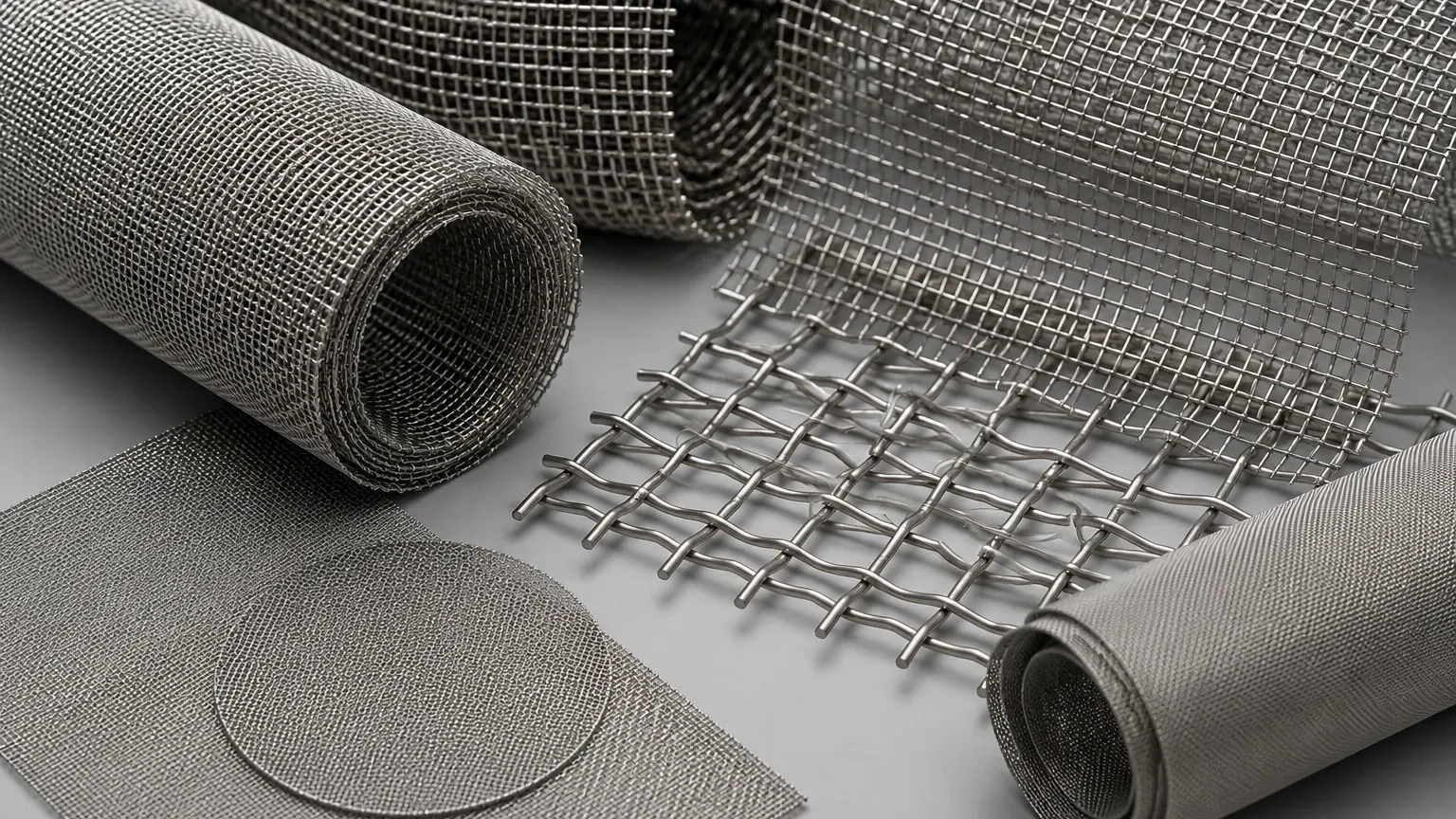
This is the most common and straightforward weave. Each warp wire (running parallel to the length of the cloth) passes alternately over and under each shute wire (running crosswise). Plain weave mesh provides a high degree of transparency and is the easiest to clean, making it suitable for general screening and low-pressure filtration applications.
Twill Weave
In a twill weave, each warp and shute wire passes alternately over two and under two successive wires. This reduces the stress on the wires during the weaving process, allowing for the use of heavier wires in relation to the mesh count. Twill weave is often selected when a fine mesh is required but must also possess higher mechanical strength to resist heavy loads or high-viscosity fluids.
Dutch Weave (Plain and Twill)
Dutch weaves utilize different diameters for warp and shute wires. The shute wires are driven close together, creating a dense, wedge-shaped opening rather than a square aperture.
- Plain Dutch Weave offers high strength and is primarily used for high-pressure filtration where the retention of fine particles is necessary.
- Twill Dutch Weave provides even finer filtration ratings (down to the micron level) by combining the twill pattern with the density of the Dutch weave. This is the standard for critical pharmaceutical and aerospace filtration.
Key Engineering Metrics for Selection
When specifying woven wire mesh 304, engineers must evaluate several quantitative metrics to ensure the component meets the system's requirements.
Mesh Count vs. Aperture Size
Mesh count refers to the number of openings per linear inch. While this is a common shorthand, the aperture (the clear distance between wires) is the more critical measurement for filtration accuracy. The relationship is defined by the formula:
*Aperture = (1 / Mesh Count) – Wire Diameter*
Understanding this relationship is vital because two meshes with the same mesh count but different wire diameters will have significantly different filtration capabilities and flow characteristics.
Percentage of Open Area
The open area determines the flow capacity and the pressure drop across the filter. A higher percentage of open area results in lower flow resistance but may reduce the mechanical durability of the mesh. The open area is calculated as:
*Open Area % = (Aperture / (Aperture + Wire Diameter))² x 100*
For high-volume fluid processing, maximizing the open area while maintaining structural integrity is a primary design goal.
Micron Rating
In precision filtration, the micron rating defines the size of the smallest particle the mesh is intended to retain. It is important to distinguish between "nominal" ratings (approximate retention) and "absolute" ratings (99% or higher retention). For woven wire mesh 304, Dutch weaves are typically required to achieve absolute ratings below 40 microns.
Industrial Applications and Performance Expectations
The versatility of woven wire mesh 304 allows it to serve various roles across multiple industries, each with unique performance expectations.
Chemical and Petrochemical Processing
In these environments, the mesh is used for catalyst recovery, straining raw materials, and protecting downstream equipment from particulate contamination. The 304 alloy provides the necessary resistance to the various hydrocarbons and mildly corrosive chemicals found in these processes.
Food and Beverage Industry
Hygiene and non-toxicity are paramount. 304 stainless steel is widely accepted for food contact. It is used in everything from juice straining and sugar refining to flour milling. The smooth surface of the woven wires prevents bacterial growth and allows for rigorous Clean-in-Place (CIP) procedures.
Pharmaceuticals and Biotechnology
Precision is the priority here. Fine Dutch weave 304 mesh is used in the production of active pharmaceutical ingredients (APIs) and in sterile air filtration. The material's ability to withstand sterilization cycles (autoclaving) without degrading is a significant advantage.
Hydraulics and Lubrication Systems
Filter cartridges made from woven wire mesh 304 protect sensitive valves and pumps by removing wear particles from hydraulic fluids and oils. The mesh must be able to handle high pressure spikes and maintain its pore structure under turbulent flow conditions.
Maintenance, Cleaning, and Replacement Cycles
One of the primary advantages of stainless steel mesh over disposable synthetic filters is its cleanability and reusability, which significantly lowers the total cost of ownership.
Cleaning Methods
- Backwashing: Reversing the flow of the fluid to dislodge particles trapped on the surface.
- Ultrasonic Cleaning: Using high-frequency sound waves in a cleaning solvent to remove fine particles embedded deep within the weave (especially effective for Dutch weaves).
- Chemical Cleaning: Using mild acids or specialized detergents to dissolve organic or mineral scaling, provided the chemicals are compatible with 304 stainless steel.
Identifying Wear and Failure
Engineers should monitor the differential pressure (Delta P) across the filter. A permanent increase in Delta P, even after cleaning, often indicates "blinding" (permanent clogging) or mechanical deformation of the mesh. Regular visual inspections should look for wire displacement, thinning of the wire due to abrasion, or signs of localized pitting corrosion.
Customization and Procurement Considerations
For B2B purchasing teams, the ability to customize the mesh to fit specific equipment is essential. Kaifil provides extensive OEM capabilities, ensuring that the woven wire mesh 304 is delivered in the most usable format for the application.
Formats and Fabrication
- Rolls and Cut-to-Size: Standard mesh supplied in bulk rolls or precision-cut pieces for integration into existing frames.
- Framed Panels: Mesh tensioned and secured into rigid frames for use in vibrating screens or large-scale intake filters.
- Multi-layer Sintered Mesh: For extreme pressure applications, multiple layers of 304 mesh can be sintered together to create a porous metal plate with high mechanical strength and precise filtration ratings.
- Custom Shapes: Cylindrical cartridges, conical strainers, and pleated elements designed to maximize surface area within a limited footprint.
Total Cost Considerations
While 304 stainless steel has a higher initial cost than plastic or galvanized steel mesh, its durability, temperature resistance, and cleanability make it more economical over the life of the system. When specifying mesh, confirming the wire diameter, mesh count, and weave type with the manufacturer ensures that the product will perform as expected without premature failure.
Conclusion
Woven wire mesh 304 remains a cornerstone of industrial filtration due to its reliable performance in demanding environments. By understanding the technical nuances of weave patterns, material properties, and engineering metrics, procurement and engineering teams can select filtration solutions that optimize flow rates and protect critical infrastructure. Whether used in simple straining or high-precision pharmaceutical separation, the correct application of 304 mesh is a vital component of efficient industrial operations.
