


20 Gauge Galvanized Woven Wire Mesh: Engineering Specifications and Industrial Applications
In the landscape of industrial filtration and structural support, material selection is dictated by the balance between mechanical requirements and environmental stressors. Among the various specifications available to engineers, 20 gauge galvanized woven wire mesh represents a versatile middle ground. It offers sufficient wire diameter for structural rigidity while maintaining the flexibility required for fabrication into filter cartridges, guards, and separation screens.
Understanding the technical nuances of this specific mesh—from the gauge of the wire to the chemistry of the zinc coating—is essential for procurement teams and engineers tasked with optimizing filtration performance and system longevity. This guide examines the technical properties, manufacturing standards, and selection criteria for 20 gauge galvanized woven wire mesh within a B2B industrial context.
Understanding 20 Gauge Wire Specifications
The "gauge" of a wire refers to its diameter, typically following the American Wire Gauge (AWG) or the Birmingham Wire Gauge (BWG) standards. For 20 gauge galvanized wire, the nominal diameter is approximately 0.0348 inches (0.884 mm).
In the context of Woven Wire Mesh, wire diameter directly influences two critical performance metrics: mechanical strength and the percentage of open area. A 20 gauge wire provides a robust cross-section that can withstand significant physical impact and high-pressure differentials without deforming. This makes it particularly suitable for primary filtration stages where large debris or high-velocity flows are present.
When specifying 20 gauge mesh, engineers must consider the mesh count (the number of openings per linear inch). Because the wire itself is relatively thick, higher mesh counts will result in a significantly lower percentage of open area. For example, a 10×10 mesh using 20 gauge wire will have a much smaller aperture than a 2×2 mesh using the same wire. Calculating the exact aperture size is vital to ensure the mesh meets the required micron rating for the specific application.
The Galvanization Process and Corrosion Resistance
Galvanization is the process of applying a protective zinc coating to steel to prevent rusting. For industrial mesh, this is typically achieved through two primary methods: Hot-Dipped Galvanizing (HDG) and Electro-Galvanizing (EG).
Hot-Dipped Galvanizing
In this process, the woven mesh is submerged in a bath of molten zinc. This creates a thick, multi-layered coating of zinc-iron alloys and pure zinc. HDG is preferred for 20 gauge galvanized woven wire mesh used in outdoor environments or applications exposed to high humidity. The coating is typically thicker and more durable, offering "sacrificial protection" where the zinc corrodes in preference to the underlying steel even if the surface is scratched.
Electro-Galvanizing
Electro-galvanizing involves the deposition of zinc through an electrolytic process. This results in a much thinner, smoother, and more uniform coating. While it offers less long-term corrosion resistance than HDG, it is often preferred for precision filtration components where dimensional accuracy and a clean surface finish are paramount. It is also easier to weld and form without damaging the protective layer.
For engineers, the choice between HDG and EG depends on the expected lifecycle of the component and the chemical aggressiveness of the fluid or gas being filtered. In many chemical processing environments, even galvanized steel may be insufficient, necessitating a transition to higher-grade alloys.
Woven Wire Mesh Weave Patterns
The performance of 20 gauge galvanized woven wire mesh is also defined by its weave pattern. The weave determines the stability of the openings and the overall texture of the mesh surface.
1. Plain Weave: This is the most common pattern where each warp wire crosses alternately over and under each shute wire. It provides the most consistent aperture size and is the standard for most industrial separation tasks.
2. Twill Weave: In this pattern, each warp wire passes alternately over and under two shute wires. This allows for a heavier wire (like 20 gauge) to be woven into a finer mesh count than would be possible with a plain weave. It is often used when a combination of high strength and fine filtration is required.
3. Crimped Mesh: Before weaving, the wires are pre-crimped. This lock-crimp or intermediate-crimp style ensures that the wires remain fixed in position, which is critical for 20 gauge mesh used in heavy-duty vibratory screens or architectural guards where vibration could otherwise cause the wires to shift.
Performance Metrics in Industrial Filtration
When integrating 20 gauge galvanized woven wire mesh into a filtration system, several engineering factors must be evaluated to ensure the component does not become a bottleneck or a point of failure.
Aperture and Micron Rating
The aperture is the clear distance between two adjacent wires. For 20 gauge mesh, the aperture is a function of the mesh count. Engineers must ensure the aperture is small enough to retain the target particles but large enough to prevent premature blinding (clogging).
Percentage of Open Area (POA)
The POA determines the flow capacity and pressure drop across the filter. A higher POA allows for higher flow rates with lower energy consumption. However, increasing the POA usually requires using a thinner wire or a wider mesh count, which may compromise the structural integrity of the filter element.
Pressure Drop (Delta P)
As fluid passes through the mesh, a pressure differential is created. 20 gauge wire, being relatively thick, can create more turbulence and a higher initial pressure drop than thinner wires. Engineers must calculate the clean pressure drop to ensure the system’s pumps or blowers are adequately sized.
Comparative Analysis: Galvanized vs. Stainless Steel
While galvanized steel is a cost-effective solution for many general-purpose applications, it has limitations in specialized industrial environments. In sectors such as food and beverage, pharmaceuticals, or high-temperature chemical processing, the zinc coating of galvanized mesh may react with the process media or fail prematurely.
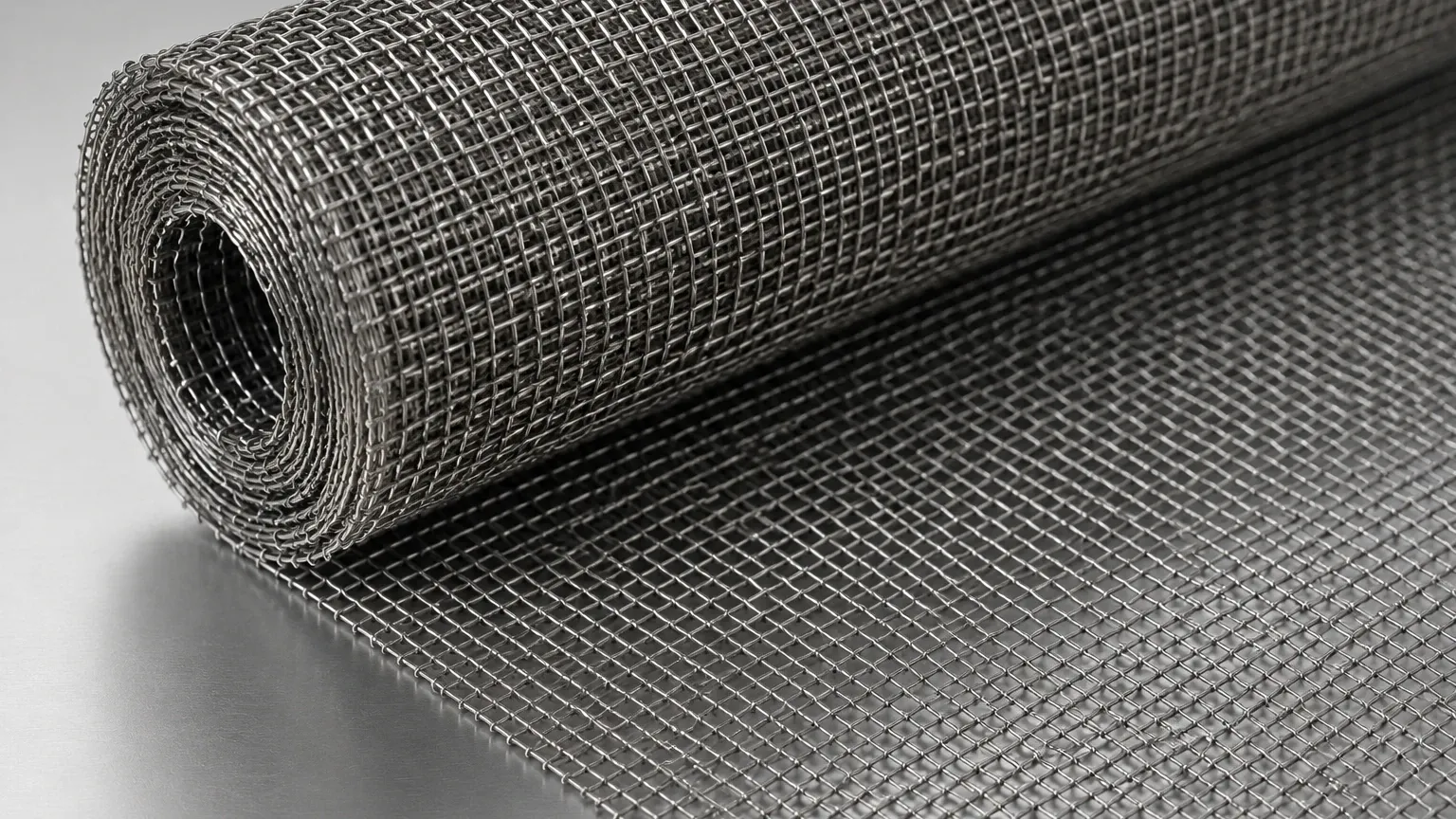
In these instances, upgrading to stainless steel is the industry standard. For those requiring higher precision or superior chemical resistance, Plain, twill and dutch woven wire mesh in SS304/316L — rolls, cut mesh and framed panels. Send mesh count or micron target for a technical quote. provides a more durable alternative. Stainless steel eliminates the risk of zinc contamination and offers significantly better performance in cryogenic or high-heat applications where galvanized coatings might flake or oxidize.
However, for applications like HVAC intake screens, agricultural separators, or as a support backing for finer filter media, 20 gauge galvanized woven wire mesh remains a highly efficient and economical choice.
Customization and Fabrication Options
Industrial applications rarely use mesh in its raw roll form. Fabrication is a critical step in turning a 20 gauge galvanized woven wire mesh into a functional component. Common customization options include:
* Cut-to-Size Panels: Precision shearing of mesh into specific dimensions for use in framed assemblies.
* Slitting: Reducing the width of a master roll into narrow strips for automated manufacturing processes.
* Forming and Pleating: 20 gauge wire is ductile enough to be formed into cylinders or pleated to increase the surface area of a filter cartridge. Pleating 20 gauge mesh requires specialized equipment to ensure the zinc coating does not crack at the fold points.
* Framing and Edging: To prevent fraying and to facilitate installation, mesh panels are often finished with U-binders, welded frames, or bolted flanges. This is particularly important for 20 gauge mesh used in safety guards or removable tray filters.
Maintenance and Lifecycle Considerations
The total cost of ownership for a filtration system includes not just the initial purchase price, but also the costs associated with maintenance and replacement. 20 gauge galvanized woven wire mesh is generally considered a semi-permanent component.
In non-corrosive environments, these screens can last for years with minimal maintenance. However, in industrial settings where the mesh is exposed to abrasive particles or moisture, the zinc coating will eventually deplete. Regular inspection for "white rust" (zinc oxide) or red rust (iron oxide) is necessary. Once the base steel is exposed, the structural integrity of the mesh will degrade rapidly.
Cleaning methods also impact the lifecycle. Galvanized mesh should be cleaned with pH-neutral solutions. Acidic or highly alkaline cleaners can strip the zinc coating, leading to immediate corrosion. For applications requiring frequent aggressive chemical cleaning, transitioning to a stainless steel mesh is often more cost-effective in the long run despite the higher initial investment.
Conclusion: Selecting the Right Mesh for the Project
Selecting the appropriate 20 gauge galvanized woven wire mesh requires a thorough understanding of the operational environment. Engineers must weigh the benefits of the 0.0348-inch wire diameter—such as its impact resistance and rigidity—against the chemical limitations of galvanized steel.
When the application demands a robust, cost-effective barrier for coarse filtration or structural support, galvanized mesh is an excellent choice. However, for precision filtration where contamination must be zero and durability must be absolute, exploring stainless steel options is the recommended path. By confirming the required mesh count, aperture, and environmental conditions before procurement, technical teams can ensure they deploy a filtration solution that optimizes both performance and budget.
