


3mm Woven Wire Mesh
In industrial filtration and separation, the selection of mesh specifications is a critical engineering decision that impacts throughput, durability, and the purity of the final product. A 3mm woven wire mesh occupies a specific niche in the market, bridging the gap between fine filtration and heavy-duty structural screening. Whether used as a primary filter media or a support layer for finer meshes, understanding the technical nuances of this specification is essential for engineers and procurement professionals.
This guide examines the engineering considerations, material properties, and application-specific variables associated with 3mm woven wire mesh to assist in technical evaluation and procurement.
Understanding 3mm Woven Wire Mesh Specifications
When discussing "3mm" in the context of Woven Wire Mesh, it is vital to distinguish between the aperture size (the clear opening between wires) and the wire diameter. In most industrial B2B contexts, a 3mm mesh typically refers to a 3mm aperture.
Aperture vs. Wire Diameter
The relationship between the aperture and the wire diameter determines the mesh's "open area" percentage. For a 3mm aperture, the wire diameter can vary significantly depending on the required mechanical strength. For instance:
- Light Duty: 0.5mm to 1.0mm wire diameter provides high open area but lower structural rigidity.
- Standard Duty: 1.2mm to 1.6mm wire diameter offers a balance of flow rate and durability.
- Heavy Duty: 2.0mm wire diameter and above is used for high-impact applications like mining or heavy aggregate screening.
Calculating Open Area
The open area is a primary performance metric for engineers. It is calculated using the formula:
`Open Area % = (Aperture / (Aperture + Wire Diameter))^2 x 100`
A higher open area reduces pressure drop and increases flow capacity, but it may compromise the mesh's ability to withstand mechanical stress or abrasion over time.
Material Selection for Industrial Environments
The performance of a 3mm woven wire mesh is largely dictated by its metallurgy. Kaifil specializes in high-grade stainless steel alloys to ensure longevity in demanding environments.
Stainless Steel 304 (SS304)
SS304 is the most common material for general industrial use. It provides excellent corrosion resistance for water treatment, food processing, and general manufacturing. It is cost-effective but may be susceptible to pitting in high-chloride environments.
Stainless Steel 316L (SS316L)
For chemical processing, pharmaceutical applications, or marine environments, SS316L is the preferred choice. The addition of molybdenum enhances resistance to chloride-induced pitting and crevice corrosion. The "L" denotes low carbon content, which improves weldability and prevents sensitization during the fabrication of framed panels or filter cartridges.
Specialized Alloys
In high-temperature or highly corrosive environments (such as acidic gas filtration), alloys like Inconel, Monel, or Duplex stainless steel may be required. These materials maintain their mechanical properties at temperatures exceeding 500°C, where standard stainless steels might oxidize or lose tensile strength.
Performance Evaluation: Flow Rate and Pressure Drop
Engineers must evaluate how a 3mm woven wire mesh interacts with the fluid or gas stream. Because 3mm is a relatively coarse aperture, it is often used for high-volume flow applications where the goal is to remove large particulates (scalping) or to protect downstream equipment like pumps and fine filters.
Pressure Drop Considerations
The pressure drop (ΔP) across the mesh is influenced by the fluid velocity, viscosity, and the mesh's open area. A 3mm mesh with a 1.5mm wire diameter has an open area of approximately 44%. If the wire diameter is reduced to 1.0mm, the open area increases to 56%, significantly lowering the initial pressure drop. However, the thinner wire will wear faster if the media contains abrasive particles.
Retention Efficiency
While a 3mm mesh is not designed for micron-level filtration, it is highly effective at retaining solids larger than 3000 microns. In multi-stage filtration systems, this mesh serves as a "trash screen," removing debris that would otherwise clog finer Plain, twill and dutch woven wire mesh in SS304/316L — rolls, cut mesh and framed panels. Send mesh count or micron target for a technical quote. layers.
Structural Integrity and Mechanical Properties
Unlike finer meshes that rely on high mesh counts for stability, a 3mm woven wire mesh relies on the physical properties of the wire and the weave style.
Weave Styles and Crimping
For apertures as large as 3mm, the weave style is often combined with "crimping" to ensure the wires remain locked in place:
- Plain Weave: The simplest form where wires cross over and under each other. Suitable for standard applications.
- Intermediate Crimp: Extra crimps are added between the intersection points, providing greater stability for large apertures with relatively thin wires.
- Lock Crimp: The wires are crimped at the intersections to lock them into a permanent position, preventing "wire migration" under high pressure or vibration.
Tensile Strength and Load Bearing
In applications like vibrating screens or architectural panels, the mesh must withstand significant tension and mechanical loads. Engineers should confirm the tensile strength of the wire (measured in N/mm²) to ensure the mesh will not deform or "blind" (where particles become trapped in the openings) under operating conditions.
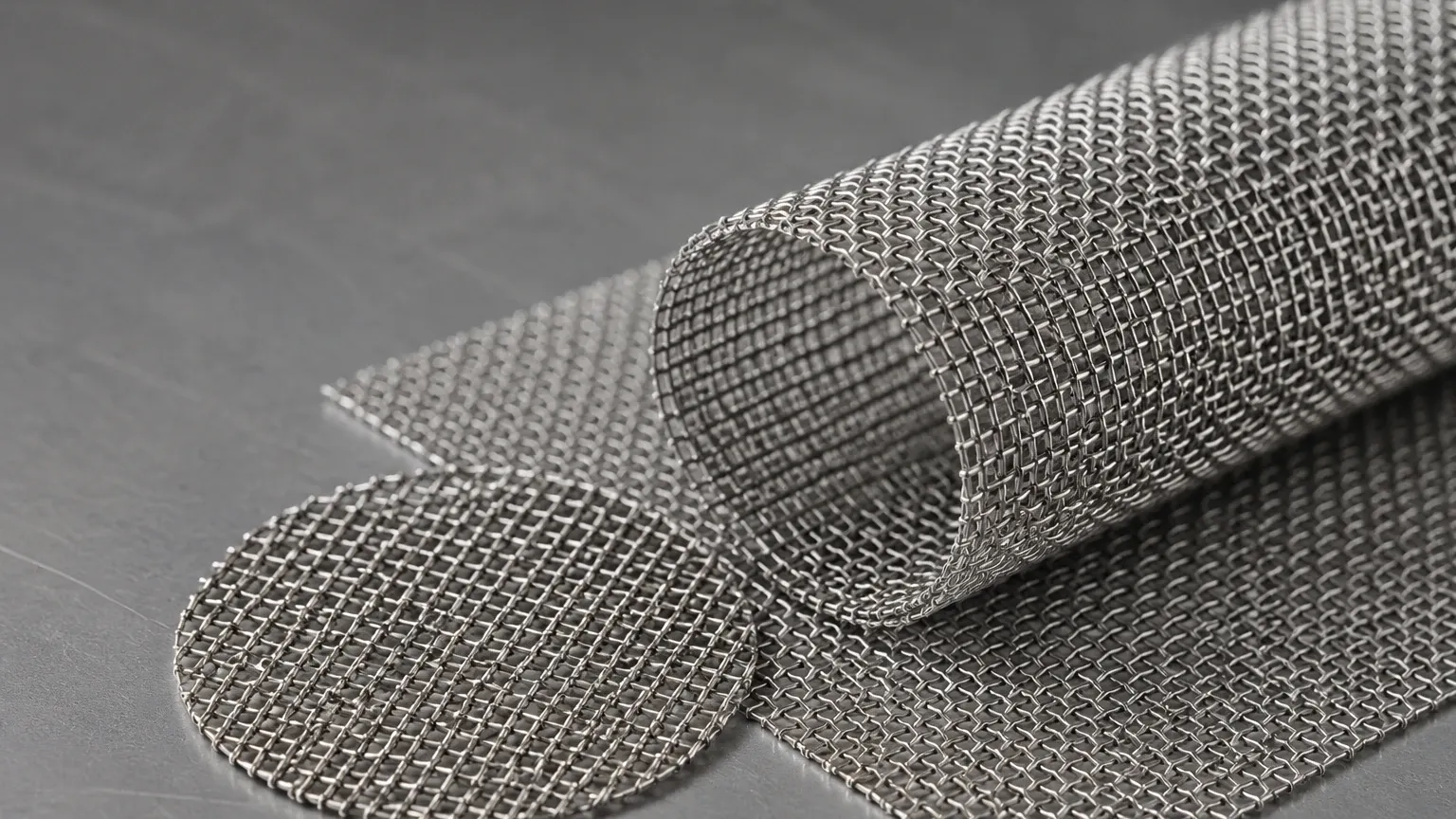
Customization and OEM Solutions
Industrial applications rarely use mesh in its raw roll form. Customization is often necessary to integrate the mesh into existing machinery or filter housings.
Framed Panels and Edging
For use in sifting or architectural applications, 3mm mesh is often supplied as framed panels. Edging options include:
- U-Binders: Metal channels welded to the edges for safety and structural rigidity.
- Hook Strips: Used for mounting mesh onto vibrating screening machines.
- Welded Borders: Ensuring no loose wires contaminate the process stream, particularly important in the food and beverage industry.
Cut-to-Size and Cylindrical Forms
Kaifil provides precision cutting services using laser or waterjet technology to ensure dimensional accuracy. Additionally, 3mm mesh can be rolled and seam-welded into cylindrical filter cartridges to serve as robust support cores for finer pleated media.
Common Risks and Quality Standards
Procuring industrial mesh requires a focus on quality assurance to avoid premature failure. Engineers should be aware of the following risks:
1. Material Grade Substitution: Lower-quality stainless steel may be marketed as SS304 or SS316. Always request material test reports (MTRs) and consider Positive Material Identification (PMI) testing for critical applications.
2. Aperture Inconsistency: In poorly manufactured mesh, the 3mm opening may vary across the roll. This leads to inconsistent filtration performance and potential bypass of oversized particles.
3. Wire Surface Defects: Scratches, pits, or drawing marks on the wire surface can become focal points for corrosion, especially in chemical environments.
Compliance with international standards such as ISO 9044 (Industrial wire screens – Technical requirements and testing) ensures that the mesh meets specific tolerances for aperture size and wire diameter.
Total Cost of Ownership (TCO) and Maintenance
While the initial purchase price is a factor, the total cost of ownership is determined by the mesh's service life and maintenance requirements.
Cleaning and Reusability
One of the primary advantages of stainless steel 3mm woven wire mesh is its cleanability. Unlike disposable polymer filters, stainless mesh can be cleaned via:
- Backwashing: Reversing the flow to dislodge particles.
- Ultrasonic Cleaning: Using high-frequency sound waves to remove embedded contaminants.
- Chemical Cleaning: Using mild acids or bases to dissolve organic or mineral buildup.
Replacement Cycles
The replacement cycle depends on the abrasiveness of the process media and the frequency of cleaning. In non-abrasive water treatment, a high-quality SS316L mesh can last for years. In mining or aggregate applications, the mesh is a wear part and should be monitored for thinning of the wire diameter and signs of fatigue.
Conclusion: Technical Checklist for Procurement
Before finalizing a purchase order for 3mm woven wire mesh, technical teams should confirm the following details with their manufacturer:
- Exact Aperture: Confirm if the 3mm requirement refers to the opening or the center-to-center distance.
- Wire Diameter: Specify the gauge based on the required mechanical strength and open area.
- Alloy Grade: Ensure the material is compatible with the operating temperature and chemical environment.
- Weave/Crimp Style: Choose the style that prevents wire migration for your specific pressure or vibration levels.
- Finish and Fabrication: Determine if the mesh requires degreasing, passivating, or specific edge treatments.
By focusing on these technical parameters, engineers can ensure that the selected mesh provides reliable, long-term performance in their specific industrial application. For specialized requirements or custom configurations, consulting with a manufacturer like Kaifil allows for the development of tailored filtration solutions that optimize both performance and cost-efficiency.
