


Stainless Steel Woven Wire Mesh 304: A Technical Guide for Industrial Filtration
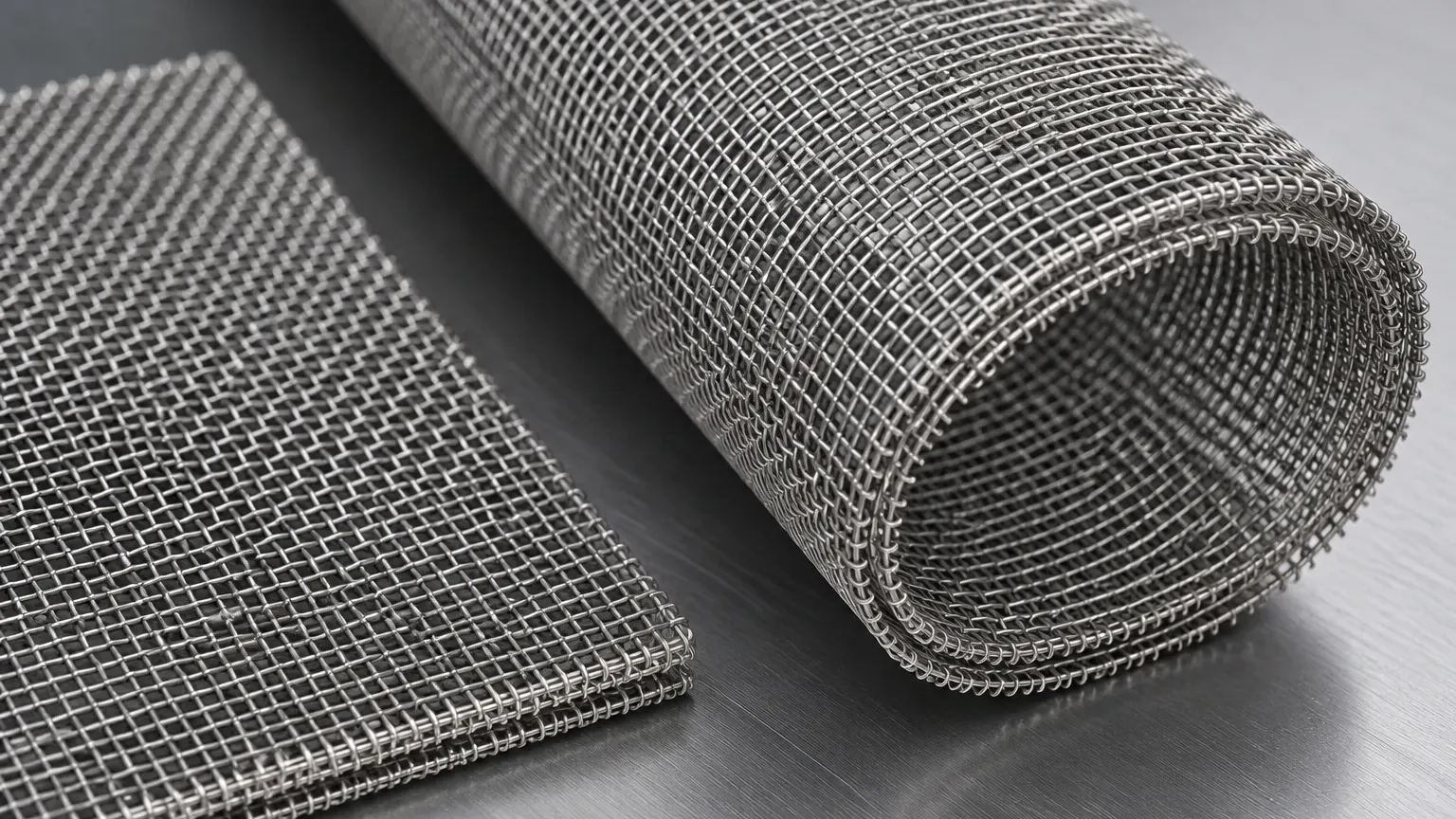
In the landscape of industrial separation and filtration, the selection of media determines the efficiency, longevity, and cost-effectiveness of a process. Among the various materials available, Woven Wire Mesh manufactured from Type 304 stainless steel remains the most widely utilized specification across global industries. Its balance of mechanical strength, corrosion resistance, and precision makes it a foundational component for engineers designing filtration systems, protective screens, and structural elements.
For technical professionals and purchasing teams, understanding the nuances of stainless steel woven wire mesh 304 is essential for optimizing system performance. This guide explores the material properties, weave geometries, and engineering considerations required to select the correct mesh for demanding industrial applications.
Understanding the Material Science of Type 304 Stainless Steel
Type 304 stainless steel is an austenitic alloy, often referred to in the industry as 18/8 due to its approximate composition of 18% chromium and 8% nickel. This chemical profile provides the material with its characteristic resistance to oxidation and corrosion. In the context of wire mesh, 304 offers several critical advantages:
1. Corrosion Resistance: It withstands most oxidizing acids and is resistant to ordinary rusting in most atmospheric conditions. While Type 316 is preferred for high-chloride (marine) environments, 304 is the standard for food processing, chemical handling (non-saline), and general industrial filtration.
2. Thermal Stability: Type 304 maintains its structural integrity across a wide temperature range, typically up to 800°C (1472°F) in intermittent service and 925°C in continuous service, though mechanical properties may shift at these extremes.
3. Formability and Weldability: The alloy’s ductility allows for the drawing of extremely fine wires—down to microns in diameter—without compromising tensile strength. This is crucial for creating high-density weaves used in precision filtration.
Technical Specifications and Mesh Geometry
When specifying Woven Wire Mesh, engineers must look beyond the material grade and focus on the geometric properties that define filtration performance. The three primary metrics are mesh count, wire diameter, and aperture size.
Mesh Count
Mesh count refers to the number of openings per linear inch, measured from the center of one wire to the center of the next. A higher mesh count indicates a finer screen. For example, a 100-mesh screen has 100 openings per inch in both the warp and weft directions.
Wire Diameter
Wire diameter is the thickness of the wire before weaving. The choice of wire diameter directly impacts the mesh's "Open Area" percentage. Using a thicker wire increases the mechanical strength and pressure resistance of the mesh but reduces the total open area, which can increase the pressure drop across the filter.
Aperture (Opening Size)
The aperture is the clear distance between two parallel wires. This is the most critical dimension for particle retention. In B2B procurement, this is often expressed in microns (µm). For those requiring specific configurations, you can Plain, twill and dutch woven wire mesh in SS304/316L — rolls, cut mesh and framed panels. Send mesh count or micron target for a technical quote. to ensure the geometry aligns with your filtration targets.
Comparing Weave Patterns for Filtration Performance
The method by which wires are interlaced—the weave pattern—determines the mesh's pore structure, flow characteristics, and durability. There are four primary weave types used in stainless steel woven wire mesh 304 production:
1. Plain Weave
This is the most common and straightforward pattern, where each weft wire passes over and under one warp wire. It provides a square opening and is ideal for general screening and low-pressure filtration where a high percentage of open area is required.
2. Twill Weave
In a twill weave, each weft wire passes over and under two warp wires. This allows for the use of heavier wire diameters than would be possible in a plain weave of the same mesh count. Twill weaves are often used for fine filtration where the mesh must withstand significant mechanical loads.
3. Plain Dutch Weave
Unlike square meshes, Dutch weaves use different diameters for the warp and weft wires. The warp wires are heavier and spaced further apart, while the weft wires are smaller and driven close together. This creates a "zero-open" appearance, where the fluid must pass through a tortuous path. This weave is excellent for high-pressure filtration and fine particle retention.
4. Twill Dutch Weave
Combining the principles of twill and Dutch weaves, this pattern allows for the highest density of wires and the finest filtration ratings (down to 5-10 microns). It is the standard for high-precision hydraulic and pharmaceutical applications where absolute filtration is required.
Engineering Considerations for Filter Selection
Selecting the right stainless steel woven wire mesh 304 requires a balance of several engineering factors. Purchasing teams should evaluate the following criteria before finalizing a specification:
Pressure Drop (Delta P)
The resistance to flow caused by the filter media is critical. A mesh with a low open area will cause a higher pressure drop, requiring more energy from pumps and potentially leading to system failure if the mesh becomes blinded by particulates. Engineers must calculate the Effective Filtration Area (EFA) to ensure the flow rate meets process requirements.
Mechanical Loading and Fatigue
In applications such as vibrating screens or high-pressure hydraulic systems, the mesh is subject to constant stress. Type 304 provides excellent tensile strength, but the weave type must be chosen to prevent wire migration or fatigue cracking. Sintered mesh (where multiple layers are heat-bonded) is often an alternative for extreme pressure environments, though standard woven mesh is sufficient for most industrial housings.
Cleanability and Maintenance
One of the primary benefits of stainless steel mesh over polymer or paper media is its reusability. Type 304 mesh can be cleaned via backwashing, ultrasonic baths, or chemical cleaning. However, the weave must be robust enough to withstand these cleaning cycles without distorting the aperture size.
Applications Across Industrial Sectors
Due to its versatility, stainless steel woven wire mesh 304 is found in almost every major industrial sector:
* Food and Beverage: Used in centrifugal screens, juice filtration, and flour milling. Type 304 is generally recognized as safe for food contact and resists the organic acids found in fruits and vegetables.
* Chemical Processing: Employed in catalyst recovery, resin traps, and the filtration of intermediate chemical products. It provides a cost-effective alternative to more expensive alloys like Monel or Inconel when the environment is not highly acidic or alkaline.
* Pharmaceuticals: Used in fluid bed dryers, granulators, and sterile filtration. The smooth surface of the stainless steel wires prevents bacterial growth and allows for easy sterilization.
* Water Treatment: Acts as a primary screen for removing debris from intake water or as a support medium for finer filter membranes.
* Hydraulics and Aerospace: Precision Dutch weaves are used to protect sensitive valves and actuators from particulate contamination in hydraulic fluids.
Customization and OEM Manufacturing Capabilities
Industrial filtration often requires more than just a standard roll of mesh. Modern manufacturing allows for significant customization to meet specific OEM requirements. These services typically include:
* Slitting and Cutting: Mesh can be provided in precise widths or die-cut into specific shapes (circles, donuts, or rectangles) for integration into existing equipment.
* Framing and Edging: To prevent fraying and facilitate installation, mesh panels can be framed with solid stainless steel strips or U-binders.
* Multi-layer Fabrication: Combining different mesh counts into a single pleated or cylindrical cartridge to provide graduated filtration (coarse outer layers protecting fine inner layers).
* Surface Treatments: Processes like electropolishing can be applied to 304 mesh to enhance its corrosion resistance and create an ultra-smooth surface that resists clogging.
Conclusion: Making an Informed Procurement Decision
When specifying Woven Wire Mesh for an industrial project, the choice of material and weave is a technical decision that impacts the entire lifecycle of the filtration system. While Type 304 stainless steel offers a robust and economical solution for a wide range of applications, the success of the installation depends on confirming the exact mesh count, wire diameter, and weave pattern required for the specific fluid dynamics and particle sizes involved.
By focusing on factual performance data—such as micron ratings, pressure drop limits, and mechanical strength—engineers can ensure they are selecting a stainless steel woven wire mesh 304 product that provides reliable service and minimizes the total cost of ownership. For complex applications, working with a manufacturer that offers custom engineering and OEM capabilities ensures that the final filtration component is perfectly matched to the operational environment.
