


304 Stainless Steel Woven Wire Mesh: A Technical Guide for Industrial Filtration
In the landscape of industrial filtration and separation, material selection is the cornerstone of operational efficiency. Among the various alloys and configurations available, 304 stainless steel woven wire mesh remains the most widely utilized medium due to its balanced mechanical properties, chemical resistance, and cost-effectiveness. For engineers and procurement specialists, understanding the nuances of weave patterns, wire diameters, and micron ratings is essential to ensuring the longevity of filtration systems in demanding environments.
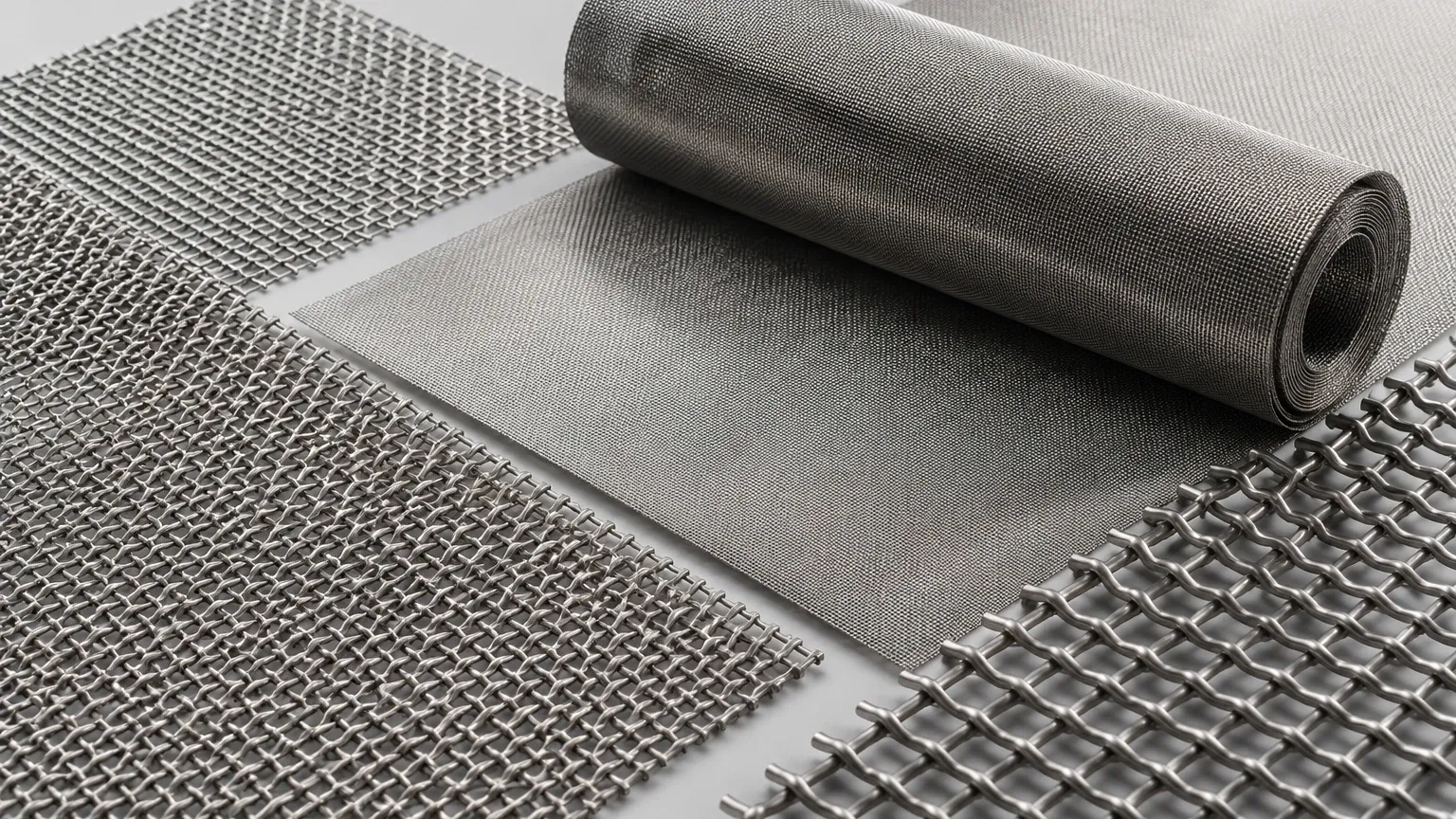
As a versatile solution, Woven Wire Mesh serves as the primary component in everything from simple strainers to complex multi-layer sintered filter elements. This guide explores the technical specifications, engineering considerations, and selection criteria for 304-grade mesh to help technical teams optimize their filtration processes.
Material Properties of 304 Stainless Steel
Type 304 stainless steel is an austenitic alloy characterized by its high chromium (18%) and nickel (8%) content. Often referred to as "18-8" stainless steel, this composition provides a robust oxide layer that protects the underlying metal from oxidation and corrosion in various environments.
Corrosion Resistance and Chemical Compatibility
While 316 stainless steel is preferred for marine environments or high-chloride applications, 304 stainless steel woven wire mesh offers excellent resistance to a broad spectrum of industrial chemicals, organic solvents, and atmospheric conditions. It is particularly effective in food processing, where hygiene and non-reactivity are paramount. However, engineers must be cautious when using 304 in environments with high concentrations of chlorides or acids, where pitting corrosion may occur.
Thermal Performance
304 stainless steel maintains its structural integrity at temperatures up to 800°C (1472°F). For filtration applications involving hot gases or high-temperature fluids, the thermal expansion coefficient and tensile strength at elevated temperatures must be factored into the design of the filter housing and the mesh support structure.
Understanding Weave Structures in Woven Wire Mesh
The performance of a filter is dictated not just by its material, but by the geometry of its weave. The choice of weave affects the flow rate, pressure drop, and the shape of the particles that can pass through the medium.
Plain Weave
This is the most common and straightforward weave pattern. Each warp wire (running lengthwise) passes alternately over and under each weft wire (running crosswise). Plain weave Woven Wire Mesh provides square openings and is ideal for general-purpose screening and sifting where high flow rates and low pressure drops are required.
Twill Weave
In a twill weave, each warp wire passes alternately over and under two weft wires. This allows for a heavier wire diameter to be used for a given mesh count, resulting in a more robust and durable mesh. Twill weaves are often employed when the mesh must withstand higher mechanical loads or when a finer filtration degree is needed than a plain weave can provide.
Dutch Weave (Plain and Twill)
Dutch weaves utilize different wire diameters for the warp and weft. Typically, the weft wires are smaller and driven closer together, creating a dense, "tortuous path" for the fluid. This results in a mesh with no visible openings when viewed directly. Dutch weaves are the standard for precision liquid filtration and high-pressure hydraulic systems because they offer superior strength and very fine micron ratings (down to 5-10 microns).
Key Engineering Parameters for Selection
When specifying 304 stainless steel woven wire mesh, engineers must define several critical parameters to ensure the mesh meets the application's performance requirements.
Mesh Count vs. Aperture Size
* Mesh Count: The number of openings per linear inch. A higher mesh count indicates finer filtration.
* Aperture (Opening Size): The clear distance between two adjacent wires. This is the most critical value for determining the largest particle that can pass through the mesh.
* Wire Diameter: The thickness of the wire before weaving. A larger wire diameter increases the strength and service life of the mesh but reduces the open area.
Percentage of Open Area
The open area is the ratio of the total area of the apertures to the total area of the mesh. A higher open area percentage results in a lower pressure drop across the filter and higher flow capacity. Engineers must balance the need for fine filtration (which usually requires smaller apertures and thus less open area) with the requirement for efficient flow.
Micron Rating: Absolute vs. Nominal
* Nominal Micron Rating: An approximate value indicating the size of particles the mesh will retain at a certain efficiency (e.g., 90%).
* Absolute Micron Rating: The diameter of the largest hard spherical particle that will pass through the mesh under specified test conditions. For critical pharmaceutical or aerospace applications, absolute ratings are mandatory.
Industrial Applications of 304 Stainless Steel Mesh
Due to its versatility, 304 stainless steel woven wire mesh is found across nearly every industrial sector. Its ability to be formed, welded, and cleaned makes it a favorite for custom filtration components.
Food and Beverage Processing
In the food industry, 304 mesh is used for sieving ingredients, filtering juices, and protecting pumps from debris. Its smooth surface and resistance to common cleaning agents (CIP – Clean-in-Place) ensure that it meets stringent sanitary standards.
Chemical and Petrochemical
Filtration of catalysts, separation of chemical intermediates, and protection of downstream equipment rely on the durability of stainless steel. In these environments, the mesh must resist both chemical attack and the mechanical stress of high-viscosity fluids.
Hydraulic and Lubrication Systems
Precision Dutch weave mesh is often used in hydraulic filters to remove fine metallic wear particles and contaminants. The high collapse strength of 304 stainless steel is vital in systems where pressure spikes are common.
Water Treatment
From coarse intake screens to fine membrane protection filters, Woven Wire Mesh is used to remove suspended solids from water. Its resistance to rust makes it a long-lasting alternative to synthetic media in municipal and industrial water systems.
Maintenance and Total Cost of Ownership
One of the primary advantages of metal mesh over disposable synthetic filters is cleanability. A 304 stainless steel woven wire mesh filter can often be restored to near-original performance through various cleaning methods, significantly reducing the total cost of ownership over the life of the equipment.
Cleaning Methods
* Backwashing: Reversing the flow of fluid to dislodge particles trapped on the surface of the mesh.
* Ultrasonic Cleaning: Using high-frequency sound waves in a cleaning solution to remove fine particles from within the weave of Dutch or twill meshes.
* Chemical Cleaning: Using specialized solvents to dissolve organic or inorganic scaling without damaging the stainless steel alloy.
Durability and Replacement Cycles
While the initial cost of a stainless steel filter is higher than a polymer equivalent, its lifespan is measured in years rather than weeks. Engineers should evaluate the "total cost" by including the costs of downtime, labor for filter changes, and disposal costs of single-use cartridges. In most high-volume industrial processes, the durability of 304 stainless steel provides a superior return on investment.
Customization and OEM Solutions
Standard off-the-shelf mesh rolls are often insufficient for specialized industrial machinery. Working with a manufacturer like Kaifil allows for the development of customized filtration components tailored to specific housing geometries and performance targets.
Precision Fabrication
Customization options include:
* Cut-to-size pieces: Precision laser or mechanical cutting to ensure tight tolerances for edge-sealing.
* Pleated Cartridges: Increasing the surface area of the mesh within a fixed volume to lower the flux rate and extend the time between cleanings.
* Multi-layer Lamination: Sintering multiple layers of mesh together to combine the filtration accuracy of fine mesh with the structural support of coarse mesh.
Before finalizing a purchase, technical teams should confirm the specific environmental conditions—including pH levels, operating pressures, and cleaning protocols—to ensure that 304 stainless steel woven wire mesh is the optimal choice. For applications involving high salinity or extreme acidity, a transition to 316L or exotic alloys may be necessary.
Conclusion
Selecting the right 304 stainless steel woven wire mesh requires a deep understanding of both the material properties and the mechanical configuration of the weave. By carefully evaluating mesh count, wire diameter, and weave type, engineers can design filtration systems that offer high precision, low maintenance, and exceptional durability. Whether for food safety, chemical purity, or hydraulic reliability, 304 stainless steel remains a foundational material in the world of industrial separation.
For technical assistance in selecting the correct mesh count or to request a quote for Plain, twill and dutch woven wire mesh in SS304/316L — rolls, cut mesh and framed panels. Send mesh count or micron target for a technical quote., consult with a specialist to ensure your filtration solution is engineered for your specific application requirements.
