


3 8 Woven Wire Mesh
In industrial filtration and separation, precision is the primary determinant of process efficiency. Among the various specifications used in chemical processing, food production, and water treatment, the 3 8 woven wire mesh (referring to a 3/8-inch aperture or specific mesh spacing) represents a critical category of coarse-to-medium filtration media. Selecting the correct mesh involves more than simply identifying the opening size; it requires a comprehensive understanding of wire diameter, material grade, open area percentages, and mechanical load requirements.
As a specialized manufacturer, Kaifil provides high-performance Woven Wire Mesh solutions designed to meet the rigorous demands of industrial environments. This guide examines the technical parameters, engineering considerations, and selection criteria essential for engineers and purchasing teams evaluating 3/8-inch woven wire mesh for their operations.
Understanding the 3/8" Woven Wire Mesh Specification
When discussing a "3 8" specification in the context of woven wire, it typically refers to the clear opening (aperture) between the wires. In the imperial system, a 3/8" opening equates to 0.375 inches or approximately 9.525 mm. However, the performance of the mesh is dictated by the relationship between this opening and the wire diameter.
Aperture vs. Mesh Count
In finer meshes, the "mesh count" (the number of openings per linear inch) is the standard unit of measure. For larger openings like 3/8", the industry often specifies the "clear opening." It is vital for engineers to distinguish between:
1. Clear Opening: The actual space between adjacent parallel wires.
2. Center-to-Center Spacing: The distance from the center of one wire to the center of the next.
For a 3 8 woven wire mesh, the clear opening is the functional area where particles are either retained or passed. If a project requires a 3/8" clear opening, the total center-to-center distance will be 3/8" plus one wire diameter.
The Role of Wire Diameter
The wire diameter significantly impacts the mesh's structural integrity and its "Open Area." A thicker wire increases the weight and durability of the mesh but reduces the percentage of open area, which can restrict flow rates or increase pressure drop. Conversely, a thinner wire maximizes throughput but may fail under high-pressure loads or abrasive conditions.
Material Selection: SS304 vs. SS316L
Material science is at the heart of filtration performance. For industrial applications, stainless steel is the preferred choice due to its mechanical strength and resistance to environmental degradation.
Stainless Steel 304
SS304 is the most common grade for general industrial use. It offers excellent corrosion resistance in most atmospheric conditions and is widely used in food and beverage processing. It is cost-effective and provides the necessary durability for architectural guards, safety screens, and standard liquid filtration.
Stainless Steel 316L
For more demanding environments, SS316L is the industry standard. The addition of molybdenum provides superior resistance to chlorides and acids, making it essential for chemical processing and marine applications. The "L" denotes low carbon, which improves weldability and prevents sensitization—a critical factor when the 3 8 woven wire mesh must be welded into frames or custom filter cartridges.
Engineering Parameters: Open Area and Flow Dynamics
One of the most critical calculations for an engineer is the Percentage of Open Area. This value determines the efficiency of the filtration system and the potential for pressure loss. The formula for calculating open area in a square mesh is:
Open Area % = (Aperture / (Aperture + Wire Diameter))² x 100
For a 3/8" (0.375") opening:
* If using a 0.063" wire, the open area is approximately 73%.
* If using a 0.135" wire, the open area drops to approximately 54%.
Pressure Drop Considerations
A higher open area results in a lower initial pressure drop ($ΔP$). In gravity-fed systems or low-pressure liquid filtration, maximizing open area is often the priority. However, in high-velocity gas streams or heavy-duty sifting, the mechanical stress on the wires must be balanced against the desired flow rate. Engineers must ensure that the selected wire diameter can withstand the maximum differential pressure expected during the filtration cycle, especially as the mesh begins to load with contaminants.
Weave Styles and Structural Integrity
While fine meshes often utilize twill or dutch weaves to achieve high filtration accuracy, a 3 8 woven wire mesh typically employs a Plain Weave or a Crimped structure.
Plain Weave
In a plain weave, each shute wire passes alternately over and under each warp wire. This is the most stable and common weave for 3/8" openings, providing consistent aperture sizes and a smooth surface.
Crimped Woven Wire Mesh
For larger openings and heavier wire gauges, the wire is often "pre-crimped" before weaving. This ensures that the wires remain locked in place, preventing "shunting" or movement of the wires under mechanical vibration or heavy loads. Common crimp styles include:
* Double Crimp: Standard for most screening applications.
* Lock Crimp: Provides extra stability for heavy-duty industrial sifting.
* Inter-Crimp: Used when the opening is significantly larger than the wire diameter to provide additional rigidity.
Industrial Applications for 3 8 Woven Wire Mesh
The versatility of 3/8" woven wire makes it suitable for a broad spectrum of industrial sectors:
1. Chemical and Petrochemical Processing
In these sectors, the mesh is used as support grids for catalyst beds or as primary strainers for removing large particulates from process streams. The corrosion resistance of SS316L ensures long-term reliability in aggressive chemical environments.
2. Food and Beverage Industry
3/8" mesh is frequently used in the initial stages of raw material processing, such as washing and sorting produce or straining large solids in brewery and distillery operations. Compliance with food safety standards requires the smooth, easy-to-clean surfaces provided by high-quality stainless steel.
3. Water Treatment and Intake Screens
For municipal and industrial water treatment, 3 8 woven wire mesh serves as a debris screen at intake points. It prevents large objects, aquatic life, and debris from entering pumps and sensitive downstream filtration equipment.
4. Mining and Aggregate Screening
In material handling, the mesh is used to sort and grade ores and stones. The high impact resistance of crimped stainless steel mesh is vital here to prevent premature wear and mesh deformation.
Customization and OEM Manufacturing
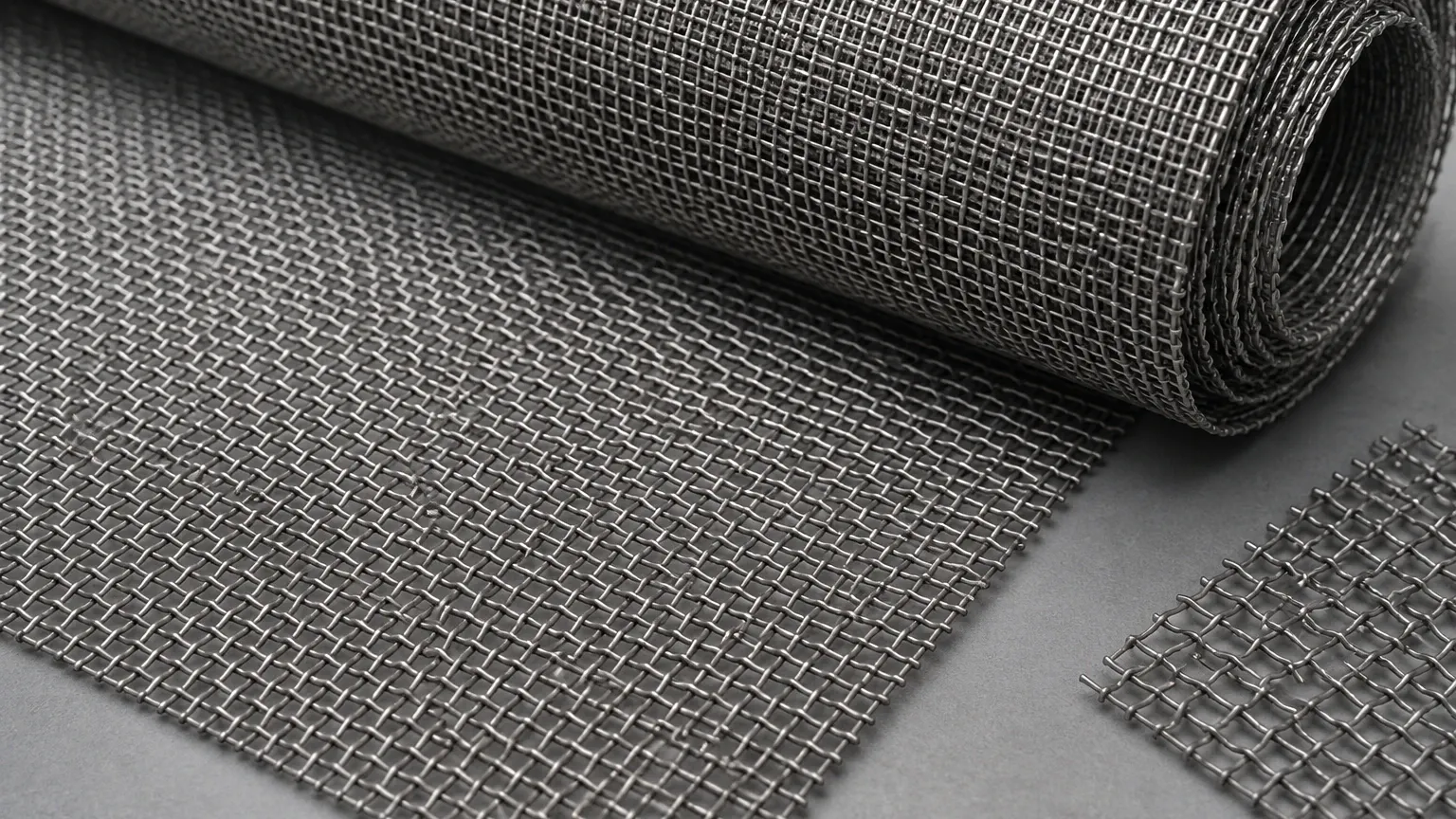
Standard off-the-shelf mesh rolls rarely meet the specific needs of complex industrial equipment. Kaifil specializes in providing Plain, twill and dutch woven wire mesh in SS304/316L — rolls, cut mesh and framed panels. Send mesh count or micron target for a technical quote.
Custom Dimensions and Shapes
Whether your application requires circular discs for extruder screens, rectangular panels for vibrating sifters, or cylindrical cartridges for inline strainers, customization ensures a perfect fit. Precision cutting techniques, such as laser or waterjet cutting, prevent fraying at the edges and maintain the integrity of the 3/8" apertures.
Edge Treatments and Framing
For safety and structural stability, woven wire mesh often requires specific edge treatments. Options include:
* Hemmed Edges: Folding the edges to eliminate sharp wires.
* U-Binding/Framing: Encasing the mesh in a metal frame (typically SS304 or SS316) to provide rigid support for installation into machinery.
* Welded Edges: Spot welding the perimeter wires to prevent the weave from unraveling during handling.
Maintenance, Cleaning, and Replacement Cycles
The total cost of ownership for a 3 8 woven wire mesh component is influenced by its service life and maintenance requirements. While stainless steel is exceptionally durable, certain factors can necessitate replacement.
Cleaning Protocols
In filtration applications, "blinding" (particles wedging in the openings) or "pegging" can occur. For 3/8" mesh, cleaning is generally straightforward compared to micron-rated meshes. High-pressure water jets, ultrasonic cleaning, or chemical baths (back-washing) are effective. Engineers should specify a wire diameter that can withstand the mechanical stresses of the chosen cleaning method.
Monitoring Wear and Fatigue
In vibrating screens or high-flow environments, wire thinning (due to abrasion) or work-hardening (leading to brittle failure) can occur. Regular inspection for broken wires or aperture deformation is essential to maintain process quality. Establishing a predictive replacement cycle based on historical performance data helps prevent unscheduled downtime.
Procurement Checklist for Engineers
Before placing an order for 3 8 woven wire mesh, technical professionals should confirm the following data points to ensure the product meets application requirements:
1. Exact Aperture Size: Confirm if 3/8" refers to the clear opening or center-to-center spacing.
2. Wire Diameter: Specify based on the required mechanical strength and the allowable pressure drop.
3. Material Grade: Choose SS304 for general use or SS316L for corrosive environments.
4. Weave/Crimp Type: Determine if a plain weave is sufficient or if a lock-crimp is needed for stability.
5. Form Factor: Will the mesh be delivered in rolls, cut-to-size pieces, or framed panels?
6. Quantity and Tolerance: Define the dimensional tolerances required for seamless integration into existing hardware.
Conclusion
The 3 8 woven wire mesh is a foundational component in many industrial systems, providing a balance of high flow rates and robust mechanical separation. By understanding the nuances of wire gauge, material properties, and weave styles, engineers can optimize their filtration processes for both performance and longevity.
Kaifil continues to support global industries with precision-engineered stainless steel filtration solutions. For technical consultations or customized mesh designs, our engineering team provides the expertise necessary to solve complex filtration challenges. Whether you require standard rolls or complex framed components, selecting the right Woven Wire Mesh is the first step toward operational excellence.
