


3 4 Woven Wire Mesh
In industrial filtration and screening, the specification of "3/4" typically refers to the clear opening or aperture size of the mesh. Selecting the correct 3 4 woven wire mesh involves more than simply identifying the opening size; it requires a deep understanding of wire diameters, material properties, and weave types to ensure the component performs reliably under specific mechanical and environmental stresses.
As a specialized manufacturer, Kaifil provides precision-engineered Woven Wire Mesh solutions tailored to demanding sectors, including chemical processing, food production, and heavy industrial screening. This guide examines the technical parameters, engineering considerations, and selection criteria essential for procurement and design teams.
Understanding the Geometry of 3/4 Woven Wire Mesh
When discussing 3 4 woven wire mesh, the "3/4" designation usually signifies a 0.75-inch (19.05 mm) clear opening. Unlike fine meshes, which are categorized by mesh count (the number of openings per linear inch), coarse meshes like the 3/4" variety are defined by the actual space between parallel wires.
Aperture vs. Center-to-Center Spacing
Engineers must distinguish between the clear opening (aperture) and the center-to-center spacing. The aperture is the actual space through which particles or fluids pass. The center-to-center distance includes one wire diameter plus the aperture. For instance, if a 3/4" opening is paired with a 0.120" wire, the center-to-center distance is 0.870". This distinction is critical for calculating flow rates and structural load-bearing capacity.
The Impact of Wire Diameter
The choice of wire diameter significantly alters the performance of the mesh. A thicker wire increases the structural integrity and wear life of the screen but reduces the percentage of open area. Conversely, a thinner wire maximizes throughput but may fail under high-pressure or high-impact loads.
| Wire Diameter (Inches) | Aperture (Inches) | Open Area (%) | Weight (lb/sq.ft) |
| :— | :— | :— | :— |
| 0.080 | 0.750 | 81.6% | 0.47 |
| 0.105 | 0.750 | 76.9% | 0.81 |
| 0.135 | 0.750 | 71.8% | 1.32 |
| 0.192 | 0.750 | 63.4% | 2.58 |
Material Selection: SS304 vs. SS316L
Material science is the cornerstone of filtration longevity. For most industrial 3 4 woven wire mesh applications, stainless steel is the standard due to its mechanical strength and resistance to oxidation.
Stainless Steel 304
SS304 is the most common grade used in industrial screening. It offers excellent durability and cost-effectiveness for general applications where extreme chemical corrosion is not a primary concern. It is widely used in food processing (where it meets hygiene standards) and architectural safety guards.
Stainless Steel 316L
For environments involving chlorides, acids, or marine conditions, SS316L is the preferred choice. The addition of molybdenum provides superior resistance to pitting and crevice corrosion. The "L" (low carbon) variant is particularly important if the mesh needs to be welded into frames, as it prevents carbide precipitation during the welding process, maintaining the corrosion resistance of the heat-affected zone.
Weave Types and Crimp Styles
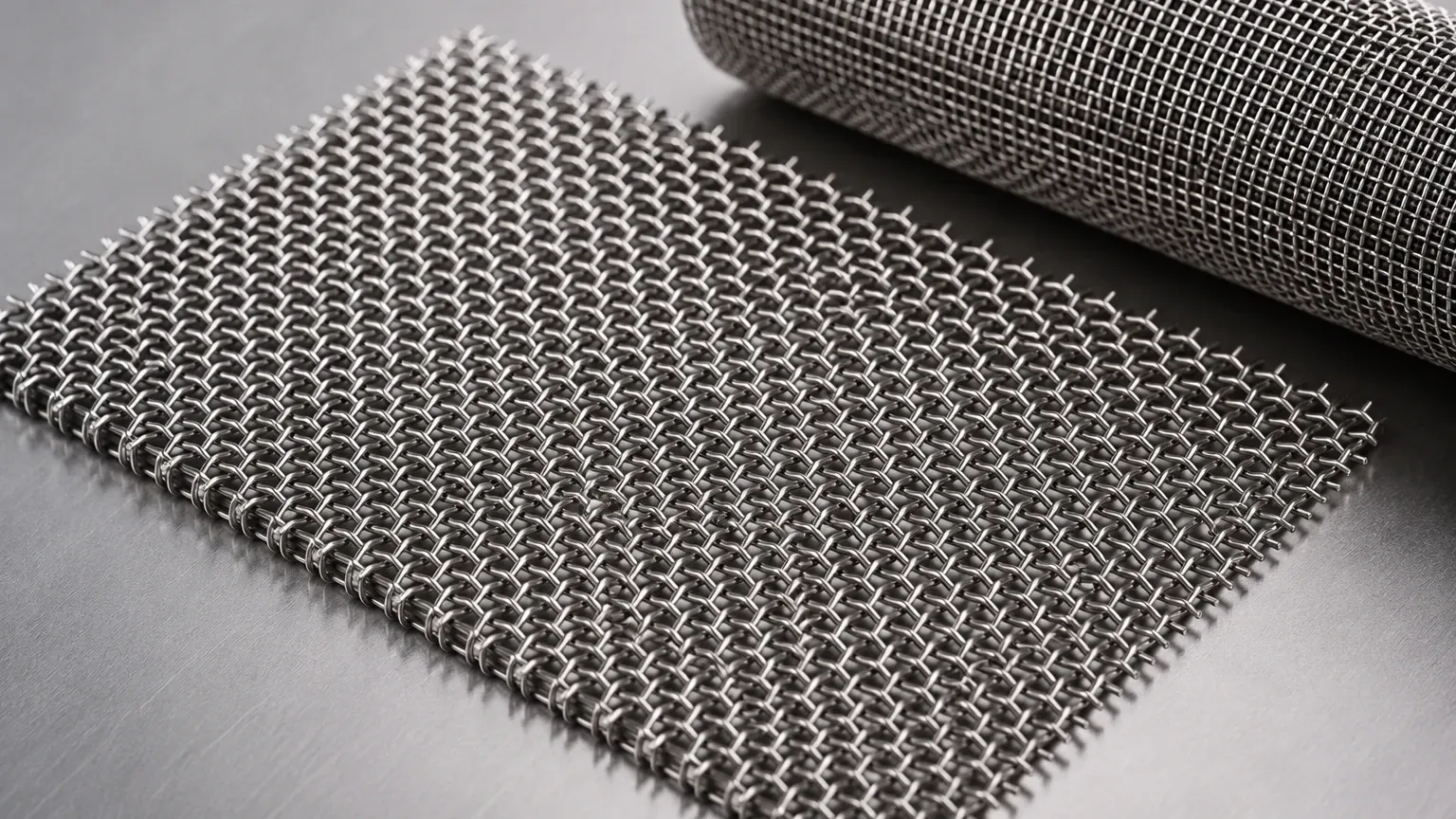
The method by which the wires are interlaced determines the stability and surface smoothness of the mesh. While Plain, twill and dutch woven wire mesh in SS304/316L — rolls, cut mesh and framed panels. Send mesh count or micron target for a technical quote. covers a broad spectrum, 3/4" openings typically utilize specific crimping styles to maintain aperture precision.
Plain Weave
In a plain weave, each shute wire passes alternately over and under each warp wire. This is the most common weave for standard industrial applications, providing a consistent aperture and straightforward manufacturing process.
Lock Crimp
For larger openings like 3/4", a lock crimp is often employed. The wires are pre-crimped with distinct "knuckles" that lock the wires together at their intersections. This prevents the wires from shifting under mechanical vibration, ensuring that the 0.75-inch opening remains accurate throughout the service life of the screen.
Intermediate Crimp
Intermediate crimping involves extra crimps in both the warp and shute wires between the intersections. This is typically used when using relatively light-gauge wire with large openings to provide extra rigidity and prevent wire "weaving" or displacement.
Engineering Considerations for Industrial Use
When integrating 3 4 woven wire mesh into a system, engineers must evaluate several performance metrics beyond simple sizing.
1. Open Area and Flow Dynamics
The percentage of open area determines the efficiency of the filtration or screening process. A higher open area results in lower pressure drops across the screen. In high-velocity gas or liquid systems, calculating the pressure differential is vital to prevent pump cavitation or system fatigue.
2. Mechanical Load and Tensile Strength
Screens used in mining, aggregate processing, or heavy-duty safety guards must withstand significant impact and static loads. The tensile strength of the stainless steel wire, combined with the weave stability, dictates the maximum allowable load. Kaifil’s manufacturing process ensures that the internal stresses of the wire are managed to prevent premature cracking or deformation.
3. Abrasion Resistance
In applications involving the movement of abrasive solids (such as ores or grains), the surface hardness of the wire is a key factor. While stainless steel provides moderate abrasion resistance, the gauge of the wire must be oversized if high-velocity abrasive contact is expected to ensure a reasonable replacement cycle.
Common Applications for 3/4 Woven Wire Mesh
The versatility of the 3/4" opening makes it suitable for a wide range of industrial and commercial functions:
* Industrial Guarding: Used as protective screens for machinery and fans where airflow is required but personnel safety is paramount. The 3/4" opening prevents hand or tool entry while allowing maximum ventilation.
* Coarse Filtration: Serving as a pre-filter or intake screen in water treatment and chemical processing to remove large debris before it reaches finer filtration stages or sensitive pumps.
* Mining and Aggregate: Utilized in vibrating screens for the initial sorting of raw materials, where the lock-crimp construction provides the necessary durability against constant vibration.
* Architectural and Security: Often used in infill panels for railings or security partitions. The clean aesthetic of stainless steel woven wire mesh combined with its structural strength provides both form and function.
* Food Processing: Used in drying racks or sorting trays where large food items require consistent airflow and high hygiene standards.
Quality Control and Standards
To ensure performance reliability, industrial mesh should be manufactured in accordance with international standards such as ASTM E2016 (Standard Specification for Industrial Woven Wire Cloth) and ISO 9044. These standards define the allowable tolerances for wire diameter, aperture size, and weave consistency.
At Kaifil, quality control involves rigorous inspection of the raw wire material and the finished mesh. We verify the chemical composition of the alloy (SS304/316L) and use precision measurement tools to ensure the 3 4 woven wire mesh meets the exact aperture specifications required by the client’s engineering drawings.
How to Specify 3/4 Woven Wire Mesh for Procurement
When requesting a quote or designing a component, providing the following technical details will ensure the product meets the application requirements:
1. Material Grade: Specify SS304 for general use or SS316L for corrosive environments.
2. Aperture Size: Confirm the 3/4" (0.75") clear opening.
3. Wire Diameter: Define the gauge based on the required open area and structural needs.
4. Overall Dimensions: Provide the width and length of the rolls or the specific dimensions of cut-to-size panels.
5. Edge Treatment: Specify if the mesh should have raw edges, hemmed edges, or be welded into a custom frame.
6. Quantity: Industrial production often benefits from economies of scale for custom runs.
Conclusion
The 3 4 woven wire mesh is a fundamental component in many industrial systems, providing a balance between high throughput and structural resilience. By carefully selecting the wire gauge, material grade, and crimp style, engineers can optimize their filtration and screening processes for maximum efficiency and longevity.
Kaifil’s expertise in custom stainless steel filtration solutions allows us to support technical teams in identifying the precise mesh configuration for their specific environment. Whether you require bulk rolls or precision-framed panels, our focus on quality and engineering accuracy ensures that your filtration components perform reliably in the most demanding industrial settings. For technical consultation on material compatibility or performance expectations, reaching out to a specialized manufacturer is the most effective way to ensure the total cost of ownership remains low through extended replacement cycles and optimized performance.
