


3/16 Woven Wire Mesh
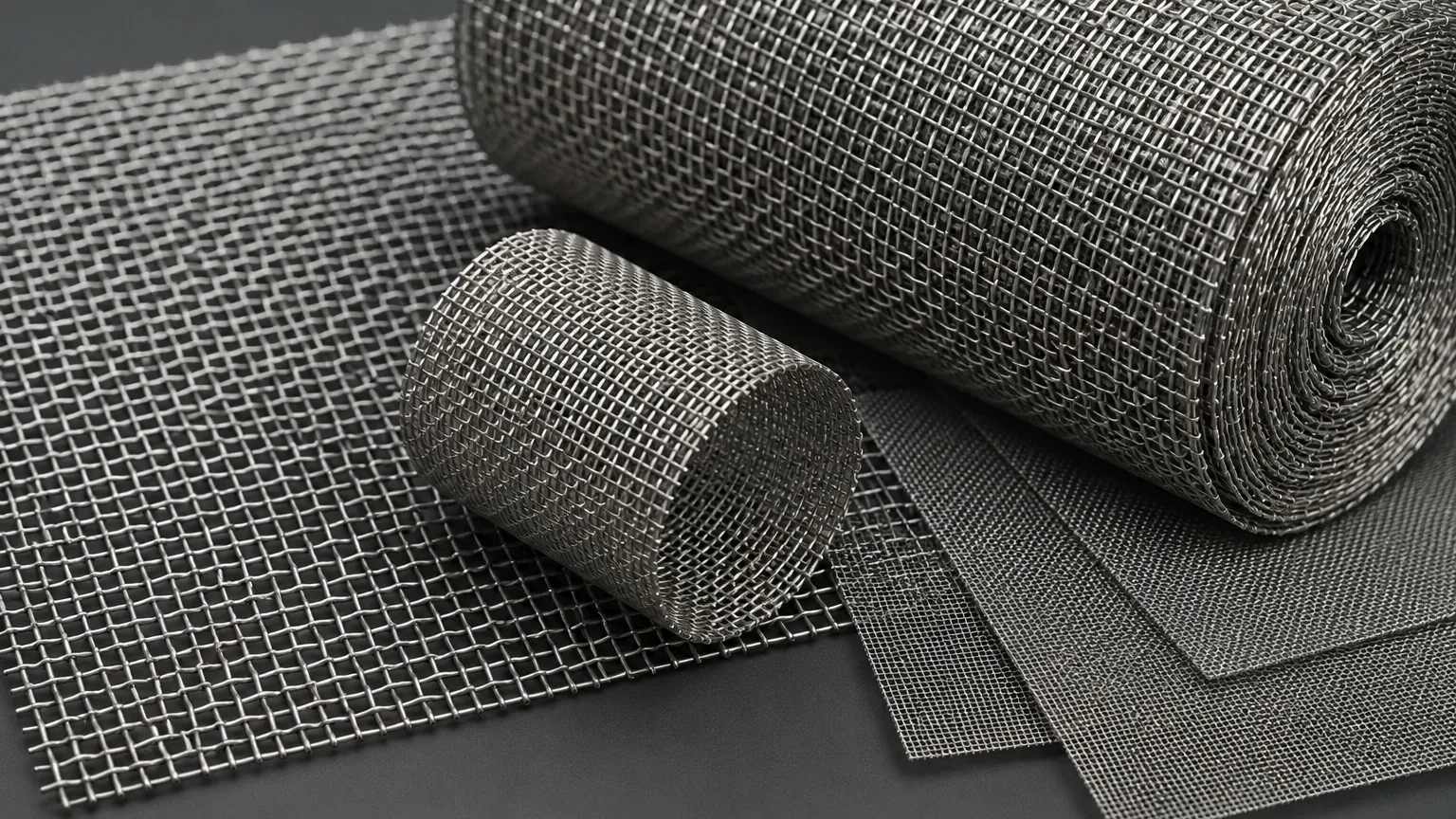
In the landscape of industrial filtration and material separation, selecting the correct aperture size and material grade is critical to operational efficiency. Among the various specifications available, 3/16 woven wire mesh represents a versatile, medium-coarse solution frequently utilized in heavy-duty screening, pre-filtration, and protective enclosures.
For engineers and procurement professionals, understanding the technical nuances of Woven Wire Mesh is essential for ensuring that the selected component can withstand the mechanical stresses and chemical environments of a specific application. This guide examines the technical specifications, material considerations, and engineering factors associated with 3/16" opening mesh to assist in informed decision-making.
Understanding the 3/16 Specification
When discussing "3/16" in the context of wire mesh, it typically refers to the clear opening—the space between two adjacent parallel wires. A 3/16-inch opening is equivalent to 0.1875 inches or approximately 4.76 mm. This size falls into the category of "space cloth," where the focus is on the clear distance rather than the mesh count (the number of openings per linear inch).
Opening vs. Mesh Count
While fine meshes are defined by mesh count, coarser meshes like the 3/16" variety are often defined by the opening size and the wire diameter. For example, a 3/16" opening can be achieved using various wire diameters. If a 0.063" (1.6mm) wire is used, the center-to-center distance becomes 0.250", resulting in a 4-mesh configuration. However, if a heavier 0.080" (2.0mm) wire is used for increased durability, the center-to-center distance increases, and the open area percentage decreases.
The Importance of Wire Diameter
The diameter of the wire chosen for a 3/16 woven wire mesh directly impacts the product's lifespan and performance.
- Light Wire Gauges: Offer a higher percentage of open area, which maximizes flow rates and reduces pressure drop in liquid filtration. However, they are more susceptible to abrasion and mechanical deformation.
- Heavy Wire Gauges: Provide greater structural integrity and resistance to impact. These are preferred in vibrating screens or architectural panels where the mesh must support its own weight or external loads.
Material Selection: SS304 vs. SS316L
Material science is the cornerstone of reliable filtration. For most industrial applications, stainless steel is the standard due to its corrosion resistance and thermal stability. At Kaifil, we primarily focus on two grades: SS304 and SS316L.
Stainless Steel 304
SS304 is the most common grade used for industrial mesh. It provides excellent resistance to atmospheric corrosion and many organic and inorganic chemicals. It is widely used in food processing (non-acidic), general manufacturing, and protective screening. Its primary limitation is susceptibility to chloride-induced pitting, making it less suitable for marine environments or highly concentrated saline solutions.
Stainless Steel 316L
For more demanding environments, SS316L is the preferred choice. The addition of molybdenum (2-3%) significantly enhances its resistance to pitting and crevice corrosion in chloride-rich environments. The "L" denotes low carbon content, which minimizes carbide precipitation during welding, ensuring that the mesh remains corrosion-resistant at the joints. This grade is essential for pharmaceutical production, chemical processing, and water treatment plants where aggressive cleaning agents or harsh process fluids are present.
Engineering Considerations for Filtration and Screening
When integrating 3/16 woven wire mesh into a system, engineers must evaluate several performance metrics to ensure long-term reliability.
Open Area Percentage
The open area is the ratio of the total area of the openings to the total area of the mesh. It is calculated using the formula:
Open Area % = (O / (O + d))² x 100
*Where O = Opening size and d = Wire diameter.*
For a 3/16" (0.1875") opening with a 0.063" wire, the open area is approximately 56%. A high open area is desirable for high-volume throughput but must be balanced against the need for mechanical strength. In applications like debris screening in water intakes, a higher open area prevents excessive head loss (pressure drop).
Weave Types
While plain weave is the most common for 3/16" openings, other configurations exist:
1. Plain Weave: Each shute wire passes alternately over and under each warp wire. This provides a stable, consistent opening and is the standard for most industrial applications.
2. Pre-Crimped Mesh: For larger openings like 3/16", the wires are often crimped before weaving. This ensures the wires stay locked in place, maintaining precise aperture dimensions even under heavy vibration or impact.
3. Inter-Crimp: Extra crimps between the intersections provide additional rigidity, often used when using lighter wires for larger openings.
Mechanical Strength and Stability
In B2B industrial environments, mesh is rarely used in isolation. It is often welded into frames, rolled into cylinders, or used as a support layer for finer filter media. The 3/16" mesh must possess enough tensile strength to resist "blinding" (clogging) and "peening" (deformation of wires due to impact).
Key Applications of 3/16" Woven Mesh
The 3/16" aperture size serves a specific niche where fine filtration is not required, but robust separation or protection is mandatory.
1. Industrial Pre-Filtration
In complex water treatment or chemical processing systems, 3/16" mesh serves as a primary strainer. It protects downstream pumps, valves, and finer filter cartridges from large debris, stones, or scale. By removing these large particles early, the total cost of ownership is reduced through extended maintenance intervals for more expensive fine-filtration components.
2. Food and Beverage Processing
In the food industry, 3/16" mesh is used in scalping screens to remove oversized contaminants or clumps from bulk dry ingredients. Because it can be manufactured in SS316L, it meets stringent hygienic standards and can withstand high-temperature CIP (Clean-in-Place) cycles without degrading.
3. Architectural and Security Enclosures
Beyond filtration, the structural aesthetic of 3/16 woven wire mesh makes it suitable for security screens, machine guards, and ventilation panels. It provides a high level of visibility and airflow while preventing the passage of objects larger than 4.76mm, ensuring personnel safety around moving machinery.
4. Catalyst Support and Retention
In petrochemical reactors, coarse mesh layers are used to support catalyst beds. The 3/16" opening allows for high fluid velocity while providing a stable platform for the catalyst pellets to rest upon, preventing them from migrating into the piping system.
Customization and OEM Solutions
Standard off-the-shelf mesh rolls often do not meet the precise requirements of specialized industrial equipment. At Kaifil, we emphasize the importance of customized filtration solutions.
Cut-to-Size and Fabrication
Large-scale operations often require mesh in specific shapes—circles, rectangles, or complex geometries—to fit into existing housings. Precision laser or plasma cutting ensures that the edges of the 3/16" mesh are clean, reducing the risk of wire fraying, which could contaminate the process stream.
Framed and Reinforced Panels
For applications involving high pressure or heavy loads, the mesh can be supplied with reinforced edges or integrated into stainless steel frames. This adds structural rigidity and simplifies the installation and replacement process for maintenance teams.
Technical Consultation
Choosing between different wire diameters and material grades can be complex. Engineers should confirm the following before procurement:
- Flow Rate Requirements: Will the open area of the 3/16" mesh allow for the necessary volume?
- Chemical Compatibility: Is the process fluid acidic, alkaline, or high in chlorides?
- Temperature Extremes: Will the mesh be subject to thermal expansion or cryogenic conditions?
- Mechanical Load: Will the mesh be supporting weight or subjected to high-velocity impact?
For detailed specifications and to explore various weave patterns, you can Review product options and application support to find the exact configuration required for your project.
Maintenance and Longevity
The total cost of ownership for industrial filtration components is heavily influenced by their service life. While stainless steel is durable, 3/16" mesh requires proper maintenance to prevent premature failure.
1. Cleaning Protocols: Depending on the application, mesh can be cleaned via backwashing, ultrasonic cleaning, or chemical baths. It is vital to ensure that cleaning agents are compatible with the stainless steel grade (e.g., avoiding bleach on SS304).
2. Inspection for Blinding: In screening applications, particles can become wedged in the 3/16" openings. Regular inspection ensures that the effective open area is maintained.
3. Monitoring for Corrosion: Even 316L can corrode under extreme conditions. Periodic checks for discoloration or pitting can prevent catastrophic failure and process contamination.
Conclusion
Selecting the right 3/16 woven wire mesh involves more than just picking an opening size. It requires a deep dive into material properties, wire geometry, and the specific mechanical demands of the industrial environment. Whether used as a protective guard, a catalyst support, or a primary strainer, the quality of the mesh directly impacts the reliability of the entire system.
Kaifil provides the technical expertise and manufacturing precision necessary to deliver high-performance Woven Wire Mesh solutions. By focusing on quality materials like SS304 and SS316L and offering extensive customization, we help engineers achieve optimized filtration performance and long-term durability in their most demanding applications.
