


Stainless Steel Woven Wire 5 Mesh: A Technical Guide for Industrial Applications
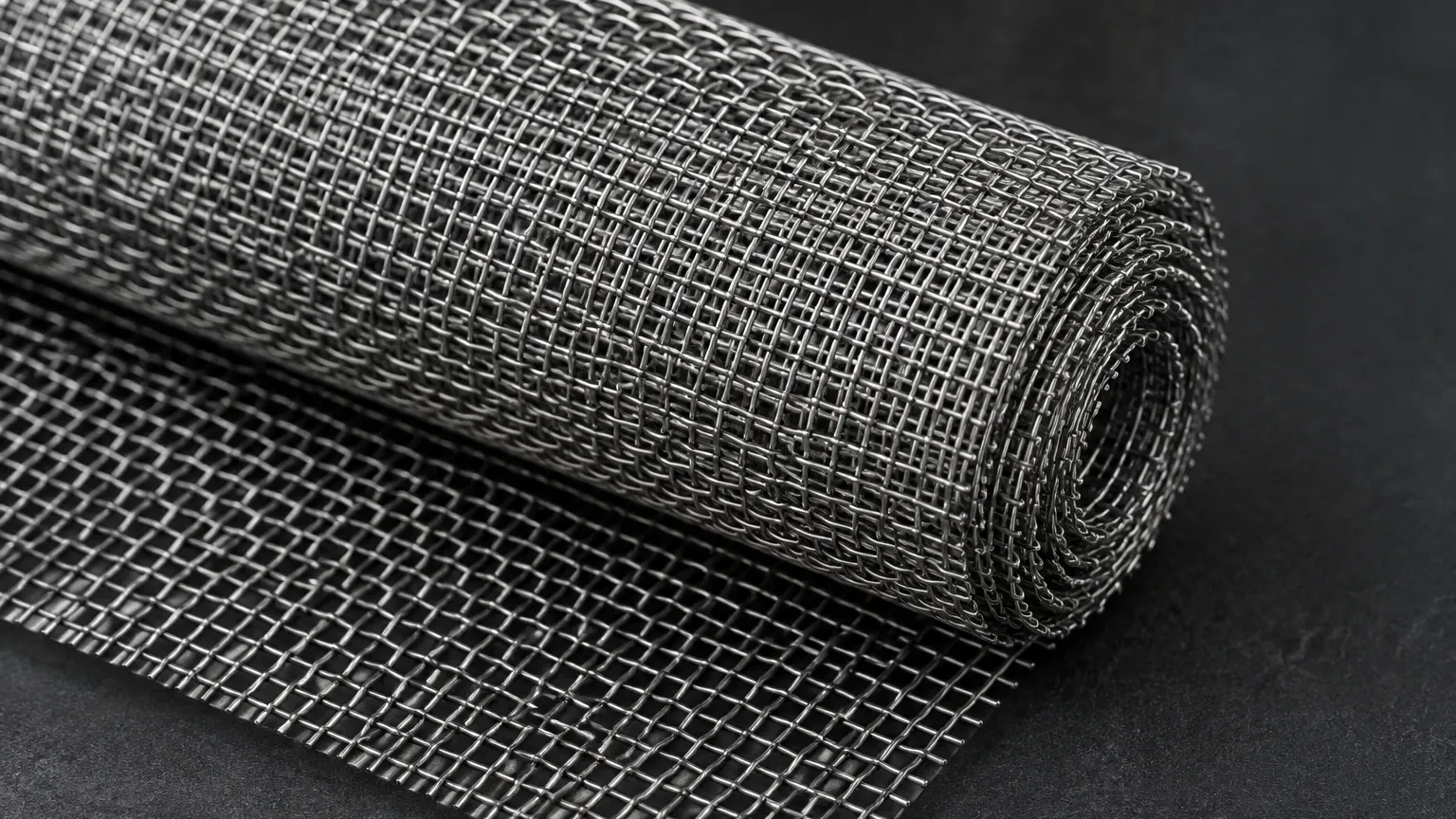
In industrial filtration and separation, selecting the correct mesh count is critical to balancing flow efficiency with structural integrity. Stainless steel woven wire 5 mesh represents a specific category of coarse mesh used extensively across the chemical, food and beverage, and water treatment sectors. Characterized by five openings per linear inch in both the warp and weft directions, this specification provides a robust solution for primary filtration, protective screening, and support structures for finer filtration media.
For engineers and procurement teams, understanding the technical nuances of Woven Wire Mesh is essential for ensuring that a component can withstand the mechanical stresses and corrosive environments typical of industrial processes. This guide examines the geometry, material properties, and engineering considerations of 5 mesh stainless steel wire cloth.
Understanding the Geometry of Stainless Steel Woven Wire 5 Mesh
The term "5 mesh" refers to the number of openings per linear inch. To calculate the aperture (the clear opening between wires), one must account for the wire diameter. The formula is straightforward:
Aperture = (1 / Mesh Count) – Wire Diameter
In a standard industrial configuration, a 5 mesh screen often utilizes a wire diameter of approximately 0.047 inches (1.2 mm). Using the formula, this results in an aperture of roughly 0.153 inches (3.89 mm). This relatively large opening allows for high flow rates and minimal pressure drop, making it an ideal candidate for coarse particle removal or as a protective guard against large debris.
The "Open Area" percentage is another critical metric. For a 5 mesh screen with 0.047-inch wire, the open area typically falls between 55% and 65%. This high transparency to fluids and gases ensures that the filtration system does not become a bottleneck in the production line, while the substantial wire gauge provides the necessary stiffness to resist deformation under pressure.
Material Selection: SS304 vs. SS316L for Industrial Filtration
While the physical dimensions of the mesh determine the mechanical filtration capability, the alloy selection determines the service life and chemical compatibility. Kaifil specializes in manufacturing 5 mesh solutions using high-grade stainless steel alloys, primarily Type 304 and Type 316L.
Type 304 Stainless Steel
Type 304 is the standard industrial grade. It offers excellent resistance to atmospheric corrosion and is suitable for most food processing and general industrial applications. It is cost-effective and provides sufficient durability for environments where high concentrations of chlorides or acids are not present.
Type 316L Stainless Steel
For more demanding environments, such as chemical processing plants or marine applications, Type 316L is the preferred choice. The addition of molybdenum enhances its resistance to pitting and crevice corrosion, particularly in chloride-rich environments. The "L" denotes low carbon content, which improves weldability and reduces the risk of sensitization—a critical factor when the mesh is being fabricated into custom filter cartridges or framed panels.
Structural Performance and Load-Bearing Capabilities
Unlike finer meshes that may require a support grid, stainless steel woven wire 5 mesh is often self-supporting due to its thicker wire diameters. In many hydraulic and water treatment applications, this mesh serves as the "support mesh" or "drainage layer" in a multi-layered sintered or pleated filter element.
Engineering considerations for structural performance include:
* Tensile Strength: The ability of the mesh to withstand internal pressure without bursting. This is a function of the alloy's yield strength and the wire diameter.
* Rigidity: 5 mesh is rigid enough to maintain its shape in vibrating screens or high-velocity fluid streams, which is essential for consistent filtration performance.
* Stability: Because the wires are woven (typically in a plain weave pattern), the mesh maintains precise aperture dimensions even under mechanical stress, provided the tension is correctly managed during installation.
Key Industrial Applications for 5 Mesh Screens
The versatility of stainless steel woven wire 5 mesh allows it to be utilized in various capacities across multiple industries:
1. Water Treatment: Used in intake screens to prevent large debris, aquatic life, and stones from entering pumps and sensitive downstream filtration equipment.
2. Food and Beverage: Employed in the initial stages of processing to separate large solids from liquids, such as in fruit juice extraction or grain cleaning.
3. Chemical Processing: Acts as a catalyst support or a primary strainer in piping systems to protect valves and meters from pipe scale or welding slag.
4. Architectural and Security: Due to its aesthetic appeal and strength, it is used in infill panels, security screens, and ventilation guards where airflow and visibility are required alongside physical protection.
5. Heat Treating: Used in the fabrication of baskets and trays for industrial ovens, where the high open area allows for uniform heat distribution and rapid cooling.
Engineering Evaluation: Flow Rate and Pressure Drop
When integrating a 5 mesh screen into a system, engineers must evaluate the impact on fluid dynamics. The pressure drop ($ΔP$) across a woven wire mesh is influenced by the fluid's velocity, viscosity, and the mesh's open area.
Because 5 mesh has a high open area, the initial pressure drop is typically negligible. However, as particles begin to accumulate on the surface (the "filter cake"), the effective open area decreases, leading to an increase in $ΔP$. In B2B procurement, it is vital to confirm the expected solids loading of the process fluid to determine the appropriate cleaning or replacement cycle.
For high-viscosity fluids, such as heavy oils or resins, the wire diameter of the 5 mesh becomes even more significant. A thinner wire increases the open area and reduces resistance, but may sacrifice the longevity of the screen if the fluid contains abrasive particles.
Customization and Fabrication Options for OEM Integration
Industrial applications rarely use raw mesh rolls without some level of fabrication. Kaifil provides comprehensive OEM services to transform standard 5 mesh rolls into ready-to-install components. Customization options include:
* Cut-to-Size Pieces: Precision-cut circles, rectangles, or complex shapes using laser or waterjet cutting to ensure clean edges and dimensional accuracy.
* Framed Panels: Adding stainless steel frames or U-edging to the mesh to provide structural mounting points and prevent fraying of the wire ends.
* Cylindrical and Conical Filters: Rolling and seam-welding the mesh into tubes or cones for use in basket strainers and inline filters.
* Multi-Layer Composites: Sintering 5 mesh with finer layers of stainless steel wire cloth to create a high-strength filter medium with precise micron ratings.
When requesting a quote for a custom project, engineers should specify the required alloy, wire diameter, and the specific tolerances needed for their housing or equipment.
Maintenance and Longevity in Demanding Environments
The durability of stainless steel woven wire 5 mesh is one of its primary advantages over synthetic alternatives. However, to maximize the total cost of ownership (TCO), a proper maintenance regimen is required.
Cleaning Methods
Stainless steel mesh can be cleaned using several methods depending on the contaminant:
* Backwashing: Reversing the flow of the fluid to dislodge particles trapped on the surface.
* Ultrasonic Cleaning: Using high-frequency sound waves in a solvent bath to remove fine particles from the wire intersections.
* Chemical Cleaning: Using mild acids or specialized detergents to dissolve organic or mineral scale (ensure chemical compatibility with the SS304 or SS316L alloy).
* Mechanical Brushing: For coarse 5 mesh, soft-bristle brushing can remove large surface debris without damaging the wire structure.
Inspection Points
Regular inspections should check for signs of wire thinning (abrasion), pitting (corrosion), or "blinding" (permanent clogging of the apertures). If the mesh is used in a vibrating separator, inspectors should also look for signs of fatigue cracking at the points where the mesh is clamped to the frame.
Conclusion: Selecting the Right Partner for Filtration Solutions
Choosing the correct 5 mesh specification involves more than just selecting a mesh count. It requires a technical evaluation of wire diameter, material grade, and the specific demands of the industrial environment. As a professional manufacturer, Kaifil offers the engineering expertise and manufacturing precision necessary to deliver high-performance filtration components.
Whether you require standard rolls for general screening or customized, framed components for a proprietary OEM application, focusing on quality and exact specifications is the key to operational efficiency. For technical support in selecting the optimal weave and material for your project, Plain, twill and dutch woven wire mesh in SS304/316L — rolls, cut mesh and framed panels. Send mesh count or micron target for a technical quote.
