


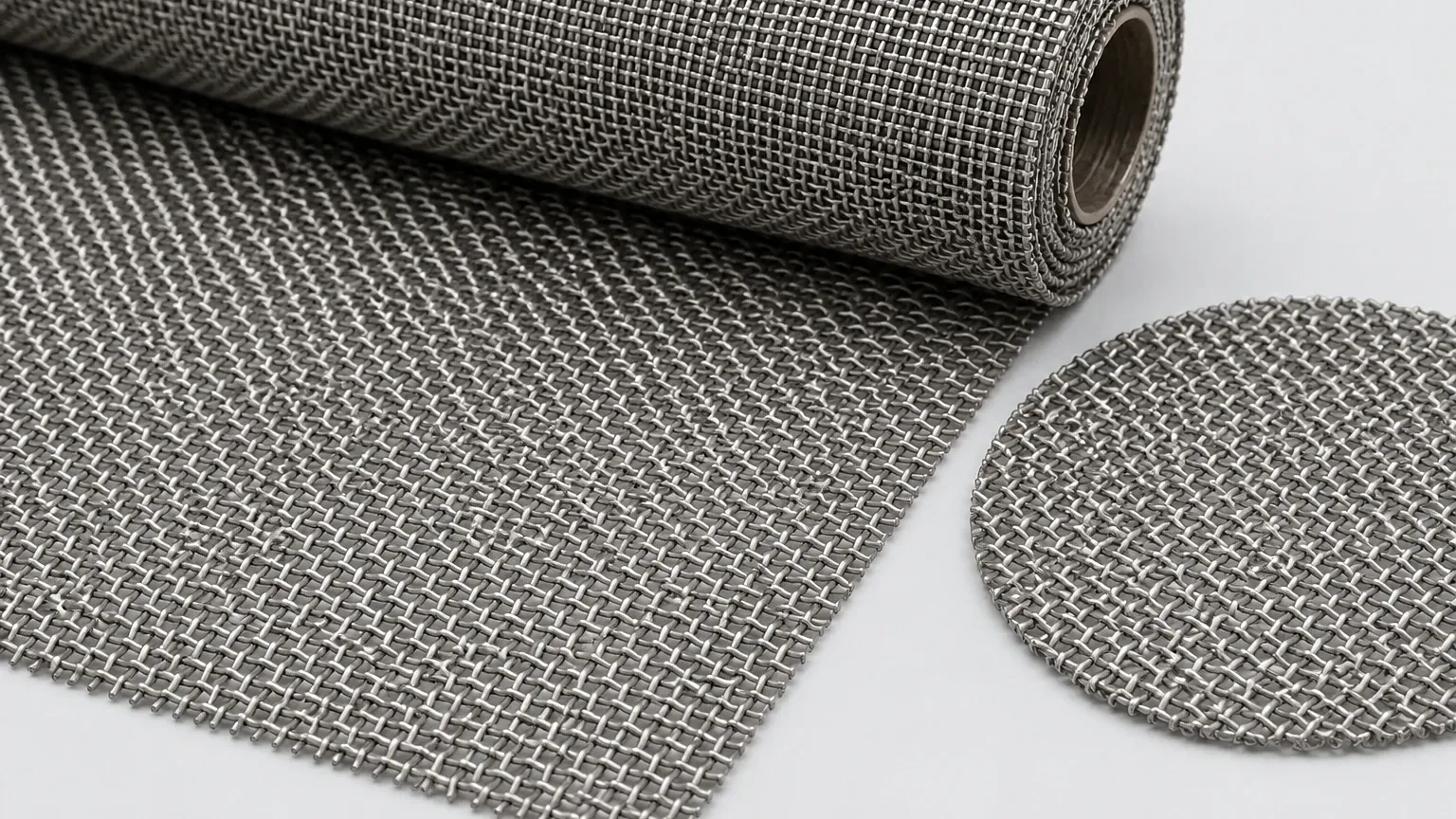
5mm Woven Wire Mesh
In industrial filtration and screening applications, the precision of a mesh opening is the primary determinant of process efficiency and product quality. A 5mm woven wire mesh represents a relatively coarse specification within the broader category of industrial wire cloth, typically utilized for primary filtration, heavy-duty screening, and protective enclosures. Selecting the correct mesh involves more than simply identifying the aperture size; it requires a deep understanding of wire diameter, material grade, and the mechanical stresses of the operating environment.
As a specialized manufacturer, Kaifil provides engineered Woven Wire Mesh solutions designed to meet the rigorous demands of chemical processing, water treatment, and food production. This guide examines the technical parameters, material considerations, and engineering factors that procurement teams and engineers must evaluate when specifying 5mm mesh components.
Understanding 5mm Woven Wire Mesh Specifications
When discussing "5mm mesh," it is critical to distinguish between the aperture (the clear opening between wires) and the center-to-center spacing. In most industrial contexts, 5mm refers to the aperture size. However, the performance of the mesh is dictated by the relationship between this opening and the wire diameter.
The Geometry of the Mesh
The aperture size ($A$), wire diameter ($d$), and mesh count ($n$) are mathematically linked. For a square Woven Wire Mesh, the formula is:
$$A = \frac{25.4}{n} – d$$
For a 5mm aperture, the wire diameter chosen significantly impacts the "Open Area" percentage. The open area determines the flow capacity and pressure drop across the filter. A thinner wire increases the open area but reduces the mechanical strength and wear life of the mesh. Conversely, a thicker wire—such as a 1.6mm or 2.0mm wire for a 5mm opening—provides high structural integrity at the cost of reduced throughput.
Open Area Calculation
Engineers must calculate the percentage of open area ($OA$) to ensure the filtration system can handle the required flow rates without excessive backpressure:
$$OA = \frac{A^2}{(A + d)^2} \times 100$$
For example, a 5mm aperture with a 1.2mm wire diameter results in an open area of approximately 65%. This high transparency is ideal for gravity-fed filtration or low-pressure intake screens.
Material Selection for Industrial Environments
The longevity of a 5mm woven wire mesh is largely dependent on its metallurgical composition. While various alloys are available, stainless steel remains the industry standard due to its balance of cost, strength, and corrosion resistance.
Stainless Steel 304 (SS304)
SS304 is the most common grade for general industrial use. It offers excellent resistance to atmospheric corrosion and is suitable for most food-grade applications and basic chemical processing. It is a cost-effective choice for environments where high-concentration acids or chlorides are not present.
Stainless Steel 316L (SS316L)
For more demanding environments, such as marine applications, pharmaceutical production, or high-chloride chemical processing, SS316L is preferred. The addition of molybdenum provides superior resistance to pitting and crevice corrosion. The "L" denotes low carbon content, which improves weldability and prevents sensitization during fabrication—a critical factor when the mesh is being welded into frames or cartridges.
Specialty Alloys
In extreme cases involving high temperatures (above 800°C) or highly aggressive media, alloys like Inconel, Monel, or Hastelloy may be required. Kaifil offers Plain, twill and dutch woven wire mesh in SS304/316L — rolls, cut mesh and framed panels. Send mesh count or micron target for a technical quote. to ensure the material matches the specific chemical and thermal profile of the application.
Manufacturing and Weave Types
While 5mm apertures are typically produced using a Plain Weave—where each warp wire passes alternately over and under each weft wire—other weave structures exist for specific functional requirements.
1. Plain Weave: The most stable and common weave for 5mm openings. It provides a consistent aperture and is easy to clean, making it ideal for sieving and primary filtration.
2. Intermediate Crimp: For coarser meshes with relatively thin wires, intermediate crimping adds extra stability. The wires are crimped at intersection points to prevent "wire migration," ensuring the 5mm aperture remains precise throughout the service life.
3. Lock Crimp: This method locks the wires in place at the intersections. It is frequently used in heavy-duty screening where the mesh is subjected to high vibration or mechanical impact, such as in mining or aggregate processing.
Key Engineering Considerations: Flow and Durability
When integrating a 5mm woven wire mesh into an industrial system, engineers must account for several performance variables that go beyond simple particle retention.
Pressure Drop (ΔP)
As fluid passes through the mesh, a pressure differential is created. If the mesh is too restrictive (low open area), the pressure drop can exceed the system's pump capacity or cause the mesh to deform. In gas filtration or high-velocity liquid systems, maintaining a low ΔP is essential for energy efficiency.
Mechanical Loading and Fatigue
In pressurized filtration systems, the mesh acts as a pressure vessel component. It must withstand the differential pressure without permanent deformation (yielding). For 5mm mesh used in large-diameter pipes or tanks, internal supports or perforated metal backings are often necessary to prevent the mesh from "ballooning" or tearing at the edges.
Blinding and Pegging
"Blinding" occurs when particles slightly smaller than the aperture coat the surface of the mesh, while "pegging" occurs when particles of near-mesh size become wedged in the openings. Because 5mm is a relatively large aperture, it is susceptible to pegging in applications involving irregular solids (e.g., wood chips, crushed stone, or industrial waste). Selecting a wire diameter that creates a slight "taper" in the opening or using specialized vibrating equipment can mitigate these issues.
Applications of 5mm Mesh in Industrial Sectors
The versatility of 5mm woven wire mesh allows it to serve various roles across multiple industries:
* Water Treatment: Used as intake screens for power plants or municipal water facilities to prevent large debris, fish, and vegetation from entering sensitive pumping equipment.
* Food and Beverage: Employed in the initial stages of processing to separate large solids from liquids, such as removing stems from fruit pulp or large grains in brewing processes.
* Chemical Processing: Acts as a catalyst support grid or a primary filter for coarse chemical slurries where high flow rates are required.
* Architectural and Security: Due to its aesthetic appeal and strength, 5mm stainless steel mesh is often used for security screens, machine guards, and ventilated facades in industrial facilities.
* Hydraulic Systems: Serves as a coarse suction strainer to protect pumps from catastrophic failure caused by large contaminants in the reservoir.
Customization and Fabrication Options
Standard rolls of Woven Wire Mesh are often just the starting point. Most industrial applications require further fabrication to ensure the mesh integrates seamlessly into existing equipment.
Edge Treatments
Raw cut edges of 5mm mesh can be sharp and prone to fraying. Common edge treatments include:
* Hemmed Edges: Folding the edges over for safety and stability.
* U-Binding: Encasing the edges in a metal U-channel to provide a rigid mounting surface.
* Welded Borders: TIG or spot welding the mesh to a solid metal frame.
Shape and Configuration
Beyond flat panels, 5mm mesh can be formed into cylinders, cones, or multi-layered pleated cartridges. For high-pressure applications, the 5mm mesh may serve as a drainage layer or support mesh for a much finer filtration layer (e.g., a 50-micron mesh).
Quality Assurance and Procurement Checklist
To ensure the performance of a 5mm woven wire mesh investment, purchasing teams should confirm the following details with their manufacturer:
1. Aperture Tolerance: Industrial standards (such as ASTM E2011 or ISO 9044) define the allowable variance in aperture size. For precision screening, tighter tolerances may be required.
2. Material Certification: Request Mill Test Reports (MTRs) to verify the chemical composition of the stainless steel, particularly the Nickel and Chromium content.
3. Surface Finish: Depending on the application, the mesh may require ultrasonic cleaning (to remove oils from the weaving process) or electropolishing (to improve corrosion resistance and ease of cleaning).
4. Flatness Requirements: For architectural or precision-clamping applications, the mesh must be tensioned and leveled during production to avoid "oil-canning" or warping.
By focusing on these technical parameters, engineers can select a filtration solution that optimizes both performance and total cost of ownership. Whether the goal is protecting downstream equipment or ensuring the purity of a final product, the choice of a high-quality Woven Wire Mesh is a foundational step in industrial process design.
