


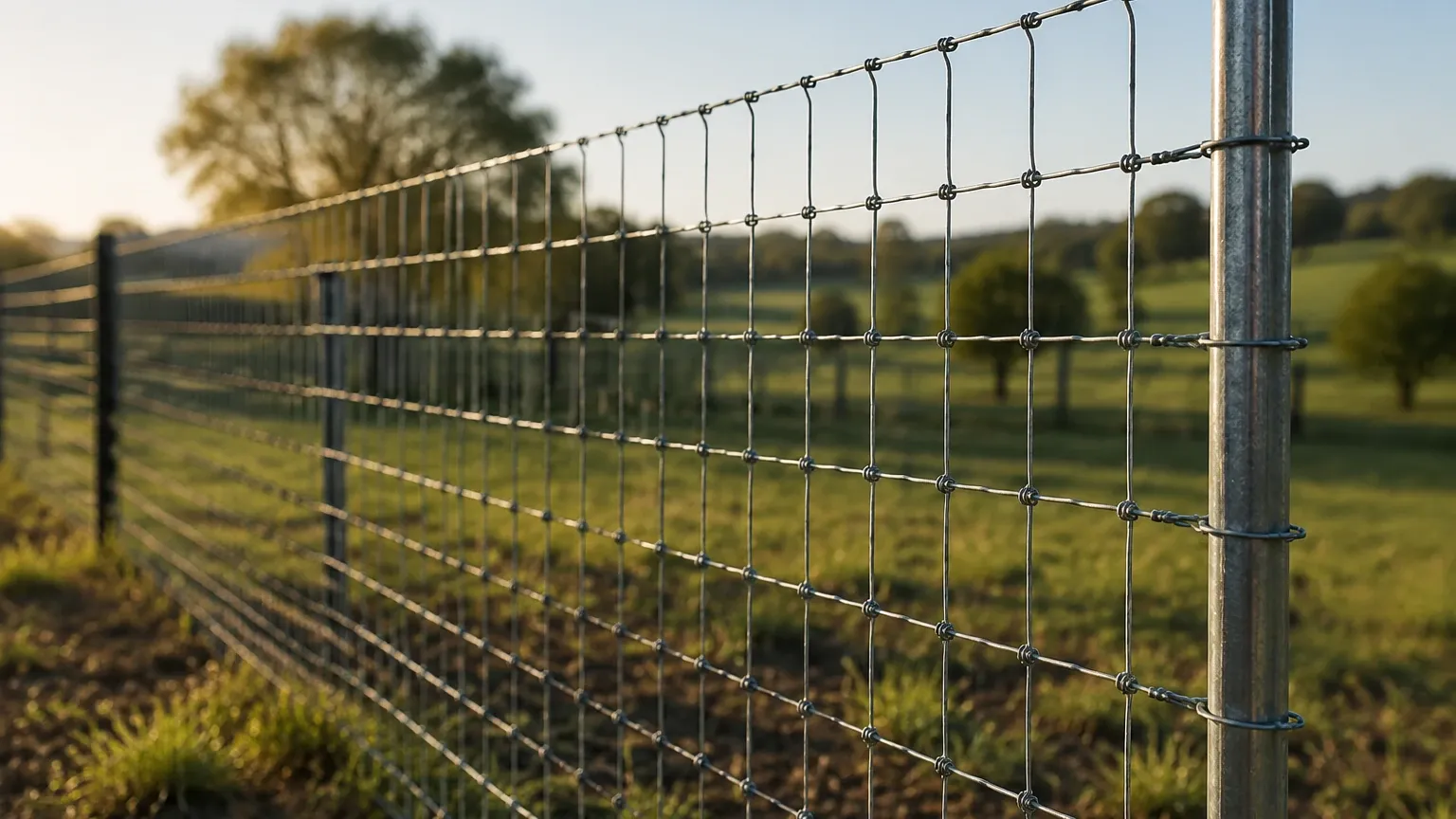
Woven Wire Fence 6ft
In industrial environments, the selection of perimeter and screening solutions requires a balance of structural integrity, material durability, and precise specification. While the term "woven wire fence 6ft" often brings to mind agricultural or residential boundaries, its application in industrial sectors—such as chemical processing, water treatment, and machine guarding—demands a much higher level of engineering scrutiny.
For engineers and procurement professionals, a 6ft woven wire installation is rarely just a barrier; it is a functional component of a facility’s safety and filtration infrastructure. Utilizing high-quality Woven Wire Mesh ensures that these installations meet rigorous standards for corrosion resistance, impact strength, and aperture consistency.
Understanding the Industrial Intent of 6ft Woven Wire Mesh
When specifying a woven wire fence 6ft in height for an industrial site, the primary objective is usually the containment of materials or the exclusion of personnel from hazardous zones. Unlike standard fencing, industrial-grade woven mesh is defined by its weave precision and alloy composition.
In a B2B context, a 6ft vertical span presents specific engineering challenges. The mesh must maintain its tension and aperture shape over a significant surface area. This is particularly critical in applications such as:
* Machine Guarding: Protecting operators from moving parts while maintaining visibility and airflow.
* Large-Scale Filtration: Serving as a primary screen for water intake systems or large particulate separation.
* Chemical Storage Areas: Providing a ventilated yet secure barrier that resists corrosive fumes.
Technical Specifications and Material Selection
The performance of a 6ft woven wire installation is fundamentally determined by the materials used. In industrial settings, carbon steel or galvanized options often fail prematurely due to oxidation and chemical exposure. Stainless steel is the industry standard for longevity and performance.
SS304 vs. SS316L
* SS304: This is the most common grade for general industrial use. It offers excellent strength and basic corrosion resistance. It is suitable for machine guards and internal partitions where moisture levels are moderate.
* SS316L: Containing molybdenum, SS316L provides superior resistance to chlorides and acidic environments. For 6ft screens used in marine environments, chemical processing plants, or wastewater treatment facilities, SS316L is the preferred choice to prevent pitting and structural failure.
Weave Types for Large-Scale Panels
For a 6ft height, the weave type influences both the rigidity of the panel and its functional transparency. Plain, twill and dutch woven wire mesh in SS304/316L — rolls, cut mesh and framed panels. Send mesh count or micron target for a technical quote. options allow engineers to select the exact balance of strength and open area required for their specific project.
1. Plain Weave: The most straightforward construction where wires cross over and under each other. It provides a consistent aperture and is ideal for standard safety barriers.
2. Crimp Weave: Often used for heavier wire diameters, pre-crimping the wire before weaving adds significant structural rigidity, which is essential for maintaining the shape of a 6ft tall panel without excessive support bracing.
Engineering Considerations for 6ft Vertical Spans
Designing a 6ft woven wire fence requires more than just selecting a mesh size. Engineers must account for physical forces that act upon a large vertical surface area.
Wire Gauge and Structural Integrity
The diameter of the wire (gauge) must be proportional to the mesh opening to ensure the panel does not sag. For a 6ft height, a heavier wire gauge is typically recommended to provide self-supporting characteristics. If the wire is too thin, the mesh may deform under its own weight or under minor impacts, compromising the safety or filtration integrity of the installation.
Wind Load and Open Area
In outdoor industrial applications, a 6ft fence acts as a sail. Engineers must calculate the "open area" percentage of the mesh. A higher open area reduces wind resistance but may allow smaller particles or objects to pass through. Precision in mesh manufacturing ensures that these calculations remain accurate across the entire 6ft span.
Tensioning and Framing
To prevent "oil-canning" or bowing in a 6ft panel, the mesh must be properly tensioned within a frame or secured to robust posts. For industrial filtration or safety partitions, framed panels are often preferred over rolls, as they provide a plug-and-play solution that maintains factory-set tensioning.
Common Risks in Industrial Mesh Procurement
Procuring a woven wire fence 6ft solution without technical verification can lead to several operational risks:
1. Material Substitution: Lower-grade alloys may be marketed as "stainless steel" but lack the nickel or chromium content required for industrial durability, leading to rapid rusting.
2. Aperture Irregularity: Inconsistent spacing between wires can create weak points in a safety barrier or allow bypass in a filtration application.
3. Inadequate Edge Finishing: For 6ft panels, raw edges can be a safety hazard and a point of structural failure. Specifying welded edges or framed borders is essential for B2B applications.
Application Focus: Beyond Simple Fencing
In many technical sectors, a "6ft fence" is actually a specialized component of a larger system.
Wastewater Treatment
Large-scale screens are used to protect pumps and downstream equipment from large debris. A 6ft woven wire screen must withstand constant immersion and the physical pressure of flowing water and debris. Here, the precision of the woven wire mesh is critical to ensure that the flow rate is maintained while effectively capturing solids.
Food and Beverage Processing
In these environments, 6ft partitions are used to separate production lines. The mesh must be "sanitary grade," meaning it must be easy to clean and resistant to high-pressure washdowns with caustic chemicals. Stainless steel woven mesh is the only material that reliably meets these hygiene and durability standards.
Customization and OEM Solutions
Industrial projects rarely fit a one-size-fits-all model. Customization is often necessary to meet specific site requirements. When sourcing a woven wire fence 6ft solution, technical teams should confirm the following with their manufacturer:
* Custom Dimensions: Ability to produce exact heights and widths to minimize on-site cutting and waste.
* Specific Mesh Counts: Tailoring the aperture size to the specific particulate or safety requirement of the facility.
* Surface Treatments: Options such as passivating or electropolishing to further enhance the corrosion resistance of the stainless steel.
Total Cost of Ownership (TCO) in Filtration and Fencing
When evaluating the cost of a 6ft woven wire installation, the initial purchase price is only one factor. B2B buyers must consider the Total Cost of Ownership, which includes:
* Maintenance Cycles: High-quality stainless steel mesh requires minimal maintenance compared to painted or galvanized steel.
* Replacement Frequency: A durable SS316L mesh may last decades, whereas a lower-quality material might require replacement every 3-5 years in a corrosive environment.
* Operational Efficiency: In filtration applications, a precisely woven mesh maintains flow rates and reduces energy costs for pumps.
Conclusion: Confirming Project Requirements
Before proceeding with a purchase of a woven wire fence 6ft system, engineering and purchasing teams should confirm the following technical data points:
1. Environmental Conditions: Is there exposure to salt, acids, or extreme temperatures?
2. Impact Requirements: What is the maximum physical force the mesh must withstand?
3. Filtration/Airflow Needs: What is the required micron rating or open area percentage?
4. Compliance Standards: Does the mesh need to meet specific ISO, ASTM, or food-grade certifications?
By focusing on these factual engineering parameters, industrial facilities can ensure that their woven wire mesh installations provide long-term reliability and safety. Whether used as a protective barrier or a critical filtration component, the quality of the weave and the integrity of the material remain the most important factors in project success.
