


5 Woven Wire
In the landscape of industrial filtration and material separation, precision is the primary driver of operational efficiency. For engineers and procurement specialists, selecting the correct mesh specification is not merely a matter of sizing; it is an exercise in balancing mechanical integrity, chemical compatibility, and flow dynamics. The term "5 woven wire" typically refers to two distinct but related configurations in the industry: 5-mesh woven wire (a coarse screen) or 5-layer sintered woven wire mesh (a high-performance composite).
Understanding the nuances between these configurations is essential for optimizing filtration systems in chemical processing, pharmaceutical manufacturing, and hydraulic applications. This guide provides a technical deep dive into the specifications, engineering considerations, and selection criteria for 5 woven wire solutions.
Defining 5 Woven Wire: Mesh Count vs. Sintered Layers
When discussing "5 woven wire" in a B2B context, it is critical to clarify the nomenclature. Depending on the application, this refers to either the mesh density or the structural laminating of the material.
5-Mesh Woven Wire
A 5-mesh screen denotes that there are five openings per linear inch in both the warp and weft directions. This results in a relatively large aperture size, making it ideal for primary straining, heavy-duty architectural applications, or as a support substrate for finer filter media. In a standard configuration using a 0.063-inch wire diameter, a 5-mesh screen provides an opening of approximately 0.137 inches (3.48 mm) and an open area of roughly 46.9%.
5-Layer Sintered Mesh
Conversely, 5-layer sintered mesh is a sophisticated filtration material created by diffusion-bonding five layers of Woven Wire Mesh together. This structure typically consists of a fine filter layer, two protective layers, and two heavy-duty reinforcement layers. This configuration is engineered to provide high mechanical strength while maintaining precise micron ratings, often used in high-pressure or high-temperature environments where single-layer mesh would fail.
Technical Specifications of 5 Mesh Woven Wire
For coarse filtration and separation, 5-mesh woven wire is a staple. Its performance is dictated by three primary variables: wire diameter, aperture size, and the weave pattern.
1. Wire Diameter: The thickness of the wire used determines the mesh's durability and weight. Common industrial diameters for 5-mesh range from 0.032 inches to 0.080 inches. Thicker wires increase the mesh's resistance to abrasion and impact but reduce the total open area.
2. Aperture (Opening Size): This is the clear distance between two parallel wires. In a 5-mesh configuration, the aperture is large enough to capture visible particulates while allowing for high flow rates with minimal pressure drop.
3. Weave Types:
* Plain Weave: The most common method where each warp wire crosses alternately over and under each weft wire. It offers the highest level of consistency for 5-mesh specifications.
* Intercrimped Weave: Often used for coarser meshes like 5-mesh, where the wires are extra-crimped before weaving to provide greater stability for large openings and heavy wire gauges.
The Engineering Behind 5-Layer Sintered Woven Wire Mesh
In demanding industrial environments, single-layer mesh often lacks the structural rigidity to withstand backwashing or high differential pressures. This is where the 5-layer sintered structure becomes the industry standard.
The Sintering Process
Sintering involves placing the five layers of mesh into a high-temperature vacuum furnace. Through diffusion bonding, the molecular structures of the wires at every contact point fuse together. The result is a monolithic porous plate that retains the precise filtration characteristics of the inner mesh layer but gains the physical properties of a solid metal plate.
Structural Composition
* Filter Layer: The central layer (or second layer) determines the micron rating (e.g., 1μm to 200μm).
* Protective Layers: Positioned on either side of the filter layer, these prevent mechanical damage to the fine wires during cleaning and operation.
* Support Layers: The outermost layers are coarse, heavy-gauge meshes that provide the overall structural integrity required to resist collapsing under pressure.
Material Selection: Why SS316L Dominates Industrial Applications
The performance of 5 woven wire is heavily dependent on the alloy selected. While various metals can be woven, stainless steel remains the gold standard for industrial filtration.
Stainless Steel 304
SS304 is the baseline for many industrial applications. It offers good corrosion resistance and is cost-effective for environments where exposure to harsh chemicals is limited. It is frequently used in food processing and general industrial straining.
Stainless Steel 316L
For chemical processing, marine environments, and pharmaceuticals, SS316L is preferred. The addition of molybdenum enhances resistance to pitting and crevice corrosion in chloride-rich environments. The "L" (low carbon) designation is crucial for sintered 5-layer structures, as it prevents carbide precipitation during the high-temperature sintering process, ensuring the mesh remains corrosion-resistant at the weld points.
Exotic Alloys
In extreme cases involving highly acidic or high-temperature environments (exceeding 800°F), materials like Hastelloy, Inconel, or Monel may be used. These are typically reserved for specialized petrochemical or aerospace filtration needs.
Performance Metrics: Permeability, Strength, and Micron Ratings
When evaluating 5 woven wire for a project, engineers must look beyond simple dimensions and focus on performance data.
Permeability and Pressure Drop
Permeability refers to the ease with which a fluid passes through the mesh. For a 5-mesh screen, permeability is exceptionally high. However, for a 5-layer sintered mesh, permeability must be carefully calculated. A well-engineered sintered plate maximizes the number of pores while maintaining a thickness that can withstand the system's operating pressure. High pressure drops across a filter can lead to energy inefficiency and potential media deformation.
Mechanical Strength
One of the primary reasons for choosing a 5-layer sintered configuration is its resistance to "migration." In single-layer meshes, wires can shift under high flow velocity, changing the effective pore size. Sintered 5-layer mesh eliminates this risk, providing a fixed pore geometry that remains stable even under intense vibration or pressure surges.
Cleaning and Regenerability
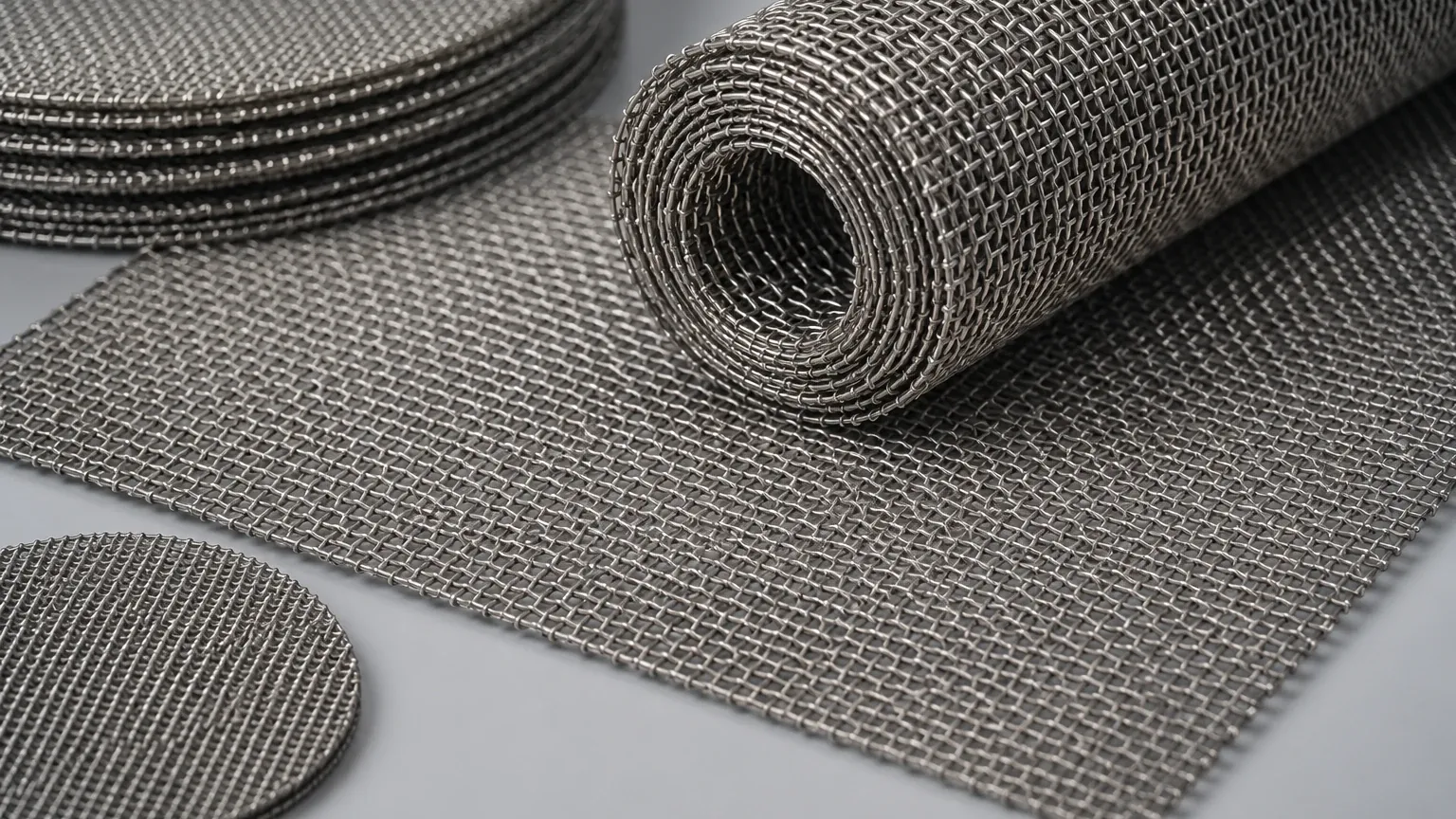
Industrial filters are a capital investment. The ability to clean and reuse the media is a significant factor in the total cost of ownership. Plain, twill and dutch woven wire mesh in SS304/316L — rolls, cut mesh and framed panels. Send mesh count or micron target for a technical quote. These materials are designed for longevity, supporting methods such as ultrasonic cleaning, chemical dipping, and high-pressure backpulsing without compromising the filter's integrity.
Industrial Applications for 5 Woven Wire Solutions
The versatility of 5 woven wire allows it to serve multiple roles across various sectors.
Chemical and Petrochemical Processing
In these industries, 5-layer sintered mesh is used for catalyst recovery and the filtration of aggressive polymers. The material's ability to withstand high temperatures and corrosive fluids makes it indispensable for maintaining the purity of chemical streams.
Food and Beverage Production
Standard 5-mesh stainless steel is often used as a primary screen to remove large debris from raw ingredients. For more refined processes, such as juice clarification or steam filtration, sintered mesh ensures that no metallic fibers migrate into the product, meeting stringent food safety standards.
Pharmaceutical Manufacturing
Precision is paramount in pharmaceutical applications. 5-layer sintered mesh is used in Nutsche filters and fluid bed dryers. Its smooth surface allows for easy cake discharge and thorough sterilization (CIP/SIP), which is critical for preventing cross-contamination between batches.
Hydraulic and Aerospace Systems
High-pressure hydraulic systems utilize 5-layer mesh to protect sensitive valves and actuators from particulate contamination. The mesh must be able to handle high differential pressures (often exceeding 3,000 PSI) without bursting or bypassing.
Common Risks and How to Mitigate Them
Failure to properly specify 5 woven wire can lead to system downtime or product contamination. Here are the most common risks:
* Media Blinding: This occurs when particles become lodged in the mesh openings, significantly reducing flow. To mitigate this, engineers should choose a weave pattern (like Dutch weave) that offers surface filtration rather than depth filtration for easier cleaning.
* Galvanic Corrosion: If a stainless steel 5-mesh screen is housed in a dissimilar metal housing (like aluminum) in a conductive fluid, corrosion will accelerate. Always ensure metallurgical compatibility across the entire assembly.
* Incorrect Micron Rating: Using a mesh that is too fine will lead to frequent clogging and high maintenance costs, while a mesh that is too coarse will fail to protect downstream equipment. Professional lab testing of the fluid's particle size distribution (PSD) is recommended before final selection.
Procurement Checklist: What Engineers Must Confirm
Before finalizing a purchase order for 5 woven wire components, technical teams should confirm the following details with the manufacturer:
1. Exact Alloy Grade: Confirm whether SS304, SS316, or SS316L is required based on the chemical exposure.
2. Layer Configuration (for Sintered): Specify the thickness and micron rating of each of the five layers to ensure the mechanical properties match the application.
3. Dimensional Tolerances: For custom-cut panels or framed filters, precise tolerances are necessary to ensure a leak-proof fit within the housing.
4. Certification Requirements: Does the project require FDA compliance, material test reports (MTRs), or ISO 9001 quality documentation?
5. Operating Conditions: Provide the manufacturer with the maximum operating temperature, pressure, and flow rate to verify the mesh's suitability.
By focusing on these technical boundaries, procurement teams can move beyond commodity purchasing and invest in filtration solutions that enhance the reliability and lifespan of their industrial systems. Whether utilizing the high-flow capabilities of a 5-mesh screen or the rugged precision of a 5-layer sintered plate, the right specification is the foundation of process success.
