


6 Woven Wire Fencing
In industrial environments, the selection of perimeter and safety barriers is a critical engineering decision that impacts security, safety compliance, and operational longevity. While often categorized under general security, 6 woven wire fencing—referring to the standard six-foot height frequently required for industrial enclosures—demands a rigorous technical evaluation of material properties, weave patterns, and structural integrity. Unlike standard chain-link alternatives, industrial-grade Woven Wire Mesh provides a level of precision and durability essential for chemical processing plants, pharmaceutical facilities, and high-load machinery guarding.
Selecting the right mesh for a six-foot industrial barrier involves more than just choosing a height. It requires an understanding of how wire diameter, aperture size, and alloy composition interact to meet specific environmental challenges. This guide explores the engineering considerations necessary for specifying high-performance woven wire solutions in industrial applications.
Engineering Specifications for 6 Woven Wire Fencing
When specifying 6 woven wire fencing for industrial use, the focus shifts from simple containment to technical performance. The "six-foot" designation typically refers to the vertical height of the panel or roll, but the internal geometry of the mesh determines its utility.
Wire Diameter and Mesh Count
The relationship between wire diameter and mesh count (the number of openings per linear inch) dictates the strength and transparency of the fence. For industrial enclosures, a heavier wire gauge is usually preferred to resist physical impact and maintain structural rigidity over a six-foot span. Common industrial specifications for safety partitions often utilize wire diameters ranging from 0.063 inches to 0.120 inches, depending on the required level of security.
Aperture Size and Open Area
The aperture, or the clear distance between adjacent wires, is a vital metric for ventilation and visibility. In applications such as machinery guarding or server room enclosures, a high percentage of open area is necessary for airflow and cooling. However, the aperture must be small enough to prevent unauthorized reach-through or the passage of debris. Engineers must calculate the open area percentage to ensure the mesh meets both safety standards and equipment cooling requirements.
Material Selection: Why Stainless Steel Matters
The environment in which the 6 woven wire fencing is installed dictates the material requirements. While galvanized steel is common in commercial fencing, industrial applications often demand the superior properties of stainless steel.
SS304 vs. SS316L
* SS304: This is the standard grade for most industrial mesh applications. It offers excellent corrosion resistance and durability for indoor partitions, warehouse dividers, and general machinery guards. It is cost-effective while providing a high strength-to-weight ratio.
* SS316L: For environments involving chemical exposure, high humidity, or coastal conditions, SS316L is the preferred choice. The addition of molybdenum enhances resistance to pitting and crevice corrosion, particularly in chloride-rich environments. In pharmaceutical and food processing facilities where frequent wash-downs with caustic agents occur, SS316L ensures the 6-foot barrier remains structurally sound and free of oxidation.
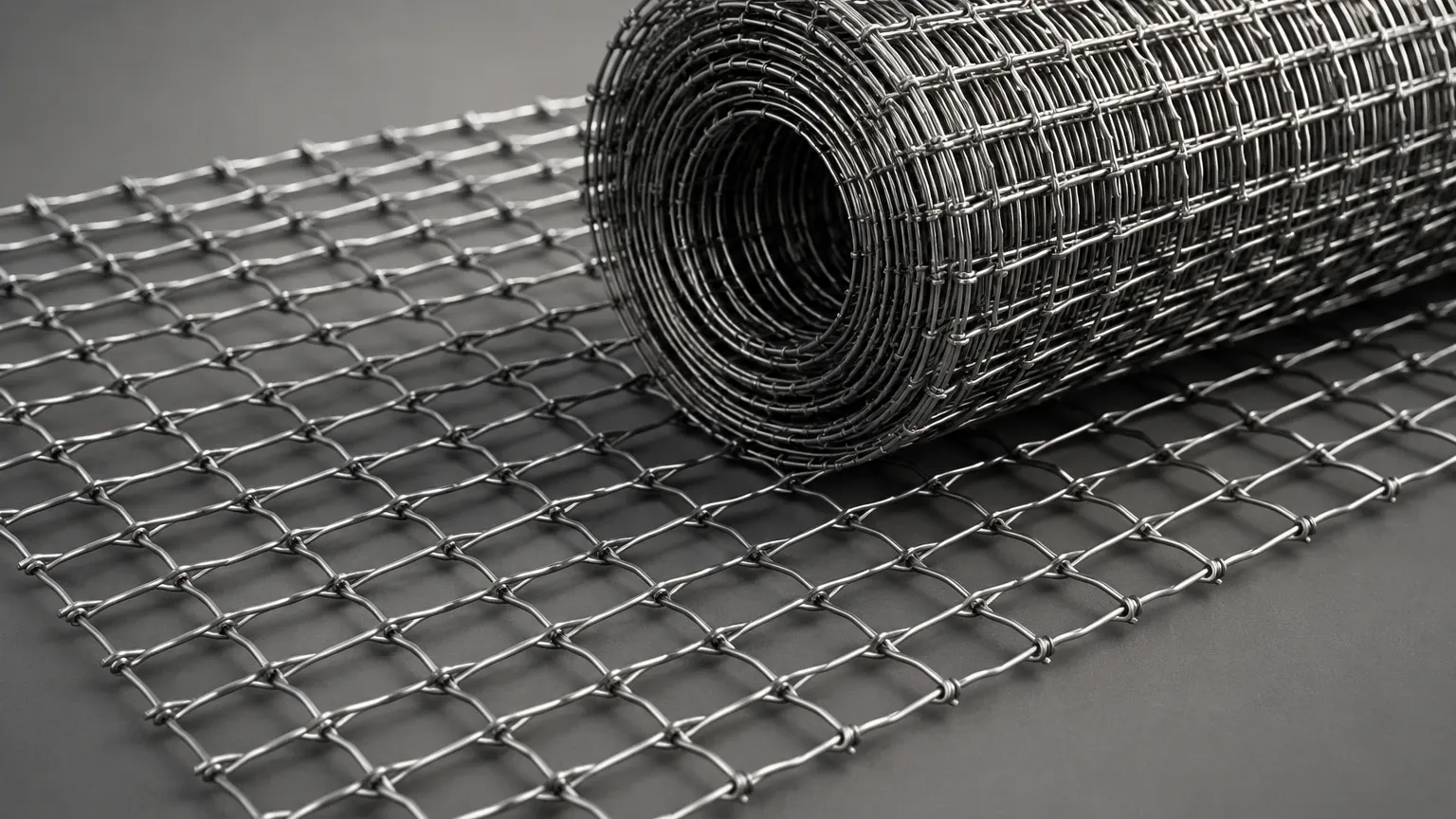
Using high-quality Plain, twill and dutch woven wire mesh in SS304/316L — rolls, cut mesh and framed panels. Send mesh count or micron target for a technical quote. ensures that the fencing system does not become a source of contamination or a maintenance liability over time.
Structural Integrity and Weave Types
The method by which the wires are interlaced significantly affects the performance of a six-foot-tall mesh panel. In industrial fencing, three primary weave types are most relevant:
1. Plain Weave: The most common and straightforward weave, where each warp wire crosses alternately over and under each shute wire. It provides high dimensional stability and is ideal for standard safety partitions.
2. Inter-Crimped Weave: Often used for larger apertures, the wires are crimped at the intersections and often between intersections. This provides extra rigidity, which is crucial for 6-foot panels that must remain flat and resist sagging without excessive horizontal bracing.
3. Lock-Crimp Weave: This variation of the crimped weave locks the wires into place at their intersections. It is particularly effective for heavy-duty industrial fencing where the mesh may be subject to vibration or mechanical stress.
For engineers, selecting the weave type is a balance between the required rigidity of the 6-foot span and the aesthetic or visibility requirements of the facility.
Industrial Applications and Compliance
6 woven wire fencing is not a one-size-fits-all solution; its design is often dictated by the specific regulations of the industry it serves.
Machinery Guarding and OSHA Compliance
In manufacturing plants, 6-foot woven wire partitions are used to create safety perimeters around automated robotics and high-speed machinery. OSHA standards often dictate the minimum distance a guard must be from the hazard based on the size of the mesh openings. A finer mesh allows the guard to be placed closer to the machine, saving valuable floor space while maintaining a 6-foot height to prevent over-reach.
Chemical and Pharmaceutical Cleanrooms
In cleanroom environments, the fencing must not shed particles or harbor bacteria. Stainless steel woven wire mesh is non-porous and easy to sanitize. Here, 6-foot partitions serve to define process areas or secure high-value reagents without obstructing the laminar airflow essential for contamination control.
Data Centers and Secure Storage
For high-security enclosures, the resistance of the mesh to cutting and tampering is paramount. The interlocking nature of woven wire makes it significantly more difficult to breach than expanded metal or chain link, providing a robust 6-foot barrier for server racks and sensitive equipment.
Customization and Installation Considerations
Achieving an effective installation of 6 woven wire fencing requires attention to how the mesh is framed and supported. Because a six-foot panel can act as a large sail or a heavy weight, the framing system is as important as the mesh itself.
Framed Panels vs. Continuous Rolls
For most industrial safety applications, pre-fabricated framed panels are preferred. These panels allow for easy installation and replacement. The mesh is typically welded or bolted into a structural angle or tube frame, ensuring that the edges are not sharp and the mesh remains under tension. Continuous rolls are more common for long-distance perimeter fencing where horizontal rails provide the necessary support.
Edge Treatments
In a B2B context, the finish of the mesh edges is a safety concern. For 6-foot partitions, flush-cut edges or hemmed edges are often specified to prevent injury to personnel during maintenance or operation. Custom manufacturing allows for the integration of mounting tabs or specialized hardware directly into the mesh panel design.
Total Cost of Ownership (TCO) and Maintenance
When evaluating the cost of 6 woven wire fencing, purchasing teams must look beyond the initial price per square foot. The total cost of ownership is influenced by the material’s lifespan and maintenance requirements.
* Durability: Stainless steel mesh significantly outlasts galvanized or plastic-coated alternatives, especially in corrosive industrial atmospheres. This reduces the frequency of replacement.
* Maintenance: Woven wire requires minimal upkeep. Unlike solid partitions, it does not collect dust as easily and allows for visual inspection of the equipment behind it without the need for disassembly.
* Adaptability: High-quality modular mesh panels can be reconfigured as facility layouts change, providing long-term value that fixed-wall solutions cannot match.
Conclusion: Selecting the Right Partner
Specifying 6 woven wire fencing for an industrial project requires a deep understanding of filtration-grade precision applied to structural scales. Whether the goal is to secure a chemical storage area, protect workers from high-speed machinery, or partition a cleanroom, the choice of material and weave is paramount. By focusing on stainless steel options and engineered weave patterns, facilities can ensure their 6-foot barriers provide maximum safety with minimal lifecycle costs.
For technical professionals and purchasing teams, partnering with a manufacturer that understands the nuances of wire diameter, alloy performance, and custom fabrication is essential. Selecting a high-performance Woven Wire Mesh solution ensures that your industrial fencing meets the rigorous demands of your specific application environment.
