


6 Inch Woven Wire
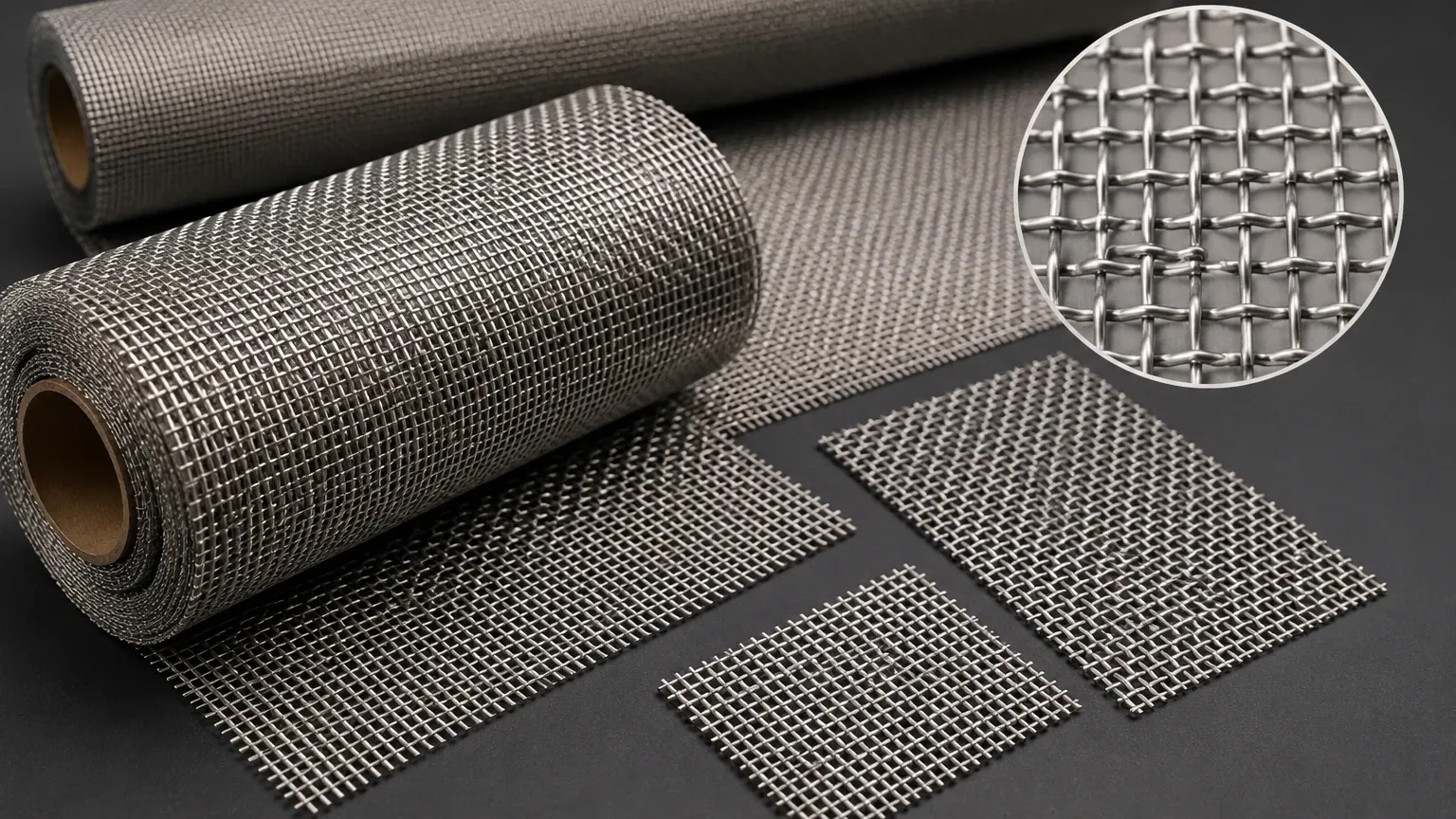
In the landscape of industrial filtration and material separation, the precision of the medium determines the efficiency of the entire process. Woven Wire Mesh serves as the foundational component for countless filtration systems, offering a balance of mechanical strength, chemical resistance, and precise aperture control. When engineers and procurement specialists specify 6 inch woven wire, they are typically addressing a specific dimensional requirement—whether it be the width of a mesh roll, the diameter of a filter disc, or a customized component designed to fit a standard 6-inch pipe or housing.
This guide examines the technical considerations, material properties, and engineering trade-offs involved in selecting and implementing 6-inch woven wire components in demanding industrial environments.
Understanding the Core Material: Woven Wire Mesh
At its most basic level, Woven Wire Mesh is produced by weaving individual metal wires over and under one another on industrial looms. The resulting fabric is characterized by its mesh count (the number of openings per linear inch), wire diameter, and weave pattern. For industrial applications, stainless steel—specifically grades 304 and 316L—is the industry standard due to its durability and resistance to oxidation.
Material Selection
- SS304: The most common grade, suitable for general industrial use where high-strength and basic corrosion resistance are required. It is frequently used in food processing and architectural applications.
- SS316L: The "L" denotes low carbon, which improves weldability and resistance to intergranular corrosion. This grade includes molybdenum, making it essential for chemical processing, marine environments, and pharmaceutical applications where resistance to chlorides and acids is critical.
When specifying a 6 inch woven wire component, the alloy selection is the first gate in ensuring long-term performance. Using SS304 in a high-chloride environment will lead to pitting and premature failure, regardless of the mesh's physical dimensions.
Weave Patterns and Performance Characteristics
The geometry of the weave dictates how the mesh interacts with the fluid or gas stream. For 6-inch components, three primary weave types are most common:
1. Plain Weave: Each warp wire crosses alternately over and under each shute wire. This is the simplest construction and provides the highest open area, making it ideal for high-flow applications where particle size is relatively large.
2. Twill Weave: Each shute wire passes alternately over and under two warp wires. This allows for the use of heavier wires for a given mesh count, increasing the mechanical strength of the 6-inch disc or strip without sacrificing filtration accuracy.
3. Dutch Weave: This utilizes a larger diameter warp wire and a smaller diameter shute wire woven tightly together. This creates a "tortuous path" for particles, offering superior depth filtration and the ability to withstand high pressure. Dutch weave is the preferred choice for hydraulic systems and high-pressure liquid filtration.
Engineering Considerations for 6-Inch Components
Specifying "6 inch" can refer to several different product formats. Understanding the nuances of these formats is essential for accurate procurement.
6-Inch Mesh Rolls and Strips
In many manufacturing processes, 6 inch woven wire is supplied as continuous rolls or slit-to-width strips. These are often used in continuous belt filters or as the outer wrap for larger cylindrical filter cartridges. The primary engineering concern here is the edge finish. Slit edges can be prone to fraying; therefore, depending on the application, engineers may require annealed edges or ultrasonic slitting to ensure the mesh remains intact during high-speed processing.
6-Inch Filter Discs
Perhaps the most common application for this dimension is the 6-inch filter disc. These are used in extruder screen changers, polymer filtration, and as support plates in 6-inch piping systems. When designing a 6-inch disc, the following factors must be confirmed:
- Tolerance: A standard 6-inch pipe has a specific internal diameter. If the disc is intended to sit in a recessed seat, a tolerance of +/- 0.005 inches may be required to prevent bypass.
- Flatness: In high-pressure applications, any warping in the mesh can lead to uneven stress distribution and eventual tearing.
- Layering: A single layer of fine mesh may lack the structural integrity to withstand differential pressure. Often, a 6-inch disc is part of a multi-layer stack, where a fine filtration layer is sandwiched between coarser support layers.
Evaluating Filtration Efficiency and Flow Rates
For any engineer, the two most critical metrics are the micron rating and the pressure drop. These are determined by the interaction between the mesh count and the wire diameter.
Micron Rating: Absolute vs. Nominal
- Nominal Rating: Refers to the ability of the mesh to retain a majority of particles of a specific size. Woven wire mesh is generally very consistent, but nominal ratings can be misleading in high-flow environments.
- Absolute Rating: This is the diameter of the largest hard spherical particle that will pass through the mesh under laboratory conditions. For critical pharmaceutical or chemical processes, absolute ratings are mandatory.
Open Area and Pressure Drop
The "Open Area" percentage determines the flow capacity of the 6 inch woven wire component. A higher open area reduces the initial pressure drop across the filter, which lowers energy costs for pumps and compressors. However, increasing the open area usually requires thinner wires, which can reduce the lifespan of the filter. Finding the "sweet spot" between flow efficiency and structural durability is a key part of the selection process.
Customization and Manufacturing Precision
Standard off-the-shelf mesh rarely meets the specific needs of specialized industrial equipment. Customization is where the technical expertise of a manufacturer like Kaifil becomes vital.
Sintered Mesh Options
For applications involving extreme pressure or frequent backwashing, standard woven wire mesh may shift or deform. Sintering involves heat-treating multiple layers of mesh until they fuse together at their contact points. A 6-inch sintered mesh disc provides the filtration accuracy of fine wire with the structural rigidity of a thick plate. This is particularly useful in nutsche filters and fluidized beds.
Edging and Framing
To ensure a leak-proof seal and ease of handling, 6-inch discs can be provided with various edge treatments:
- Spot Welded: Multiple layers are tacked together at the perimeter.
- Aluminum or Stainless Steel Rims: A metal U-binding is crimped around the edge, providing a gasket-like surface and protecting the mesh from damage during installation.
- Polymer Overmolding: In some medical or food-grade applications, the mesh is integrated directly into a plastic frame.
Common Risks and How to Mitigate Them
Failure to account for the operational environment can lead to costly downtime. When integrating 6 inch woven wire into a system, consider these potential risks:
1. Media Migration: If the wire diameter is too thin for the flow velocity, individual wires may break and enter the downstream fluid. Regular inspection and proper alloy selection (ensuring high fatigue strength) are necessary.
2. Blinding and Clogging: If the mesh is too fine for the particulate load, it will blind quickly, leading to a rapid rise in differential pressure. Engineers should evaluate the particle size distribution (PSD) of the influent before finalizing the mesh count.
3. Chemical Incompatibility: Even stainless steel can fail if exposed to incompatible cleaning agents or process chemicals. Always verify the pH levels and temperature of the process fluid.
Total Cost of Ownership (TCO) vs. Initial Purchase Price
In a B2B procurement context, the cheapest mesh often results in the highest long-term cost. A low-quality 6 inch woven wire component may suffer from inconsistent weave density, leading to "hot spots" where particles bypass the filter.
Investing in high-quality, precision-manufactured mesh reduces the frequency of replacement cycles. Furthermore, stainless steel mesh is often cleanable. Through ultrasonic cleaning or chemical baths, 6-inch filter discs can often be restored to near-original performance, extending their service life significantly compared to disposable synthetic filters.
Final Checklist for Procurement and Engineering
Before placing an order for 6 inch woven wire, ensure the following technical details are confirmed with your manufacturer:
- Exact Dimensions: Is it a 6-inch roll width, or a disc with a specific diameter and tolerance?
- Mesh Specification: Provide the mesh count and wire diameter, or the target micron rating.
- Alloy Grade: Specify SS304, SS316L, or specialty alloys like Monel or Inconel for extreme environments.
- Weave Type: Plain, Twill, or Dutch, based on your flow and pressure requirements.
- Quantity and Packaging: For 6-inch discs, specify if they should be bulk packed or individually sleeved to prevent contamination.
- Compliance: Do you require material test reports (MTRs) or FDA compliance certification for food/beverage applications?
By focusing on these factual engineering boundaries, technical professionals can ensure that their Woven Wire Mesh solutions provide reliable, repeatable, and cost-effective performance in any industrial application.
