


Wire Mesh Cylinder Filter
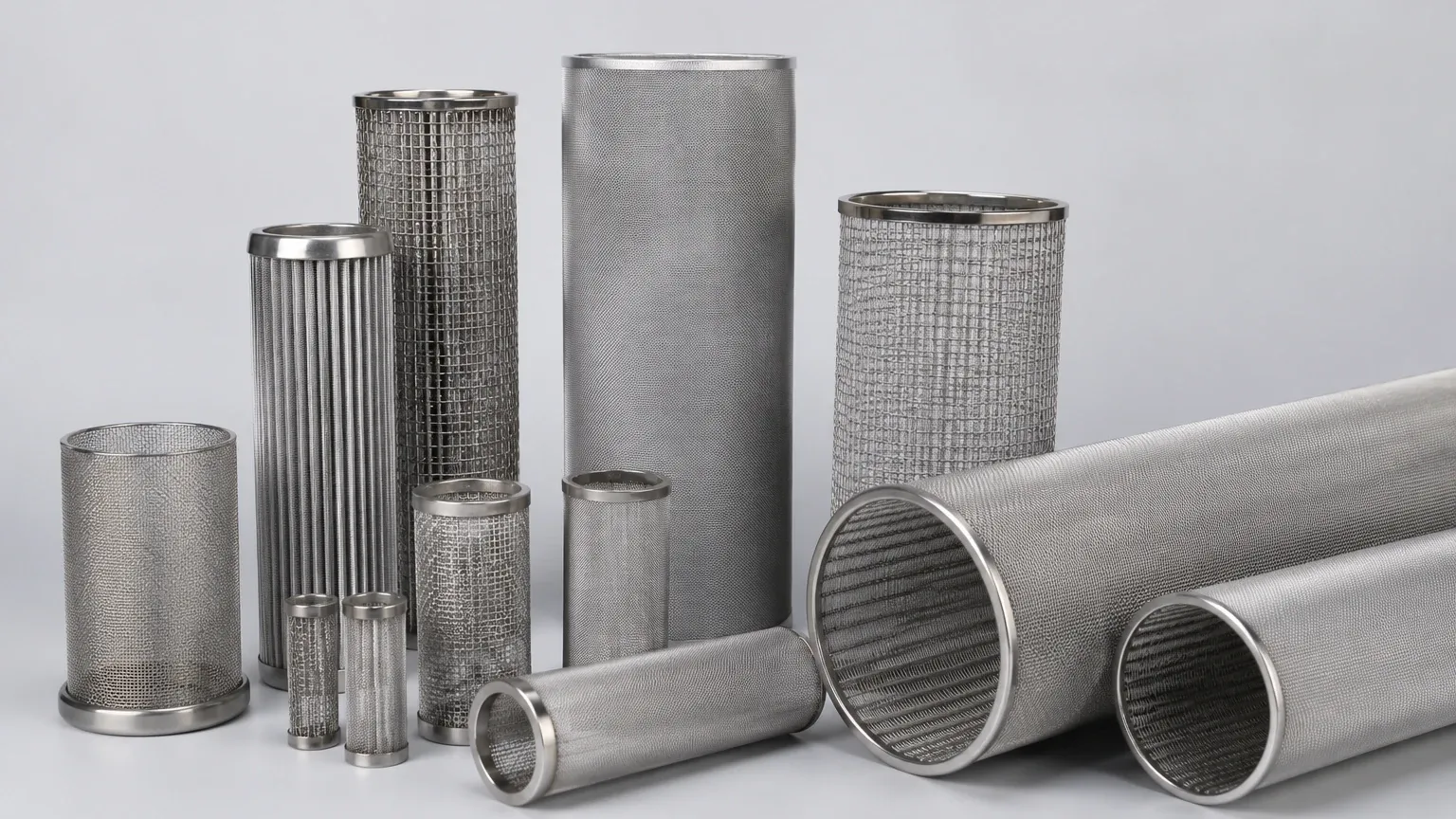
In the landscape of industrial filtration, the wire mesh cylinder filter stands as a fundamental component for liquid and gas separation. These cylindrical structures are engineered to provide precise particle retention while maintaining structural integrity under varying pressure and temperature conditions. For engineers and technical procurement teams, understanding the nuances of material selection, weave patterns, and structural reinforcement is essential for optimizing system performance and reducing long-term operational costs.
Industrial filtration is rarely a one-size-fits-all solution. The efficiency of a filtration system depends heavily on the geometry and construction of the filter element. A cylindrical design is often preferred due to its high surface-area-to-volume ratio and its ability to withstand radial pressure. Whether used in hydraulic systems, chemical processing, or water treatment, the wire mesh cylinder filter provides a reliable barrier against contaminants, ensuring the purity of the process media and the protection of downstream equipment.
Understanding the Engineering of Wire Mesh Filter Cylinders & Tubes
The construction of Wire Mesh Filter Cylinders & Tubes involves sophisticated manufacturing techniques to ensure that the mesh remains uniform and the seams are secure. Unlike standard filter bags or polymer-based cartridges, metal mesh cylinders offer a degree of permanence and durability that is required in demanding industrial environments.
From an engineering perspective, the cylinder serves as the primary pressure vessel for the filtration media. The flow direction—whether from inside-to-outside or outside-to-inside—dictates how the filter is reinforced. For outside-to-inside flow, the mesh is typically supported by an internal perforated core to prevent collapse. Conversely, inside-to-outside flow may require external reinforcement. The precision of the cylinder’s diameter and length is critical for ensuring a proper seal within the filter housing, preventing bypass, which is one of the most common causes of filtration failure.
Material Science: Selecting the Right Stainless Steel Grade
The performance of a wire mesh cylinder filter is inextricably linked to the metallurgy of the wire. Stainless steel is the industry standard due to its corrosion resistance and mechanical strength. However, the specific grade must be selected based on the chemical composition of the process fluid and the operating temperature.
* Stainless Steel 304: This is the most common grade used for general industrial applications. It offers excellent strength and good corrosion resistance in most non-corrosive environments. It is widely used in food and beverage applications where sanitation is a priority but extreme chemical resistance is not required.
* Stainless Steel 316L: For applications involving chlorides, acids, or high-salinity environments, 316L is the preferred choice. The addition of molybdenum enhances its resistance to pitting and crevice corrosion. The "L" denotes low carbon content, which is crucial for preventing carbide precipitation during welding, ensuring the integrity of the seams in the wire mesh cylinder filter.
* Specialty Alloys: In extreme cases involving high-temperature oxidation or highly aggressive chemicals, alloys such as Hastelloy, Inconel, or Monel may be used. These materials maintain their mechanical properties at temperatures where standard stainless steels would fail.
Weave Types and Filtration Precision
The "mesh" of the filter is defined by how the wires are interwoven. This determines the micron rating, flow resistance, and the types of particles the filter can effectively capture. Engineers must balance filtration fineness with the allowable pressure drop across the element.
1. Plain Weave: The simplest and most common weave, where each weft wire passes alternately over and under each warp wire. It provides a high open area and low pressure drop, making it ideal for high-flow applications with relatively large particle sizes.
2. Twill Weave: In this pattern, each weft wire passes over and under two warp wires. This allows for the use of heavier wires in a given mesh count, providing greater strength and the ability to achieve finer filtration ratings than plain weave.
3. Dutch Weave (Plain and Twill): Dutch weaves utilize different wire diameters for the warp and weft. This creates a dense, multi-layered structure within a single weave. Dutch weaves are characterized by their high mechanical strength and precise, fine filtration capabilities. They are often used in high-pressure applications where absolute particle retention is required.
When specifying a wire mesh cylinder filter, it is important to distinguish between nominal and absolute micron ratings. A nominal rating refers to the ability of the filter to retain a majority of particles at a certain size, while an absolute rating indicates the size of the largest spherical particle that can pass through the mesh under laboratory conditions.
Structural Design: Multi-layer vs. Single-layer Construction
A wire mesh cylinder filter can be constructed from a single layer of mesh or multiple layers bonded together. The choice depends on the required filtration accuracy and the mechanical stresses the filter will encounter.
* Single-Layer Filters: These are cost-effective and easy to clean. They are suitable for low-pressure applications or as pre-filters for coarser separation. However, they lack the depth required for very fine filtration and may be prone to deformation if not properly supported.
* Multi-Layer Sintered Mesh: In this process, multiple layers of wire mesh are fused together using heat and pressure (sintering) without the use of binders. This creates a robust, integrated structure that combines a fine filtration layer with coarser support and protection layers. Sintered wire mesh cylinders are exceptionally strong, heat-resistant, and capable of maintaining precise pore sizes even under high differential pressure.
For many industrial applications, the mesh is wrapped around or tucked inside a perforated metal tube. This perforated core provides the necessary structural backbone to withstand the "crush pressure" of the system, while the wire mesh provides the actual filtration. The welding of the mesh to the end caps or the longitudinal seam of the cylinder is a critical quality point; TIG (Tungsten Inert Gas) or plasma welding is typically used to ensure a clean, contaminant-free, and high-strength bond.
Operational Performance: Pressure Drop and Flow Dynamics
One of the primary concerns for engineers is the "clean pressure drop" (ΔP). This is the resistance to flow caused by the filter element when it is first installed. As the wire mesh cylinder filter captures contaminants, the effective open area decreases, and the pressure drop increases.
To optimize flow dynamics, the total open area of the mesh must be calculated against the system's flow rate and the viscosity of the fluid. A filter with too small a surface area will reach its terminal pressure drop quickly, leading to frequent maintenance cycles and potential system downtime. Conversely, an oversized filter may be unnecessarily expensive and take up valuable space in the plant layout.
Furthermore, the velocity of the fluid as it passes through the mesh can affect filtration efficiency. High-velocity flow can cause "particle migration," where captured particles are forced through the mesh pores. Selecting a wire mesh cylinder filter with an appropriate surface area ensures that the flux (flow per unit area) remains within safe limits for the specific application.
Application Environments and Industry Standards
The versatility of the wire mesh cylinder filter allows it to be used across a broad spectrum of industries, each with its own set of technical requirements:
* Chemical and Petrochemical: Filters must withstand aggressive solvents and high temperatures. Sintered 316L or specialty alloy cylinders are often used to recover catalysts or protect high-value pumps.
* Food and Beverage: Compliance with FDA and 3-A Sanitary Standards is paramount. The filters must be constructed with smooth, crevice-free welds to prevent bacterial growth and must be capable of withstanding Clean-in-Place (CIP) procedures.
* Hydraulic and Lubrication Systems: These systems require high-strength filters to handle high-viscosity fluids and sudden pressure spikes. The wire mesh cylinder filter is often used as a suction strainer or a return-line filter to protect sensitive valves and actuators.
* Pharmaceutical: High-precision filtration is required for sterile air and gas venting. Sintered mesh cylinders are preferred here for their ability to be repeatedly sterilized without losing structural integrity.
Maintenance, Cleaning, and Service Life
One of the greatest advantages of a stainless steel wire mesh cylinder filter over disposable media is its cleanability. Proper maintenance can extend the service life of a metal filter for several years, significantly reducing the total cost of ownership.
Cleaning methods vary based on the nature of the contaminant:
* Backwashing/Backpulsing: For systems with particulate matter that sits on the surface of the mesh, a reverse flow of clean fluid or compressed air can often dislodge the cake.
* Ultrasonic Cleaning: This is the most effective method for fine mesh and sintered structures. High-frequency sound waves create cavitation bubbles that penetrate deep into the mesh pores, removing even the smallest trapped particles.
* Chemical Cleaning: Soaking the filter in specialized solvents, acids, or caustic solutions can dissolve organic or chemical buildup that mechanical cleaning cannot reach.
Engineers should establish a "terminal pressure drop" at which the filter must be cleaned or replaced. Neglecting this can lead to element collapse or the bypassing of unfiltered fluid through the seals.
Procurement and Customization Guide for Engineers
When sourcing a wire mesh cylinder filter, providing detailed specifications to the manufacturer is essential for ensuring the product meets the application's needs. Technical teams should confirm the following parameters before proceeding:
1. Micron Rating: Specify whether this is nominal or absolute.
2. Operating Conditions: Define the maximum temperature, normal operating pressure, and maximum allowable differential pressure.
3. Fluid Compatibility: List all chemicals present in the process stream to ensure proper material selection (e.g., 304 vs. 316L).
4. Dimensions and Tolerances: Provide exact outer diameter (OD), inner diameter (ID), and overall length. Specify tolerances for critical fitment areas.
5. End Fittings: Determine if the filter requires threaded connections, flanges, NPT fittings, or simple open ends with gaskets.
6. Structural Requirements: Indicate if an internal or external support core is needed based on the flow direction.
As a specialized manufacturer, Kaifil provides technical support to assist engineers in navigating these variables. For detailed specifications and custom engineering support, technical teams can Review product options and application support. By focusing on precision manufacturing and high-quality materials, Kaifil ensures that each wire mesh cylinder filter delivers consistent performance in the most demanding industrial environments.
