


Cylindrical Mesh Filter
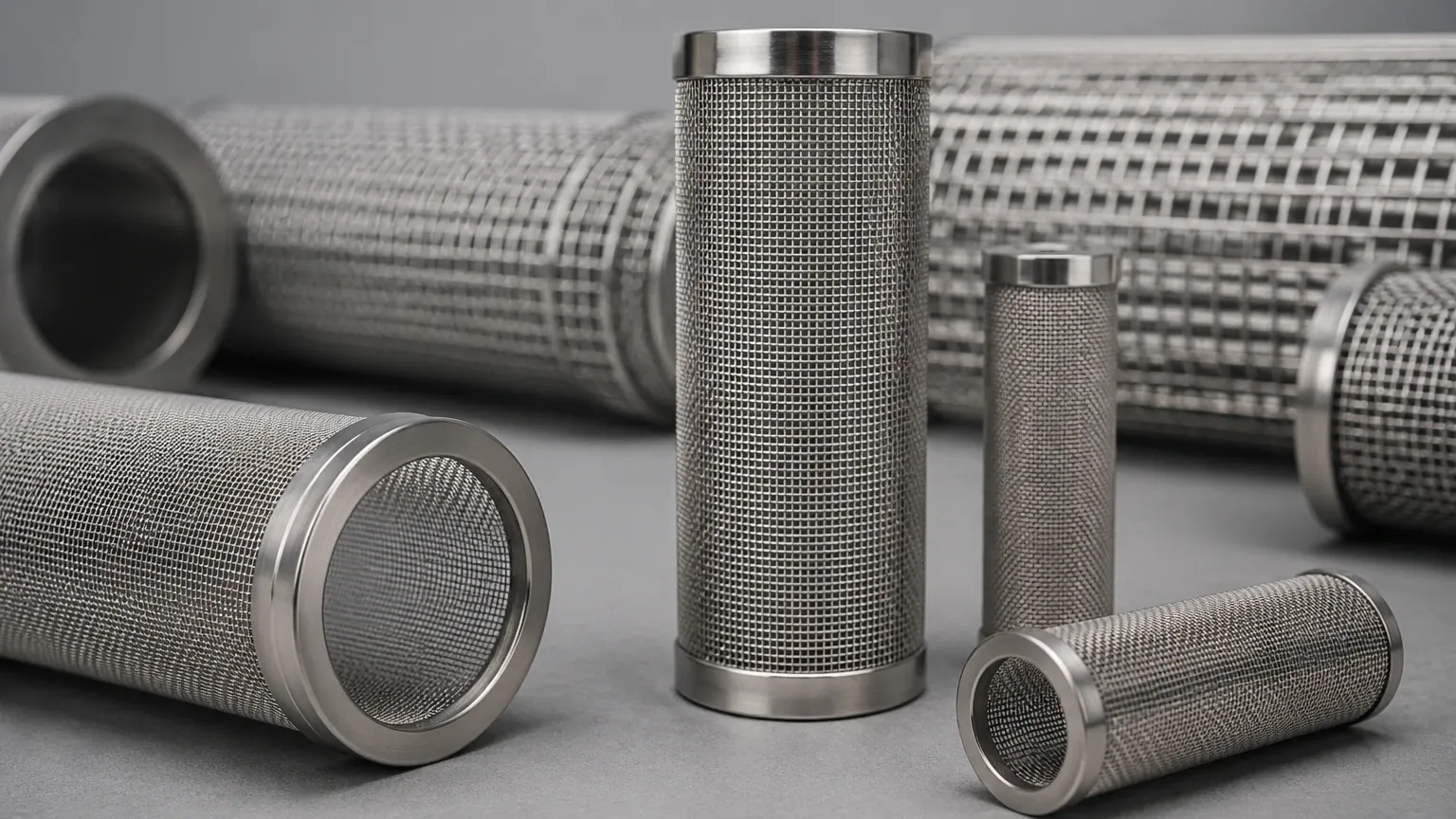
In industrial filtration, the cylindrical mesh filter serves as a fundamental component for separating solids from liquids and gases. These components, often referred to as Wire Mesh Filter Cylinders & Tubes, are engineered to provide precise filtration levels while maintaining structural integrity under varying pressure and temperature conditions. Unlike disposable polymer filters, stainless steel cylindrical filters offer a reusable, high-strength solution suitable for the most demanding chemical, pharmaceutical, and food processing environments.
Selecting the appropriate filtration media requires a deep understanding of the mechanical and chemical requirements of the application. This guide examines the technical specifications, material considerations, and engineering factors that define the performance of industrial cylindrical mesh filters.
Engineering Fundamentals of Cylindrical Mesh Filters
The construction of a cylindrical mesh filter typically involves one or more layers of woven wire mesh formed into a tube and joined via longitudinal welding. The structural performance of these filters is determined by the interaction between the filtration media and the support structure.
Single-Layer vs. Multi-Layer Construction
Single-layer cylinders are used in low-pressure applications where the primary goal is coarse straining. However, for precision filtration, multi-layer configurations are often necessary. These may include a fine filtration layer protected by coarser mesh layers on both sides to prevent mechanical damage and provide pleating stability if the design is pleated.
Sintered Mesh vs. Standard Woven Mesh
In environments characterized by high pressure or frequent backwashing, standard woven mesh may experience pore migration or wire displacement. Sintered wire mesh—where multiple layers are bonded through heat and pressure without the use of binders—creates a rigid, stable structure. This process ensures that the micron rating remains constant even under significant mechanical stress, making it an ideal choice for high-performance cylindrical mesh filter applications.
Material Selection and Chemical Compatibility
The longevity of a filter is directly tied to its resistance to the process fluid. Stainless steel is the industry standard due to its corrosion resistance and thermal stability.
* AISI 304/304L: The most common grade, offering excellent cost-effectiveness for water treatment and general industrial use. It provides sufficient resistance to many organic chemicals but may be susceptible to chloride-induced pitting.
* AISI 316/316L: Containing molybdenum, 316L offers superior resistance to chlorides and acids. It is the preferred material for marine environments, pharmaceutical manufacturing, and chemical processing where aggressive cleaning agents are used.
* Specialty Alloys: For extreme conditions involving high-concentration acids or temperatures exceeding 500°C, alloys such as Hastelloy, Inconel, or Monel may be utilized. These materials ensure that the filter does not leach contaminants into the process stream or suffer from premature structural failure.
Performance Evaluation: Micron Rating and Flow Dynamics
When specifying a cylindrical mesh filter, engineers must balance filtration efficiency with flow capacity. This balance is defined by several technical parameters:
Micron Rating: Absolute vs. Nominal
A nominal rating indicates the ability of the filter to retain a majority of particles of a specific size (e.g., 90% of 10-micron particles). In contrast, an absolute rating refers to the diameter of the largest spherical particle that can pass through the mesh under laboratory conditions. For critical applications like sterile filtration in the pharmaceutical industry, an absolute rating is essential to ensure process consistency.
Effective Filtration Area (EFA)
The EFA determines the flow velocity through the mesh. A larger surface area results in a lower "flux rate" (flow per unit area), which reduces the pressure drop and extends the time between cleaning cycles. In cylindrical designs, the EFA can be increased by pleating the mesh, although this adds complexity to the cleaning process compared to a smooth-walled cylinder.
Pressure Drop (ΔP)
The initial pressure drop is a function of the mesh's open area and the fluid's viscosity. As contaminants accumulate, the pressure drop increases. Engineers must design the system to handle the maximum allowable ΔP before the filter requires cleaning or replacement, ensuring the mesh does not collapse or bypass.
Customization Options for Industrial Integration
Industrial filtration systems rarely utilize "off-the-shelf" components without some level of customization. To ensure seamless integration into existing pipelines or housings, several mechanical features must be specified:
* End Cap Configurations: Filters can be equipped with various end fittings, including threaded connectors (NPT/BSP), flanges, DOE (Double Open End), or SOE (Single Open End) with specific O-ring seals (e.g., 222 or 226 fittings).
* Support Cores: For high-differential pressure applications, an internal or external perforated metal core is added. This core provides the necessary hoop strength to prevent the wire mesh from buckling.
* Welding Techniques: Precision is critical in the longitudinal seam. Plasma or TIG welding ensures a clean, slag-free join that maintains the filter's integrity and prevents bypass. In sanitary applications, these welds must be ground smooth to eliminate crevices where bacteria could proliferate.
Applications Across Critical Industries
The versatility of Wire Mesh Filter Cylinders & Tubes allows them to be used in diverse sectors:
1. Chemical Processing: Used for catalyst recovery and the filtration of aggressive solvents. The high temperature and chemical resistance of stainless steel are vital here.
2. Food and Beverage: Employed in the filtration of syrups, edible oils, and beverages. Compliance with FDA standards and ease of sterilization (CIP – Clean-in-Place) are the primary requirements.
3. Hydraulic Systems: Protecting sensitive valves and pumps from particulate contamination. These filters must withstand high-pressure pulses and provide consistent performance under varying flow rates.
4. Water Treatment: Serving as pre-filters for Reverse Osmosis (RO) membranes or as final strainers for cooling water systems, preventing debris from clogging heat exchangers.
Maintenance, Cleaning, and Replacement Cycles
One of the primary advantages of a stainless steel cylindrical mesh filter is its cleanability. Unlike disposable cartridges, these units can be restored to near-original performance levels through several methods:
* Backwashing: Reversing the flow of fluid to dislodge particles trapped on the surface of the mesh. This is often automated in continuous process systems.
* Ultrasonic Cleaning: Using high-frequency sound waves in a cleaning solution to remove fine particles embedded deep within the mesh pores. This is particularly effective for sintered multi-layer filters.
* Chemical Cleaning: Utilizing acids, alkalis, or solvents to dissolve organic or inorganic scaling. Compatibility between the cleaning agent and the filter material (e.g., 316L) must be verified.
Determining Replacement Cycles
While reusable, metal filters are not infinite. Fatigue from pressure cycling, erosion of the wire diameter over years of service, or permanent fouling (where particles cannot be removed) will eventually necessitate replacement. Monitoring the "clean pressure drop" after each cleaning cycle is the best way to track the filter's remaining service life.
Technical Procurement: What to Confirm Before Ordering
To ensure the successful procurement of a cylindrical mesh filter, purchasing teams and engineers should confirm the following data points with the manufacturer:
1. Fluid Characteristics: What is the viscosity, temperature, and pH of the fluid? Are there abrasive particles present?
2. Contaminant Profile: What is the expected particle size distribution and concentration (PPM)?
3. Flow Requirements: What is the maximum and normal flow rate? What is the maximum allowable pressure drop?
4. Mechanical Constraints: What are the exact dimensions (OD, ID, and Length)? What type of seal or connection is required?
5. Compliance Standards: Does the application require specific certifications, such as food-grade compliance or material traceability reports (MTRs)?
By addressing these factors during the design and selection phase, facilities can optimize their filtration performance, reduce downtime, and achieve a lower total cost of ownership compared to disposable alternatives. Kaifil's expertise in manufacturing custom stainless steel filtration solutions ensures that each cylindrical mesh filter is tailored to the specific rigors of its intended industrial application.
