


A Mesh Filter
In the landscape of industrial fluid dynamics and gas processing, the selection of filtration components is a critical engineering decision that directly impacts equipment longevity, product purity, and operational efficiency. At its most fundamental level, a mesh filter serves as a physical barrier designed to remove solid contaminants from a liquid or gaseous stream. However, for industrial applications, the complexity of these components extends far beyond simple screening. High-performance Wire Mesh Filter Cylinders & Tubes represent the pinnacle of this technology, offering the structural integrity and precision required for demanding environments such as chemical processing, hydraulic systems, and pharmaceutical manufacturing.
Understanding the technical nuances of mesh filtration is essential for engineers and procurement professionals. This guide explores the engineering principles, material considerations, and selection criteria necessary to optimize filtration performance in industrial settings.
Engineering Fundamentals of a Mesh Filter
The performance of a mesh filter is determined by the geometry of its weave and the characteristics of the wire used in its construction. Unlike disposable paper or polymer filters, stainless steel wire mesh provides a rigid, heat-resistant, and chemically stable medium that can be cleaned and reused, significantly lowering the total cost of ownership in high-volume industrial processes.
Weave Types and Their Implications
Industrial wire mesh is categorized by the way the warp and shute wires are interlaced. Each weave type offers distinct advantages regarding filtration accuracy and flow resistance:
* Plain Weave: The most common configuration where each shute wire passes over and under one warp wire. This results in square openings and is ideal for high-flow applications where moderate filtration accuracy is required.
* Twill Weave: Each shute wire passes over and under two warp wires, allowing for a heavier wire diameter and a tighter mesh count. This is often used when the filter must withstand higher mechanical loads.
* Dutch Weave (Plain and Twill): These weaves utilize different wire diameters for the warp and shute. The shute wires are driven close together, creating a dense, wedge-shaped opening. Dutch weaves are preferred for fine filtration and high-pressure applications because they offer superior strength and smaller micron ratings.
Micron Ratings and Filtration Efficiency
Filtration accuracy is measured in microns (μm). When selecting a mesh filter, engineers must distinguish between "nominal" and "absolute" micron ratings. A nominal rating indicates the filter's ability to retain the majority of particles of a specific size, whereas an absolute rating refers to the diameter of the largest spherical particle that can pass through the mesh under laboratory conditions. For critical applications in the pharmaceutical or food and beverage industries, absolute ratings are typically required to ensure consistent product safety.
Material Selection for Industrial Wire Mesh Filter Cylinders & Tubes
The choice of material is the primary factor in determining the chemical compatibility and thermal limits of the filtration system. While various metals can be used, stainless steel remains the industry standard due to its versatility and durability.
Stainless Steel 304 vs. 316L
* Grade 304: This is the standard "18/8" stainless steel. It offers excellent corrosion resistance in most atmospheric conditions and is suitable for water treatment and general industrial use. It is a cost-effective choice for non-corrosive environments.
* Grade 316L: The "L" stands for low carbon, which improves weldability and prevents sensitization in the heat-affected zone. The addition of molybdenum provides 316L with significantly higher resistance to chlorides and pitting. This makes it the preferred material for chemical processing, marine environments, and pharmaceutical applications where aggressive cleaning agents or corrosive fluids are present.
Specialized Alloys
In extreme cases involving high temperatures or highly acidic/alkaline environments, specialized alloys such as Monel, Inconel, or Hastelloy may be utilized. These materials ensure that a mesh filter maintains its structural integrity and filtration precision even when exposed to conditions that would cause standard stainless steel to fail.
Structural Design: Cylinders and Tubes
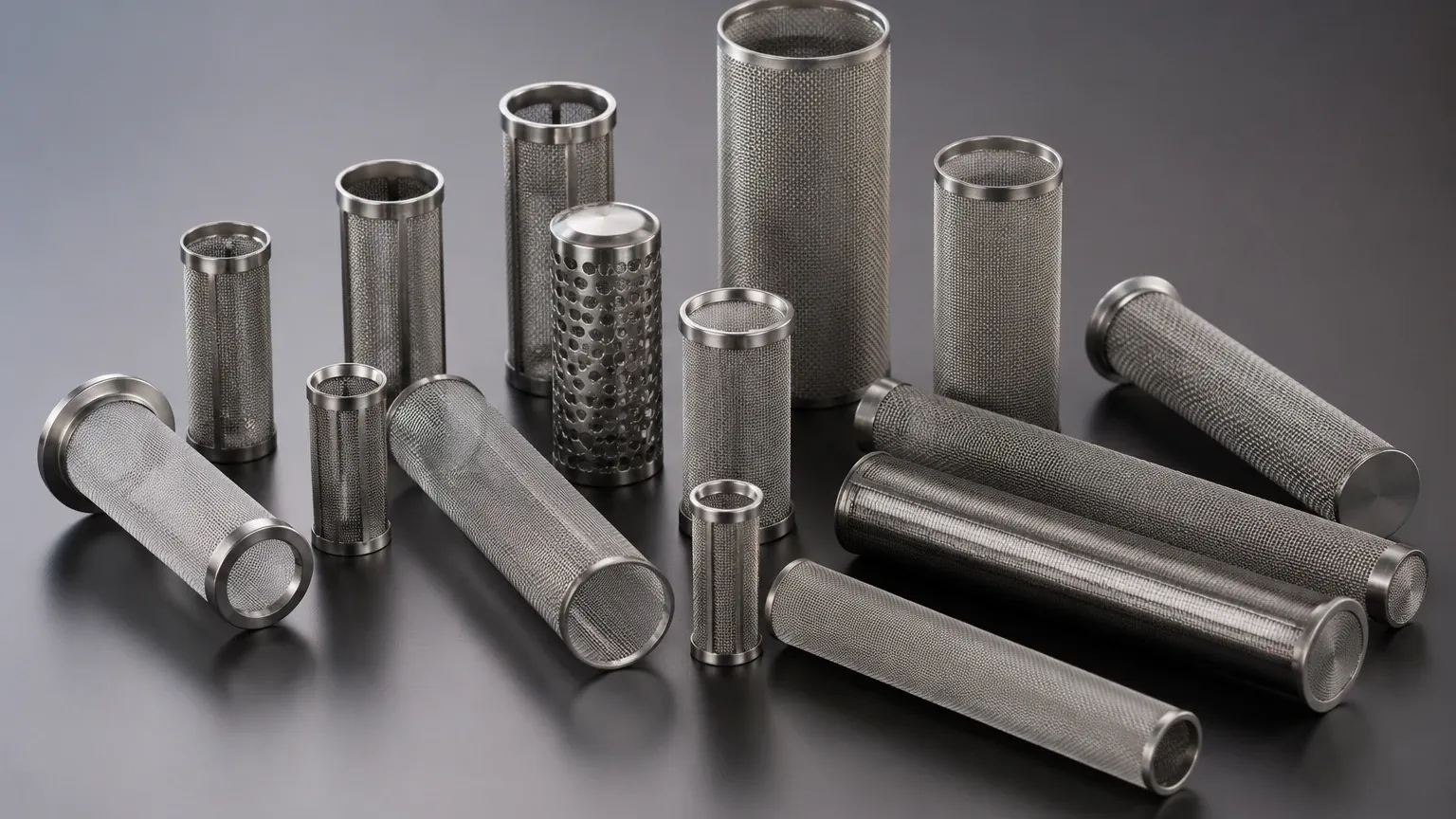
While flat mesh sheets are useful for simple strainers, most industrial processes require the increased surface area and structural strength provided by Wire Mesh Filter Cylinders & Tubes. The cylindrical shape is inherently stronger under pressure and allows for various flow configurations, such as outside-to-inside or inside-to-outside flow.
Single-Layer vs. Multi-Layer Construction
* Single-Layer Filters: These consist of a single ply of wire mesh rolled into a cylinder and welded. They are lightweight and easy to clean, making them suitable for low-pressure applications and coarse filtration.
* Multi-Layer Sintered Mesh: For high-pressure environments, multiple layers of mesh are bonded together through a process called vacuum sintering. This creates a monolithic structure that combines the fine filtration of a Dutch weave layer with the mechanical support of coarser mesh layers. Sintered cylinders do not require internal support cores in many applications and offer exceptional resistance to pressure surges.
Support Components
To prevent the mesh from collapsing or bursting under high differential pressure (ΔP), a mesh filter cylinder is often reinforced with a perforated metal core or an external cage. These support structures are typically made from thicker stainless steel plate, providing the necessary rigidity while maintaining high open-area ratios to minimize flow restriction.
Evaluating Performance: Flow Rate and Pressure Drop
One of the most critical engineering considerations when integrating a mesh filter into a system is the relationship between flow rate and pressure drop. Every filter introduces resistance to the fluid stream. If the pressure drop is too high, it can lead to pump cavitation, reduced system efficiency, or even structural failure of the filter element.
Factors Influencing Pressure Drop
1. Open Area: The percentage of the mesh surface that is not obstructed by wire. A higher open area generally results in a lower initial pressure drop.
2. Viscosity of the Fluid: Thicker fluids require more force to pass through the mesh, increasing the pressure drop.
3. Contaminant Loading: As the filter captures particles, the effective open area decreases, causing the pressure drop to rise over time. This is known as the "dirt-holding capacity."
Engineers must size the Wire Mesh Filter Cylinders & Tubes appropriately to ensure that the initial clean pressure drop is within the system's design limits, allowing for a sufficient operational window before cleaning or replacement is required.
Customization and OEM Considerations
Industrial filtration is rarely a one-size-fits-all solution. Customization is often necessary to integrate a filter into existing machinery or to meet specific process requirements. When working with a manufacturer like Kaifil, several customization parameters should be confirmed:
* End Cap Configurations: Filters can be equipped with threaded ends, flanges, NPT fittings, or simple open ends. The choice depends on the housing design and the ease of installation required.
* Sealing Methods: To prevent bypass, the interface between the filter and the housing must be sealed. Options include O-rings (Viton, EPDM, Silicone) or metal-to-metal seals for high-temperature applications.
* Welding Techniques: Precision welding, such as TIG (Tungsten Inert Gas) or plasma welding, is used to join the mesh seams and attach end caps. High-quality welds are essential to ensure there are no gaps larger than the mesh pore size, which would compromise filtration integrity.
Maintenance, Cleaning, and Longevity
A primary advantage of using a mesh filter made of stainless steel is its cleanability. Unlike depth filters or membranes that must be discarded once clogged, metal mesh can be restored to near-original performance levels through various cleaning methods.
Cleaning Protocols
* Backwashing: Reversing the flow of the fluid to dislodge particles from the surface of the mesh. This is often automated in continuous flow systems.
* Ultrasonic Cleaning: Using high-frequency sound waves in a cleaning solvent to remove fine particles trapped deep within the mesh pores. This is highly effective for Dutch weave and sintered mesh.
* Chemical Cleaning: Using acids or alkalis to dissolve organic or mineral deposits. It is vital to ensure that the cleaning agents are compatible with the filter's material (e.g., 316L stainless steel).
Total Cost of Ownership (TCO)
While the initial investment in Wire Mesh Filter Cylinders & Tubes may be higher than disposable alternatives, the TCO is often much lower. The durability of stainless steel reduces the frequency of replacements, minimizes downtime, and eliminates the waste disposal costs associated with single-use cartridges.
Industry-Specific Applications
Chemical and Petrochemical
In these sectors, filters must withstand aggressive solvents and high temperatures. Sintered wire mesh cylinders are frequently used to protect downstream catalysts and high-pressure pumps from particulate damage.
Food and Beverage
Hygiene is the priority here. Stainless steel mesh filters are used for straining juices, oils, and syrups. The smooth surface of the wire mesh prevents bacterial growth and allows for easy sterilization via CIP (Clean-In-Place) systems.
Hydraulics and Lubrication
Precision hydraulic systems require extremely clean oil to prevent valve sticking and component wear. A mesh filter in the return line or suction line ensures that metal shavings and environmental dust do not circulate through the system.
Conclusion: Selecting the Right Filtration Partner
Choosing the correct a mesh filter involves a careful balance of filtration accuracy, structural strength, and material compatibility. For engineers, the goal is to find a solution that provides reliable performance under the specific stresses of their application. By focusing on high-quality Wire Mesh Filter Cylinders & Tubes, industrial operators can ensure the longevity of their equipment and the purity of their products.
When specifying a filter, always confirm the operating temperature, maximum differential pressure, fluid chemistry, and required micron rating. Working with a specialist manufacturer like Kaifil allows for the development of customized filtration components that meet these exact technical demands, providing peace of mind and optimized process efficiency.
