


Mesh Wire Cylinder
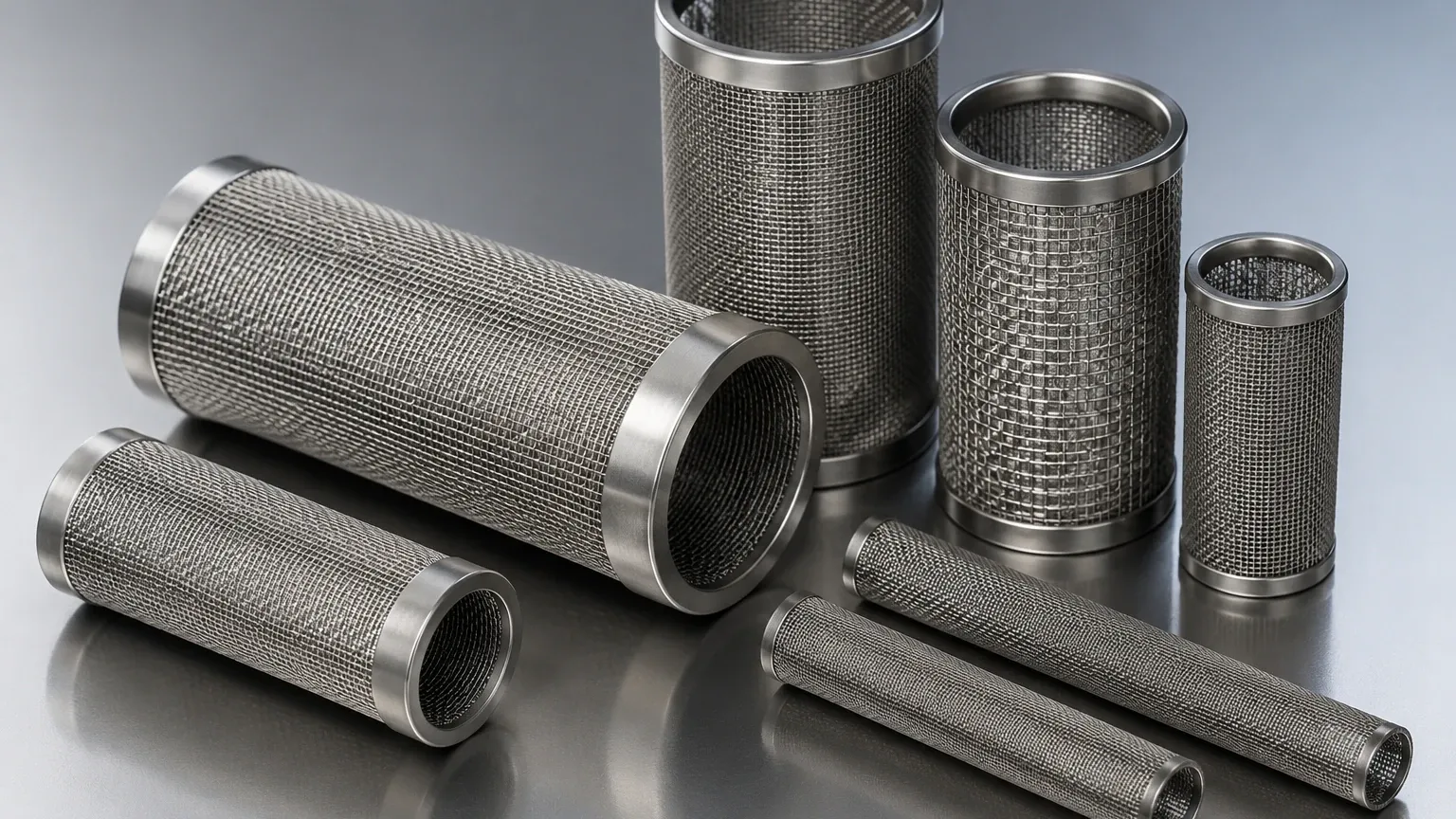
In industrial filtration, the mesh wire cylinder serves as a fundamental component for separating solids from liquids and gases. These cylindrical structures, often referred to as filter tubes or cartridges, are engineered to withstand high pressure, corrosive environments, and extreme temperatures while maintaining precise filtration accuracy. For engineers and procurement specialists, selecting the correct Wire Mesh Filter Cylinders & Tubes involves a deep understanding of material science, weaving techniques, and structural integrity.
Kaifil specializes in the manufacturing of these precision components, focusing on stainless steel solutions that offer durability and repeatable performance across diverse sectors, including chemical processing, pharmaceuticals, and hydraulic systems. This guide explores the technical considerations necessary for specifying a mesh wire cylinder that meets the rigorous demands of modern industrial applications.
Understanding the Construction of a Mesh Wire Cylinder
The performance of a mesh wire cylinder is primarily dictated by its construction. Unlike disposable fabric or paper filters, wire mesh cylinders are typically constructed from stainless steel wire cloth that is formed into a cylindrical shape and joined via longitudinal welding.
Single-Layer vs. Multi-Layer Designs
Single-layer cylinders are often used for coarse filtration or as a protective screen for larger debris. However, for finer filtration requirements, multi-layer designs are employed. In a multi-layer configuration, different mesh counts are combined. A fine inner mesh provides the filtration accuracy, while coarser outer layers provide mechanical support and protection. In more demanding environments, these layers may be sintered—a process of diffusion bonding—to create a monolithic structure that prevents wire migration and ensures pore stability under high pressure.
Weaving Patterns and Their Impact
The choice of weave significantly affects the flow rate and the particle size retention.
- Plain Weave: The most common and cost-effective, where wires cross over and under each other. It offers high open area and low pressure drop.
- Twill Weave: Allows for thicker wires and is used for heavier filtration loads.
- Dutch Weave: This pattern uses a higher density of smaller diameter wires in one direction, creating a "tortuous path" for particles. It is ideal for high-pressure applications requiring fine micron ratings.
Material Specifications and Industrial Grade Selection
Material selection is the most critical factor in ensuring the longevity of a mesh wire cylinder. Because these components are frequently exposed to aggressive chemicals or high-temperature steam cleaning, stainless steel is the industry standard. Kaifil utilizes various grades to match specific environmental challenges.
Stainless Steel 304
Grade 304 is the standard industrial choice for general-purpose applications. It provides excellent strength and good corrosion resistance for water treatment and food processing environments where chemical exposure is moderate.
Stainless Steel 316 and 316L
For more demanding environments, such as marine applications or chemical processing involving chlorides, Grade 316 is preferred due to the addition of molybdenum. 316L (low carbon) is specifically utilized in applications involving extensive welding, as it minimizes the risk of intergranular corrosion at the weld seams. This is particularly important for maintaining the structural integrity of the cylinder's longitudinal joint.
Specialized Alloys
In extreme cases involving highly acidic or alkaline fluids, or temperatures exceeding 500°C, specialized alloys like Inconel or Monel may be required. These materials ensure that the mesh wire cylinder does not undergo mechanical failure or oxidative scaling during operation.
Key Performance Indicators: Micron Rating and Flow Dynamics
When specifying a mesh wire cylinder, engineers must balance filtration efficiency with hydraulic performance. The two primary metrics used to evaluate this are the micron rating and the pressure drop.
Nominal vs. Absolute Micron Ratings
- Nominal Rating: Indicates the ability of the mesh to retain a majority of particles of a specific size (e.g., 90% of 20-micron particles). It is a general guide but does not guarantee total exclusion.
- Absolute Rating: Refers to the diameter of the largest hard spherical particle that will pass through the mesh under specified test conditions. For critical applications in the pharmaceutical or aerospace sectors, absolute ratings are mandatory to ensure system safety.
Pressure Drop (ΔP)
The pressure drop is the difference in pressure between the upstream and downstream sides of the filter. A high initial pressure drop indicates that the mesh may be too fine for the required flow rate, leading to premature clogging and increased energy costs for pumps. Engineering a cylinder with a maximized open area while maintaining the required micron rating is essential for optimizing the lifecycle of the filtration system.
Structural Support and Reinforcement Methods
A mesh wire cylinder, particularly one with a fine micron rating, may lack the inherent stiffness to withstand high differential pressures. Without proper support, the mesh can collapse or deform, bypassing the filtration seal.
Perforated Metal Cores
To prevent deformation, many cylinders are designed with an internal or external perforated metal core. This core acts as a skeleton, absorbing the mechanical load of the fluid pressure while the wire mesh performs the actual filtration. The hole pattern and thickness of the perforated core must be calculated based on the maximum expected differential pressure (collapse pressure).
End Fittings and Sealing
The method by which the cylinder is integrated into the housing is a common point of failure. Precision-machined end caps, which can be threaded, flanged, or fitted with O-ring grooves, are welded to the ends of the mesh cylinder. Common configurations include:
- Double Open End (DOE): Flow passes through the cylinder, and seals are required at both ends.
- Single Open End (SOE): One end is permanently capped, often with a flat or finned end, ensuring a more secure flow path.
Customization Options for Industrial Integration
Standard sizes rarely meet the specific needs of complex industrial machinery. Customization is often necessary to ensure that the mesh wire cylinder fits perfectly within existing housings or meets unique flow characteristics. Kaifil provides extensive OEM capabilities to address these specific engineering requirements.
Dimensional Precision
Cylinders can be manufactured in diameters ranging from a few millimeters for miniature hydraulic filters to several meters for large-scale water intake screens. The length and diameter ratio must be carefully considered to ensure uniform flow distribution across the entire surface of the mesh.
Surface Treatments
Depending on the application, additional surface treatments may be applied. Electropolishing is common in the food and pharmaceutical industries to create a smooth, burr-free surface that resists bacterial growth and is easier to clean. Passivation is also used to enhance the natural protective oxide layer of the stainless steel, providing superior corrosion resistance.
Maintenance, Cleaning, and Total Cost of Ownership
One of the primary advantages of using a stainless steel mesh wire cylinder over disposable media is the ability to clean and reuse the component. This significantly reduces the long-term operational costs and environmental impact of a filtration system.
Cleaning Methodologies
- Backwashing: Reversing the flow of the fluid to dislodge particles trapped on the surface of the mesh. This is often automated in continuous filtration systems.
- Ultrasonic Cleaning: Using high-frequency sound waves in a cleaning solvent to remove fine particles embedded deep within the mesh pores. This is highly effective for multi-layer sintered mesh.
- Chemical Cleaning: Utilizing specific solvents or acids to dissolve organic or mineral scaling. The material compatibility of the stainless steel must be verified against the cleaning agents used.
Replacement Cycles
While reusable, wire mesh cylinders are not infinite. Over time, repeated cleaning and mechanical stress can lead to work hardening of the wires or erosion of the mesh. Regular inspection for "blinded" (permanently clogged) areas or physical breaches in the mesh is necessary. Monitoring the pressure drop over time is the most effective way to determine when a cylinder has reached the end of its functional life.
Conclusion
Selecting the appropriate Wire Mesh Filter Cylinders & Tubes is a technical process that requires balancing filtration precision, mechanical strength, and chemical compatibility. By focusing on high-quality stainless steel construction and customized engineering, industrial operators can achieve efficient and reliable filtration that protects downstream equipment and ensures product purity.
For engineers looking to optimize their filtration processes, confirming the specific micron requirements, maximum differential pressure, and chemical exposure levels is the first step toward selecting a mesh wire cylinder that provides the best return on investment and operational stability.
