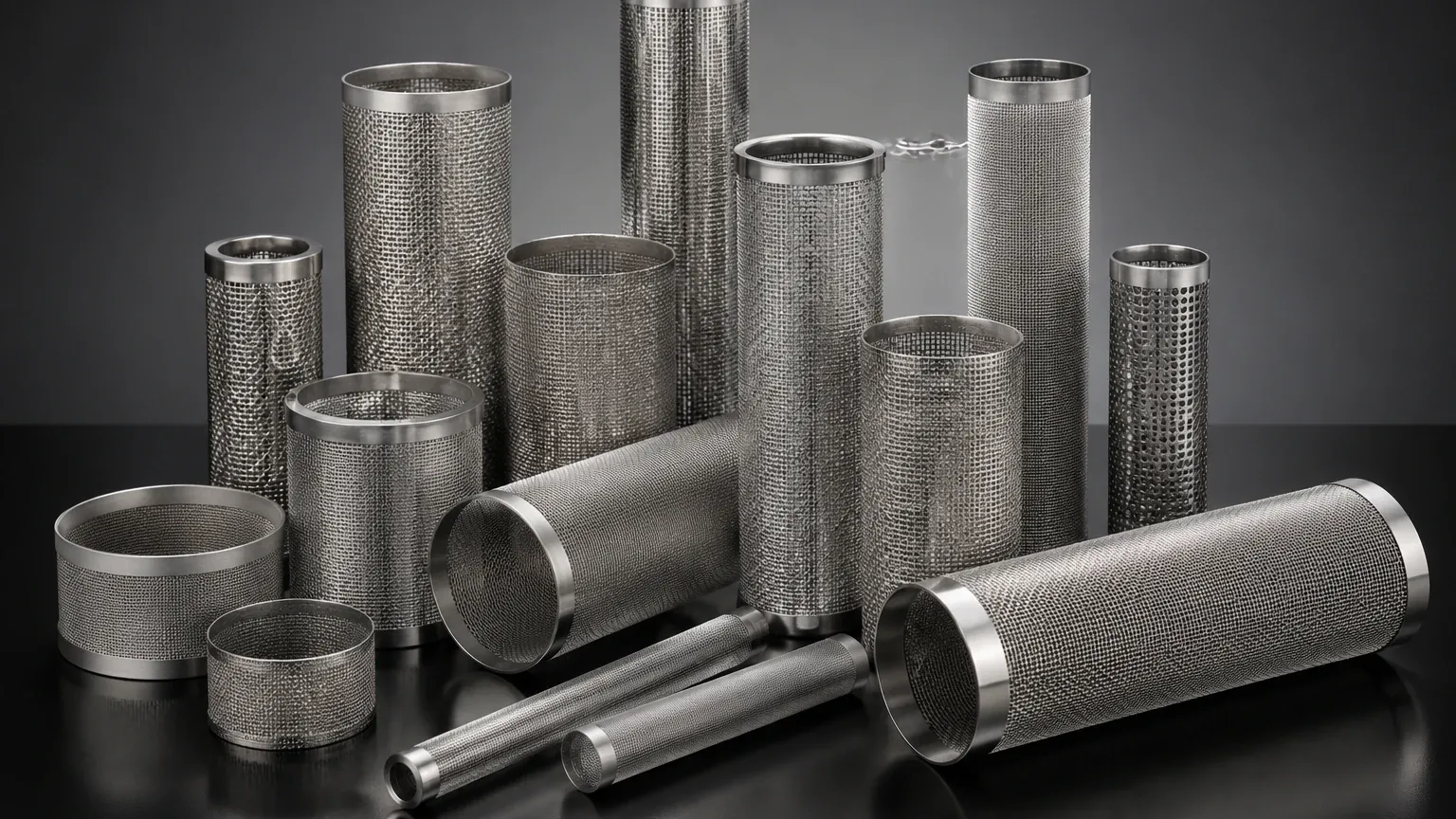
Cylinder Wire Mesh
In industrial filtration, the structural integrity and precision of the filter medium directly impact the efficiency of the entire process. Cylinder wire mesh is a critical component used across diverse sectors to separate solids from liquids or gases. These cylindrical components are engineered to withstand high pressure, corrosive environments, and extreme temperatures while maintaining consistent filtration accuracy. Understanding the technical specifications, material properties, and manufacturing nuances of these filters is essential for engineers and procurement professionals seeking to optimize system performance.
Technical Construction of Wire Mesh Filter Cylinders & Tubes
The construction of Wire Mesh Filter Cylinders & Tubes involves several engineering layers, depending on the required filtration fineness and the mechanical stress of the application. At its core, a cylinder wire mesh is formed by rolling a woven wire cloth into a tube and joining the edges, typically through advanced welding techniques.
Single-Layer vs. Multi-Layer Construction
Single-layer cylinders are often used in low-pressure applications or as primary strainers where the particle size is relatively large. However, for finer filtration or high-pressure environments, multi-layer designs are preferred. In a multi-layer configuration, the "working layer" (the mesh with the specific micron rating) is supported by coarser mesh layers or a perforated metal core. This reinforcement prevents the fine mesh from deforming under the force of the fluid flow, ensuring the interstitial spaces remain consistent during operation.
Weaving Patterns
The performance of the cylinder is heavily influenced by the weave of the wire mesh used:
* Plain Weave: The most common pattern where wires cross over and under each other. It provides high flow rates and is easy to clean.
* Dutch Weave: This utilizes heavier warp wires and smaller shute wires, resulting in a dense, strong mesh with very fine openings. It is ideal for high-pressure filtration and fine particle retention.
* Twill Weave: Allows for heavier wires in a given mesh count, providing increased strength for demanding mechanical tasks.
Material Selection for Industrial Environments
Material science is the foundation of filter durability. Because cylinder wire mesh is frequently exposed to aggressive chemicals or high temperatures, stainless steel is the industry standard. Choosing the correct grade of stainless steel is a balance between cost and the specific chemical profile of the filtrate.
1. AISI 304: This is the standard grade for general industrial use. It offers good corrosion resistance and is suitable for food processing, water treatment, and most atmospheric conditions. It is cost-effective but may struggle in high-chloride environments.
2. AISI 316/316L: Containing molybdenum, 316 stainless steel provides superior resistance to pitting and crevice corrosion, particularly in saline or acidic environments. The "L" variant (low carbon) is preferred for welded structures to prevent carbide precipitation, which can lead to corrosion at the weld seams.
3. Specialty Alloys: For extreme conditions, such as high-temperature petrochemical processing or highly acidic chemical manufacturing, alloys like Monel, Inconel, or Hastelloy may be employed to ensure the filter does not degrade prematurely.
Engineering Considerations: Micron Rating and Flow Dynamics
When specifying a cylinder wire mesh, engineers must evaluate the relationship between filtration accuracy and flow dynamics. The primary goal is to achieve the required particle retention without creating an excessive pressure drop (ΔP).
Nominal vs. Absolute Micron Rating
It is vital to distinguish between nominal and absolute ratings. A nominal rating refers to the ability of the mesh to retain a certain percentage of particles of a specific size. An absolute rating indicates the largest spherical particle that can pass through the mesh. For critical applications in the pharmaceutical or hydraulic industries, absolute ratings are often required to ensure no oversized contaminants bypass the system.
Effective Filtration Area (EFA)
The EFA is the total surface area available for the fluid to pass through. In a cylindrical design, the EFA is determined by the diameter and length of the tube. Increasing the EFA by using pleating techniques or increasing the cylinder dimensions can significantly extend the service life of the filter by reducing the face velocity and the rate of cake buildup.
Manufacturing Processes and Quality Control
The reliability of a cylinder wire mesh depends on the precision of its assembly. At Kaifil, the manufacturing process focuses on maintaining the geometric integrity of the cylinder and the security of the closures.
* Seam Welding: The longitudinal seam is the most vulnerable part of the cylinder. Techniques such as Plasma Welding or TIG (Tungsten Inert Gas) welding are used to create a seamless-strength bond that does not compromise the micron rating at the joint.
* End Caps and Fittings: Cylinders are often fitted with custom end caps, flanges, or threaded connectors. These must be welded or bonded securely to prevent "bypass," where unfiltered fluid leaks around the edges of the filter medium.
* Tolerances: In precision equipment, such as hydraulic valves or fuel injectors, the outer diameter (OD) and inner diameter (ID) of the mesh tube must be held to tight tolerances to ensure a proper fit within the housing.
Applications Across Demanding Industries
Cylinder wire mesh is a versatile solution found in numerous critical systems:
* Chemical and Petrochemical: Used for catalyst recovery, polymer filtration, and protecting downstream equipment from debris in high-temperature pipelines.
* Food and Beverage: Stainless steel cylinders are used for straining juices, syrups, and dairy products. The material must be smooth and easy to sanitize to meet stringent hygienic standards.
* Hydraulic Systems: These filters protect sensitive valves and pumps from wear-causing particles, ensuring the longevity of heavy machinery.
* Water Treatment: From desalination pre-filtration to industrial wastewater recycling, wire mesh tubes provide a robust first line of defense against organic and inorganic solids.
Maintenance, Cleaning, and Service Life
One of the primary advantages of stainless steel cylinder wire mesh over disposable polymer filters is cleanability. Depending on the nature of the contaminant, these filters can be restored to near-original performance levels through several methods:
* Backwashing: Reversing the flow of the fluid to dislodge particles trapped on the surface of the mesh.
* Ultrasonic Cleaning: Using high-frequency sound waves in a cleaning solvent to remove fine particles embedded deep within the weave of a multi-layer or Dutch weave mesh.
* Chemical Cleaning: Using mild acids or bases to dissolve organic buildup or mineral scales, provided the mesh material is chemically compatible.
Regular monitoring of the differential pressure across the filter is the most effective way to determine the cleaning cycle. A sudden spike in ΔP indicates that the mesh is blinded and requires immediate attention to prevent structural failure or system bypass.
Selection and Customization Checklist
Before finalizing a purchase of cylinder wire mesh, engineering teams should confirm the following technical parameters to ensure the product meets the application requirements:
1. Fluid Compatibility: Does the stainless steel grade (304, 316L, etc.) resist the acidity, alkalinity, or salinity of the fluid?
2. Operating Temperature: What are the continuous and peak operating temperatures? This affects material expansion and structural strength.
3. Pressure Requirements: What is the maximum operating pressure and the maximum allowable pressure drop? Does the design require an internal perforated support tube?
4. Particle Size Distribution: What is the target micron rating, and is an absolute or nominal rating required?
5. Connection Type: Does the cylinder require specific end fittings, such as NPT threads, BSP threads, or custom flanges for installation into existing housings?
By focusing on these factual engineering boundaries, procurement teams can secure filtration solutions that offer the best total cost of ownership through durability and consistent performance. Kaifil’s expertise in custom manufacturing allows for the development of tailored Wire Mesh Filter Cylinders & Tubes that address the specific challenges of modern industrial filtration.