


Keywords
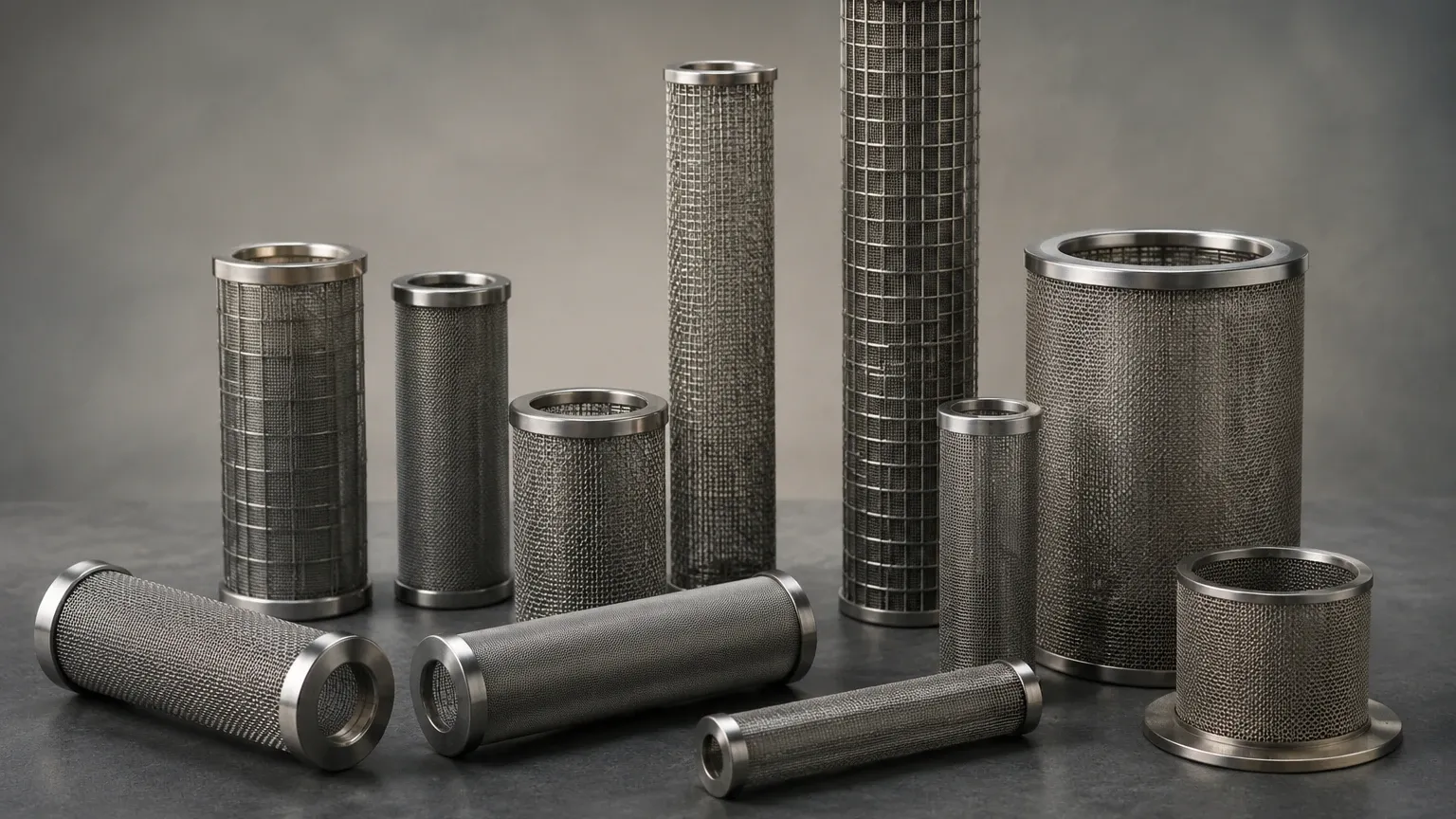
In the specialized field of industrial filtration, the term "Keywords" often refers to the critical technical specifications and performance parameters that define the success of a separation process. For engineers and procurement professionals, identifying these core requirements is the first step in selecting the appropriate Wire Mesh Filter Cylinders & Tubes. These components are essential in industries ranging from petrochemical processing to food and beverage production, where they serve as the primary barrier against contaminants.
Understanding the technical language of filtration—the specific "keywords" of material science, weave geometry, and structural engineering—is vital for optimizing system efficiency and ensuring the longevity of the equipment. This guide examines the essential criteria used to evaluate wire mesh filtration solutions and provides the technical context necessary for informed decision-making.
Material Selection: The Primary Specification Keyword
The choice of material is perhaps the most significant keyword in any filtration project. In industrial environments, stainless steel is the gold standard due to its mechanical strength and resistance to environmental degradation. However, the specific grade of stainless steel must be matched to the chemical and thermal profile of the application.
Grade 304 Stainless Steel
Grade 304 is the most common material used for wire mesh filter cylinders. It offers excellent corrosion resistance in a wide range of atmospheric environments and many corrosive media. It is frequently used in food processing and general industrial water treatment. However, it is susceptible to pitting and crevice corrosion in warm chloride environments.
Grade 316 and 316L Stainless Steel
For more demanding applications, Grade 316 (and its low-carbon variant, 316L) is the preferred specification. The addition of molybdenum enhances resistance to chlorides and acids. Grade 316L is particularly valued for welded filter tubes because the lower carbon content minimizes carbide precipitation during the welding process, which could otherwise lead to intergranular corrosion in the heat-affected zone.
High-Temperature and Specialty Alloys
In extreme environments, such as high-temperature exhaust filtration or aggressive chemical reactors, other materials may be specified. These might include Monel, Inconel, or Hastelloy. When evaluating these materials, engineers must consider the coefficient of thermal expansion and the potential for galvanic corrosion if the filter is housed in a housing made of a dissimilar metal.
Weave Patterns and Filtration Accuracy
When discussing filtration performance, the "keywords" shift to the geometry of the mesh itself. The way the wires are woven determines the micron rating, the flow resistance, and the ability of the filter to be cleaned.
Plain Weave and Twilled Weave
Plain weave is the simplest pattern, where each shute wire passes over and under one warp wire. It provides high flow rates and is easy to clean. Twilled weave, where wires pass over and under two wires, allows for a heavier wire diameter to be used for a given mesh count, increasing the strength of the cylinder but slightly increasing the resistance to flow.
Dutch Weaves (Plain and Twilled)
Dutch weaves utilize different diameters for warp and shute wires. This creates a dense, tortuous path for the fluid, providing much finer filtration than standard weaves. Plain Dutch Weave offers a high degree of strength and is excellent for high-pressure applications. Twilled Dutch Weave provides the finest filtration levels, often down to the single-digit micron range, making it ideal for hydraulic systems and pharmaceutical processing.
Micron Rating: Absolute vs. Nominal
A critical distinction in filtration keywords is the difference between nominal and absolute micron ratings. A nominal rating refers to the ability of the filter to retain a certain percentage of particles of a given size (e.g., 90% of 20-micron particles). An absolute rating, typically determined through glass bead testing, indicates the diameter of the largest spherical particle that can pass through the mesh under laboratory conditions. For critical applications, absolute ratings are required to ensure process integrity.
Structural Integrity of Filter Cylinders and Tubes
A wire mesh filter must do more than just trap particles; it must withstand the mechanical stresses of the fluid flow. The structural design of Wire Mesh Filter Cylinders & Tubes often involves multiple layers and support components.
Single-Layer vs. Multi-Layer Construction
Single-layer cylinders are cost-effective for low-pressure applications or where the mesh itself is sufficiently heavy. However, for fine filtration, the mesh is often too delicate to stand alone. In these cases, a multi-layer construction is used. This might involve a fine filtration layer sandwiched between coarser support layers, providing both precision and durability.
Sintered Wire Mesh
Sintering is a process where multiple layers of wire mesh are bonded together using heat and pressure without the use of binders. This creates a monolithic structure where the wires are fused at every contact point. Sintered filter tubes offer exceptional mechanical stability, making them suitable for high-pressure environments and applications requiring frequent backpulsing or ultrasonic cleaning.
Internal and External Supports
To prevent the collapse or bursting of the filter under high differential pressure (Delta P), perforated metal cores or outer shrouds are often integrated into the design. These supports are typically made from heavier gauge stainless steel and are welded to the end caps to provide a rigid framework for the wire mesh.
Performance Evaluation: Flow Rate and Pressure Drop
In the engineering phase, the performance keywords focus on the fluid dynamics of the system. Every filter introduces a restriction to the flow, and managing this restriction is key to system efficiency.
Initial Pressure Drop
The initial pressure drop is the resistance measured across a clean filter. It is influenced by the fluid viscosity, the velocity of the flow, and the open area of the mesh. Engineers must ensure that the initial pressure drop is low enough to allow for a significant "dirt-holding" period before the filter reaches its terminal pressure drop and requires cleaning or replacement.
Dirt-Holding Capacity
This refers to the total volume of contaminants the filter can collect before the pressure drop exceeds the system's limits. Increasing the surface area of the filter—for example, by using a pleated design rather than a smooth cylinder—can significantly increase the dirt-holding capacity, thereby extending the service interval.
Effective Filtration Area (EFA)
The EFA is the total area of the mesh that is actually available for flow. When designing filter tubes, one must account for the area lost to welding seams, end caps, and support structures. Maximizing the EFA is essential for reducing the flux (flow per unit area) and improving filtration efficiency.
Customization and Engineering Considerations
No two industrial processes are identical, which is why customization is a recurring theme in filtration procurement. When requesting a quote for Wire Mesh Filter Cylinders & Tubes, several physical and functional "keywords" must be confirmed:
1. End Cap Configurations: Options include Double Open End (DOE), Single Open End (SOE) with various O-ring configurations (e.g., 222 or 226 fittings), threaded connections (NPT/BSP), or custom flanges.
2. Welding Standards: For high-purity or high-pressure applications, TIG (Tungsten Inert Gas) or plasma welding is preferred over spot welding to ensure a continuous, leak-proof seam and to prevent bypass.
3. Surface Finishes: Some applications, particularly in the pharmaceutical and food industries, require specific surface roughness (Ra) values. Electropolishing can be used to remove surface impurities and improve the cleanability of the stainless steel.
4. Compliance and Certification: Depending on the industry, filters may need to comply with FDA regulations for food contact, USP Class VI for plastics and elastomers, or PED (Pressure Equipment Directive) standards for pressurized housings.
Maintenance and Total Cost of Ownership
While the initial purchase price is a factor, the total cost of ownership (TCO) is a more accurate metric for evaluating filtration solutions. Wire mesh filters, unlike disposable polymer cartridges, are often cleanable and reusable.
Cleaning Methods
Stainless steel filters can be cleaned using various methods, including backwashing, ultrasonic cleaning, chemical soaking, or burnout (for organic contaminants). The ability to restore the filter to near-original pressure drop levels significantly reduces the long-term cost of the operation.
Durability and Replacement Cycles
The durability of a wire mesh cylinder is determined by its resistance to fatigue and corrosion. In systems with high-frequency pressure pulsations, the mechanical design of the mesh and its supports must be robust enough to prevent wire breakage. A well-specified stainless steel filter can last for years, whereas disposable alternatives might require replacement every few weeks.
Conclusion: Confirming the Technical Keywords
Before proceeding with a purchase, engineers should confirm a checklist of "keywords" with their manufacturer to ensure the product meets the application's demands. This includes verifying the chemical compatibility of the alloy, the absolute micron rating required for process safety, the maximum allowable differential pressure, and the specific dimensions required for the existing housing.
By focusing on these technical parameters rather than generic descriptions, purchasing teams can secure filtration components that provide reliable performance and a lower total cost of ownership. For those seeking specialized assistance in designing or sourcing these components, it is advisable to Review product options and application support to align the technical specifications with the operational goals of the facility.
In summary, the "Keywords" of filtration are the bridge between engineering requirements and manufacturing reality. Whether it is the precision of a Twilled Dutch Weave or the structural integrity of a sintered cylinder, each specification plays a vital role in the efficiency and safety of industrial processes. Working with a manufacturer like Kaifil, who understands these nuances, ensures that the final product is not just a component, but a solution tailored to the rigors of the industrial environment.
