


Wire Mesh Filter Tubes
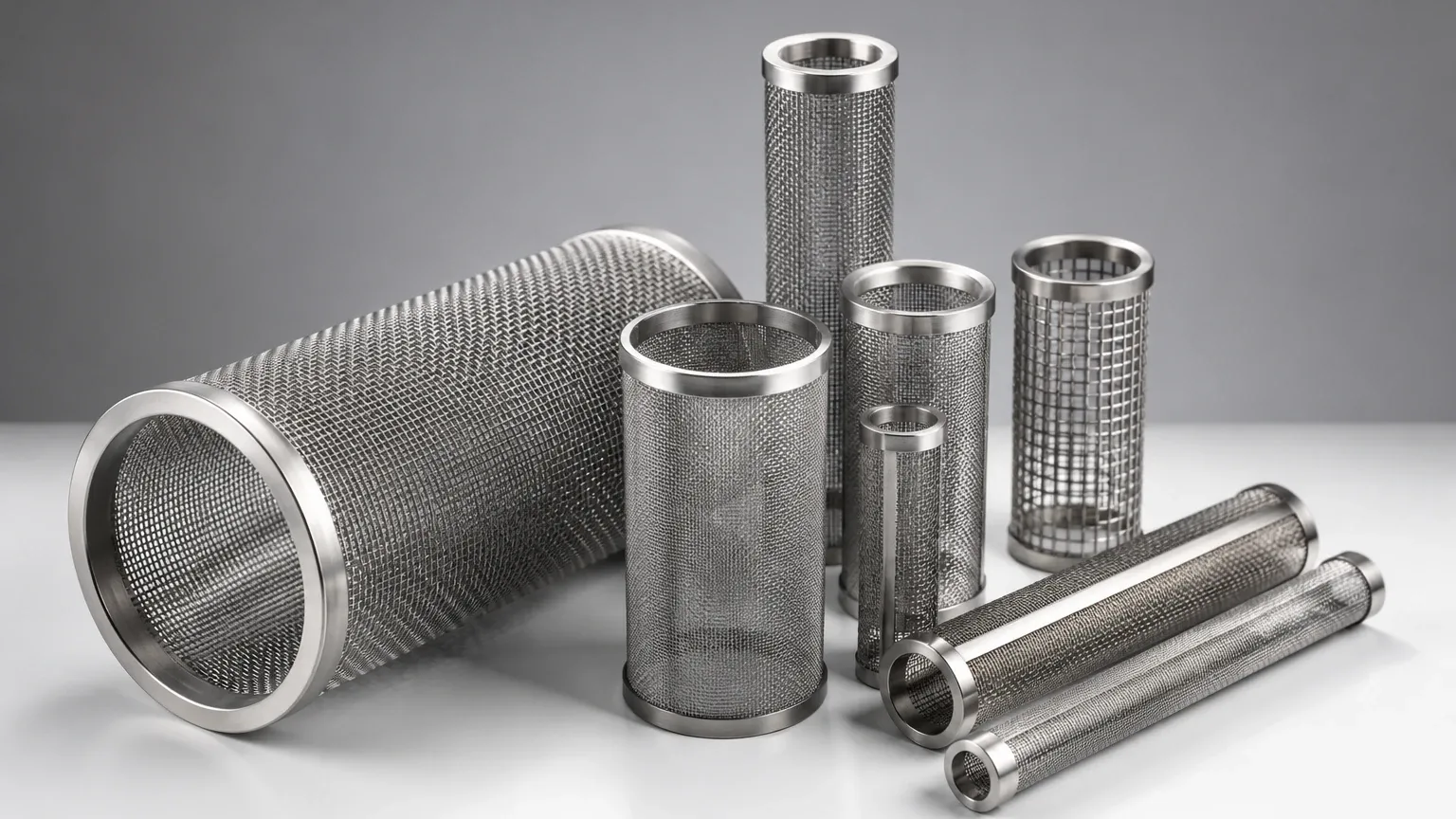
In industrial filtration, the structural integrity and precision of the filter medium directly dictate the efficiency of the entire process. Wire mesh filter tubes, often referred to in engineering specifications as Wire Mesh Filter Cylinders & Tubes, serve as critical components in liquid and gas separation. These components are designed to withstand high differential pressures, extreme temperatures, and corrosive environments while maintaining a consistent pore size for accurate particle retention.
Selecting the appropriate wire mesh filter tubes requires a deep understanding of fluid dynamics, material science, and mechanical design. For engineers and procurement teams, the challenge lies in balancing filtration fineness with flow capacity and mechanical durability. As a specialized manufacturer, Kaifil provides custom stainless steel filtration solutions that address these complex industrial requirements, ensuring that each component is optimized for its specific application.
Engineering Fundamentals of Wire Mesh Filter Tubes
The performance of a wire mesh filter tube is primarily determined by the weave pattern and the wire diameter. Unlike disposable depth filters, wire mesh provides surface filtration, where particles are trapped on the upstream side of the medium. This characteristic makes them ideal for applications requiring high cleanability and precise micron ratings.
Weave Patterns and Filtration Characteristics
1. Plain Weave: This is the most common weave, where each warp wire crosses over and under each shute wire. It provides a high percentage of open area, which is beneficial for high-flow applications with low pressure drop requirements. However, its mechanical strength is lower compared to more complex weaves.
2. Twill Weave: In this pattern, each wire passes over and under two successive wires. This allows for the use of heavier wires in a given mesh count, resulting in greater strength and the ability to achieve finer filtration than plain weave.
3. Dutch Weave (Plain and Twill): These weaves utilize a higher density of shute wires, creating a more tortuous path for the fluid. Dutch weave is the standard for high-pressure filtration and fine particle retention (down to 5-10 microns), as it offers superior mechanical stability and a compact pore structure.
Structural Configurations
Wire mesh filter tubes are rarely composed of a single layer of mesh when used in high-pressure industrial environments. To prevent deformation under load, these tubes are often constructed as multi-layer composites. A common configuration includes a fine filtration layer protected by coarser drainage layers and supported by a perforated metal core or an external shroud. Sintering—a process of diffusion bonding the mesh layers at high temperatures—can further enhance the structural rigidity of the tube, ensuring the pore geometry remains stable even under backwashing or high-pressure spikes.
Material Selection for Industrial Environments
The longevity of wire mesh filter tubes is heavily dependent on the alloy selected. While stainless steel is the industry standard, different grades offer varying levels of resistance to chemical attack and thermal degradation.
Stainless Steel 304 vs. 316L
* Grade 304: This is the general-purpose stainless steel used for water treatment and standard industrial applications. It offers good corrosion resistance and is cost-effective for non-acidic environments.
* Grade 316L: Containing molybdenum and a lower carbon content than standard 316, 316L is the preferred choice for chemical processing, marine environments, and pharmaceutical applications. It provides superior resistance to pitting and crevice corrosion, particularly in chloride-rich environments. The "L" (low carbon) designation is crucial for components that require extensive welding, as it prevents carbide precipitation that can lead to intergranular corrosion at the weld seams.
Specialty Alloys
In extreme cases where standard stainless steel fails, specialty alloys such as Monel, Inconel, or Hastelloy may be used. These materials are reserved for highly concentrated acids, high-temperature gas filtration (exceeding 500°C), or applications involving specialized chemical catalysts. Kaifil works closely with engineering teams to select the material that provides the best total cost of ownership based on the expected service life and replacement cycles.
Design Considerations for Wire Mesh Filter Cylinders & Tubes
When designing or specifying wire mesh filter cylinders & tubes, several mechanical and hydraulic factors must be evaluated to ensure system compatibility and performance.
Flow Rate and Pressure Drop
The relationship between flow rate and pressure drop (ΔP) is a primary concern for engineers. A filter that is too restrictive will lead to high energy costs and frequent cleaning cycles. Conversely, a filter with too much open area may lack the necessary structural support. Calculating the effective filtration area (EFA) is essential. By utilizing pleated designs within the tube structure, manufacturers can significantly increase the EFA, allowing for higher flow rates within the same physical footprint.
Mechanical Support and Core Design
In many hydraulic and high-pressure liquid systems, the filter tube must resist collapse or bursting. Internal perforated cores provide the necessary radial strength to withstand high differential pressures. The hole pattern, percentage of open area, and thickness of the perforated core must be engineered to support the wire mesh without obstructing the flow path. For outside-in flow, an internal core is used; for inside-out flow, an external shroud or reinforced cage is required.
Sealing and End Cap Configurations
The interface between the filter tube and the housing is a common point of failure if not designed correctly. End caps are typically TIG or plasma welded to the mesh tube to ensure a leak-proof seal. Common configurations include:
* DOE (Double Open End): Used with gaskets or O-rings for standard housing installations.
* SOE (Single Open End): Often features a threaded connection (NPT/BSP) or a specialized fitting like a 222 or 226 O-ring connector for secure, bypass-free sealing.
* Flanged Ends: Used in large-scale industrial piping where high mechanical security is required.
Key Performance Indicators in Liquid and Gas Filtration
To evaluate the effectiveness of wire mesh filter tubes, engineers must look beyond simple micron ratings and consider the following performance indicators:
Filtration Efficiency and Beta Ratio
While "nominal" ratings provide a general idea of particle retention, "absolute" ratings are required for critical applications. The Beta Ratio (βx) is a more accurate measure, representing the ratio of particles of a given size upstream versus downstream. For high-precision industrial processes, a Beta ratio of 1000 (99.9% efficiency) is often the target for the specified micron size.
Dirt Holding Capacity (DHC)
DHC refers to the total mass of contaminants the filter can retain before reaching the terminal pressure drop. Wire mesh filters generally have lower DHC than depth filters but compensate for this through cleanability. In systems with high solids loading, the design must prioritize ease of backwashing or ultrasonic cleaning to restore the filter’s permeability.
Cleanability and Maintenance Cycles
One of the primary advantages of stainless steel wire mesh filter tubes is their ability to be cleaned and reused. Maintenance cycles are determined by the nature of the contaminant. Soft, deformable particles may require ultrasonic cleaning, while hard, crystalline particles can often be removed via backpulsing or chemical soaking. Understanding the cleaning protocol is vital for calculating the total cost of ownership, as it reduces the need for frequent replacement parts.
Applications Across Critical Industries
The versatility of wire mesh filter tubes makes them indispensable across various sectors. Each industry brings unique challenges that dictate the final design of the filtration component.
* Chemical and Petrochemical Processing: Used for catalyst recovery, monomer filtration, and protecting downstream high-pressure pumps from particulate damage. The focus here is on chemical compatibility and high-temperature stability.
* Food and Beverage: In this sector, hygienic design is paramount. Filter tubes must be manufactured using FDA-compliant materials and feature smooth, crevice-free welds to prevent bacterial growth. They are commonly used in the filtration of syrups, oils, and beverages.
* Pharmaceuticals: Precision and purity are the drivers. Sintered wire mesh tubes are often used here because they do not migrate fibers into the process stream and can withstand rigorous sterilization processes, including SIP (Steam-In-Place) and CIP (Clean-In-Place).
* Hydraulic and Lubrication Systems: Filter tubes protect sensitive valves and actuators from wear-inducing particles. They must be designed to handle high-viscosity fluids and rapid pressure fluctuations without fatigue.
Customization and OEM Procurement Guidance
For purchasing teams and design engineers, procuring the right wire mesh filter tubes involves more than selecting a part number from a catalog. Customization is often necessary to meet specific housing dimensions or unique process conditions.
Technical Specification Checklist
When requesting a quote or developing a prototype with a manufacturer like Kaifil, the following data points should be confirmed:
1. Fluid Properties: Viscosity, density, and chemical composition.
2. Operating Conditions: Normal and maximum operating temperature, operating pressure, and maximum allowable differential pressure.
3. Contaminant Profile: Particle size distribution, concentration, and the physical nature of the solids (e.g., abrasive, gelatinous).
4. Dimensional Constraints: Overall length, outer diameter, inner diameter, and specific end-fitting requirements.
5. Certification Requirements: Material test reports (MTRs), FDA compliance, or pressure vessel codes if applicable.
Total Cost Considerations
While the initial cost of a custom stainless steel filter tube is higher than that of a disposable polymer filter, the long-term savings are significant. By reducing waste, lowering disposal costs, and providing a consistent filtration performance over hundreds of cleaning cycles, wire mesh solutions offer a superior return on investment. Furthermore, the ability to customize the structure—such as adding a pleated layer to increase surface area—can lead to longer run times and reduced downtime for the entire facility.
Conclusion
Wire mesh filter tubes are foundational to modern industrial filtration, providing a level of precision and durability that synthetic media cannot match. Whether the application involves the high-pressure demands of hydraulic systems or the stringent purity requirements of pharmaceutical manufacturing, the success of the filtration process depends on the correct integration of weave type, material grade, and structural design. By focusing on engineering fundamentals and working with an experienced manufacturer like Kaifil, technical professionals can ensure their systems operate with maximum efficiency and reliability.
