


4×8 Expanded Metal
In industrial manufacturing and filtration engineering, the selection of structural materials is governed by a balance of mechanical strength, open area requirements, and cost-efficiency. Among the various forms of metal mesh, the 4×8 expanded metal sheet remains one of the most widely utilized standards. This specific dimension—4 feet by 8 feet (approximately 1220mm x 2440mm)—aligns with global logistics standards and standard fabrication machinery, making it a staple for engineers designing filtration supports, protective enclosures, and structural components.
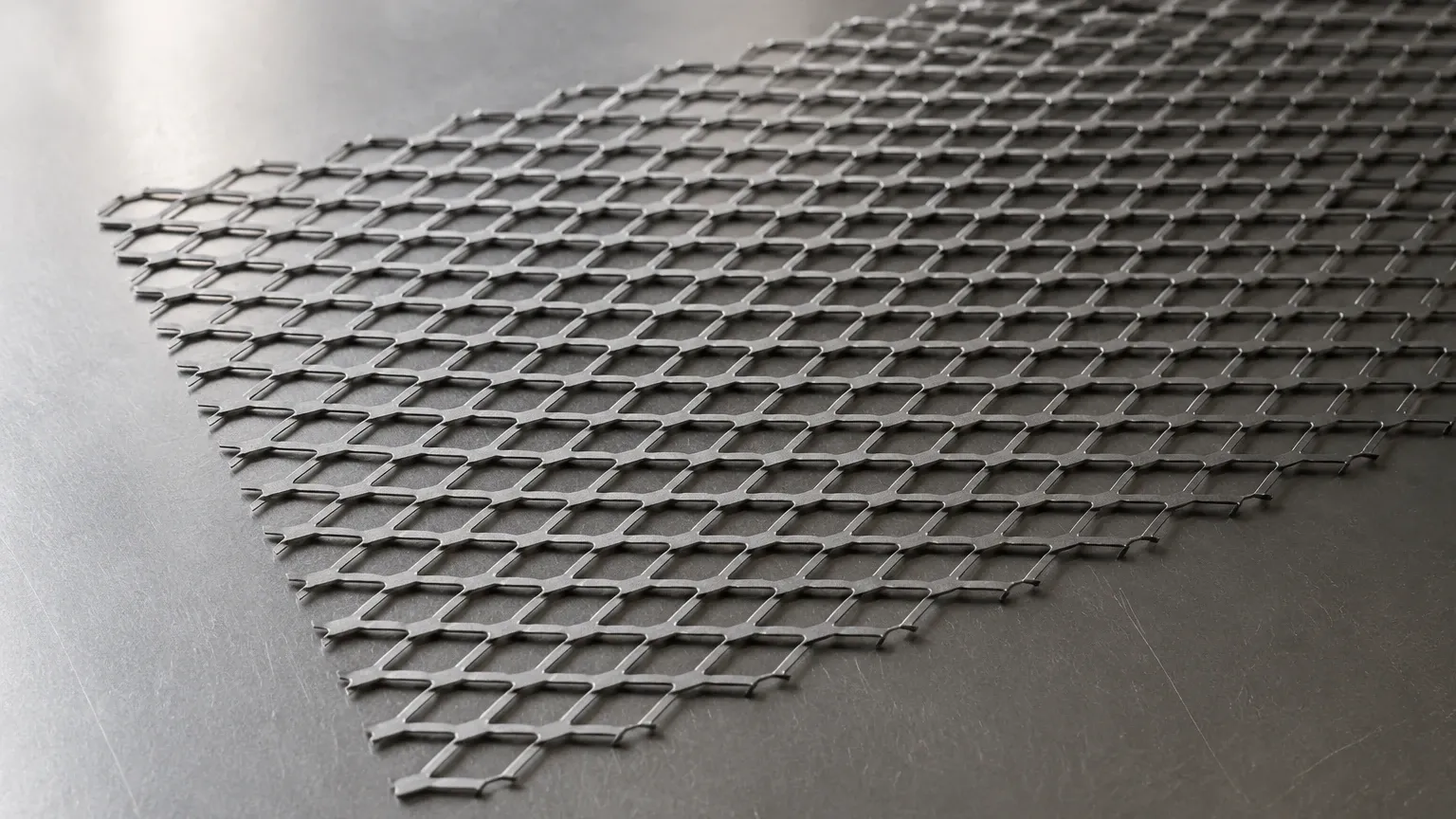
Understanding the technical nuances of expanded metal is essential for procurement and engineering teams. Unlike perforated metal, which is created by punching holes and removing material, expanded metal is produced through a simultaneous slitting and stretching process. This method ensures no material waste and creates a unique diamond-shaped pattern that offers a high strength-to-weight ratio. When specified in a 4×8 format, it provides a manageable yet substantial surface area for large-scale industrial applications.
The Manufacturing Process and Structural Characteristics
The production of expanded metal begins with a solid sheet of metal, typically stainless steel, carbon steel, or aluminum. A machine equipped with specialized knives slits the metal while simultaneously stretching it. This mechanical expansion creates a series of interconnected strands and bonds. Because the material is stretched rather than punched, the structural integrity of the original sheet is maintained, and in many cases, the resulting mesh is stronger per pound than the original flat plate.
There are two primary forms of expanded metal available in the 4×8 format:
1. Standard (Raised) Expanded Metal: In this form, the strands and bonds are set at a uniform angle to the plane of the sheet. This creates a textured surface and provides maximum rigidity. The raised edges are particularly useful in applications requiring high grip or specific flow turbulence in filtration systems.
2. Flattened Expanded Metal: To produce this, standard expanded metal is passed through a cold-roll reducing mill. This process flattens the strands and bonds, resulting in a smooth, level surface. Flattened 4×8 expanded metal is often preferred when the mesh must be integrated into a tight assembly or when a smooth surface is required to prevent abrasion of secondary filter media.
For engineers, the choice between raised and flattened profiles depends on the required thickness of the final component and the specific flow dynamics needed within a system.
Technical Specifications: SWD, LWD, and Open Area
When specifying 4×8 expanded metal, engineers must look beyond the outer dimensions of the sheet. The performance of the mesh is defined by several critical measurements:
* SWD (Short Way of Design): The distance from the center of one bond to the center of the next bond measured across the short diamond diagonal.
* LWD (Long Way of Design): The distance from the center of one bond to the center of the next bond measured across the long diamond diagonal.
* Strand Width and Thickness: These dimensions determine the overall weight and mechanical strength of the sheet. In filtration, the strand width also influences the "blind" area of the filter.
* Percentage of Open Area: This is perhaps the most critical metric for filtration applications. It determines the flow rate and pressure drop across the mesh. A 4×8 sheet with a high open area allows for high-volume fluid or gas passage, while a lower open area provides greater particle retention and structural support.
Choosing the correct combination of these factors ensures that the Perforated & Expanded Metal components meet the specific pressure and load requirements of the industrial environment.
Material Selection for Industrial Environments
The utility of a 4×8 expanded metal sheet is largely dictated by its material composition. Since these sheets are often used in harsh chemical or high-temperature environments, selecting the appropriate alloy is vital for longevity and performance.
Stainless Steel (304, 316, 316L)
Stainless steel is the preferred choice for the pharmaceutical, food and beverage, and chemical processing industries. Grade 304 offers excellent corrosion resistance for general applications, while Grade 316/316L is essential for environments involving chlorides or high acidity. In filtration, stainless steel expanded metal provides the necessary hygiene standards and the ability to withstand rigorous Cleaning-in-Place (CIP) cycles.
Carbon Steel
For applications where corrosion is not the primary concern, or where the metal will be coated (galvanized or powder-coated), carbon steel provides a cost-effective solution. It is frequently used in heavy-duty machinery guards and structural supports where high tensile strength is required.
Aluminum
Aluminum 4×8 expanded metal is valued for its lightweight properties and natural resistance to atmospheric corrosion. It is often used in HVAC filtration and aerospace components where weight reduction is a primary engineering goal.
Applications in Filtration and Industrial Systems
While expanded metal is used across many sectors, its role in industrial filtration is particularly critical. The 4×8 expanded metal sheet serves as a raw material that can be further fabricated into various filtration components.
Filter Media Support
In high-pressure hydraulic or liquid filtration systems, delicate filter media such as fine wire mesh or synthetic membranes require structural support to prevent collapsing under the force of the flow. Expanded metal provides a rigid skeleton that maintains the shape of the filter element while allowing for maximum flow through its diamond openings.
Pre-Filtration and Coarse Screening
In water treatment and intake systems, expanded metal acts as a primary barrier against large debris. The 4×8 sheet size allows for the fabrication of large intake screens that protect downstream pumps and sensitive fine filters from damage.
Protective Cages and Enclosures
Industrial filter cartridges, especially those used in dust collection and gas turbine air intake, often feature an outer cage made of expanded metal. This cage protects the pleats of the filter media during handling, installation, and operation, ensuring the longevity of the filtration system.
Engineering Considerations: Flow Dynamics and Pressure Drop
When integrating 4×8 expanded metal into a system, engineers must calculate the impact of the mesh on fluid dynamics. The angular nature of the strands in standard expanded metal can induce turbulence, which may be beneficial for mixing but detrimental if a laminar flow is required.
Furthermore, the "effective" open area can change depending on the angle of the fluid approach. Unlike perforated metal, where the holes are perpendicular to the sheet, the openings in expanded metal are three-dimensional. This means that at certain angles, the mesh may offer more resistance than a simple calculation of the 2D open area would suggest. Engineers should consult technical data sheets to confirm the pressure drop characteristics across the specific mesh pattern selected.
Quality Evaluation and Procurement Risks
Procuring 4×8 expanded metal for industrial use requires a focus on precision and consistency. Common risks associated with lower-quality expanded metal include:
* Inconsistent Strand Width: Variations in the slitting process can lead to weak points in the mesh, compromising the structural integrity of the entire sheet.
* Burrs and Sharp Edges: In filtration, burrs can tear delicate filter media or cause injury during maintenance. High-quality expanded metal undergoes deburring or specialized finishing processes to ensure safety and compatibility.
* Dimensional Instability: A sheet that is not perfectly 4×8 or has "camber" (a curve in the sheet) can cause significant issues during automated fabrication or welding.
When sourcing these materials, it is important to verify the manufacturer's quality control standards, particularly regarding the tolerance levels for SWD and LWD dimensions. For specialized applications, requesting material mill reports ensures that the alloy composition meets the required industrial standards (e.g., ASTM or ISO).
Customization Beyond the Standard 4×8 Sheet
While the 4×8 expanded metal sheet is a standard procurement unit, many industrial projects require customization to fit specific equipment. Manufacturers like Kaifil provide OEM services that transform these standard sheets into precision components. This includes:
* Shearing and Slitting: Cutting the 4×8 sheet into specific strips or smaller panels with tight tolerances.
* Circling: Creating circular discs for use in plate filters or bottom supports.
* Forming and Welding: Rolling expanded metal into cylinders or cones to serve as filter cores or protective shrouds.
* Surface Finishing: Electropolishing, pickling, or coating to enhance corrosion resistance and aesthetic appeal.
By working with a manufacturer that understands both the raw material properties and the end-use filtration requirements, engineering teams can ensure that their components provide optimal performance and durability.
Conclusion: Selecting the Right Solution
The 4×8 expanded metal sheet is a versatile and indispensable material in the industrial landscape. Its unique manufacturing process offers a combination of strength, economy, and functionality that is difficult to match with other materials. Whether used as a simple protective screen or a complex support structure in a high-precision filtration system, the technical specifications of the mesh must be carefully matched to the application's demands.
For engineers and purchasing managers, the key to success lies in understanding the trade-offs between different materials, weights, and opening sizes. By confirming the chemical compatibility, mechanical load requirements, and flow characteristics before procurement, organizations can avoid costly system failures and optimize the total cost of ownership for their filtration and structural systems.
