


Raised Expanded Metal
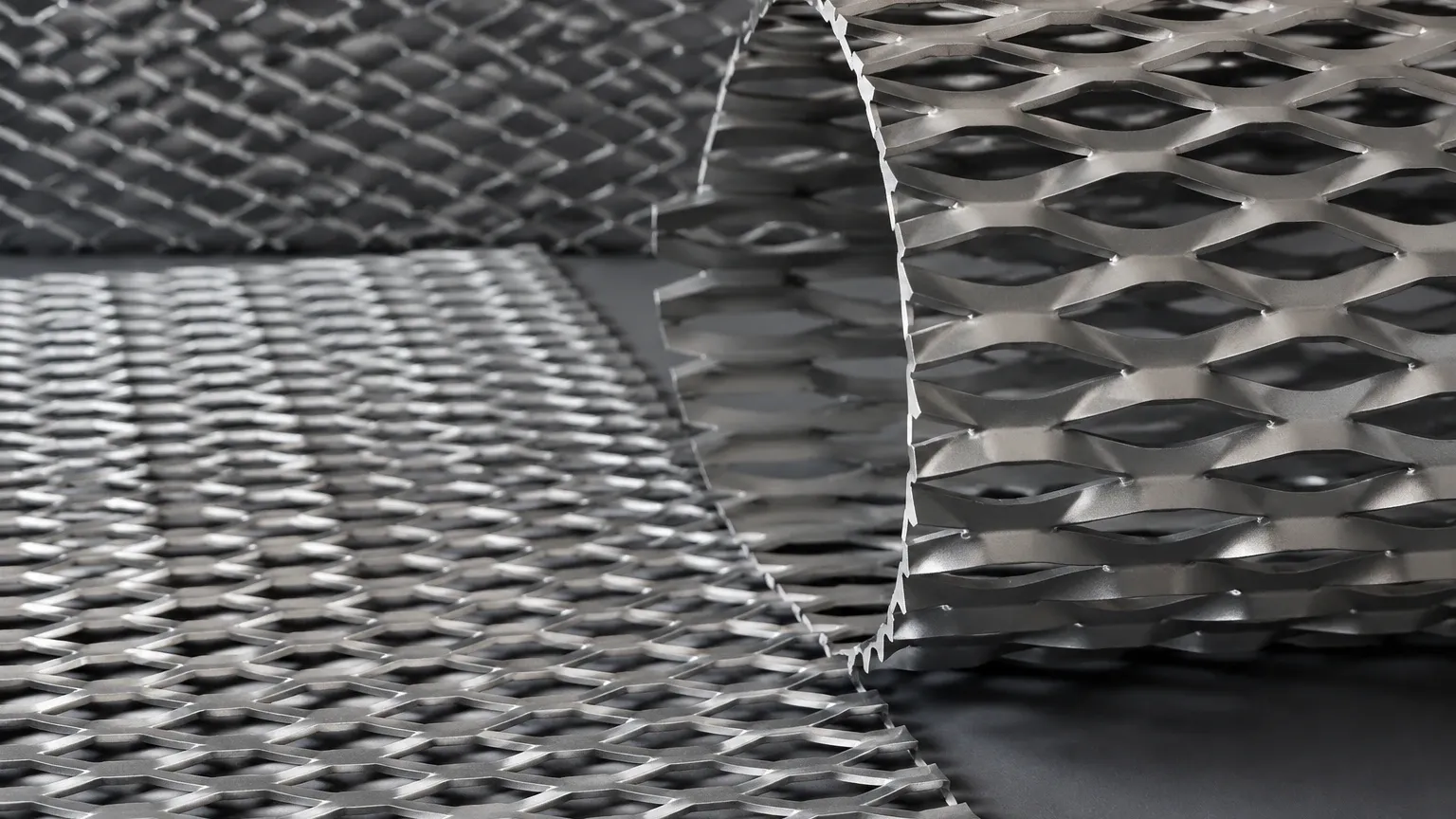
In industrial manufacturing and filtration engineering, the selection of structural components significantly influences the efficiency, durability, and safety of the final system. Among the various materials available, raised expanded metal stands out as a versatile and robust option. Unlike perforated metal, which is created by punching holes and removing material, expanded metal is produced by simultaneously slitting and stretching a solid metal sheet. The "raised" designation refers to the standard, off-the-press condition of the material, where the strands are set at a sharp angle to the plane of the sheet, creating a three-dimensional surface with distinct technical advantages.
For engineers and procurement teams sourcing components for chemical processing, hydraulic systems, or industrial filtration, understanding the mechanical properties and application boundaries of raised expanded metal is essential. As a specialized manufacturer, Kaifil provides precision-engineered Perforated & Expanded Metal solutions tailored to meet the rigorous demands of global industrial sectors.
The Geometry and Terminology of Raised Expanded Metal
To accurately specify raised expanded metal for an industrial project, it is necessary to use standardized terminology that describes its unique geometry. Because the material is not flat, its dimensions are measured differently than standard wire mesh or perforated sheets.
Key Dimensional Parameters
1. LWD (Long Way of Design): This is the distance from the center of one bond to the center of the next bond across the long axis of the diamond-shaped opening.
2. SWD (Short Way of Design): This is the distance from the center of one bond to the center of the next bond across the short axis of the diamond.
3. LWO (Long Way of Opening): The actual length of the opening from the inside of one bond to the inside of the opposite bond.
4. SWO (Short Way of Opening): The actual width of the opening from the inside of one bond to the inside of the opposite bond.
5. Strand Width: The amount of metal fed into the machine between the slitting and stretching process.
6. Strand Thickness: The thickness of the original base metal sheet.
7. Overall Thickness: The total thickness of the finished raised expanded metal, measured from the highest point of the raised strand to the lowest point on the opposite side.
In its raised state, the strands and bonds are set at a uniform angle. This configuration provides the material with a high degree of rigidity and a high strength-to-weight ratio. For filtration applications, the angle of the strands is particularly important as it influences the directional flow of fluids and gases, as well as the mechanical retention of particulate matter.
Manufacturing Process and Structural Integrity
The production of raised expanded metal is a highly efficient process that yields a product with no material waste. A solid sheet or coil of metal—typically stainless steel, carbon steel, or aluminum—is fed through an expanding machine. A set of precision blades slits the metal while simultaneously stretching it. This process creates the characteristic diamond pattern.
Because the metal is expanded rather than punched, the structural integrity of the original sheet is maintained. There are no welds or joins within the mesh; it is a single piece of continuous metal. This lack of joints makes raised expanded metal exceptionally strong. When the material is cut, the remaining strands do not unravel, which is a common issue with woven wire mesh. This structural stability is a critical factor for engineers designing high-pressure filtration housings or protective guards for industrial machinery.
Furthermore, the "raised" profile provides natural slip resistance and structural stiffness that flattened expanded metal lacks. In the raised state, the material can withstand higher point loads and resist deformation under pressure, making it an ideal substrate for supporting finer filtration media in multi-stage filter cartridges.
Raised vs. Flattened Expanded Metal: Technical Comparisons
When specifying expanded metal, engineers must choose between the raised and flattened varieties. While both begin with the same expansion process, their mechanical properties differ significantly due to secondary processing.
Mechanical Rigidity
Raised expanded metal is significantly more rigid than its flattened counterpart. The angled strands act like structural trusses, providing resistance against bending and shearing forces. In contrast, flattened expanded metal is passed through a cold-rolling mill after expansion, which flattens the strands back into the original plane of the sheet. While this makes the material smoother and thinner, it reduces the overall structural stiffness.
Surface Friction and Grip
The three-dimensional profile of raised expanded metal provides a high-friction surface. In industrial environments, this is often utilized for walkways, ramps, and stair treads to ensure operator safety. In a filtration context, this texture can help in the mechanical adhesion of filter cakes or pre-coat materials, preventing the sliding of media during pressure fluctuations.
Flow Characteristics
The angled strands of raised expanded metal create a complex path for air or liquid flow. This can be used to deflect flow or create turbulence, which is sometimes desirable in heat exchange or mixing applications. Flattened expanded metal offers a more direct, linear flow path, which results in a lower pressure drop but provides less structural support for the internal components of a filter.
Applications in Industrial Filtration Systems
Kaifil specializes in integrating raised expanded metal into high-performance filtration solutions. Its unique properties make it suitable for several roles within a filtration assembly.
Support Cores and Cages
In many industrial filter cartridges, especially those used in hydraulic or chemical processing, the primary filtration media (such as fine wire mesh or fiber felt) lacks the structural strength to withstand high differential pressures. Raised expanded metal is frequently used as an inner support core or an outer protective cage. Its rigidity prevents the collapse or bursting of the filter media under stress, ensuring the longevity of the filter element.
Pre-Filtration and Coarse Straining
For applications involving large particulate loads, such as water intake systems or heavy oil processing, raised expanded metal serves as an effective pre-filter. The diamond apertures can be sized to capture large debris before it reaches the finer, more delicate stages of the filtration system. This protects the primary filter elements from premature clogging and mechanical damage.
Catalyst Support and Mist Elimination
In chemical reactors, raised expanded metal is used to support catalyst beds. The high open-area percentage allows for efficient chemical reactions while the structural strength of the metal supports the weight of the catalyst. Similarly, in gas-liquid separation, the angled strands of the raised mesh provide a large surface area for liquid droplets to coalesce, making it an effective component in mist eliminators.
Material Selection: Stainless Steel and Specialized Alloys
The performance of raised expanded metal is heavily dependent on the material from which it is manufactured. For most B2B industrial applications, stainless steel is the preferred choice due to its corrosion resistance and mechanical properties.
* Stainless Steel 304: The most common grade, offering good corrosion resistance and excellent forming characteristics. It is suitable for most food and beverage, pharmaceutical, and general industrial applications.
* Stainless Steel 316/316L: Contains molybdenum, which provides superior resistance to chlorides and pitting. This is the standard choice for marine environments, chemical processing plants, and high-acid filtration.
* Specialized Alloys: For extreme environments involving high temperatures or highly corrosive chemicals, materials such as Monel, Inconel, or Hastelloy can be expanded. These alloys ensure that the structural integrity of the filter or component is maintained even under the most demanding conditions.
When selecting a material, engineers must consider the chemical compatibility of the fluid being filtered, the operating temperature, and the potential for galvanic corrosion if the expanded metal is in contact with dissimilar metals within the system.
Engineering Considerations for Procurement
Sourcing raised expanded metal for industrial projects requires careful attention to tolerances and customization options. Standard commercial-grade expanded metal may not meet the precision requirements of high-end filtration systems. Working with a specialized manufacturer like Kaifil allows for the customization of several critical factors:
Tolerance and Precision
In filtration housings, the fitment of the expanded metal component is critical. Precision cutting and forming ensure that the support cores or cages fit perfectly within the assembly, preventing bypass and ensuring uniform flow distribution. Procurement teams should confirm the manufacturer's ability to maintain tight tolerances on LWD, SWD, and overall thickness.
Edge Configurations
Expanded metal can be supplied with "random sheared" edges or "bond sheared" edges. Random shearing results in open diamonds and sharp points at the edges, which may require additional finishing or framing to prevent damage to surrounding filter media. Bond shearing provides a more finished edge along the bonds of the diamonds, which is often preferred for components that will be handled frequently or integrated into delicate assemblies.
Open Area Calculations
The open area percentage is a vital metric for engineers calculating flow rates and pressure drops. Because the strands are raised, the "effective" open area may change depending on the angle of incidence of the fluid flow. Providing accurate open area data is a key part of the technical support Kaifil offers to ensure the filtration system operates within its designed parameters.
Maintenance and Longevity
One of the primary benefits of using stainless steel raised expanded metal in industrial settings is its low maintenance requirement. The continuous metal structure is resistant to vibration and thermal cycling, which can cause fatigue in other types of mesh. However, to maximize the service life of the component, several factors should be monitored:
1. Cleaning Cycles: In filtration applications, the expanded metal support should be inspected during filter media replacement. While the metal itself is durable, the accumulation of fine particulates in the diamond corners can eventually lead to localized corrosion if not cleaned properly.
2. Erosion Monitoring: In high-velocity systems or those involving abrasive slurries, the leading edges of the raised strands may experience erosion over time. Selecting a harder alloy or increasing the strand thickness can mitigate this risk.
3. Chemical Exposure: Even stainless steel can succumb to corrosion if the process chemistry changes. Regular audits of the fluid composition ensure that the material remains compatible with the environment.
Conclusion
Raised expanded metal is a fundamental component in modern industrial filtration and structural engineering. Its unique combination of rigidity, high open area, and cost-effective manufacturing makes it an indispensable tool for engineers looking to optimize system performance. By understanding the technical nuances of LWD/SWD dimensions, material grades, and the mechanical differences between raised and flattened profiles, purchasing teams can make informed decisions that enhance the reliability of their operations.
Kaifil remains committed to delivering high-quality, customized Perforated & Expanded Metal solutions. Whether providing support cores for complex hydraulic filters or protective cages for chemical processing equipment, our engineering team works closely with global clients to ensure that every component meets the exact specifications required for demanding industrial environments. Through precise manufacturing and a deep understanding of filtration principles, Kaifil helps achieve efficient, durable, and cost-effective filtration performance across a wide range of sectors.
