


Flattened Expanded Metal
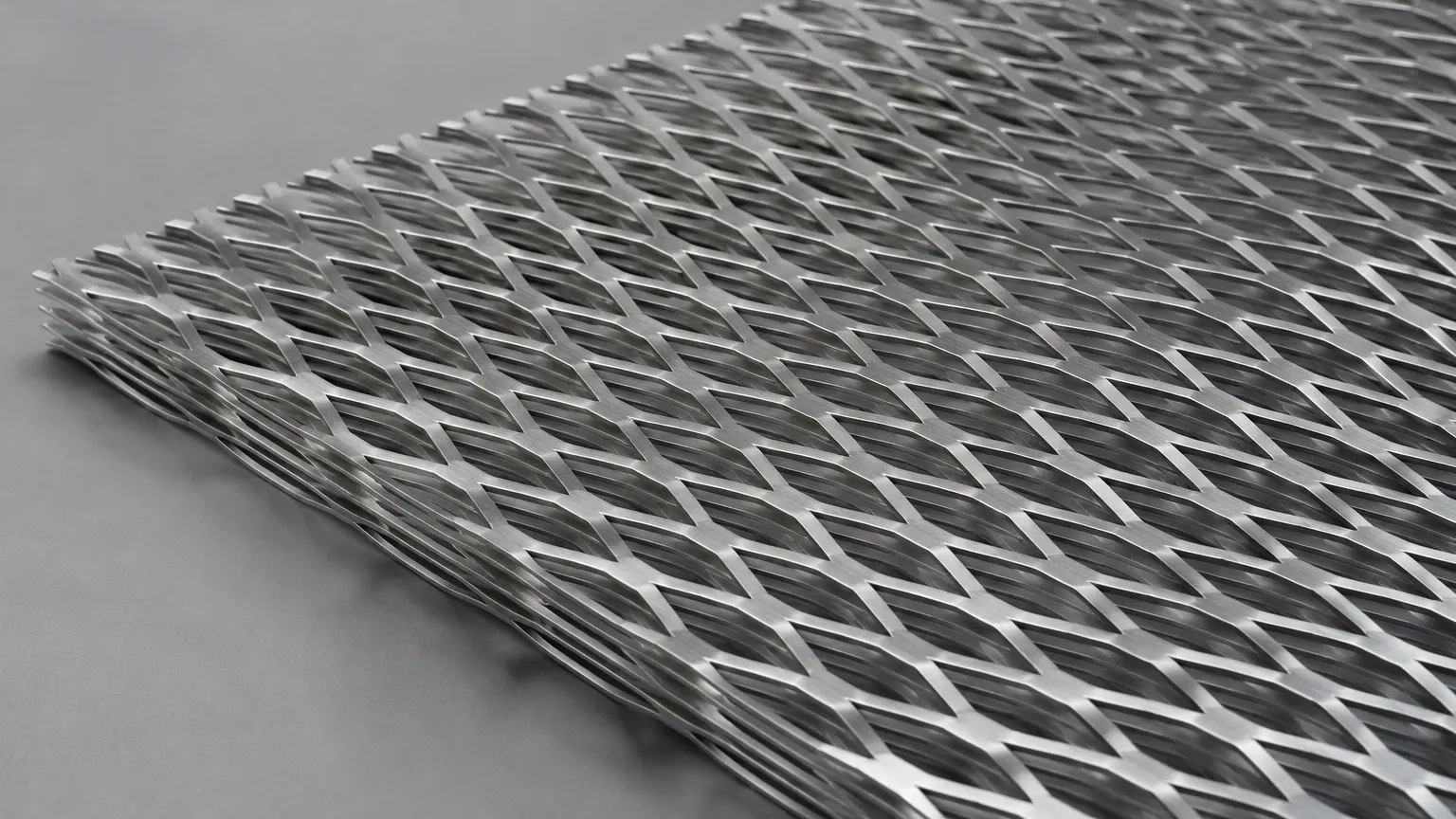
In the landscape of industrial materials, flattened expanded metal represents a versatile and structurally efficient solution for a wide range of engineering applications. Unlike standard expanded metal, which retains a raised, three-dimensional profile after the shearing and stretching process, flattened expanded metal undergoes an additional cold-rolling stage. This process levels the strands and bonds, resulting in a smooth, two-dimensional surface that is essential for specific industrial functions, particularly in filtration, safety, and structural reinforcement.
For engineers and procurement professionals, understanding the nuances of this material is critical when selecting components for high-performance systems. As a specialized manufacturer, Kaifil provides comprehensive Perforated & Expanded Metal solutions tailored to meet the rigorous demands of chemical processing, water treatment, and industrial filtration. This guide explores the technical characteristics, manufacturing processes, and selection criteria for flattened expanded metal in a B2B context.
Understanding the Manufacturing Process of Flattened Expanded Metal
The production of flattened expanded metal begins with the same fundamental process as standard (or raised) expanded metal. A solid sheet or coil of metal—typically stainless steel, carbon steel, or aluminum—is fed through an expanding machine. This machine utilizes a reciprocating knife to simultaneously slit and stretch the metal in a predetermined pattern. The result is a lattice-like structure of diamond-shaped openings.
At this stage, the material is known as "raised expanded metal." The strands are set at an angle to the plane of the sheet, providing a textured surface and significant structural depth. To produce flattened expanded metal, the raised sheet is passed through a heavy-duty cold-rolling reducing mill. This secondary operation applies intense pressure to the material, flattening the strands and bonds into a single plane.
Key Effects of the Flattening Process:
1. Thickness Reduction: The overall thickness of the sheet is reduced, often becoming slightly thinner than the original base metal thickness due to the elongation of the strands during the rolling process.
2. Surface Smoothness: The sharp edges and angled strands characteristic of raised metal are eliminated, creating a surface that is safe to handle and suitable for applications requiring flush contact.
3. Dimensional Changes: Flattening typically increases the length of the sheet (the Long Way of the Diamond) by approximately 5% to 10%, while the width remains relatively constant.
4. Material Integrity: While the process involves cold working, which can slightly increase the hardness of certain alloys, the structural integrity of the diamond bond remains intact, ensuring the material does not unravel if cut.
Technical Specifications and Dimensional Nomenclature
When specifying flattened expanded metal for industrial projects, engineers must use standardized terminology to ensure accuracy in manufacturing and performance. The geometry of the diamond opening and the dimensions of the strands determine the material's open area, strength, and filtration capability.
* Long Way of the Diamond (LWD): The distance from a point on a bond to a corresponding point on the next bond measured across the long axis of the diamond.
* Short Way of the Diamond (SWD): The distance across the short axis of the diamond, measured from the center of one bond to the center of the next.
* Long Way of the Opening (LWO): The actual width of the opening measured across the long axis.
* Short Way of the Opening (SWO): The actual height of the opening measured across the short axis.
* Strand Width: The amount of metal fed into the knives between strokes; in flattened metal, this width is visible on the surface of the sheet.
* Overall Thickness: The final thickness of the flattened sheet after the cold-rolling process.
For filtration applications, the relationship between these dimensions defines the "percent open area." This is a critical metric for calculating flow rates and pressure drops across a filter element. Flattened expanded metal often provides a more predictable flow path compared to raised metal because the strands do not create the same level of turbulence.
Comparative Analysis: Flattened vs. Standard Expanded Metal
Choosing between flattened and raised expanded metal depends entirely on the functional requirements of the application. While both share the same origin, their physical properties suit different engineering needs.
Advantages of Flattened Expanded Metal
Flattened expanded metal is preferred when a smooth surface is mandatory. In filtration systems, it is frequently used as a support medium for finer wire mesh. Because the surface is flat, it provides uniform support to the mesh without causing point-load stress or punctures that angled strands might induce. Additionally, the flat profile is easier to clean and less likely to trap debris in the "pockets" created by raised strands.
Advantages of Raised Expanded Metal
Raised expanded metal is often selected for its superior strength-to-weight ratio and its anti-skid properties. The angled strands provide inherent rigidity and can act as a louver to deflect light or air. It is commonly used in heavy-duty walkways, stair treads, and architectural sunshades where the three-dimensional texture is a functional benefit.
In the context of Perforated & Expanded Metal selection, engineers must consider whether the application requires the mechanical grip of a raised surface or the precision and compatibility of a flattened one.
Material Selection and Chemical Compatibility
The performance of flattened expanded metal is heavily influenced by the alloy from which it is manufactured. In industrial filtration and chemical processing, material selection is driven by the need for corrosion resistance, thermal stability, and mechanical strength.
1. Stainless Steel (304, 316, 316L): This is the primary choice for Kaifil’s filtration solutions. Stainless steel 304 offers excellent general corrosion resistance, while 316 and 316L (low carbon) provide superior resistance to chlorides and acidic environments. These materials are essential for food and beverage, pharmaceutical, and marine applications.
2. Carbon Steel: Often used in less corrosive environments or where cost-effectiveness is the primary driver. Carbon steel flattened expanded metal is frequently galvanized or powder-coated to improve its lifespan.
3. Aluminum: Selected for its lightweight properties and natural resistance to atmospheric corrosion. It is common in aerospace and architectural applications.
4. Specialty Alloys: For extreme environments, materials like Monel, Inconel, or Titanium can be expanded and flattened, though these require specialized manufacturing expertise to maintain structural integrity during the stretching and rolling phases.
Engineers must confirm the chemical composition of the process fluid to ensure the selected metal will not undergo galvanic corrosion or stress corrosion cracking over time.
Applications in Industrial Filtration and Support Systems
Flattened expanded metal serves several critical roles within the filtration industry. Its primary function is often as a structural skeleton for more delicate filtration media.
Filter Element Support
In high-pressure hydraulic or gas filtration, fine stainless steel wire mesh is often used as the primary filtration layer. However, wire mesh lacks the structural rigidity to withstand high differential pressures. Flattened expanded metal is wrapped into cylinders or formed into flat panels to act as a support tube or backing. The smooth surface ensures that the wire mesh remains intact and does not deform into the openings of the support structure.
Coarse Filtration and Pre-filtration
In water treatment and industrial intake systems, flattened expanded metal can serve as a primary filter for removing large debris. Its durability allows it to withstand the impact of solids that might damage lighter mesh. The predictable diamond pattern allows for consistent flow distribution across the filter surface.
Protective Guards and Shielding
Beyond filtration, the material is used for machinery guards and electronic shielding (EMI/RFI shielding). The flattening process ensures that the guards do not have sharp edges that could injure personnel, while the expanded pattern allows for necessary ventilation and visibility.
Engineering Considerations for Selection and Customization
When sourcing flattened expanded metal for a B2B project, several technical factors must be verified to ensure the component performs as expected within the larger system.
Tolerances and Flatness
Industrial applications often require tight tolerances for dimensions and flatness. While the expanding process is inherently violent to the metal, precision cold-rolling can achieve high levels of flatness. Engineers should specify the maximum allowable camber (bowing) and out-of-flatness measurements, especially if the material is to be laser-cut or welded into a precision housing.
Edge Conditions
Flattened expanded metal can be supplied with "bonded" edges or "random" edges. Bonded edges mean the sheet ends on a solid intersection of the diamonds, providing a finished look and greater safety. Random edges result from shearing through the diamonds, leaving open prongs. For filtration cartridges, bonded edges are typically preferred to facilitate clean welding and assembly.
Open Area Calculations
The percentage of open area is vital for calculating the pressure drop (ΔP). Unlike perforated metal, where the open area is easily calculated based on hole diameter and pitch, expanded metal open area depends on the strand width and the SWD. Manufacturers like Kaifil provide technical data sheets to help engineers model flow characteristics accurately.
Quality Control and Performance Evaluation
To ensure the longevity of filtration components, flattened expanded metal must undergo rigorous quality control. This includes material traceability (MTRs), dimensional inspection, and surface finish evaluation. For pharmaceutical or food-grade applications, the material must be free of burrs, oils, and manufacturing residues.
At Kaifil, the focus on precision manufacturing ensures that every piece of flattened expanded metal meets the specific requirements of the application. Whether it is used as a support core for a stainless steel filter cartridge or as a standalone screen, the material is evaluated for its ability to withstand the mechanical stresses of the intended environment.
Total Cost of Ownership (TCO)
While expanded metal is often more cost-effective than perforated metal—because the process produces no scrap—the total cost of ownership should consider the lifespan of the material. Choosing a high-grade stainless steel (316L) and ensuring a proper flattening process can reduce replacement cycles and prevent downstream contamination caused by material failure.
Conclusion
Flattened expanded metal is a sophisticated engineering material that balances structural strength with surface precision. Its role in industrial filtration and support systems is indispensable, providing the necessary rigidity for high-pressure environments while maintaining a smooth, non-damaging interface for finer media. By understanding the manufacturing nuances, material options, and technical specifications, engineering and purchasing teams can make informed decisions that optimize the performance and reliability of their filtration solutions.
For those seeking customized designs and high-performance filtration components, exploring the range of Perforated & Expanded Metal options is the first step toward achieving efficient and durable industrial outcomes. Kaifil remains committed to supporting global customers with technical expertise and precision-manufactured filtration products tailored to the most demanding applications.
