


Expanded Metal Aluminum
In the landscape of industrial filtration and structural engineering, expanded metal aluminum stands as a critical material choice for professionals seeking a balance between lightweight properties, structural integrity, and corrosion resistance. Produced through a process of simultaneous slitting and stretching, expanded metal offers a unique geometry that differs significantly from woven wire mesh or perforated sheets. For engineers and procurement specialists, understanding the technical nuances of expanded metal aluminum—from its manufacturing variations to its mechanical performance in harsh environments—is essential for optimizing system efficiency and ensuring long-term durability.
The Engineering Fundamentals of Expanded Metal Aluminum
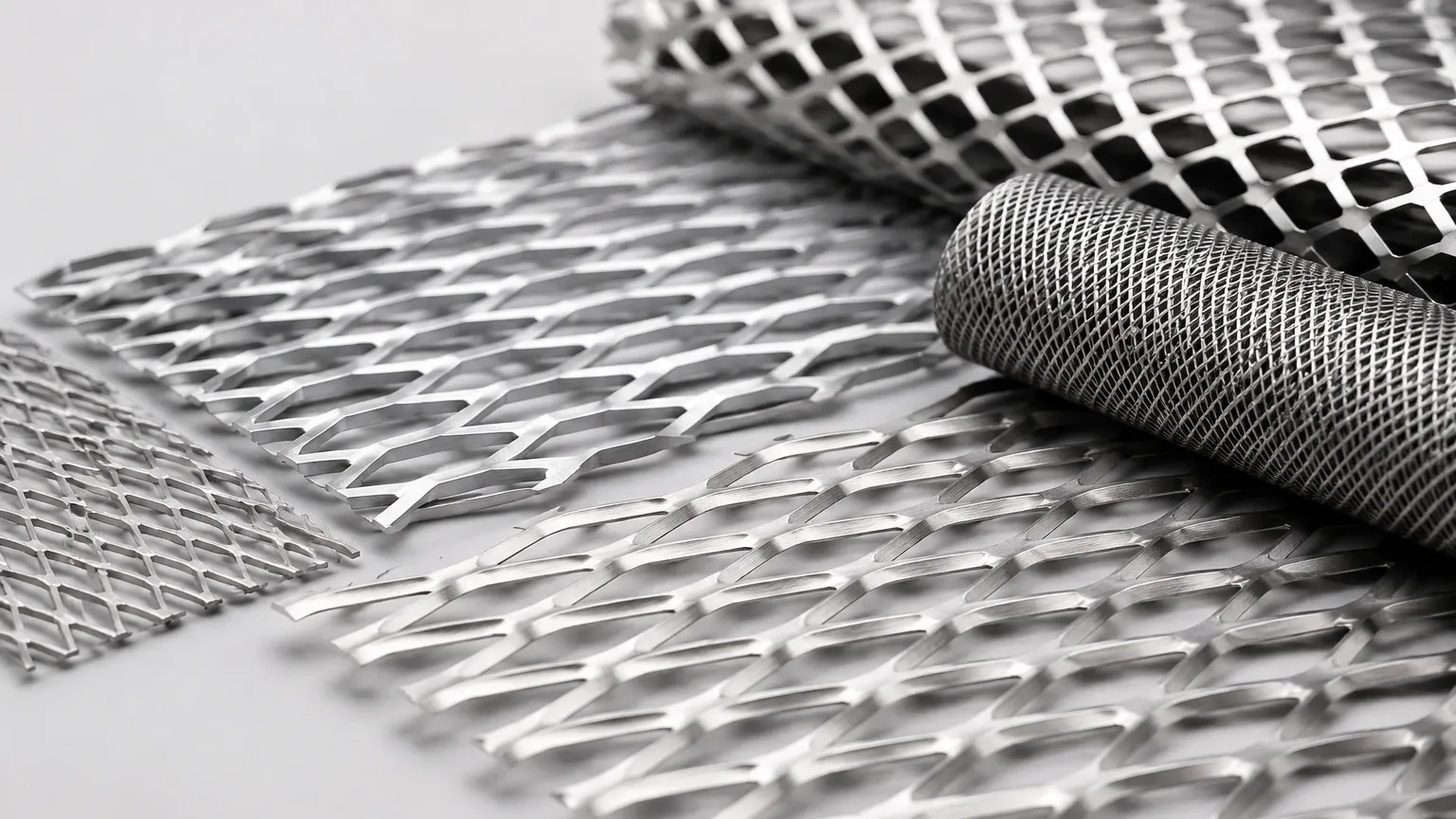
Unlike perforated metal, which is created by punching holes out of a solid sheet and generating scrap material, expanded metal is manufactured by shearing and stretching a single sheet of aluminum. This process creates a diamond-shaped pattern of openings, where the intersections are known as "bonds" and the sides of the diamonds are called "strands." Because no material is removed during production, the resulting product is often more cost-effective and environmentally sustainable than its perforated counterparts.
The expansion process also provides an inherent structural advantage. The strands and bonds are set at a uniform angle to the plane of the sheet, which adds rigidity and strength to the material. This three-dimensional structure allows the metal to distribute loads more effectively than flat sheets. For applications in filtration and support, this means expanded metal aluminum can often achieve the same structural performance as a thicker solid sheet while using significantly less raw material.
Standard vs. Flattened Expanded Metal
When specifying expanded metal aluminum, engineers must choose between two primary forms: standard (raised) and flattened.
1. Standard Expanded Metal: This is the material as it comes off the expanding machine. The strands and bonds are set at a sharp angle, creating a textured, non-slip surface. This form offers maximum rigidity and is often used in applications requiring high mechanical grip or specific airflow turbulence.
2. Flattened Expanded Metal: This is produced by passing the standard expanded sheet through a cold-roll reducing mill. The process flattens the strands and bonds into the same plane, resulting in a smooth, flat surface. Flattened expanded metal is often preferred in filtration assemblies where the mesh must be layered against other media without causing abrasion or where a low profile is required for tight tolerances.
Key Material Properties of Aluminum in Filtration
Aluminum is frequently selected for expanded metal applications due to its specific physical and chemical properties. While stainless steel is often the default for extreme chemical exposure, aluminum offers distinct advantages in specific industrial contexts.
* Weight-to-Strength Ratio: Aluminum is approximately one-third the weight of steel or stainless steel. In large-scale filtration systems or aerospace components, reducing the tare weight of the filter assembly can lead to significant energy savings and easier handling during maintenance cycles.
* Corrosion Resistance: Aluminum naturally forms a protective oxide layer when exposed to air. This layer prevents further oxidation, making it suitable for moisture-rich environments, HVAC systems, and certain chemical processing applications. For enhanced protection, aluminum can be anodized, which thickens the protective layer and increases surface hardness.
* Thermal and Electrical Conductivity: Aluminum is an excellent conductor of both heat and electricity. In filtration systems that involve temperature-sensitive fluids or require EMI/RFI shielding, expanded metal aluminum serves a dual purpose as a filter support and a functional conductor.
* Formability: Aluminum is more ductile than stainless steel, allowing for easier fabrication into complex shapes, such as cylindrical filter cartridges or custom-contoured screens.
Technical Specifications: SWD, LWD, and Open Area
To accurately specify expanded metal aluminum for a project, engineers use a standardized set of measurements. These dimensions dictate the filtration accuracy, flow rate, and mechanical strength of the component.
* SWD (Short Way of Design): The distance from the center of one bond to the center of the next bond across the short axis of the diamond.
* LWD (Long Way of Design): The distance from the center of one bond to the center of the next bond across the long axis of the diamond.
* Strand Width: The amount of metal fed into the machine for each expansion stroke.
* Strand Thickness: The thickness of the original base metal sheet.
* Percent Open Area: This is perhaps the most critical metric for filtration engineers. It determines the flow capacity and the pressure drop across the filter. Calculating the open area in expanded metal is more complex than in perforated metal due to the angled strands, but it is essential for ensuring that the filter does not become a bottleneck in the system.
Comparing Perforated & Expanded Metal for Industrial Use
When selecting a material for screening or support, the choice often comes down to Perforated & Expanded Metal. While both serve similar functions, their manufacturing methods lead to different performance characteristics.
Perforated metal allows for highly precise hole shapes and sizes, which is necessary for fine particle retention and specific aesthetic requirements. However, the punching process creates significant waste (the "slugs"), which increases the cost per square foot, especially when using expensive alloys.
In contrast, expanded metal aluminum is a more economical choice for large-scale applications where high strength and low weight are prioritized over absolute hole precision. The interlocking structure of expanded metal ensures that if a single strand is cut, the rest of the sheet retains its integrity, whereas a perforated sheet may deform more easily under localized stress. For many industrial filtration supports, expanded metal provides the necessary structural backing for finer mesh layers while maintaining a high percentage of open area for fluid flow.
Application Scenarios in Chemical and Water Treatment
Expanded metal aluminum is utilized across various sectors, often serving as a primary filter, a pre-filter, or a support structure for more delicate filtration media.
HVAC and Air Filtration
In air handling units, expanded aluminum is frequently used in grease filters and dust collectors. Its ability to withstand moisture without rusting, combined with its lightweight nature, makes it ideal for removable and washable filter panels. The diamond pattern creates a tortuous path for air, which can help in trapping larger particulates before they reach high-efficiency secondary filters.
Water Treatment and Desalination
In water treatment, expanded aluminum screens are often used as intake guards to prevent debris from entering pump systems. In certain desalination processes, aluminum's resistance to brackish water (when properly alloyed, such as the 5000 series) makes it a viable alternative to more expensive materials.
Chemical Processing
While not suitable for highly acidic or alkaline environments where stainless steel is required, aluminum expanded metal is used in the processing of certain oils, solvents, and neutral chemical solutions. It often serves as the internal support core for pleated filter cartridges, providing the necessary collapse strength to withstand high differential pressures.
Selection Criteria and Quality Assurance for Engineers
When sourcing expanded metal aluminum, purchasing teams and engineers should confirm several critical factors to ensure the material is fit for purpose:
1. Alloy Selection: The most common alloys for expansion are 3003-H14 and 5052-H32. Alloy 3003 is generally used for its excellent workability and moderate strength. Alloy 5052 is preferred for marine or high-strength applications due to its superior corrosion resistance and higher fatigue strength.
2. Edge Conditions: Expanded metal can be supplied with "random sheared" edges, where the diamonds are cut through, or "bond sheared" edges, which provide a smoother finish. For filtration cartridges that require welding or mechanical fastening, the edge condition is vital for a secure fit.
3. Flatness Tolerances: For flattened expanded metal, the degree of flatness is critical for automated assembly processes. Engineers should specify the maximum allowable camber or bow in the sheet.
4. Surface Treatment: Depending on the environment, specifying a finish such as anodizing, powder coating, or chromate conversion can significantly extend the service life of the aluminum component.
Customization and OEM Solutions from Kaifil
At Kaifil, we recognize that standard off-the-shelf expanded metal rarely meets the exacting requirements of specialized industrial filtration. As a professional manufacturer, we focus on providing customized solutions that address specific engineering challenges.
Our capabilities include precision slitting and stretching of various aluminum alloys to achieve specific SWD and LWD dimensions tailored to your flow rate requirements. We offer both standard and flattened options, with secondary processing such as degreasing, annealing, and custom die-cutting to ensure the components are ready for immediate integration into your production line.
Whether you are designing a high-performance hydraulic filter, a chemical processing screen, or a protective industrial guard, our engineering team works closely with you to select the optimal material thickness and open area. By controlling the manufacturing process from material selection to final inspection, we ensure that every piece of expanded metal aluminum meets the rigorous standards required for demanding industrial environments.
Conclusion: Strategic Material Selection
Expanded metal aluminum is more than just a commodity; it is a versatile engineering material that, when correctly specified, can significantly improve the performance and cost-efficiency of industrial systems. By leveraging its lightweight nature, inherent strength, and the waste-free manufacturing process of expanded metal, engineers can develop filtration and structural solutions that are both robust and sustainable. When evaluating your next project, consider the mechanical advantages of the diamond-mesh structure and the specific benefits of aluminum alloys to achieve the optimal balance of durability and performance.
