


Expanded Metal at Home Depot
For maintenance engineers, plant managers, and procurement professionals, the search for immediate material solutions often begins with local retail availability. Finding expanded metal at Home Depot or similar big-box hardware stores is a common starting point for urgent, small-scale repairs or basic structural needs. However, while retail outlets provide convenience for general-purpose applications, industrial filtration and precision engineering require a deeper understanding of material specifications, tolerances, and chemical compatibility that go beyond off-the-shelf availability.
In industrial environments—specifically within chemical processing, food and beverage production, and hydraulic systems—expanded metal serves as more than just a protective screen; it is a critical structural component. This article explores the technical distinctions between retail-grade materials and industrial-grade Perforated & Expanded Metal, helping technical teams determine when a local purchase suffices and when custom manufacturing is required for system integrity.
Understanding Expanded Metal Specifications
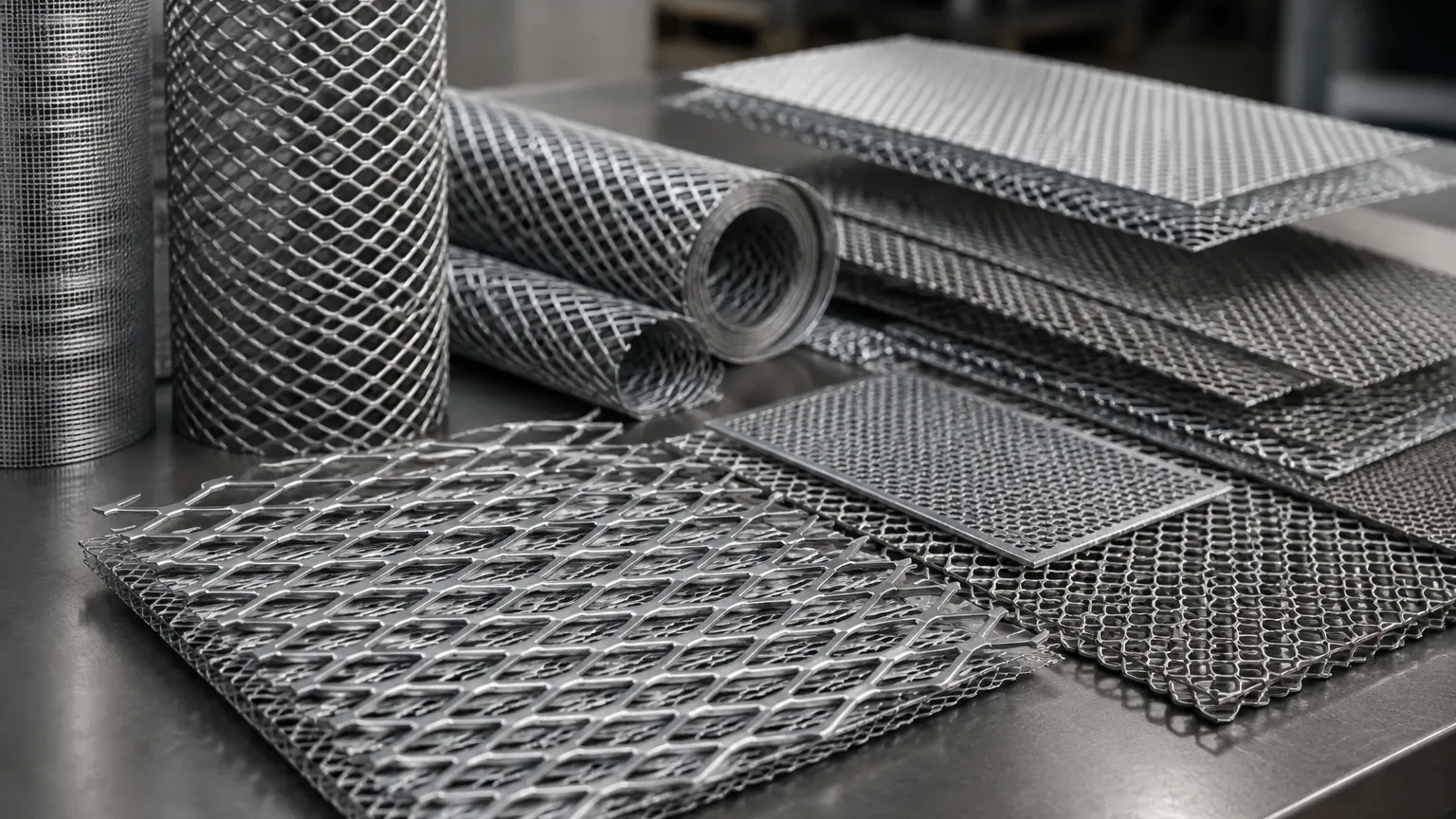
Expanded metal is manufactured through a process of simultaneously slitting and stretching a solid metal sheet. Unlike perforated metal, which involves punching holes and creating scrap material, the expansion process creates a diamond-shaped pattern without any material loss. This results in a high strength-to-weight ratio, making it an ideal choice for support structures in filtration systems.
When evaluating expanded metal, engineers must consider four primary dimensional attributes:
1. SWD (Short Way of Design): The distance from the center of one bond to the center of the next bond across the short axis of the diamond.
2. LWD (Long Way of Design): The distance across the long axis of the diamond.
3. Strand Width: The amount of metal fed into the machine between the slits.
4. Strand Thickness: The gauge or thickness of the original base metal.
Retail products found when searching for expanded metal at Home Depot are typically limited to standard carbon steel or aluminum in fixed dimensions. In contrast, industrial applications often require specific "Open Area" percentages to manage pressure drops across a filter assembly. Calculating the open area is essential for fluid dynamics, ensuring that the support structure does not impede flow while providing the necessary mechanical strength.
Retail vs. Industrial Grade: The Engineering Gap
The primary limitation of sourcing expanded metal at Home Depot for industrial use lies in material certification and variety. Most retail-grade expanded metal is designed for architectural accents, small security screens, or basic shelving. These products often lack the traceability and material grade consistency required for high-stakes industrial environments.
Material Composition and Corrosion Resistance
In the pharmaceutical and food processing industries, 304 or 316L stainless steel is the standard due to its resistance to oxidation and chemical cleaning agents. Retailers often stock "plain steel" (carbon steel) which is prone to rust, or basic aluminum. For an engineer designing a filtration housing for a corrosive chemical line, a retail-grade carbon steel sheet would fail prematurely, leading to system contamination and costly downtime.
Raised vs. Flattened Profiles
Expanded metal naturally comes off the machine in a "raised" state, where the strands are angled relative to the plane of the sheet. This provides excellent grip and rigidity but may not be suitable for all filtration applications. "Flattened" expanded metal is passed through a cold-rolling mill to create a smooth, level surface. Industrial manufacturers like Kaifil provide precise flattening to ensure the material can be seamlessly integrated with fine wire mesh layers without causing abrasion or mechanical interference.
Structural Integrity in Filtration Systems
One of the most critical roles of expanded metal in the B2B sector is providing a rigid skeleton for filter elements. In high-pressure hydraulic or water treatment applications, the primary filtration media (such as fine stainless steel wire mesh) is often too delicate to withstand the differential pressure on its own.
Industrial-grade expanded metal acts as the support core or outer protection wrap. When selecting these components, engineers must verify:
* Pressure Ratings: Can the expanded metal withstand the maximum expected PSI without deforming?
* Weldability: Is the material compatible with TIG or plasma welding processes used in filter cartridge assembly?
* Dimensional Tolerance: Retail sheets often have wider tolerances. In precision filtration, a variance of even a few millimeters in the LWD or SWD can prevent a filter element from fitting into its housing.
For those who initially looked for expanded metal at Home Depot, the transition to a custom manufacturer like Kaifil is often driven by the need for these specific mechanical guarantees. Custom-manufactured expanded metal ensures that the bond points are strong enough to resist the stresses of backwashing and high-velocity fluid flow.
Customization and OEM Solutions
While retail stores offer convenience, they cannot provide the customization required for complex OEM projects. Industrial procurement teams require solutions tailored to their specific equipment designs. Custom manufacturing offers several advantages over off-the-shelf retail products:
Specific Alloy Selection
Beyond standard 304 stainless steel, industrial applications may require specialized alloys like Monel, Inconel, or Titanium for extreme temperature or highly acidic environments. These materials are never found in general retail inventory but are essential for the longevity of filtration systems in the petrochemical and aerospace sectors.
Precision Slitting and Shearing
Industrial filters often require expanded metal in very specific widths for spiral-welded tubes or small-diameter cartridges. Sourcing expanded metal at Home Depot would require the buyer to perform secondary cutting operations in-house, which can lead to uneven edges and material waste. A professional manufacturer provides precision-sheared pieces or coils ready for immediate production line integration.
Surface Treatments
For certain applications, the expanded metal requires electropolishing to remove burrs and improve hygiene (essential in the pharmaceutical industry) or specialized coatings for added chemical resistance. These secondary processes are standard in a B2B manufacturing environment but unavailable through retail channels.
Selection Guide for Industrial Purchasing
To move from a temporary retail fix to a sustainable industrial supply chain, purchasing teams should confirm several factors before finalizing their material selection. If your project involves any of the following, a specialized manufacturer is necessary:
1. Regulatory Compliance: Does the material need to meet FDA, 3A, or ISO standards? Retail products rarely come with the necessary Mill Test Reports (MTRs).
2. Filtration Efficiency: Does the expanded metal need to provide a specific percentage of open area to maintain system flow rates? Standard retail patterns may restrict flow too much or provide insufficient support.
3. Longevity and Lifecycle Cost: While a retail sheet may be cheaper upfront, the total cost of ownership increases if the material must be replaced frequently due to corrosion or mechanical failure.
4. Quantity and Consistency: For OEM production, consistency between batches is vital. Retail inventory is often sourced from multiple suppliers, leading to variations in strand width and diamond shape that can disrupt automated assembly processes.
Conclusion: Choosing the Right Source
Searching for expanded metal at Home Depot is a valid strategy for prototype development, simple workshop jigs, or non-critical facility maintenance. However, when the material is a component of a high-performance industrial filtration system, the technical requirements demand a professional manufacturing partner.
At Kaifil, we specialize in providing high-precision stainless steel filtration solutions that meet the rigorous demands of global industries. Our expertise in Perforated & Expanded Metal allows us to support engineers in selecting the right material grade, pattern, and finish for their specific application. By focusing on durability, filtration accuracy, and custom engineering, we ensure that your filtration components perform reliably in even the most demanding industrial environments.
When precision and reliability are non-negotiable, moving beyond retail availability to a dedicated filtration manufacturer is the most cost-effective and technically sound decision for your operation.
