


Expanded Metal Amazon
In the modern industrial landscape, procurement processes are evolving. Engineers, maintenance managers, and product designers often begin their search for materials using broad digital marketplaces. The search for "expanded metal amazon" frequently represents an initial attempt to source small quantities for prototyping, quick repairs, or low-stress structural applications. However, for industrial filtration and precision engineering, the transition from a retail-oriented search to a professional manufacturing partnership is critical for ensuring performance, longevity, and safety.
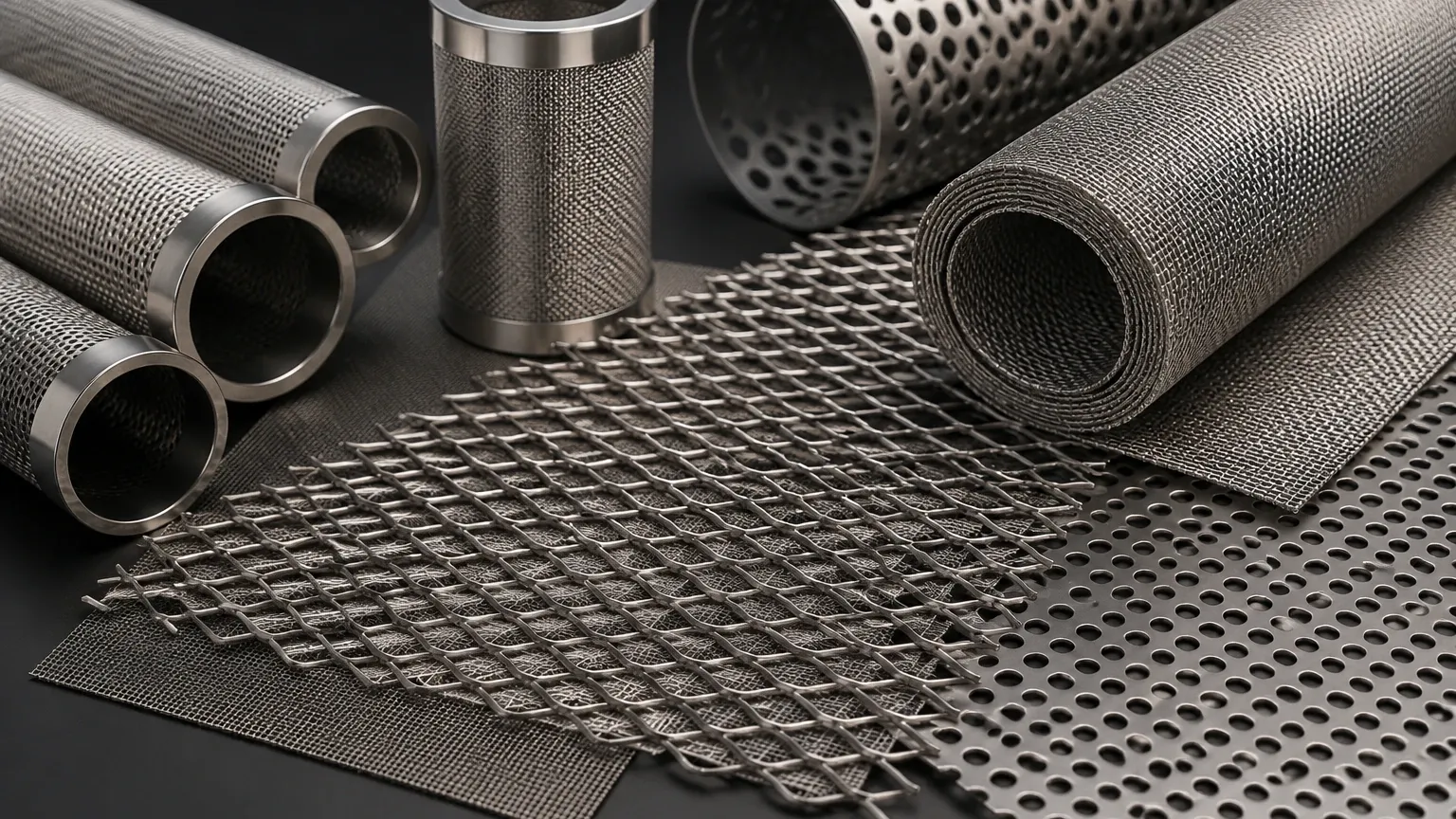
Expanded metal is a versatile material created by simultaneously slitting and stretching a sheet of metal, resulting in a diamond-shaped mesh pattern. Unlike perforated metal, which is created by punching holes and results in scrap material, expanded metal is produced through a process that involves no waste. This article explores the technical nuances of expanded metal, the implications of sourcing through retail platforms like Amazon, and the engineering criteria required for industrial-grade applications.
Understanding the Search for Expanded Metal Amazon in an Industrial Context
The intent behind searching for expanded metal amazon typically falls into two categories: immediate convenience and cost benchmarking. For a hobbyist or a small-scale workshop, a retail platform offers the speed of consumer logistics. However, for B2B professionals in sectors such as chemical processing, food and beverage, or hydraulic systems, the requirements extend far beyond simple delivery speed.
Industrial applications demand specific material certifications (such as Mill Test Reports), precise dimensional tolerances, and specialized alloys that are rarely available through general-purpose retail listings. While a search for expanded metal on a consumer platform might yield results for basic aluminum or carbon steel sheets, it often lacks the technical depth required for high-performance Perforated & Expanded Metal solutions used in filtration. Engineers must evaluate whether an off-the-shelf product can withstand the pressure drops, corrosive environments, and mechanical stresses of a production line.
Technical Specifications: Defining the Geometry of Expanded Metal
To move beyond generic sourcing, it is essential to understand the technical parameters that define expanded metal performance. When reviewing product options, engineers must specify more than just the overall sheet size. The geometry of the mesh determines both its structural integrity and its filtration efficiency.
SWD and LWD (Short Way of Design and Long Way of Design)
These terms refer to the dimensions of the diamond opening. SWD is the distance from the center of a bond to the center of the next bond across the short axis, while LWD is the distance across the long axis. In filtration, these dimensions dictate the size of the particles that can be captured or the level of support provided to a finer mesh layer.
Strand Width and Thickness
The strand refers to the metal "ribs" that form the diamond pattern. The thickness of the original sheet and the width of the strand determine the overall weight and strength of the mesh. For industrial filters, the strand width must be calculated to ensure it does not cause excessive turbulence or pressure resistance in fluid flow.
Standard vs. Flattened Expanded Metal
Standard expanded metal (also known as raised expanded metal) has strands that are turned at an angle to the plane of the sheet. This creates a three-dimensional surface that provides excellent grip and strength but may be difficult to clean in a food-grade environment. Flattened expanded metal is processed through a cold-rolling mill to create a smooth, flat surface. This is often preferred in filtration applications where the expanded metal serves as a support structure for delicate wire mesh or filter paper, as it prevents the sharp edges of raised strands from puncturing the primary filter media.
Industrial Filtration Applications for Perforated & Expanded Metal
In the realm of industrial filtration, expanded metal is rarely a standalone product; it is a critical component of a larger system. Kaifil specializes in integrating these materials into robust filtration solutions. The primary roles of expanded metal in this context include:
1. Support Cores for Filter Cartridges: In high-pressure hydraulic or chemical systems, the filter media (such as pleated wire mesh or fiberglass) lacks the structural strength to resist collapsing. Expanded metal tubes provide a rigid internal core or external cage that maintains the filter's shape under differential pressure.
2. Pre-filtration and Debris Removal: For heavy-duty water treatment or industrial intake systems, coarse expanded metal acts as a primary barrier against large debris, protecting more sensitive downstream components.
3. Flow Diffusion: The angled strands of standard expanded metal can be used to break up laminar flow, promoting better distribution of fluids across the surface of a secondary filter medium.
4. Acoustic and Thermal Shielding: In certain industrial machinery, perforated and expanded metals are used to dampen noise or dissipate heat while allowing for necessary airflow.
Comparing Retail Availability with Professional Manufacturing Standards
When an engineer searches for "expanded metal amazon," they are often presented with limited options regarding material grade and finish. For B2B procurement, the differences between retail-grade and industrial-grade materials are substantial.
Material Traceability
Industrial sectors like pharmaceuticals and food processing require strict adherence to material standards (e.g., AISI 304, 316L, or 904L). Retail platforms often provide "stainless steel" without specifying the exact grade or providing the necessary documentation to prove the alloy's composition. This lack of traceability can lead to catastrophic failures if a lower-grade steel is exposed to corrosive chemicals.
Tolerance and Consistency
General-purpose expanded metal often has wider tolerances for diamond size and sheet flatness. In precision filtration, even a millimeter of deviation can result in a bypass of unfiltered fluid or a failure to fit within a machined housing. Professional manufacturers like Kaifil maintain tight tolerances to ensure that every component integrates perfectly into the final assembly.
Surface Treatment and Cleanliness
Expanded metal used in industrial settings often requires specialized post-processing. This may include ultrasonic cleaning to remove manufacturing oils, passivating to enhance corrosion resistance, or electropolishing for a burr-free finish. Retail products are typically sold "as-is," which may include sharp edges, oil residues, or surface oxidation that are unacceptable in a cleanroom or food-production environment.
Material Integrity and Environmental Durability
The choice of material is the most significant factor in the longevity of expanded metal. While carbon steel is cost-effective for indoor structural use, it is rarely suitable for the demanding environments where Kaifil products operate.
* Stainless Steel (304/316): The gold standard for filtration. 316 stainless steel, in particular, offers superior resistance to chlorides and acidic environments, making it essential for marine and chemical applications.
* Aluminum: Lightweight and corrosion-resistant in specific environments, though it lacks the mechanical strength of steel at high temperatures.
* Specialty Alloys: For extreme conditions, materials like Monel, Inconel, or Titanium may be required. These are virtually never found via a search for expanded metal amazon and require a specialized manufacturing partner.
Engineering Challenges: When Standard Sizes Fall Short
One of the primary limitations of retail sourcing is the lack of customization. Most industrial filtration problems cannot be solved with a standard 12×24 inch sheet. Customization is required in several dimensions:
* Custom Mesh Openings: If a standard diamond size doesn't provide the right balance of open area and strength, a custom tool can be used to create a specific mesh geometry.
* Variable Open Areas: Some applications require a sheet that is expanded in some areas but remains solid in others (to allow for welding or mounting). This is known as "blank areas" or "random shearing," which is a hallmark of professional OEM manufacturing.
* Cylindrical Forming and Welding: Converting a flat sheet of expanded metal into a perfectly round, structurally sound tube requires specialized rolling and longitudinal welding techniques that maintain the integrity of the mesh pattern.
Critical Factors to Confirm Before Finalizing Procurement
Before moving from a general search to a purchase order, engineers and purchasing teams should confirm several key factors to ensure the total cost of ownership remains low and performance remains high:
1. Chemical Compatibility: Does the selected alloy react with the process fluid? (e.g., Avoiding carbon steel in deionized water systems).
2. Pressure Drop Calculations: Will the open area of the expanded metal cause an unacceptable drop in system pressure?
3. Mechanical Load: Can the mesh withstand the maximum expected differential pressure without permanent deformation?
4. Regulatory Compliance: Does the material meet FDA, 3-A, or ASME standards required for the specific industry?
5. Long-term Availability: Can the supplier provide identical replacements in two, five, or ten years? Retail inventories are notoriously volatile, whereas a B2B partnership ensures a consistent supply chain.
Conclusion
While "expanded metal amazon" may be a starting point for quick-fix solutions or low-stakes projects, the complexities of industrial filtration demand a more rigorous approach. Reliable filtration performance is built on material science, precision engineering, and a deep understanding of the application environment. By choosing a professional manufacturer like Kaifil, companies gain access to customized Perforated & Expanded Metal solutions that are designed to endure the rigors of chemical, pharmaceutical, and industrial processing. Investing in quality and technical expertise at the procurement stage prevents costly downtime and ensures the integrity of the entire filtration system.
